 小影邮箱
邮件AB测试怎么做?Test Two Subject Lines
Key Takeaways
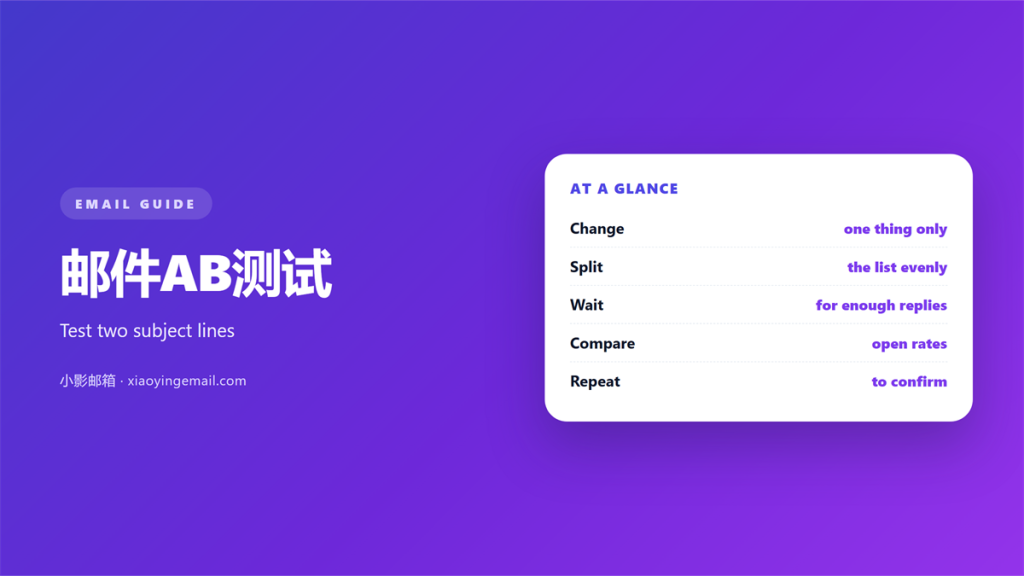
- 邮件AB测试 compares two versions of a single email.
- Change one element and keep the rest equal.
- Split the list at random and send both at once.
- Wait for a fair sample before you pick a winner.
- Write the result down for the next campaign.
What 邮件AB测试 means
邮件AB测试 is a fair test between two versions of one message.
One group of readers receives version A. A second group receives version B.
You change a single element, then compare how each version did.
Most teams begin with the subject line. That element is quick to swap.
The aim is a fair answer, not a lucky one.
A hunch can feel right and still lose. A test shows which version truly won.
Keep the first 邮件AB测试 small. One question, one change, one clear outcome.
Do not copy a stranger’s winner. Your readers decide what works for you.
Big changes often give clearer results than tiny ones.
The size of the change matters less than the clarity of the question.
Why 邮件AB测试 pays off
Every list behaves a little differently. Advice for one brand may fail for another.
A test swaps opinion for evidence from your own readers.
One good result can guide a dozen future sends.
It also ends long debates about taste and style.
Small gains repeat
A one point lift looks tiny at first.
Across a year of sends, that small gain compounds.
Most teams send often enough to notice the change.
A winner survives a rewrite
A tested line can be reused for many months.
You stop re arguing about wording that already proved itself.
New staff inherit a proven style instead of a blank page.
The cost stays low
The work is mostly planning, not spending.
Most tools include a split test at no extra cost.
A careful 邮件AB测试 also teaches you about your audience.
A patient 邮件AB测试 rewards teams who wait.
How to run 邮件AB测试
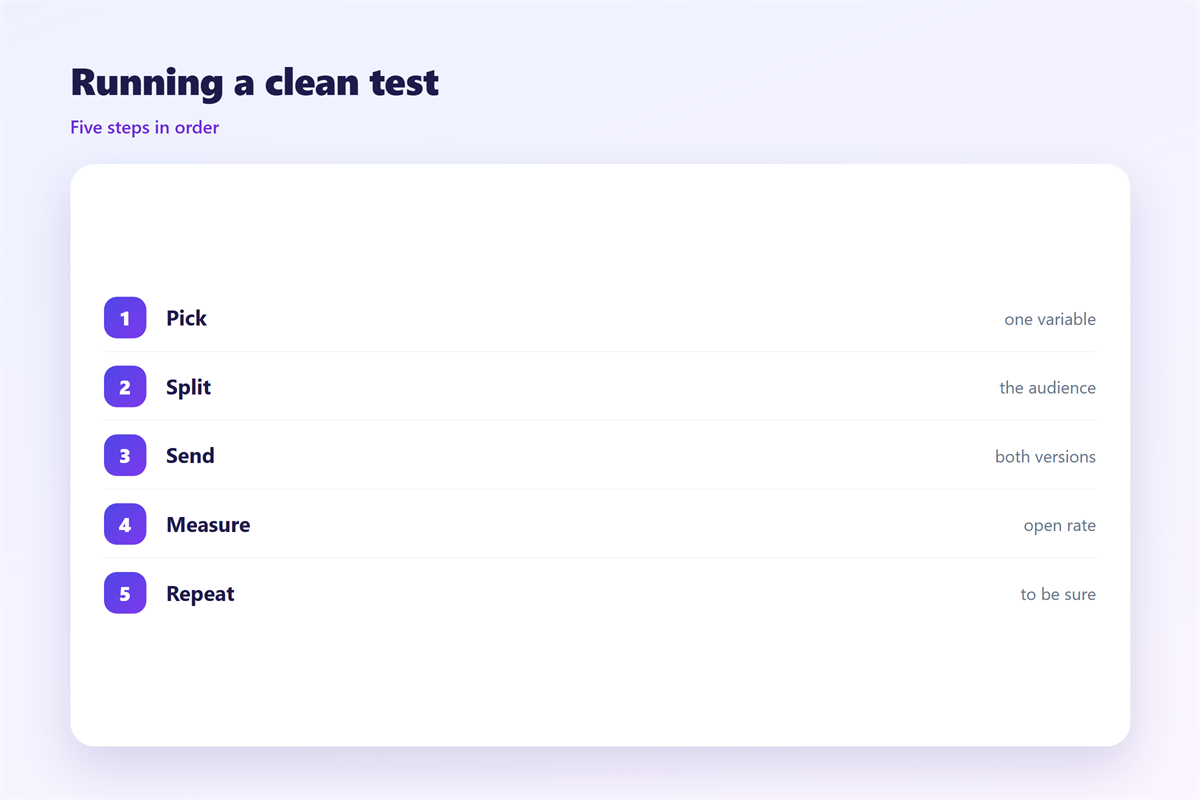
Start with one question. What do you want to learn?
Pick a single variable to change. Keep everything else the same.
Split the list at random, never by signup date.
Send both versions at the same hour. The time of day shifts results.
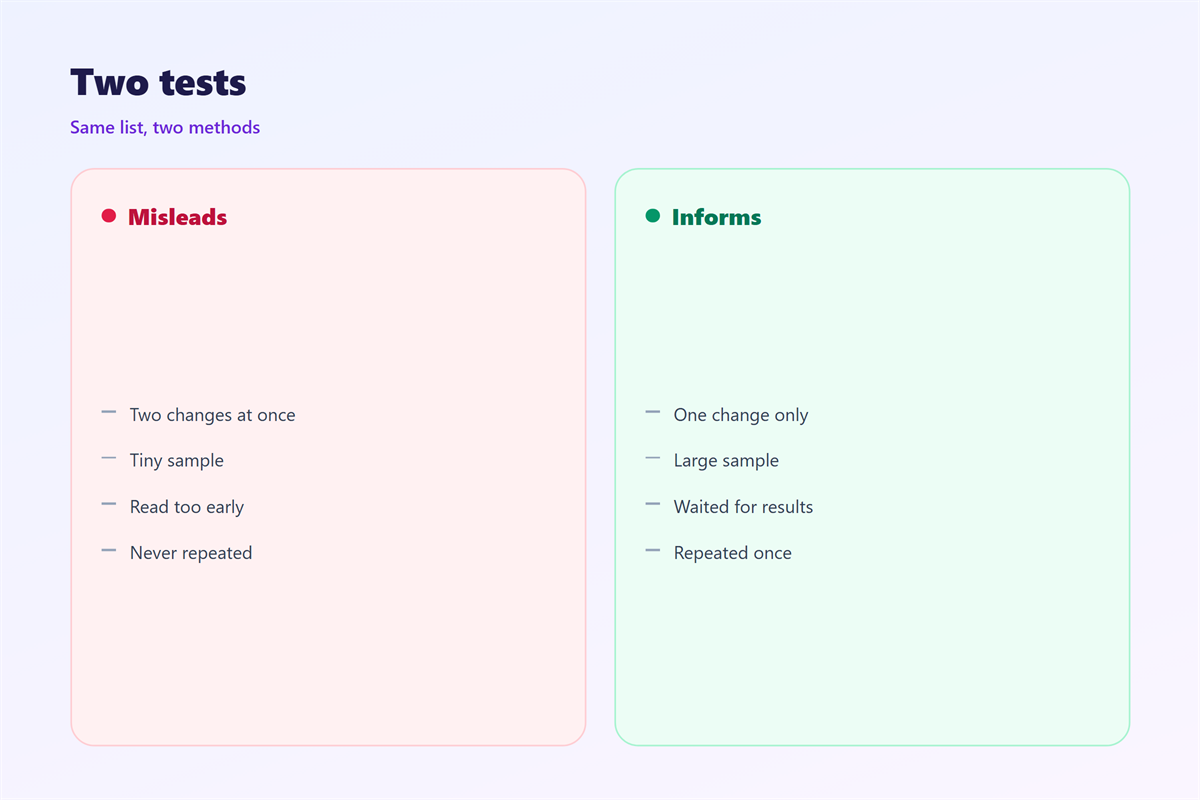
Keep both groups large enough to matter. Tiny groups mislead.
Let the test run for a fixed window. Do not peek every hour.
Record the outcome in a shared note. The next reader will thank you.
Repeat the winning idea in a later send. One win can still be luck.
Name the test with a date. A clear name helps you find it later.
Run a new 邮件AB测试 only after the last one is written up.
Write the question down before you start.
A written question keeps the test honest.
Check that both versions look right on a phone.
Ask a colleague to review the copy first.
Reading the numbers
Open rate shows how many people opened the message.
Click rate shows how many took the next step.
Compare like with like. A test sent on a holiday proves little.
Use the size of the gap as your guide. A wide gap is easy to trust.
Check the sample size before you celebrate.
A small list needs a bigger gap to be believable.
Watch the unsubscribe count as well as opens. A catchy line can push people away.
A good 邮件AB测试 answers one question only. It does not prove a whole strategy.
Compare the result with older sends.
A new record is more exciting than a small gain.
Small changes still count across many campaigns.
Run the same 邮件AB测试 twice if the first result looks strange.
Note the date and the send time in your log.
A short summary helps the next person start fast.
Keep the winning version in a saved template.
Future campaigns then start from a proven point.
Common mistakes in 邮件AB测试
The first mistake is changing two things at once. Then you cannot tell what worked.
The second is a tiny sample. A handful of replies means nothing.
The third is calling a winner too early. Recheck after the window closes.
Another 邮件AB测试 error is testing the wrong metric. Opens are not sales.
Avoid a biased split. Random is the only fair way to divide a list.
Do not test on a broken list. Clean addresses first, or the numbers lie.
Skip the urge to test everything. One clean question beats five messy ones.
Finally, keep one format across the team. Mixed methods slow every result.
An unrecorded 邮件AB测试 is a wasted effort. Write it down or lose it.
Bad data at the start ruins a careful test.
Keep the list clean before you split it.
Sending and following up
Sending 邮件AB测试 is only half the job. The lesson must reach the team.
Write the result in one short line. Note the change and the lift.
Share the winner with anyone who writes email. Our notes on 邮件标题, 邮件打开率, 邮件点击率 and 邮件预览文本 cover the wider picture.
Add the result to a growing log. Patterns appear after a few tests.
A steady habit beats one clever experiment. Test often and write it down.
FAQ
How long should 邮件AB测试 run?
Long enough to gather a fair sample. A single day often works for a small list.
Can I test more than two versions?
Yes, but keep it simple at first. Two versions are easier to read.
What if both versions perform the same?
Treat it as a tie and move on. Test a bigger change next time.
Do I need special software?
Most email tools include a split test. A simple spreadsheet can track results too.
评论
还没有评论,来说两句吧。
评论功能已关闭。