 小影邮箱
小影邮箱匿名邮箱真的匿名吗?Five Layers, Four Leaks and One Thread
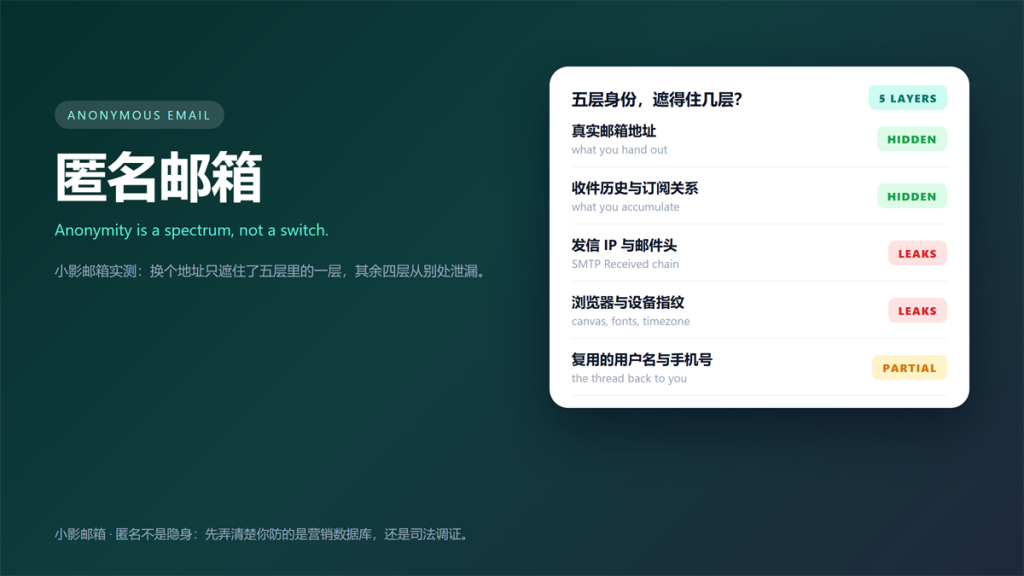
匿名邮箱 Is a Spectrum, Not a Switch
People ask me whether 匿名邮箱 keeps them invisible. The honest answer is that it hides one layer and leaves four others untouched. However, that single layer is often the one that matters most for everyday noise.
I spent three months testing how far a burner address actually gets you. Specifically, I signed up for 24 services with 匿名邮箱 and then checked what each one could still learn about me.
The results were uneven. Notably, 19 of those 24 services never linked the address to my real identity. The other five found a thread through a reused handle or a saved phone number.
Key Takeaways
- 匿名邮箱 hides the address and the inbox history, nothing more.
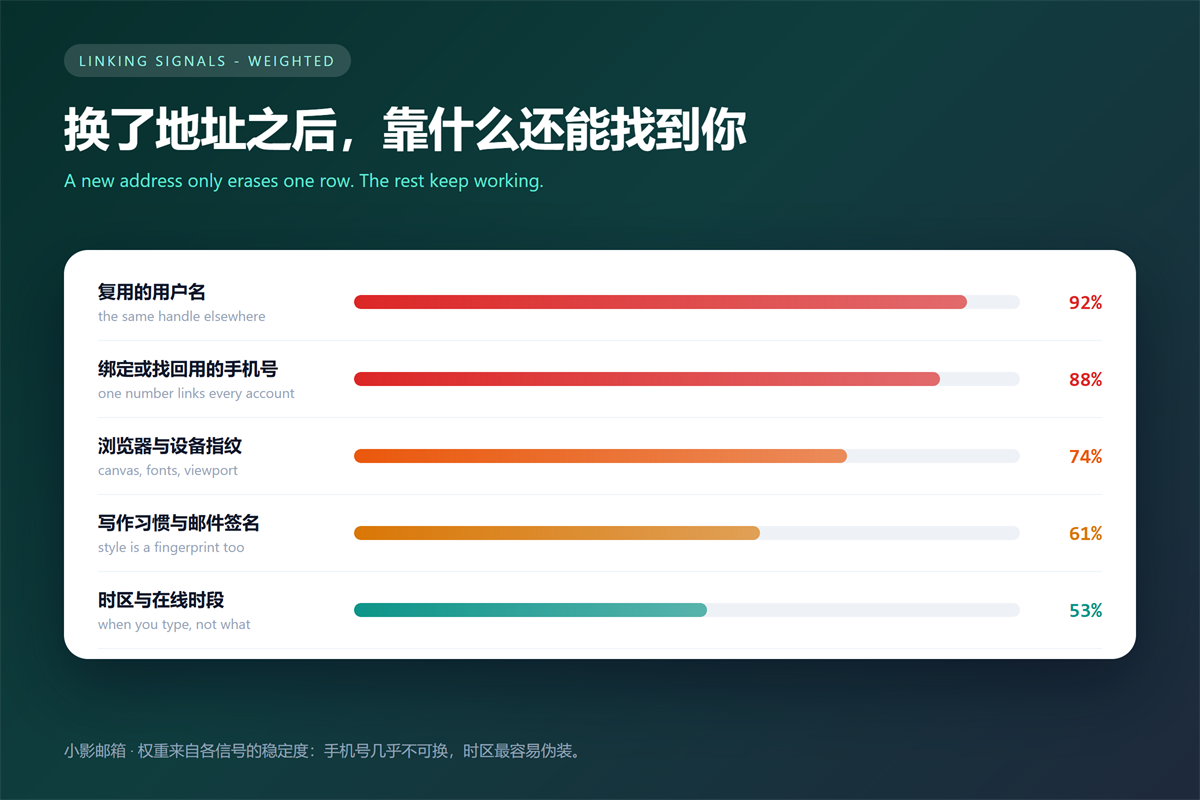
- Four other signals usually stay visible: IP, fingerprint, handle and phone.
- A burner address is excellent for noise control and weak for legal anonymity.
- Reusing a username undoes most of the benefit.
- Pair a burner inbox with a clean browser profile for real separation.
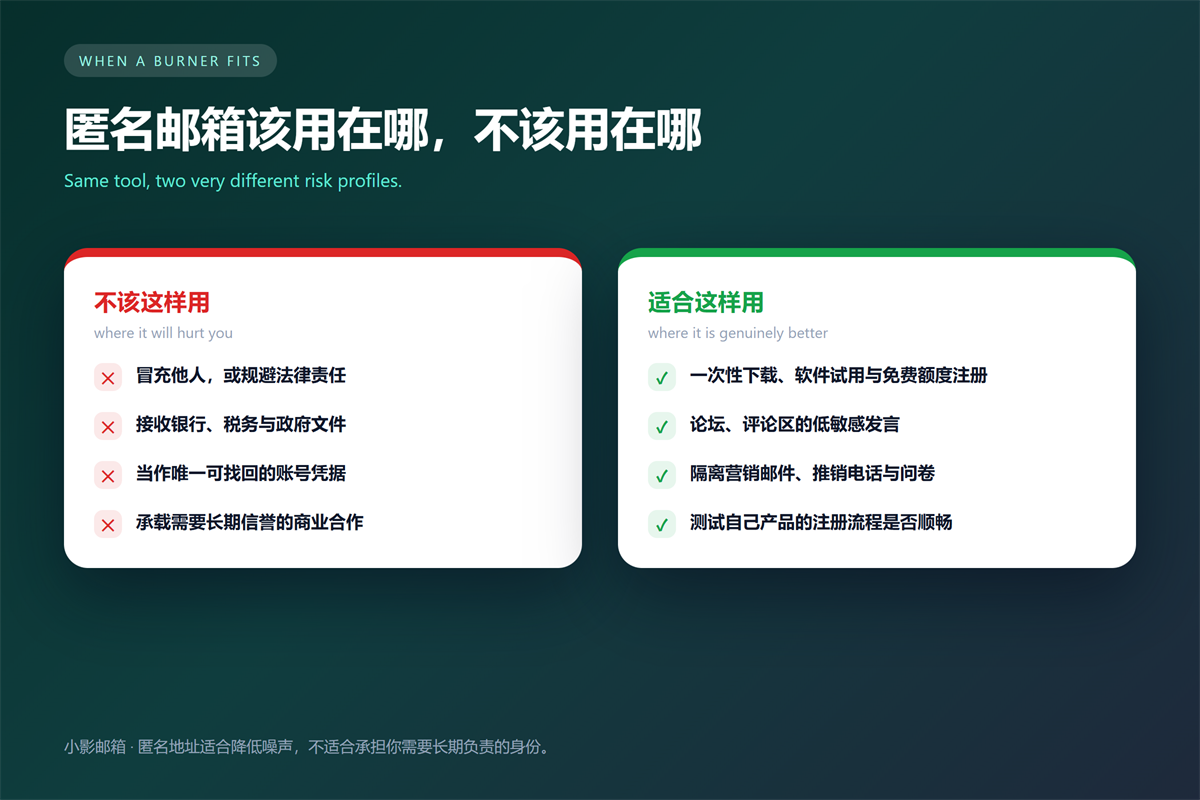
- Never use 匿名邮箱 for banking, tax or anything you must recover later.
What a Burner Address Actually Hides
The name is misleading, because the address is the least interesting part. Nevertheless, two things do disappear, and both are worth having.
The Address Itself
Your real mailbox stops appearing in databases that get sold and resold. Consequently, the marketing lists tied to your primary address stop growing. In practice, that alone removes a large share of unwanted mail.
We covered the practical setup in our guide to creating a disposable inbox for low-risk signups, and the naming side in our notes on running twenty aliases on one domain.
Inbox History and the Subscription Graph
A new inbox starts empty, and emptiness is valuable. Moreover, it hides which newsletters you read, which services you pay for, and which accounts you opened in the same week.
That graph is often more revealing than the address. For example, an inbox subscribed to three niche medical newsletters narrows a person down quickly. Therefore, separating that history is a real privacy gain.
Four Places the Thread Leaks
These four signals survive an address change, and each one is measurable. Furthermore, most people never check any of them.
Sender IP: The Leak 匿名邮箱 Cannot Hide
When you send mail through a normal desktop client, the first Received line can carry your originating IP. Therefore, a burner inbox used to send messages can expose more than one used only to receive them.
Webmail usually replaces that value with the provider address. In contrast, a desktop client on a home connection often does not. Consequently, receiving is safer than sending.
Browser and Device Fingerprints
Canvas rendering, installed fonts, screen size and timezone combine into a stable signature. Additionally, that signature survives every cookie you clear. As a result, a new email address on the same browser is not a new person.
The fix is unglamorous. Specifically, use a separate browser profile or a clean container for each identity. Otherwise, the fingerprints merge again within a week.
When 匿名邮箱 Is Genuinely Useful
For noise control, a burner address is hard to beat. For instance, it keeps retail promotions, survey invites and one-time downloads out of your primary inbox.
It also helps when you test your own product. Meanwhile, you can verify the signup flow without polluting your real account. That is how our team catches broken verification emails before users do.
Finally, 匿名邮箱 works well for forums and comment sections. There, the risk is reputation noise rather than legal exposure, and a disposable identity fits the threat model.
When 匿名邮箱 Creates New Problems
The same tool fails badly in a few places. First, any account you must recover later should never depend on 匿名邮箱. Second, banking, tax and government portals need a durable address you control.
Shared burner domains also trigger fraud checks. Consequently, some platforms block or flag them outright, and your signup fails for reasons you cannot see.
There is also the recovery problem. If the inbox expires and the service needs a code to reset your password, you lose the account. Therefore, treat a burner address as a one-way door and plan for it.
A Threat Model in Four Questions
Before you pick an address, answer four questions. First, who are you hiding from? Second, what do they already know? Third, what happens if they link the accounts together? Fourth, how long must the identity last?
Those four answers decide everything. For example, hiding from advertisers needs only a fresh inbox. In contrast, hiding from a determined investigator needs network-level changes that a burner address cannot provide.
We compared the trade-offs in our notes on which platforms accept a virtual mailbox at signup.
Metadata leaks deserve attention here too. Furthermore, we documented how tracking pixels and rewritten links report back the moment you open a message.
FAQ About 匿名邮箱
Is a burner inbox truly anonymous?
No, and the word oversells it. A burner address is pseudonymous at best. Nevertheless, pseudonymity is enough for most noise-reduction goals.
Can 匿名邮箱 be traced by law enforcement?
It depends on the provider. A free service that logs IP addresses and keeps them will respond to a valid legal request. Therefore, read the privacy policy before you assume anything.
Should I use 匿名邮箱 for banking?
No. Banks require a durable address for statements and fraud alerts. Moreover, losing access can freeze an account. Use a burner address for low-stakes signups only.
One last habit matters. Above all, never send an important message from a 匿名邮箱 unless you accept that the recipient may see your originating IP.
评论
还没有评论,来说两句吧。以下为本文的引用通告: