 小影邮箱
邮件硬退信是什么?Why an Address Dies
Key Takeaways
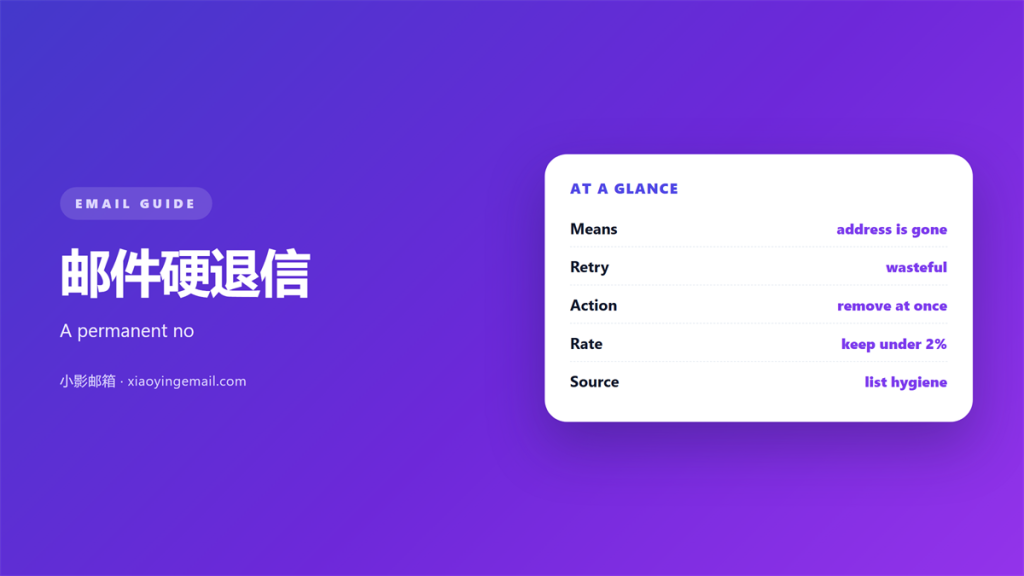
- A 邮件硬退信 is a permanent delivery failure.
- It means the address will never work.
- A soft bounce is temporary, and it may clear.
- Keep hard bounces out of your next send.
- Repeated sends to dead addresses hurt your reputation.
What a 邮件硬退信 means
A 邮件硬退信 is a permanent rejection from the receiving server. The address cannot accept mail, and retrying will not help.
So a 邮件硬退信 closes the case on that address. There is no later retry worth scheduling.
The server sends it during the same SMTP conversation. The sender learns the address is dead at once.
That is different from a delay. A soft bounce says try again later. A hard bounce says stop.
The receiving server decides which one to send. Its reply code carries the meaning.
A 邮件硬退信 usually arrives within seconds. Delays can take hours or days to resolve.
Do not read a hard bounce as a personal failure. It is a fact about the address.
Reading the failure code
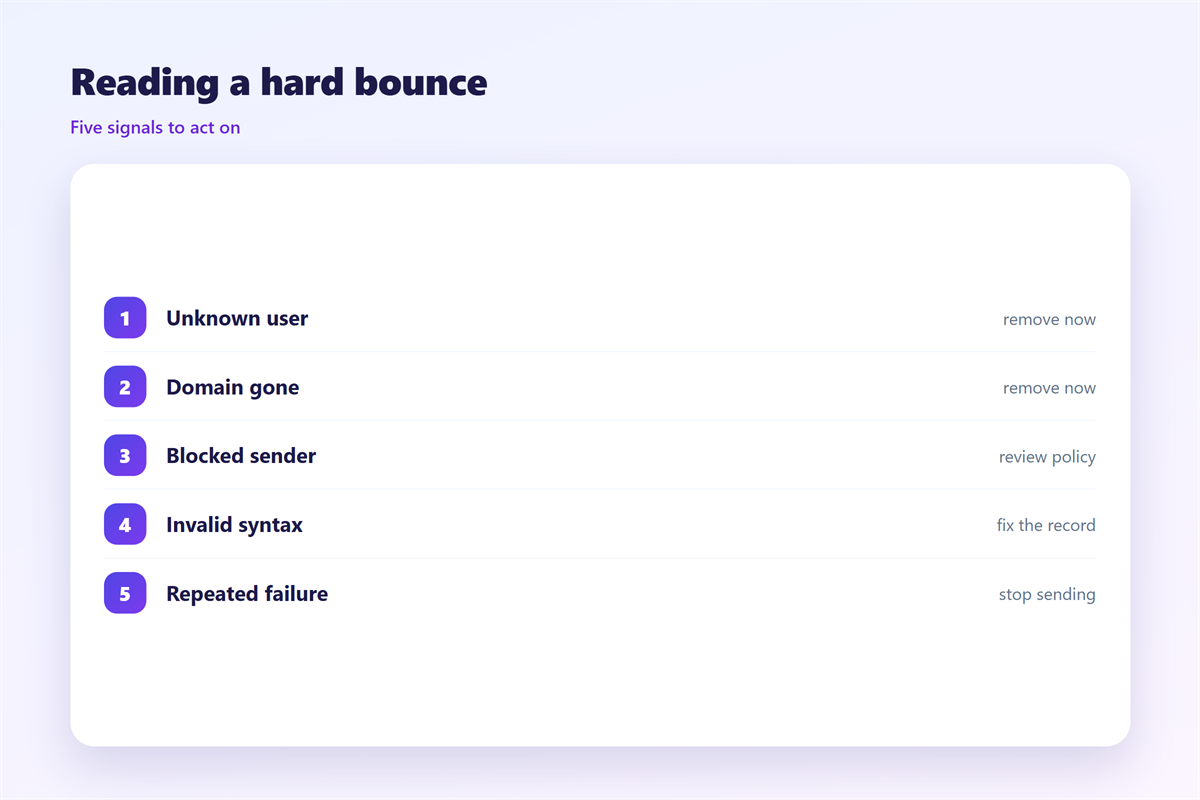
The code tells you why the address failed.
Codes in the 500 range are permanent. Codes in the 400 range are temporary by design.
A 550 reply usually means the mailbox does not exist. Typos and closed accounts are common.
A 551 reply means the address moved. The server may name a forwarding target.
A 552 reply points to a full or oversized mailbox. Some servers call this permanent.
A 553 reply means the address itself is invalid. The syntax was rejected.
A 5.1.1 code points to an unknown user. A 5.2.2 code points to a full mailbox.
The extended code is more precise than the base number. Always read both before you decide.
Read the full message, not just the number. The text explains the real cause.
One 邮件硬退信 is easy to explain, but many are a pattern. Compare the codes across your send.
Why 邮件硬退信 rates rise
A rising rate has a few usual causes.
The first is a list that was never cleaned. Old addresses accumulate quietly.
An old list is the most common starting point. Addresses expire as people change jobs.
The second is a purchased list. Such lists are full of dead and trap addresses.
The third is a form that accepts anything. A typo at signup becomes a bounce later.
A single bad import can lift the rate overnight. Check any new source before the next send.
The fourth is a block, not a bad address. A provider may reject everything from you.
A high 邮件硬退信 rate is a reputation signal. Receivers watch how often you hit dead addresses.
Track the 邮件硬退信 rate as a weekly number. Sudden growth is easier to spot than a slow drift.
Clean the list before the rate becomes a problem. Many providers set a ceiling near two percent.
Cleaning a list after a 邮件硬退信
Treat every hard bounce as a final answer.
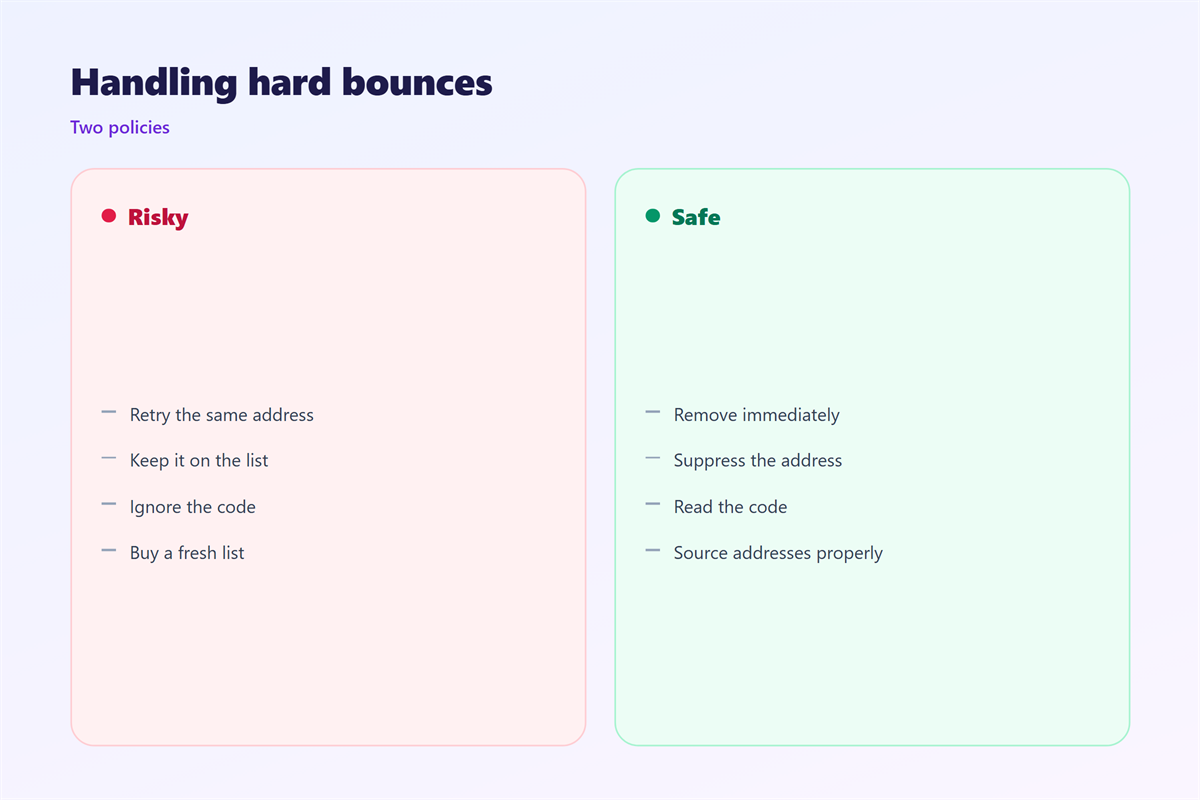
Remove the address from the active list. Do not retry it in the next campaign.
Every 邮件硬退信 should update the suppression list. That keeps the address out of future imports.
Fix the source of the bad address. A form check prevents most typos.
Send a confirmation message to new signups. Unconfirmed addresses are a common source of bounces.
Review the removals each week. The pattern often points to one broken source.
Preventing 邮件硬退信 at signup
Most hard bounces start long before the send.
Validate the address format as the user types. A small check catches obvious typos.
Typo correction helps more than strict validation. A suggestion catches a slip without blocking a real address.
Use a double opt-in for every list. The second click proves the address works.
Watch the first message to a new contact. A bounce here means the address was bad from the start.
Suppress known bad domains. Some domains reject all bulk mail by policy.
A small 邮件硬退信 rate is normal. Sudden growth is the signal worth chasing.
The cost of a hard bounce is not the failed message itself.
Receivers track how often your sends fail. A rising rate looks like neglect or a bought list.
That judgement affects every future message. Good mail from a careless sender lands in spam.
A shared sending address spreads the damage. Other teams inherit the reputation you build.
Reputation recovers slowly. Cleaning the list early is much cheaper than repairing a block.
An address can also die when a company closes. The domain may still resolve while the mailbox is gone.
A routine beats a one-time purge, so build one that repeats.
Export the bounce log after every send. Sort it by code and by domain.
Remove the permanent failures within a day. Do not wait for the monthly review.
Flag the temporary ones for a single retry. If they fail again, treat them as permanent.
Record the counts in one place. A simple trend line shows whether your fixes work.
Share the numbers with whoever owns the form. Bad data usually starts at capture, not at send.
Related reading compares both failure types under 邮件退信. The overall reputation picture sits with 邮件投递率. Exact replies are listed in 邮件错误代码, and group sending rules are covered in 邮件列表.
FAQ
Should I retry after a 邮件硬退信?
No. The failure is permanent. A retry wastes effort and risks your sender score.
How fast does a hard bounce arrive?
Usually within seconds. Some servers reply at the end of the connection.
Is a full mailbox a hard bounce?
Often it is a soft bounce. A full mailbox may clear later. Follow the reply code.
Does a 邮件硬退信 affect deliverability?
Yes. A high rate tells receivers that your list is stale. Keep it low by cleaning often.
References
- IETF RFC 5321: Simple Mail Transfer Protocol
- IETF RFC 3463: Enhanced Mail System Status Codes
- Google: SMTP error codes
评论
还没有评论,来说两句吧。
评论功能已关闭。