 小影邮箱
邮件列表清洗怎么做?Clean Before You Send
Key Takeaways
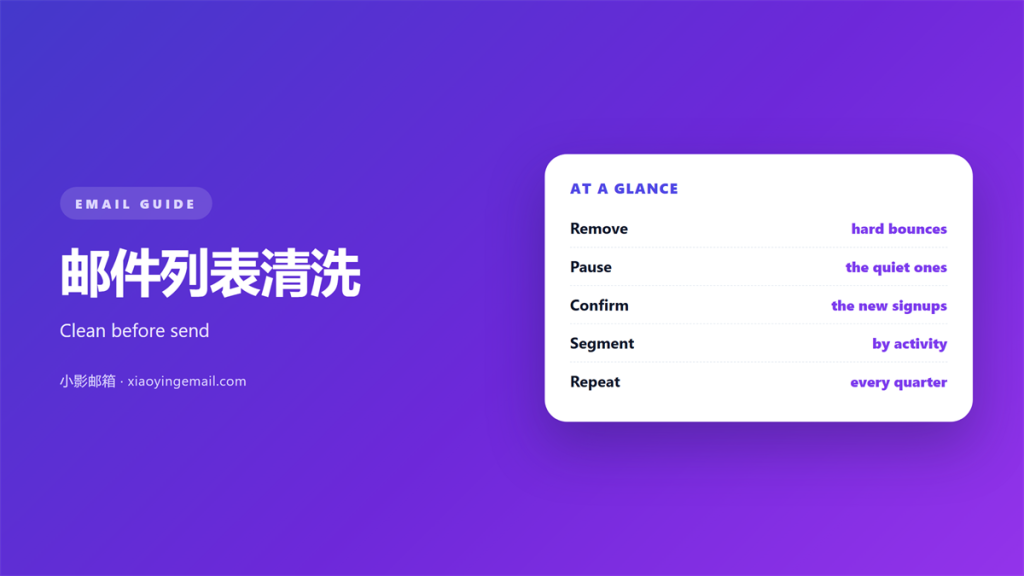
- 邮件列表清洗 keeps a list healthy and cheap to mail.
- Dead addresses quietly drag every campaign down.
- Hard bounces should leave at once.
- Soft bounces deserve a second chance.
- Clean a little, and clean it often.
What 邮件列表清洗 means
邮件列表清洗 is the routine work of removing bad addresses.
Bad addresses come in many shapes. Some never existed, and some died quietly.
A few are traps that punish careless senders. Others are simply old.
The goal stays simple. Keep real people and remove the rest.
This is not a one time job. Addresses decay every single month.
So treat cleaning as a habit rather than a yearly project.
Every send teaches you a little more about your list.
Use those lessons before the next campaign goes out.
A tidy list also means lower costs. Most platforms charge by list size.
Smaller, cleaner lists often earn better results per email.
A small list is also easier to keep accurate.
Bad addresses show up faster on a tidy list.
Cleaning acts like a health check for the whole program.
It also protects the money you spend on each campaign.
A short checklist keeps the work consistent.
Why 邮件列表清洗 matters
Providers watch how much mail you send to nobody. High bounce rates look like spam.
Poor 邮件列表清洗 also wastes money. You pay per address, even the dead ones.
A clean list protects your name with every provider.
It also makes your reports honest. Real numbers lead to better choices.
A stale list slowly hides your best readers in the noise.
A dirty list also skews every open rate you track.
When half the addresses are dead, the real rate hides.
Live readers give you signals you can actually trust.
Providers also reward senders who manage their data well.
A cared for list earns better placement over time.
Reading 邮件列表清洗 signals
Watch the bounce rate first. A slow rise is an early warning.
Next look at the open rate. A long fall means the list is tired.
Check how many addresses never acted at all.
Compare this month with last month, not with a stranger’s list.
Look for sudden jumps as well as slow drifts.
What 邮件列表清洗 removes
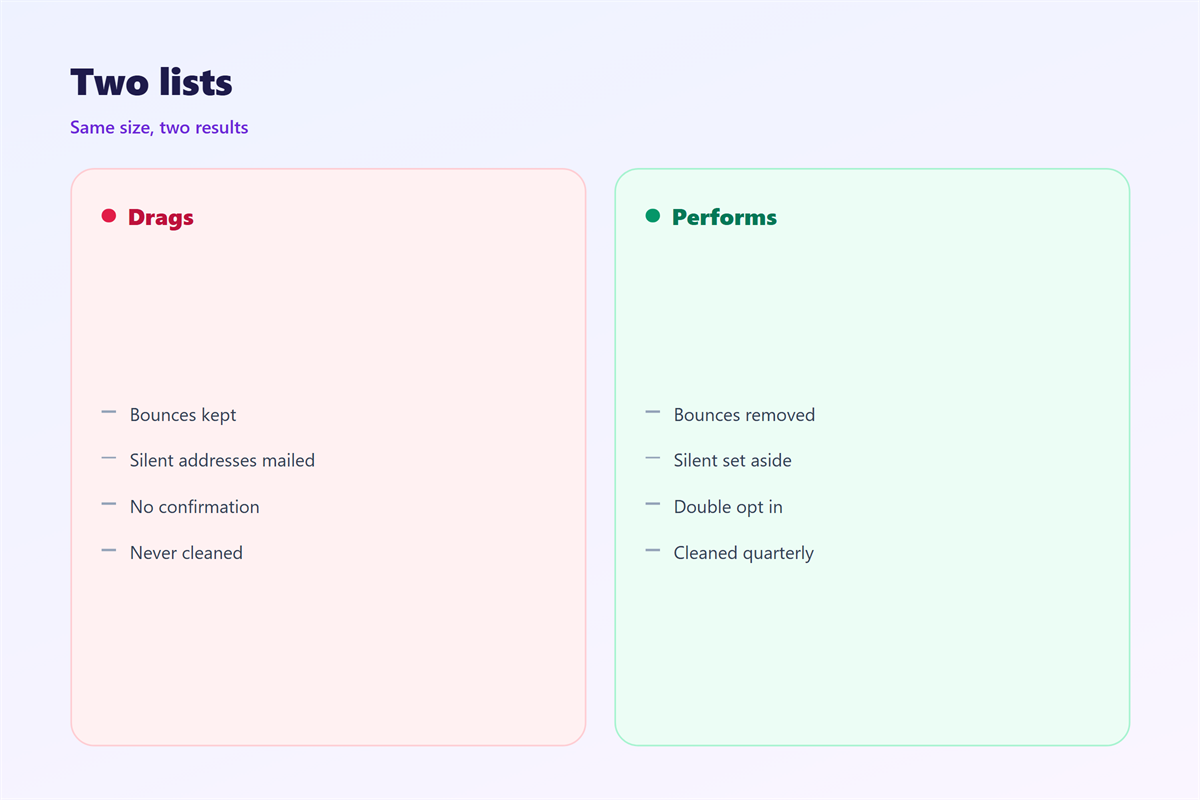
Hard bounces, spam traps and duplicates all go.
Unengaged readers may also leave after one last attempt.
Role addresses like info and sales often leave too.
Temporary failures may recover, so they need careful watching.
Known complainers should leave the list at once.
How to do 邮件列表清洗
Good 邮件列表清洗 starts with a clear rule.
Decide what counts as a dead address before you begin.
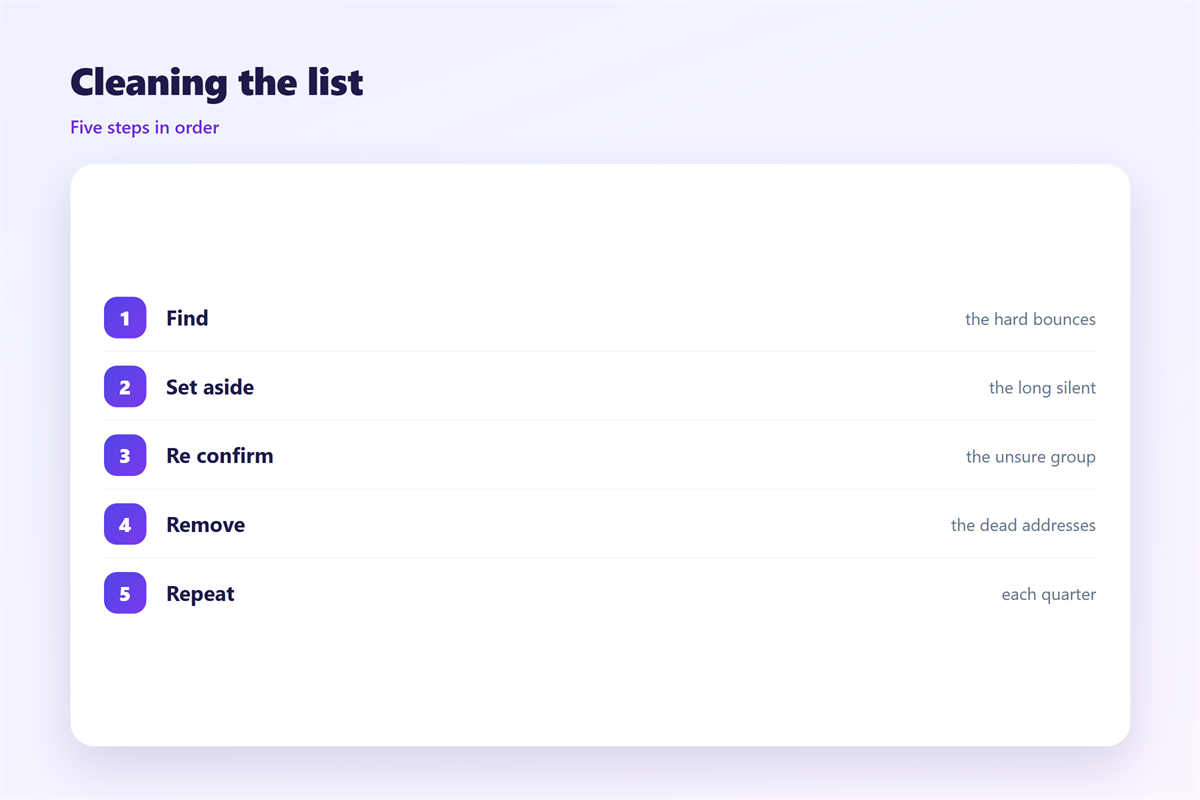
Remove every hard bounce right away. Waiting only makes things worse.
Give soft bounces a short grace period. Many recover within a few days.
A careful 邮件列表清洗 also removes exact duplicates.
Check for obvious typos in the domain name.
Never buy a list. Purchased addresses break every rule you follow.
Keep a small suppression file of people who asked to stop.
Run the cleanup the day before each campaign, not after.
Write your rules down so the team follows the same path.
Sort the list by last open date. The oldest group needs the closest look.
Send a gentle re-engagement note to quiet readers.
Give them one clear way to stay and one way to leave.
If they still do not reply, remove them from future sends.
Do the same review every month. Small steps beat one big purge.
Export the removed addresses into one safe file.
Double check that file before deleting anything for good.
Schedule the cleanup like any other routine task.
Keep the rules visible for anyone who joins later.
Ask the team to flag any address that looks wrong.
Review the rules each quarter and update them.
The best lists are earned, never bought.
Consent makes every number more meaningful.
So clean, measure, and repeat the cycle.
Measuring 邮件列表清洗
Track the bounce rate before and after each cleanup.
Watch the list size against the open rate together.
Compare the list size before and after 邮件列表清洗.
Keep a copy of every 邮件列表清洗 decision.
Review the numbers each month, not each day.
A steady trend matters more than one noisy result.
Note which segments improved after the cleanup.
Watch the complaint rate beside the bounce rate.
Write down what you changed and why.
Share the numbers with the team once a month.
A small rise in the open rate often follows a good cleanup.
Log how many addresses left the list each time.
Watch the cost per send as the list gets smaller.
Keep the report short, with three numbers at most.
Sending and improving
Send only to people who expect to hear from you. The rules sit in 邮件列表.
Remove hard failures at once. The details are explained in 邮件硬退信.
Give temporary failures one more try. The timing is covered in 邮件软退信.
Avoid the sources that block whole domains. The warnings appear in 邮件黑名单.
Then repeat 邮件列表清洗 every quarter.
Small habits keep a list alive for years.
Tell the team when a cleanup runs. Surprises damage trust.
Keep sending to the people who keep reading.
Send less often if the quality starts to slip.
Let the list grow only when people ask to join.
FAQ
How often should I run 邮件列表清洗?
Once a quarter suits most senders. Fast growing lists may need it monthly.
Should I delete readers who never open?
Ask them once, then let quiet readers go. Keeping them hurts everyone.
Is buying a list ever worth it?
No. Bought addresses raise bounces and damage your name.
What counts as a hard bounce?
A permanent failure counts as hard. The address will never work again.
References
- Litmus: Email list hygiene best practices
- Mailchimp: About bounces
- IETF RFC 5321: Simple Mail Transfer Protocol
评论
还没有评论,来说两句吧。
评论功能已关闭。