 小影邮箱
邮件邀请函怎么写?Invitations People Accept
Key Takeaways
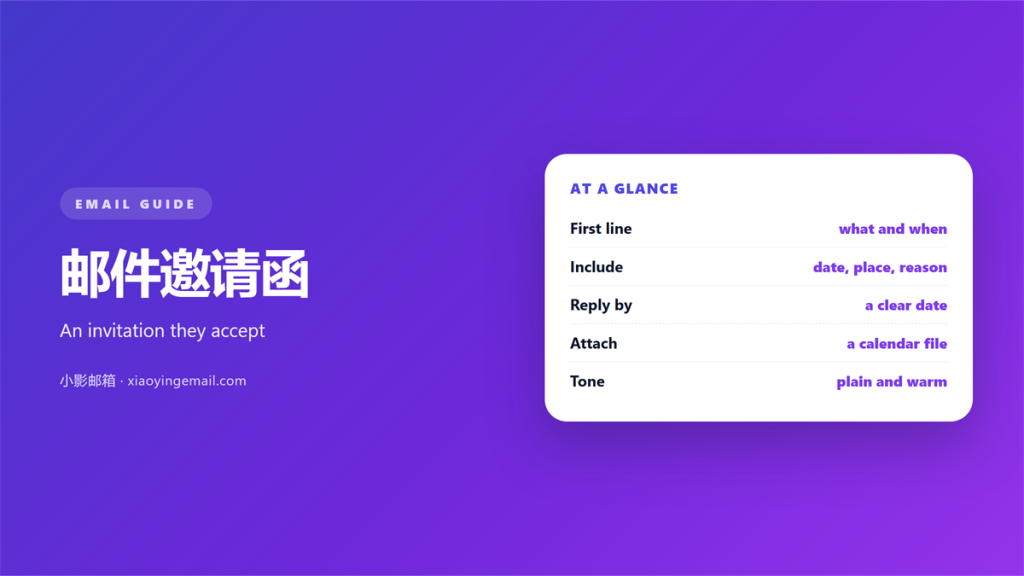
- A 邮件邀请函 works when the date, place and reason are obvious.
- Put the ask in the first two lines.
- Use a calendar invite for anything with a fixed time.
- Keep the tone warm and the details plain.
- Send one short reminder to people who did not answer.
What a 邮件邀请函 must say first
A 邮件邀请函 is judged in the preview line. Most readers decide before they open it.
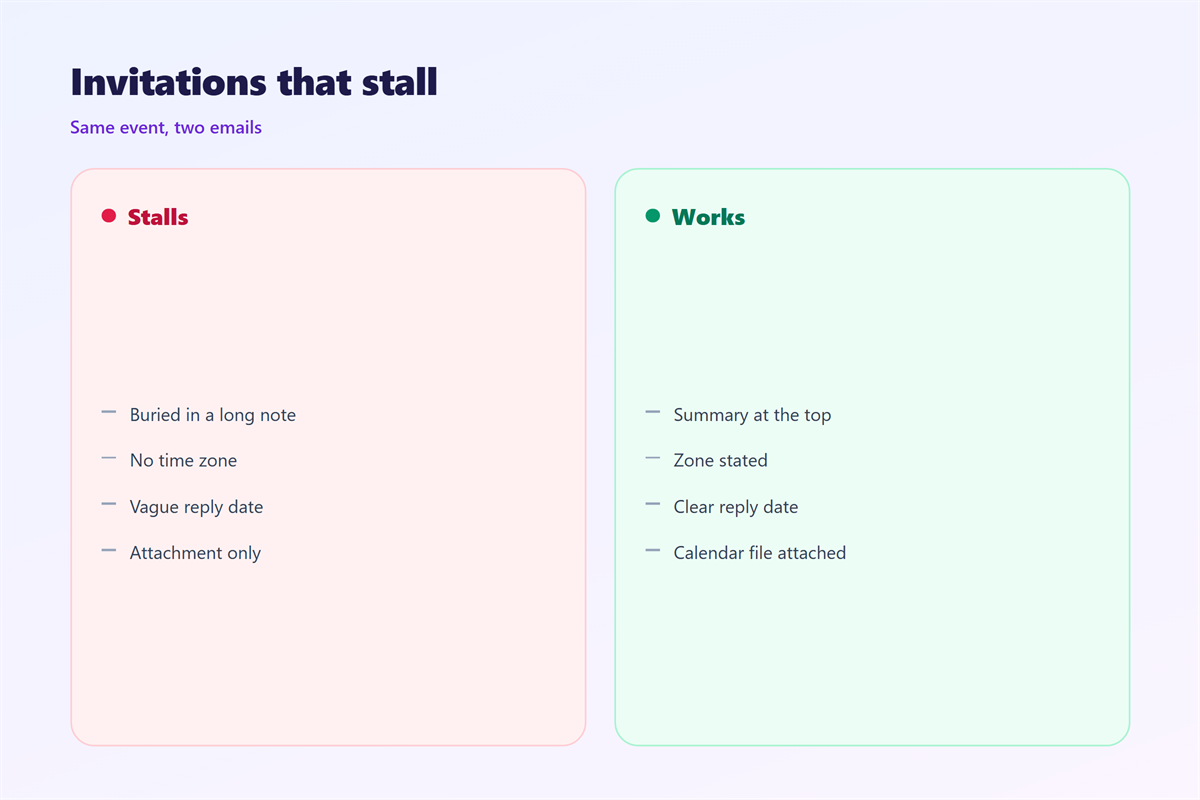
So the subject should carry the essentials. Name the event and the date in plain words.
The first line repeats the ask. You are invited, followed by the when and the where.
Put the date in digits as well as words. Numbers are harder to misread.
Readers scan, so lead with what matters. Bury the date and you will get questions.
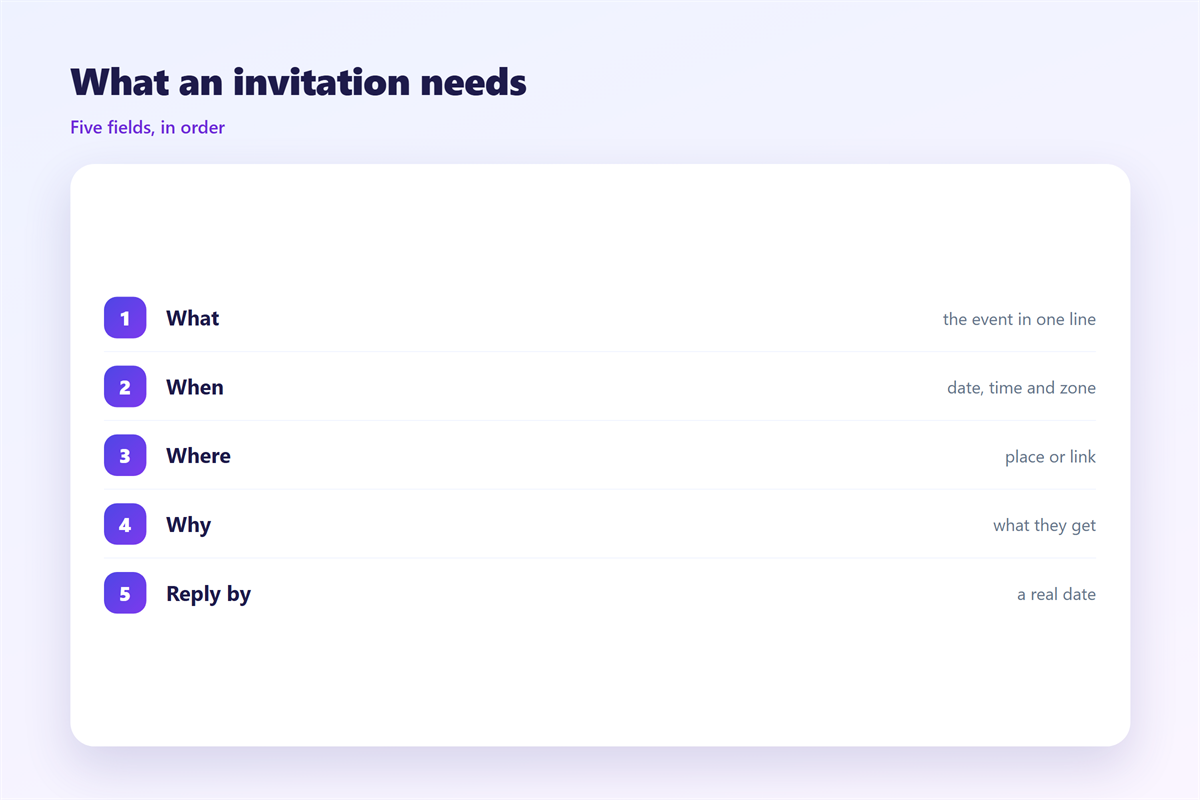
A good 邮件邀请函 answers four questions fast. What is it, when is it, where is it, and why me?
If any of those is missing, the reader hesitates. Hesitation is how invitations get ignored.
Keep the opening to three short lines. Save the background for later.
Write the subject before the body. That order forces you to name the event clearly.
A 邮件邀请函 with a vague subject reads like a newsletter. It will be deleted unread.
Write the invitation in your own voice. Borrowed wording rarely sounds sincere.
Read the note aloud before you send it. Awkward phrasing is easier to hear than to see.
Writing the 邮件邀请函 body
The body adds detail without repeating the headline. One short paragraph is usually enough.
State the purpose in a sentence. A launch, a dinner, or a review all need a clear reason.
Then give the practical facts. Time, place, duration and dress code belong together.
Say what you want the reader to do. Accept, decline, or reply with a preference.
A 邮件邀请函 should never hide the next step. Make the action impossible to miss.
Close with a warm human line. A simple “hope to see you there” beats a stiff sign-off.
Do not cram six paragraphs into the body. Long invitations feel like obligations.
If you need to explain a lot, attach a note. The 邮件邀请函 stays short either way.
Match the format to the audience. A plain-text 邮件邀请函 feels personal, and formal events forgive it.
Timing and the calendar
Timing decides whether your note lands at a good moment.
Send the first invitation early. Two to four weeks ahead suits most meetings and dinners.
For a large event, six weeks gives people room to plan.
A save-the-date note helps for big events. It costs nothing and gives people a heads-up.
Always offer a calendar invite when a time is fixed. People accept what they can save.
Without a calendar entry, the date lives only in memory. Memory loses to a busy week.
Time zones trip up remote guests. Write the time with the zone, not just the hour.
A reminder a day before helps too. It is a courtesy, not a nag.
Send it once and keep it short. Repeated reminders start to feel like pressure.
Offer two times when you can. A choice feels lighter than a single fixed slot.
Name the venue clearly. “The office” means little to someone who visits rarely.
邮件邀请函 wording that people accept
Word choice sets the tone of the whole note. Warm language earns more yeses than cold distance.
Use the person’s name. A 邮件邀请函 addressed to no one feels like a mailshot.
Explain why this person matters. A specific reason beats a generic flattering line.
Avoid pressure words like “final” and “urgent”. They make a friendly ask feel like a demand.
Give a clear but soft deadline. “Please reply by Friday” is honest and easy to answer.
Offer an easy way out too. People accept faster when they can decline without guilt.
A 邮件邀请函 that respects the reader gets a faster answer.
Keep the reading level low. Short words travel well across languages and cultures.
Ask for a reply even if the answer is no. A clear no is more useful than silence.
Following up on a 邮件邀请函
Silence is normal and rarely personal. A follow-up is part of the process.
Wait two or three days before you nudge. Same-day chasing reads as anxious.
Reply in the same thread. Your 邮件邀请函 stays visible, so no one has to search.
Keep the nudge to two lines. Restate the date and ask if it still works.
Give a real reason to answer. “I need numbers for the table” is a good one.
Stop after two nudges. A third turns a 邮件邀请函 into a chore.
Track who replied and who did not. A simple list prevents repeat messages.
Keep the same subject line in your reply. Threading keeps the whole exchange together.
Keep a simple guest list. It turns follow-ups into a quick glance.
If someone declines, thank them. The relationship outlasts this single event.
Quietly note the reason people decline. Patterns often point to a change in timing.
Our guide to 邮件日历邀请 covers the meeting that never appears. Reuse is handled in 邮件模板, and tone sits in 邮件礼仪. The plain-text choice is explained under 邮件格式.
FAQ
How long should a 邮件邀请函 be?
One screen at most. Four short paragraphs cover nearly every event.
Should every invitation include a calendar file?
Yes when a time is fixed. It removes a whole round of back-and-forth.
When should I send a reminder?
About a day before the event. One reminder is enough for most guests.
What if nobody replies?
Send one clear nudge with a deadline. Then plan as if silence means no.
References
- IETF RFC 5545: iCalendar
- IETF RFC 5322: Internet Message Format
- Google Calendar Help: Create an event
评论
还没有评论,来说两句吧。
评论功能已关闭。