 小影邮箱
邮件合同有效吗?When a Message Binds
Key Takeaways
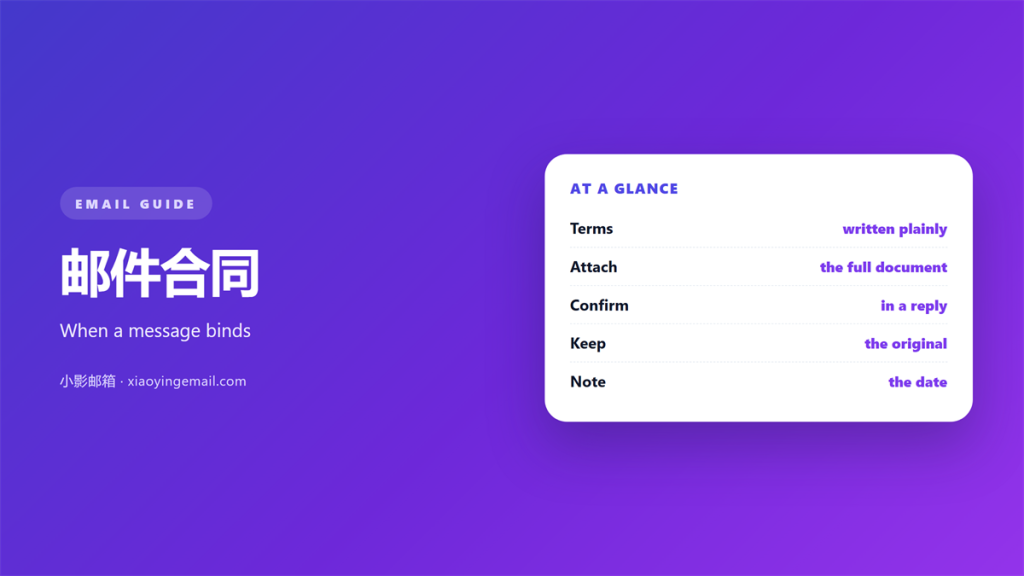
- 邮件合同 can bind when both sides agree in writing.
- Clear wording matters far more than legal jargon.
- Attach the terms instead of pasting them twice.
- Keep the whole thread as a single record.
- A signature block names who promised what.
What 邮件合同 means
邮件合同 is an agreement created and accepted through email.
It needs the same parts as any deal: an offer and an acceptance.
A price, a scope and a date usually appear somewhere in the thread.
When both sides accept those terms, the message can become binding.
Nothing about that idea is new, yet many people treat email as casual.
The casual feeling is exactly what causes trouble much later.
A quick reply such as sounds good can be read as a firm yes.
So write every promise as if a stranger might read it one day.
Plain sentences beat clever wording in this kind of record.
A clear 邮件合同 states the price, the deadline and the parties.
A written offer can come from either side of the deal.
The reply that accepts it does not need to be long or formal.
What matters is that the words say yes to specific terms.
An answer that only says thanks proves almost nothing at all.
Where 邮件合同 appears
The agreement rarely sits in one neat message from start to finish.
It grows across a chain of replies, quotes and small confirmations.
That chain is the real 邮件合同, even when nobody calls it that.
Buyers and sellers create one during almost every ordinary purchase.
Freelancers and clients do the same when they agree on a fee.
Internal teams use email to approve budgets and holidays alike.
The single message that closes the loop matters most of all.
It should repeat the final terms in one short paragraph.
That summary turns a scattered thread into a readable 邮件合同.
Both sides can then point to the same words in the same place.
- Parties: name the people and the companies.
- Deliverable: describe the work in plain words.
- Price: state the amount and the currency.
- Date: give a clear deadline for each side.
Those four lines form the backbone of a useful 邮件合同.
Quotes, purchase orders and delivery notes all feed the same record.
Each one adds a small fact that later supports the whole story.
When the facts line up, the deal is easy to describe.
When they do not, even an honest buyer looks careless.
Small orders matter as much as large ones in this habit.
A cheap purchase still deserves a clear written trail.
When 邮件合同 fails
Most disputes come from a gap in the record, not from bad intent.
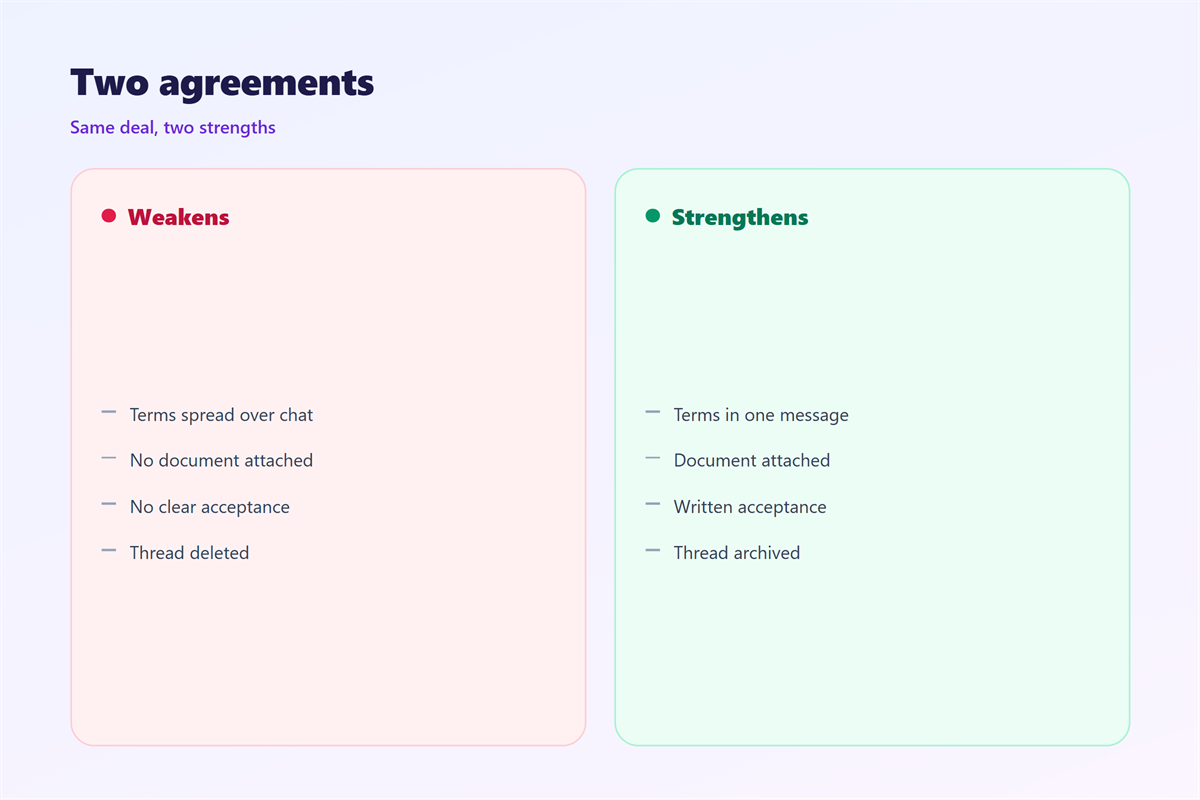
One side remembers a phone call that the other side never confirms.
A missing attachment is another very common cause of confusion.
Someone writes the terms will follow and then forgets to send them.
A vague 邮件合同 invites two honest people to disagree later.
Silence is the hardest problem of all to prove in a dispute.
If a person never replies, it is hard to show they accepted.
So ask directly for a yes and keep that answer safe.
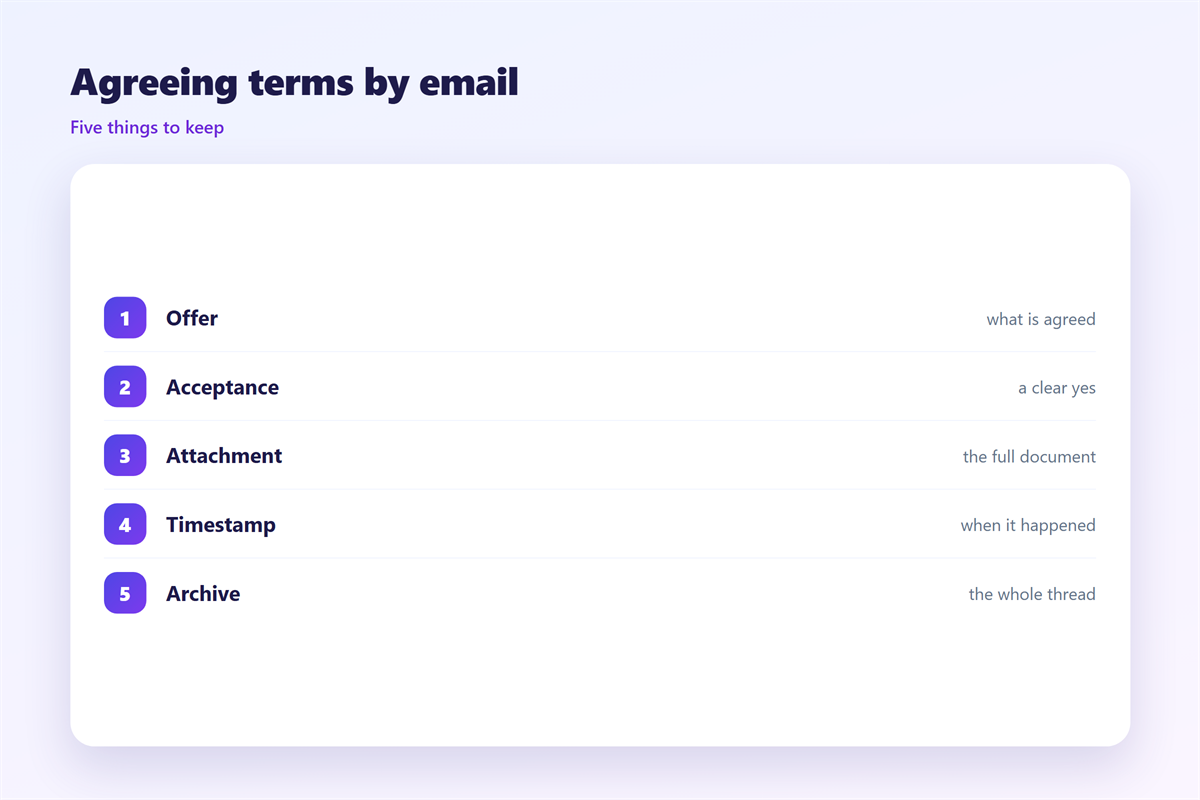
Changing a term late also weakens the whole agreement.
If a price moves, send a new summary and ask for a fresh yes.
Never rely on memory when the details start to shift.
A thread that splits into two subjects loses clarity fast.
Keep one deal in one thread, and start a new one for a new deal.
Old replies confuse new readers and hide the latest terms.
Testing your 邮件合同
You can check a draft agreement before you send it at all.
Read it once and ask whether a total stranger would understand.
Look for a clear offer, a clear price and a clear acceptance line.
Check that every attachment you mention is actually attached.
Then re read the subject line, because it carries the date.
Keep the 邮件合同 short enough to read on a phone.
A five minute review can prevent a long argument later.
Store the final thread in one folder you can find again.
Read the draft aloud and listen for any phrase that sounds soft.
Replace soft words with numbers, dates and names.
A reader should never have to ask what you actually meant.
Keeping proof of a 邮件合同
A record is only useful if you can produce it on demand.
Save the whole thread, not just the last happy message.
Export important messages so a provider change cannot erase them.
Back up the files before the account is closed for good.
Write a short note beside the folder that explains the deal.
Our notes on 邮件法律效力 explain what a record can prove. The files that matter are listed under 邮件附件. Long term storage is covered in 邮件归档, and the closing block sits under 邮件签名.
Keep the 邮件合同 tidy and it will answer most questions later.
A dated summary at the top saves hours of searching.
Two copies in two places protect the deal from a simple accident.
Name files with the date first so the order is obvious.
A simple naming rule saves minutes on every future search.
FAQ
Is a plain reply enough for 邮件合同?
Often it is. A short written yes can show acceptance. Vague praise does not count as agreement.
Do I need a lawyer to write one?
Not for simple deals. Clear words matter more. Ask for help when the amounts grow large.
What if the other side denies the deal?
Show the full thread. Dates and replies build the record. A saved copy is far stronger than memory.
Should I paste the terms or attach them?
Attach them and name the file in the message. That keeps the 邮件合同 readable and stops silent edits.
评论
还没有评论,来说两句吧。
评论功能已关闭。