 小影邮箱
邮件成交怎么做?Closing a Deal by Mail
Key Takeaways
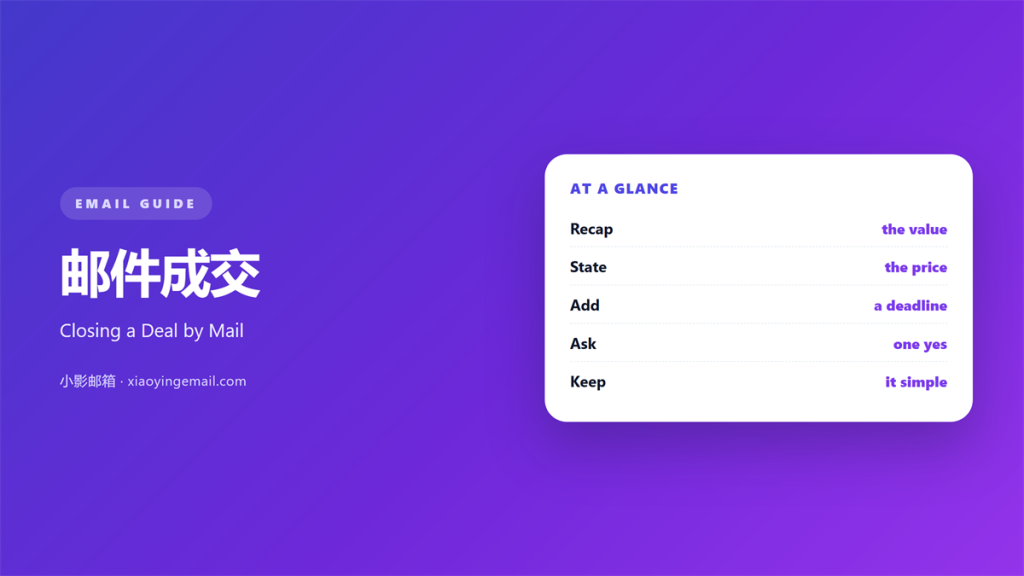
- 邮件成交 means closing a sale through email.
- Recap the value before you ask.
- Give one clear price and the terms.
- Ask for one simple yes.
- Then make the next step easy.
What 邮件成交 means
邮件成交 is closing a deal by email.
The buyer has shown real interest.
The talk has moved to terms.
Your note seals the agreement.
It repeats the value briefly.
It states the price plainly.
It asks for a clear decision.
Then it names the next step.
A signed reply can be enough.
Some deals need a formal contract.
Either way, the email marks the turn.
So write it with care.
A clear note also calms the buyer.
It shows you know your own offer.
It also repeats the delivery date.
That date removes the last doubt.
It closes with one clear question.
Why 邮件成交 matters
A deal can stall at the last step.
A vague note lets it drift.
A clear one moves it forward.
Buyers want to feel safe.
Clear terms reduce their doubt.
Email also gives them time to think.
That is a strength, not a weakness.
It lets them check the numbers.
Then they reply with a calm yes.
A pushy note does the opposite.
It makes the buyer slow down.
So 邮件成交 rewards patience.
A steady tone builds real trust.
Trust is what closes the deal.
A rushed buyer often regrets the yes.
A calm buyer stays a customer.
Value first, price second
Remind them what they gain.
Then state the cost.
That order feels natural.
Price alone can shock.
When 邮件成交 helps
A written offer helps both sides.
Each party can read it twice.
The terms stay in one place.
There is less room for confusion.
It also creates a clear record.
That record helps if a dispute starts.
A calm close also builds trust.
The buyer feels respected.
They are more likely to return.
So the note does two jobs.
It closes this deal.
And it opens the next one.
It also keeps the record tidy.
Each deal lives in one thread.
The one-question close
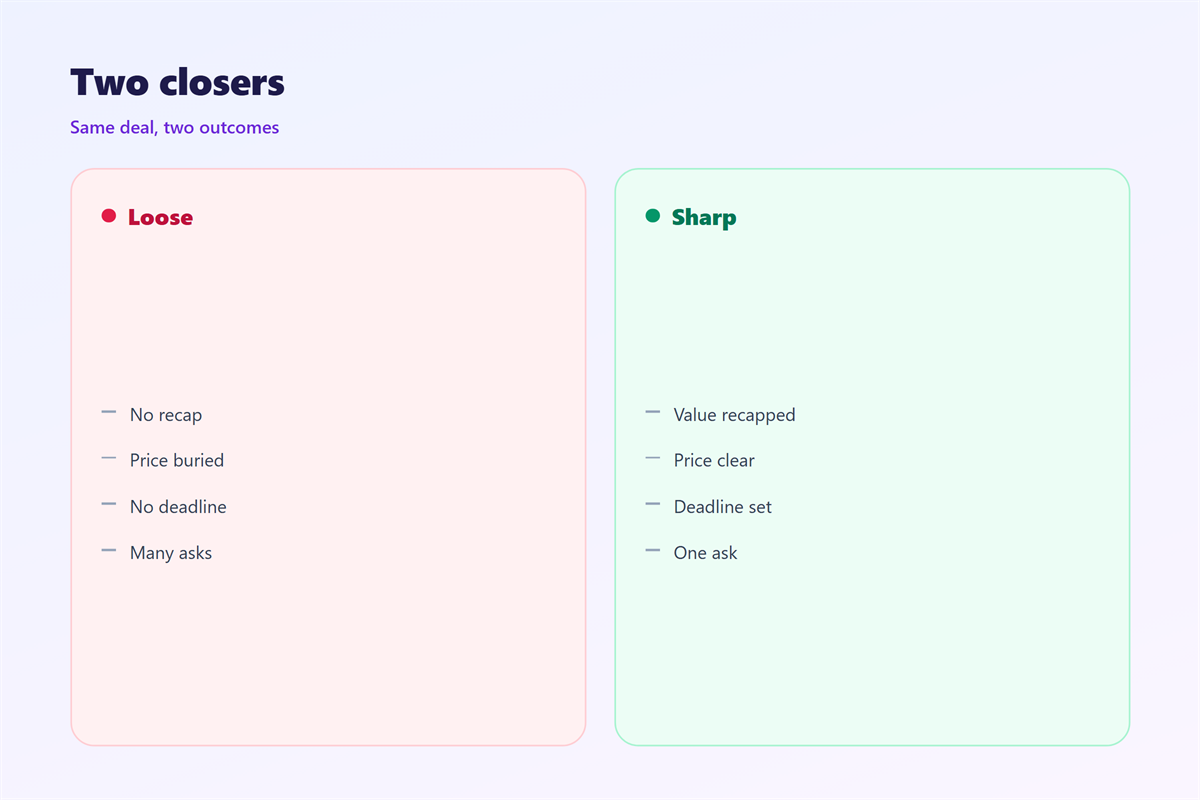
Ask one clear question.
Offer a simple start date.
One question is easy to answer.
Many questions stall the deal.
When 邮件成交 hurts
A rushed close can lose a deal.
Errors in the price break trust.
A missing date creates doubt.
So check every figure twice.
Pressure also hurts.
Fake deadlines are easy to spot.
Once spotted, they end the talk.
Silence hurts too.
A slow reply lets interest cool.
Then the buyer looks elsewhere.
So answer questions within a day.
Speed plus care wins deals.
Never guess at a number.
Say you will confirm it instead.
A wrong number costs the deal.
A right one wins the room.
The quiet-week rule
If a reply is slow, wait a week.
One gentle nudge is fine.
Then wait again.
Do not chase every day.
邮件成交 in practice
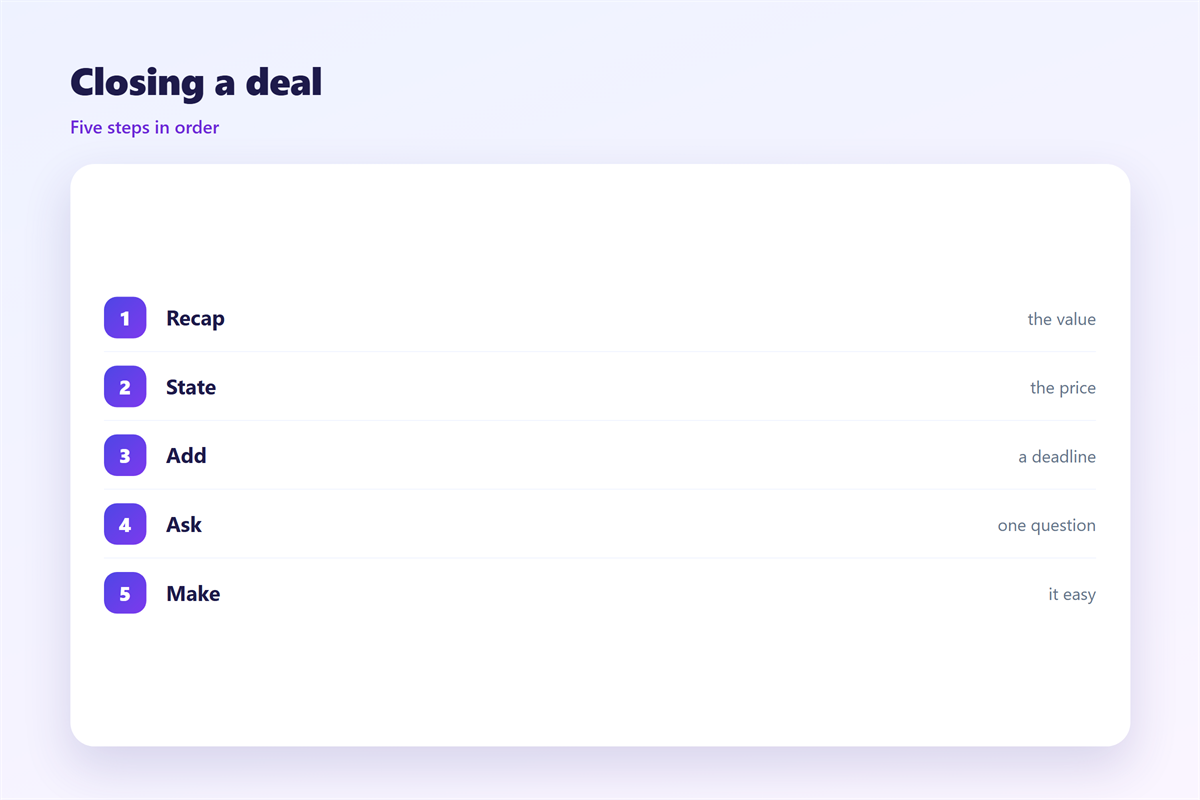
Start with a short recap.
Name the item and the quantity.
Repeat the promise you made.
Then give the price clearly.
Add what is included.
Add what is not included.
State the delivery date.
Then ask for a simple yes.
Offer to send the paperwork.
Make the reply easy.
One line is enough from them.
Then confirm the deal back.
Send the confirmation the same day.
That step prevents later doubt.
Then re-read the whole note.
Check the name and the amount.
Then press send.
How to set 邮件成交
Build a closing template.
Keep the recap to three lines.
Put the price on its own line.
Add the date and the terms.
Then add a single question.
Check the tone for pressure.
Replace any word that pushes.
Read it as the buyer would.
Then send it at a calm hour.
A morning note often works well.
Keep a copy in the deal file.
邮件成交 follows a clear pattern.
Value, price, step, question.
That pattern is easy to repeat.
Repeat it and the close gets easier.
Then track which line works.
Keep the closes that get a yes.
Cut the ones that stall.
邮件成交 and the buyer
The buyer may need to ask a colleague.
Give them what they need to do that.
A short summary helps.
A clear price helps more.
Do not hide the small costs.
Surprises end deals.
Answer every question fully.
Then ask for the decision again.
Keep the same thread throughout.
The history stays in one place.
That makes the final yes easier.
A tidy thread closes faster.
Then confirm the deal in writing.
A short recap of the terms helps.
It ends any doubt about the price.
Keeping 邮件成交 clean
A clear process closes more deals.
The quote you send first appears in 邮件报价.
The first price question you receive sits in 邮件询价.
The binding wording that may follow is covered in 邮件合同.
The opening note that starts the talk appears in 邮件开发信.
Review one lost deal each month.
Then fix the weakest line you find.
Ask why the buyer walked away.
One honest answer teaches a lot.
Then write the lesson down.
A steady 邮件成交 process wins more yeses.
FAQ
When is 邮件成交 the right choice?
When the buyer is interested but the talk has stalled.
Should I offer a discount to close?
Only if the value still holds after the cut.
How many follow-ups does 邮件成交 need?
Usually one or two calm reminders are enough.
Can a simple email close a deal?
Yes, if the terms are clear and the reply confirms them.
References
- W3C WAI: Content structure and readability
- Litmus: Email marketing guides
- Nielsen Norman Group: Email usability research
评论
还没有评论,来说两句吧。
评论功能已关闭。