 小影邮箱
邮件退货怎么沟通?Replies That Resolve
Key Takeaways
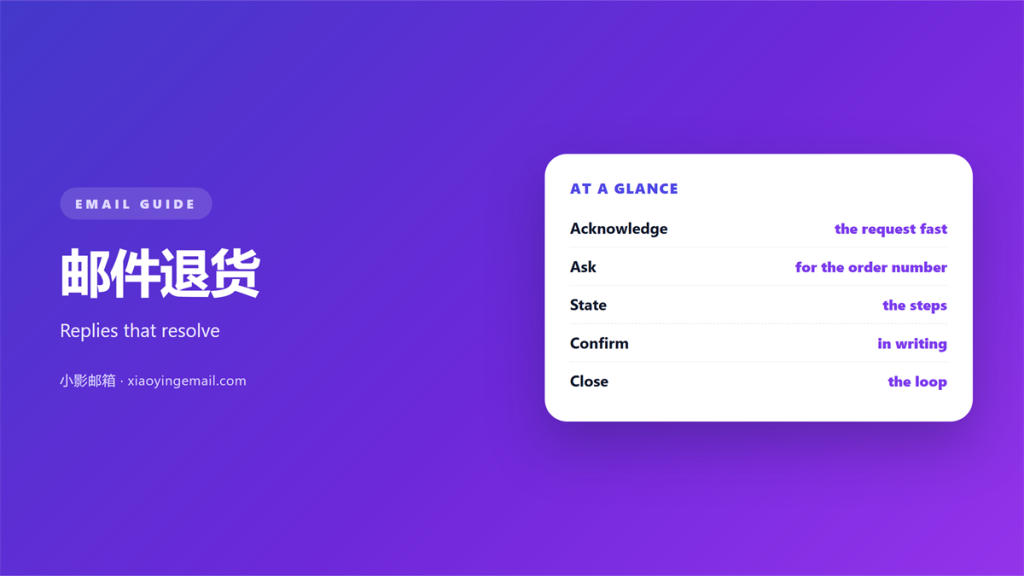
- 邮件退货 starts with a clear and calm first reply.
- Ask what went wrong before you promise anything.
- A return number keeps every case separate.
- Confirm the refund date in writing.
- A short paper trail prevents disputes later.
What 邮件退货 really means
邮件退货 is the exchange that follows a return request.
It begins when a buyer wants to send goods back.
The message states the order and the reason.
The seller answers with steps and a timeline.
Both sides then follow the same plan.
The tone matters as much as the steps.
An angry first reply makes everything harder.
A calm one keeps the customer talking.
邮件退货 is not only about money.
It is also about trust and future business.
A good process turns a return into loyalty.
A bad one ends the relationship for good.
A patient 邮件退货 protects that relationship.
So treat each return as a small project.
Give it an owner and a deadline.
Then the case cannot drift for weeks.
A written policy helps everyone stay fair.
It tells the buyer what to expect.
It also protects the seller from unfair demands.
Post that policy where buyers can read it.
Then fewer messages are needed at the start.
A clear promise is easier to keep than a vague one.
Where 邮件退货 goes wrong
Most problems start with a vague request.
The buyer says it broke and nothing more.
The seller guesses and sends the wrong form.
Two more messages are wasted on the gap.
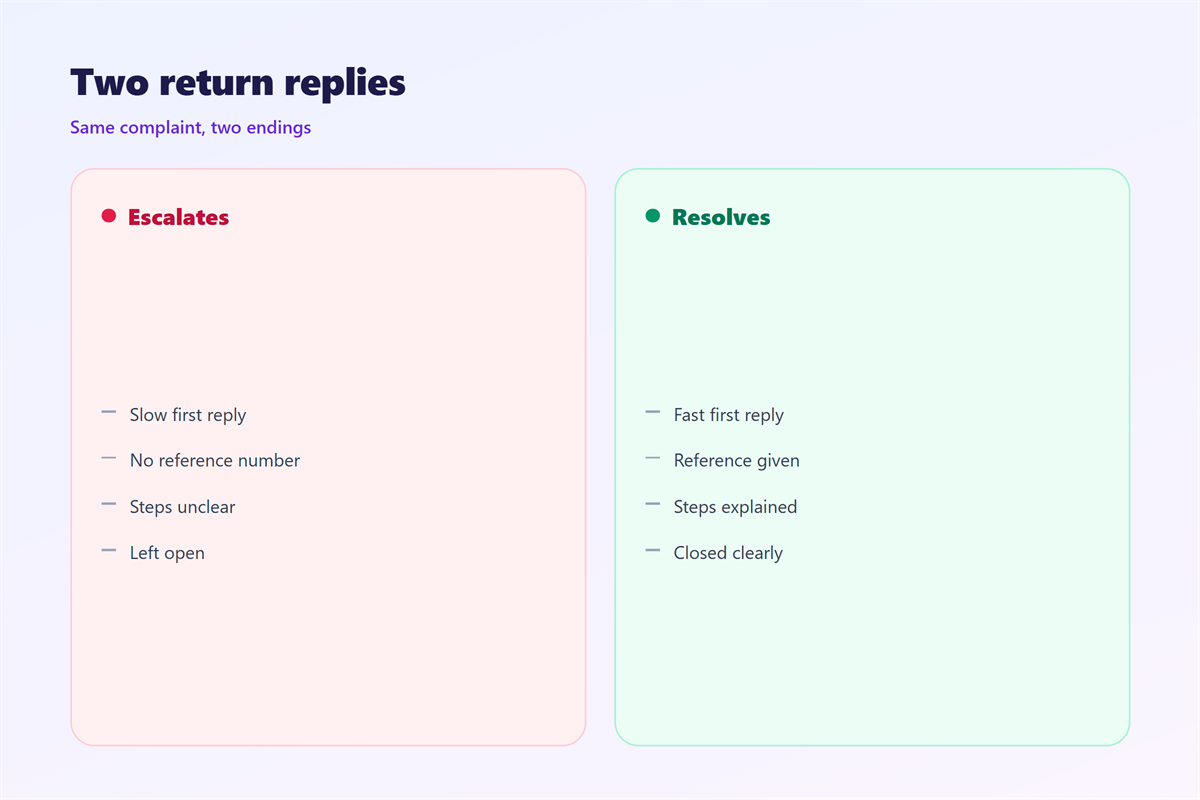
邮件退货 also fails when nobody replies fast.
A return request left overnight feels ignored.
The customer then writes a public review.
Speed is the cheapest fix here.
Set an internal rule for the first answer.
A reply within one working day is fair.
Even a holding note helps the customer wait.
Silence never reads as good news.
Train the first responder with a simple script.
The script should list the three key questions.
It should also allow a friendly, human tone.
A rigid script sounds cold and robotic.
So keep it short and let people adapt it.
A slow 邮件退货 costs more than a fast refund.
Making 邮件退货 easy for the customer
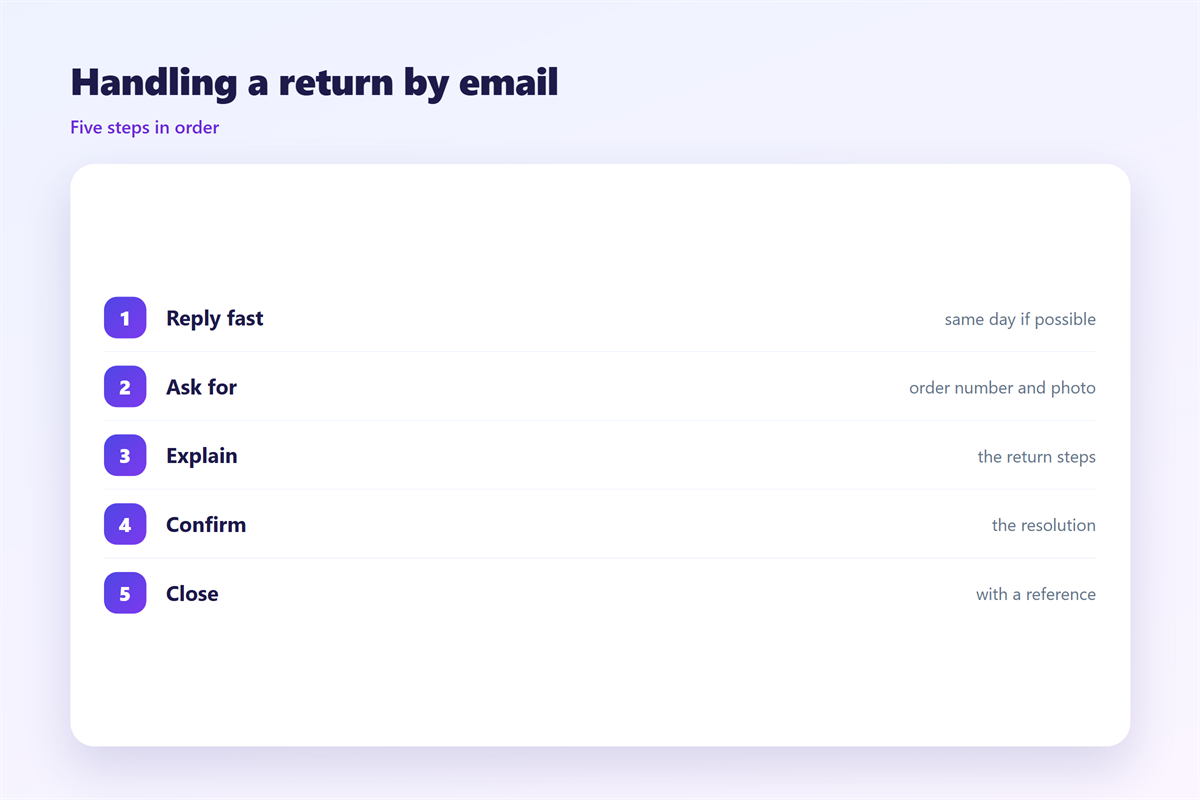
Put the return steps in one short message.
Number each step so nothing is missed.
Ask for the order number and the reason.
Request a photo if the damage is visible.
The list below keeps the message tidy.
- Order number: find the purchase fast.
- Reason: explain what went wrong.
- Photo: show the damage clearly.
- Preference: refund or replacement.
- Address: confirm where to collect.
Every 邮件退货 form should stay short.
A clear 邮件退货 reply saves two later emails.
The customer knows exactly what to send.
You know exactly what to expect.
That symmetry keeps the case short.
Offer one clear way to send the parcel back.
Too many options create more confusion.
Include a prepaid label when the fault is yours.
That single gesture ends most arguments.
Tracking a 邮件退货 request
Give every return a simple case number.
Put the number in the subject line.
Then both sides can find the thread fast.
Log the date you received the request.
Log the date you answered it.
A simple table is enough for a small shop.
Larger teams may need a shared inbox.
A tracker turns scattered messages into a queue.
A tracked 邮件退货 is a calm one.
Nothing gets lost between two agents.
The customer stops repeating the same story.
That alone removes most of the frustration.
The best 邮件退货 systems feel invisible to the buyer.
Check the queue once every morning.
Close the cases that are already finished.
Set a target time for each stage of the case.
For example, answer within a single day.
Then decide the outcome within three days.
Shared targets keep a whole team honest.
A queue with dates is easier to manage than memory.
Closing a 邮件退货 case
Closing well is as important as opening well.
Confirm the refund or replacement date.
Send that confirmation in writing.
Our notes on 自动回复 cover the first quick answer. Reusable wording sits in 邮件模板, and the files a customer sends are handled under 邮件附件. The record that proves the deal is described in 邮件确认.
Ask whether the customer is satisfied.
A one-line question invites honest feedback.
Then archive the thread for your records.
A closed 邮件退货 leaves a clean record.
Note any product problem you saw.
Patterns across returns point to a real fault.
A repeated fault is worth fixing upstream.
That is the quiet value of good records.
Review a few closed cases each month.
Look for the steps that took the longest.
Then remove one source of delay.
Small fixes compound over a busy year.
Small habits keep a return desk healthy all year.
A calm desk keeps customers calm too.
FAQ
How fast should I answer a 邮件退货 request?
One working day is a good target. Even a short holding note counts. The customer mainly wants to know you heard them.
Do I need a return number?
It helps more than it costs. A short number keeps cases apart. Then two returns never mix their details.
Should I offer a refund or a replacement?
Ask the customer which they prefer. A replacement often ends the case faster. A refund is simpler when trust is already lost.
What if the customer is angry?
Stay calm and answer the facts. Acknowledge the problem in one line. Then move straight to the next step.
References
- IETF RFC 5322: Internet Message Format
- Google: Send or unsend Gmail messages
- FTC: CAN-SPAM Act compliance guide
评论
还没有评论,来说两句吧。
评论功能已关闭。