 小影邮箱
邮件会签怎么做?Who Agreed and When
Key Takeaways
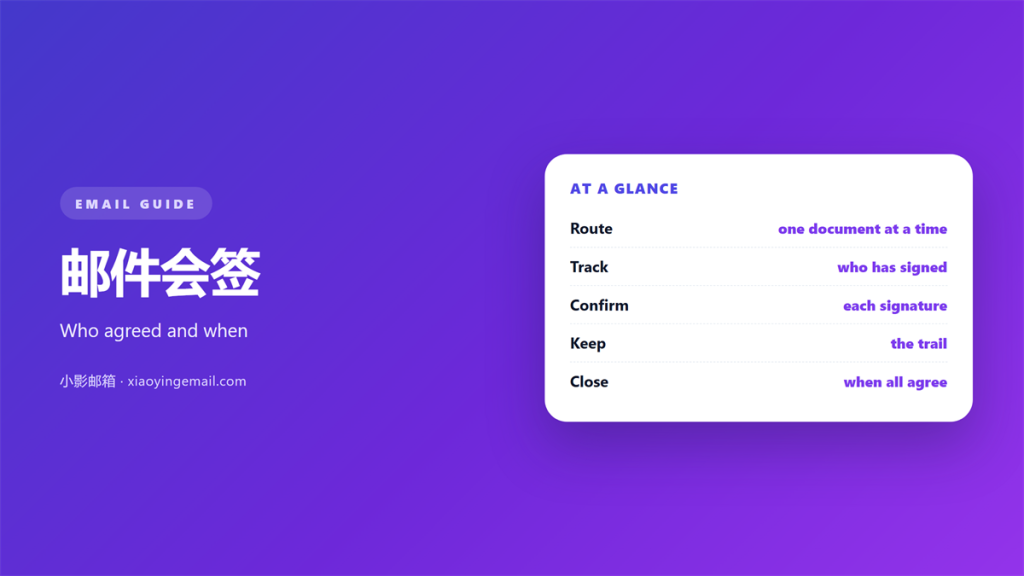
- 邮件会签 collects approvals inside one mail thread.
- State the exact decision people must approve.
- Route the document in a fixed order.
- Ask for a clear yes, no or question.
- Keep the whole trail in one place.
What 邮件会签 means
邮件会签 is a way to collect several approvals by email.
A document travels from one person to the next until all have signed.
Each reader adds a short reply that records agreement or a concern.
The word comes from paper forms and the old routing slip.
Email simply replaces the envelope that carried the file.
The result is a simple chain of named approvals.
Anyone can read the chain from start to finish.
That clarity is the whole point of 邮件会签.
It fits a contract, a budget line or a policy change.
A simple 邮件会签 needs only a mailbox and a deadline.
You do not need a special platform to begin.
Keep the request on one topic from start to end.
A mixed request confuses the signer and slows everyone down.
Why 邮件会签 matters
A decision made in a meeting often leaves no trace.
A 邮件会签 leaves a clear record with names and dates.
It also lets quiet people review a document before they answer.
That extra time improves the quality of the decision.
When someone asks who approved a change, the thread answers.
A written 邮件会签 also protects the person who signs.
Each name on the list shares the decision.
Fewer misunderstandings
People often agree to different things in a live room.
A written request removes that guesswork.
Everyone reads the same words before they sign.
Speed without a meeting
Reviewers sign when they have a free moment.
The document moves without another calendar invite.
Slow reviewers no longer hold the whole room.
A trail that lasts
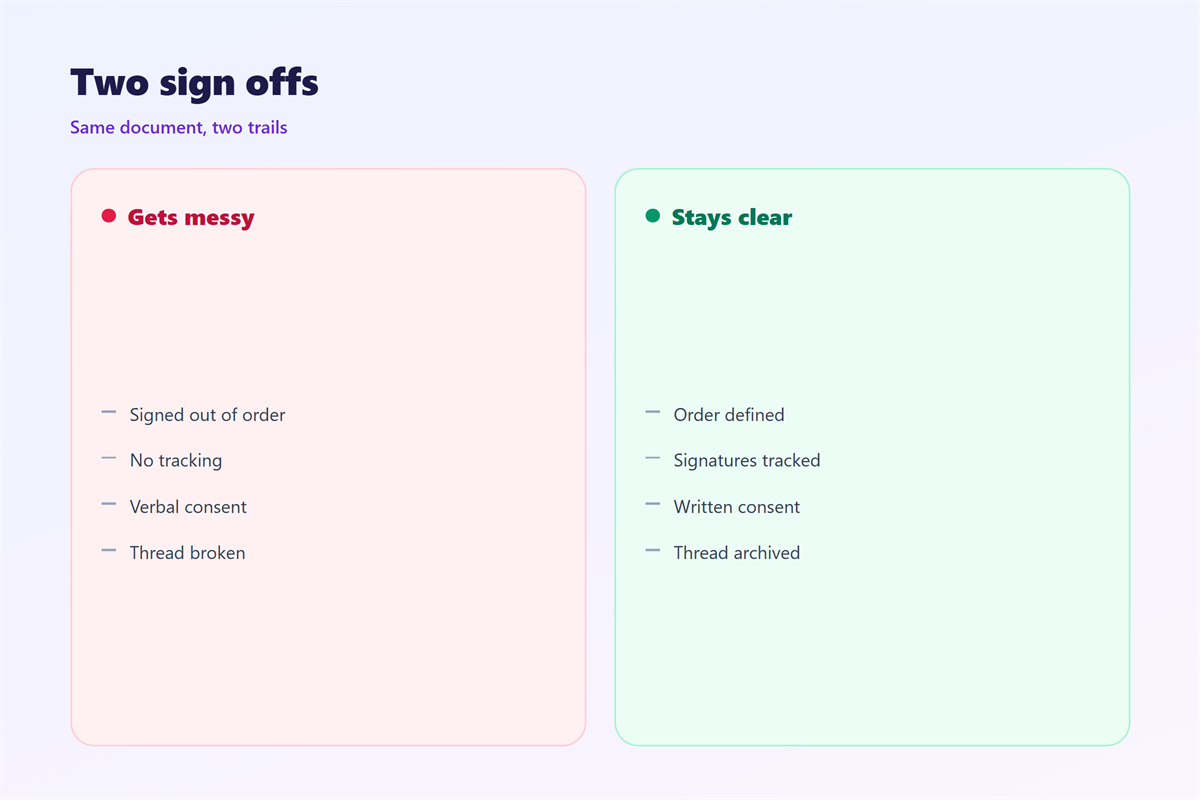
The thread keeps its order and its timestamps.
Months later, the record still stands.
A tidy trail also helps any later audit.
A clear subject makes old threads easy to find.
How to start 邮件会签
Begin with one clear question per document.
Write what you want approved in a single line.
Attach the file or link to one stable copy.
Name the deadline in the first paragraph.
Say exactly what each person must do to sign.
Do not bury the request under a long history.
Keep the opening short and polite.
A long first message scares off busy readers.
Explain why the change matters in two lines.
Order of signatures
Send the request to the first signer only.
That person forwards it once they agree.
A fixed order stops two people signing at once.
A clear subject line
Use a subject that names the document and the action.
Add the word “sign” so the mail stands out.
Handling a rejection
A no is useful, not a failure.
Ask the reader to state the reason in one line.
Then fix the point and restart the chain.
Keep the 邮件会签 trail
The trail is the value of the whole process.
Reply within the same thread so the order survives.
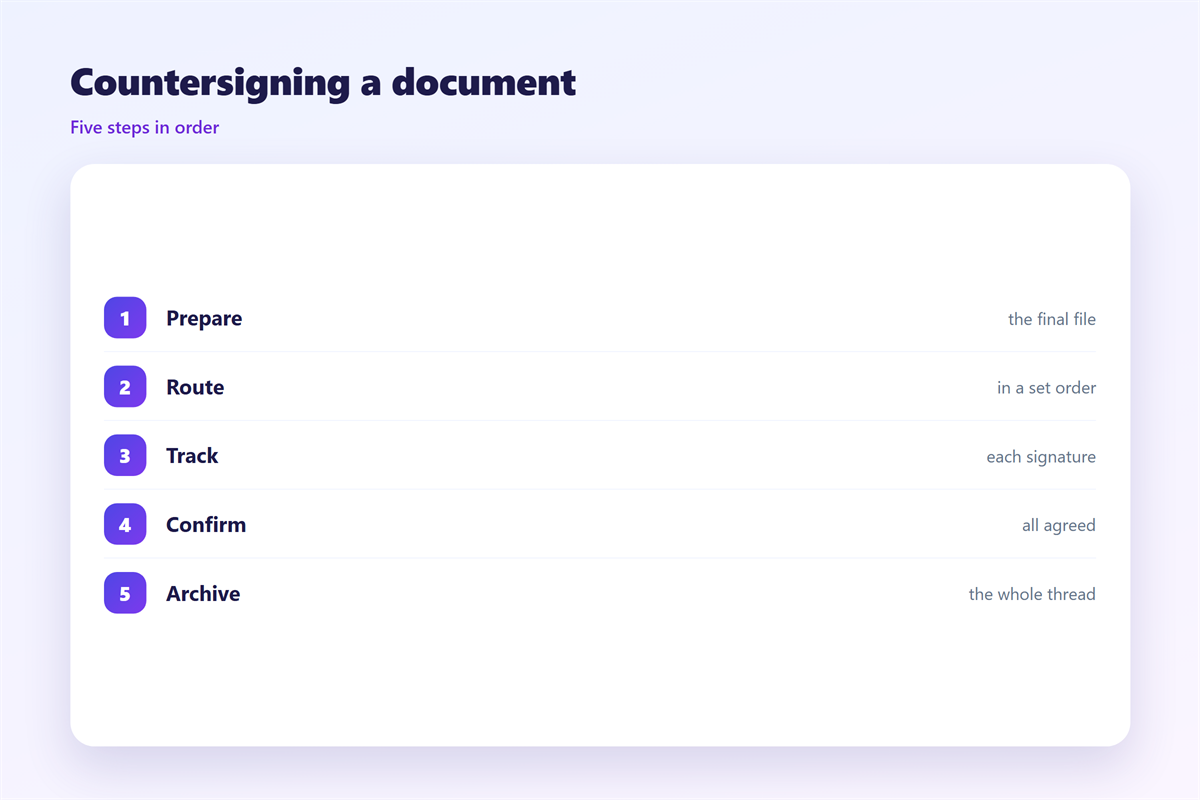
Avoid side chats that break the chain.
Name the file with a date and a version number.
Store the final thread in a shared archive.
Add the latest copy when a version changes.
Old versions confuse a reader who joins late.
That folder becomes your proof of 邮件会签.
Keep the naming rule the same across the team.
邮件会签 examples
A budget request is a common case.
The owner signs first and the finance lead signs last.
A policy change works the same way.
Legal reviews the wording before the manager agrees.
Even a simple purchase can use a short chain.
Two signers are enough for small amounts.
Match the number of signers to the risk.
A larger sum deserves a longer chain.
Write the order down so nobody guesses.
Common mistakes
The first mistake is sending to everyone at once.
Parallel requests create gaps in the order.
The second is a vague ask. “Looks fine?” invites a shrug.
The third is losing the thread in a busy inbox.
Another 邮件会签 mistake is skipping the deadline.
Do not mix two documents in one request.
Do not accept a verbal yes as a signature.
Do not let the chain sit idle for a week.
Do not copy people who never need to sign.
A wide copy list slows every reply.
A missing subject line hides the request.
Following up on 邮件会签
A gentle nudge keeps the chain moving. Our notes on 邮件审批 cover the request itself. Match your sign off to the rest, as 邮件签名 explains. Record every yes with a short 邮件确认. The whole chain is a small 邮件工作流.
Wait two days before the first reminder.
Send the reminder to one person, not the whole list.
Close the thread with a short summary of the result.
Thank the signers. A small courtesy keeps the habit alive.
A second 邮件会签 reminder usually ends the silence.
FAQ
Who signs first?
Usually the person closest to the work signs first. The senior approver signs last. That order keeps small questions at the start.
Is 邮件会签 legally binding?
Often it can be, depending on your rules and region. Check your policy before you rely on it. Keep the policy note with the saved thread.
What if someone never replies?
Send one reminder, then move to a backup signer. Silence should not block a deadline forever.
Does 邮件会签 need a special tool?
No, a normal mailbox can do it. A dedicated tool simply adds tracking and reminders. Compare the cost with the time it saves.
评论
还没有评论,来说两句吧。
评论功能已关闭。