 小影邮箱
邮件预热域名怎么做?Start Slow, Send Safe
Key Takeaways
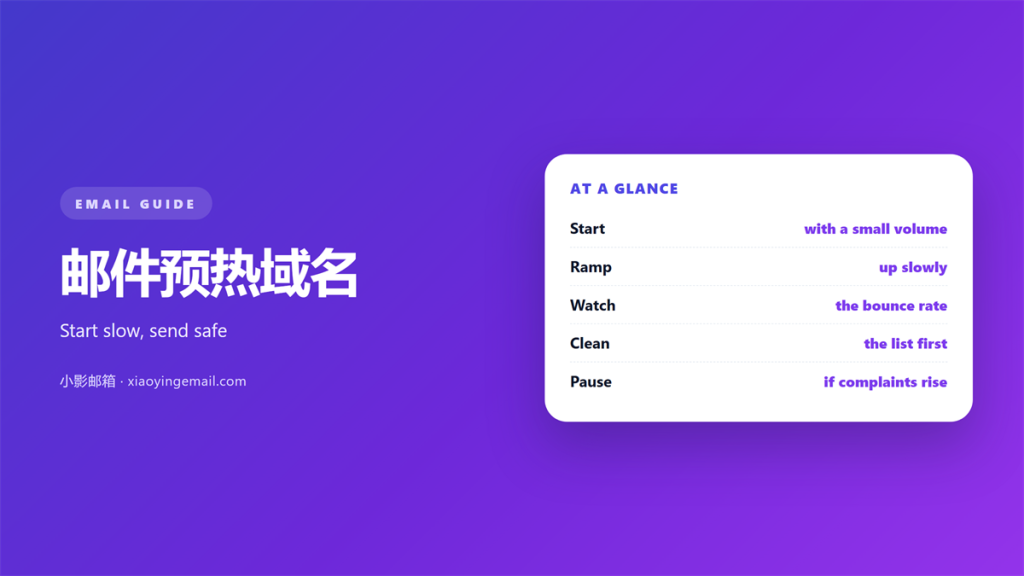
- 邮件预热域名 builds trust slowly, not overnight.
- Start with your most engaged contacts.
- Raise the volume in small daily steps.
- Watch bounces and spam complaints closely.
- Keep the ramp going for several weeks.
What 邮件预热域名 means
A 邮件预热域名 is the slow build of trust for a new sending domain.
Mailbox providers judge a domain by its past. A brand new one has no history.
So you start small and grow. Volume rises only as good signals appear.
It is not a trick to beat the filters. It is a patient, honest ramp.
A cold domain can land in spam even when the mail is clean. A 邮件预热域名 fixes that.
The idea is simple. Show steady, wanted mail until the provider trusts you.
A rushed launch risks months of damage. A slow one costs only time.
That trade is worth it. Delivered mail beats a big first send.
Think of it as earning a score, not flipping a switch.
Warm mail looks like the mail people already want. Similar content helps a lot.
Why 邮件预热域名 matters
A brand new domain has no reputation at all. That silence works against you.
Providers stay cautious until they see real engagement.
How 邮件预热域名 protect your name
A steady ramp keeps your complaint rate low. Low complaints protect the domain.
That shield matters before your first large campaign.
Bounces set the pace
A high bounce rate suggests a poor list. Clean data keeps the ramp on track.
Remove dead addresses before the next step up.
Complaints end the ramp
One angry click can slow weeks of work. Keep the send relevant to each group.
Relevance is the cheapest form of protection.
This work protects the whole brand, not just one campaign. A damaged domain is slow to repair.
How to warm up 邮件预热域名
Plan the ramp before the first send. A written schedule keeps you honest.
Start with your most engaged contacts. People who open your mail are the best first group.
Send a small batch on day one. A few hundred addresses is plenty.
Write 邮件预热域名 steps in plain numbers. Double the volume only when signals stay clean.
Spread the sends across the day. A steady trickle looks natural.
Keep content useful, not salesy. Early mail should feel wanted.
Watch the first hours closely. The earliest replies tell you the most.
Hold the next step if anything looks wrong. Pausing a day is cheaper than a repair.
Keep the schedule on a calendar. An unwatched ramp drifts and stalls.
Growing in phases gives you a clear target. Each phase has its own daily ceiling.
Daily limits matter more than total volume. A steady 邮件预热域名 beats one huge blast.
Measuring 邮件预热域名
邮件预热域名 work is only real if you measure it. Watch 邮件投递率 from the first send.
Track delivery, opens and bounces in one place. Keep the numbers side by side.
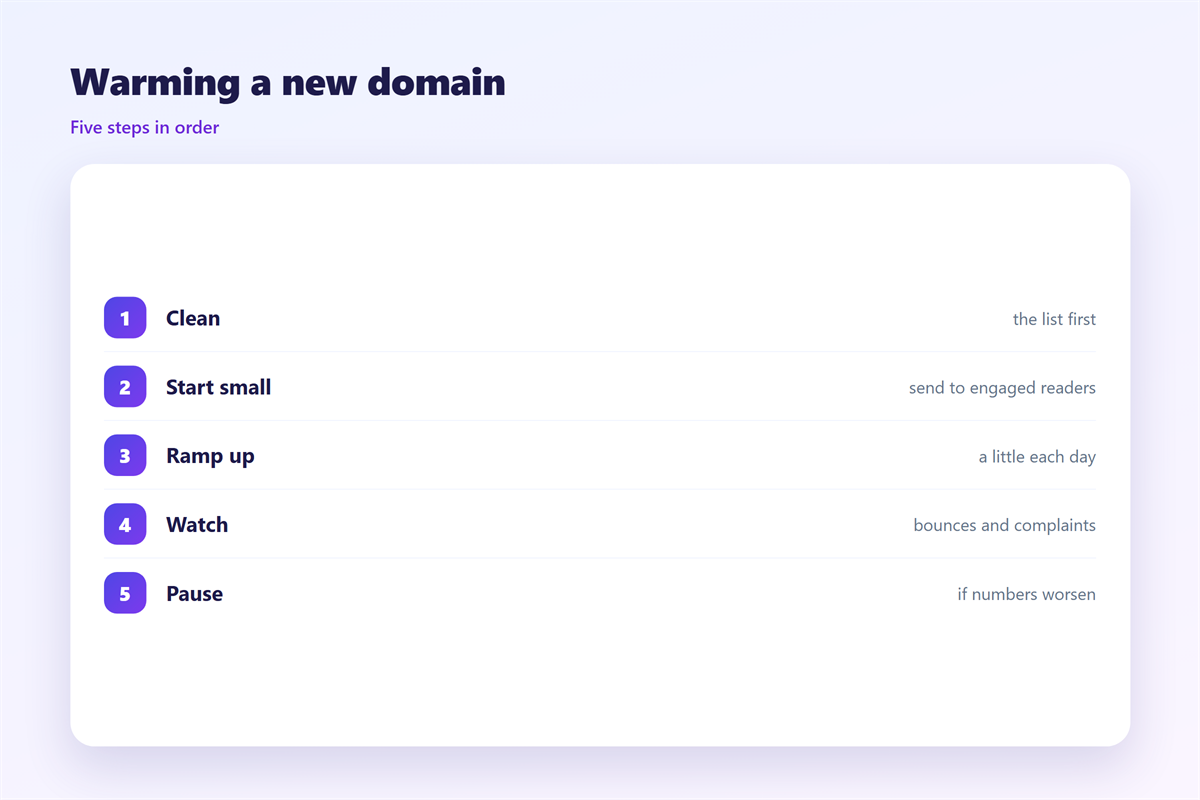
Compare each day with the last. A slow climb is a healthy sign.
Check where mail lands, not just whether it was sent. The inbox is the goal.
Keep a short log of every step. It shows the ramp really happened.
Note anything unusual the same day. Small clues vanish by the morning.
Review your 邮件信誉 signals each week. A slow drift is easier to fix early.
邮件预热域名 are not done in a day. Keep measuring long after the first month.
Common mistakes
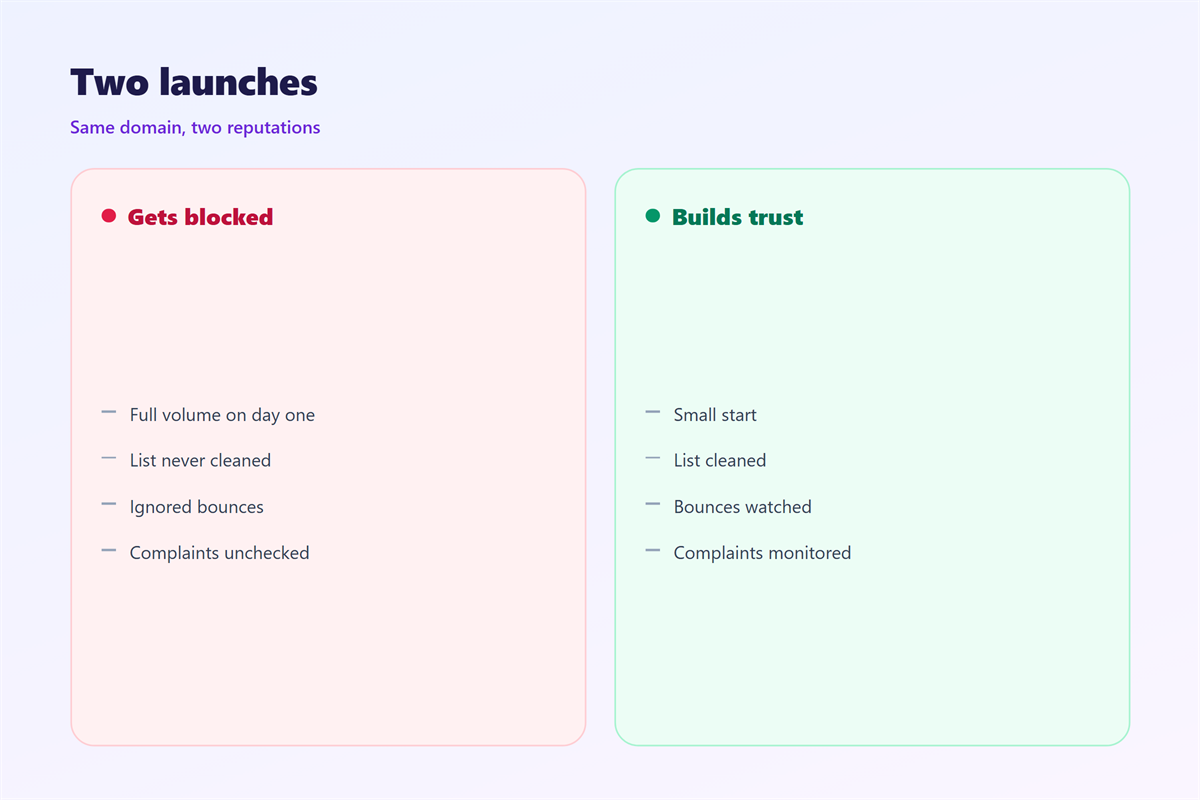
The first 邮件预热域名 mistake is speed. Full volume on day one burns a new domain.
The second is a bought list. Strangers rarely open your mail.
The third is ignoring bounces. Dead addresses drag the whole ramp down.
Another mistake is one big send instead of many small ones. Bursts look sudden.
Avoid the same content for every group. Relevance keeps complaints low.
Do not stop the ramp early. Trust fades when the sends simply stop.
Skip the urge to hide an unsubscribe link. Honest options protect the domain.
Do not ignore the first complaint. One quiet fix prevents a larger problem.
Finally, keep one plan across the team. Mixed schedules confuse the provider.
Mind the sending limits as well. A sudden jump can trip a provider rule.
Treat every complaint as a warning. Fixing the cause early saves the whole ramp.
Keeping the ramp steady
Keeping a 邮件预热域名 on track is mostly routine. Send, watch, then step up.
Watch your sending limits as volume grows. Stay well under the daily cap.
Ask new signups to confirm their address. Double opt-in keeps the list clean.
Keep a small set of engaged contacts for a slow week. They keep the signal warm.
Good habits keep a warm domain warm. Small, steady sends do the real work.
For related reading, see our guides on 邮件预热, 邮件投递率, 邮件信誉 and 邮件发送限制.
A patient ramp beats a fast one. Slow trust lasts far longer than a lucky first send.
Recheck the plan after any long pause. A domain can cool while you are away. Warm it again before a big campaign.
FAQ
How long does 邮件预热域名 take?
Most plans run four to six weeks. Slow ramps are safer than short ones.
Can I skip the warm up?
You can, but the risk is high. A cold domain may send your first mail to spam.
Does this apply to a subdomain?
Yes, each domain and subdomain earns its own trust. Start fresh for each new one.
What if the bounce rate jumps?
Pause the ramp and clean the list. Resume only when the numbers settle.
References
- Google Workspace: Sender guidelines
- IETF RFC 5321: Simple Mail Transfer Protocol
- IETF RFC 6376: DomainKeys Identified Mail
评论
还没有评论,来说两句吧。
评论功能已关闭。