 小影邮箱
邮件折叠怎么用?Tidy a Long Thread
Key Takeaways
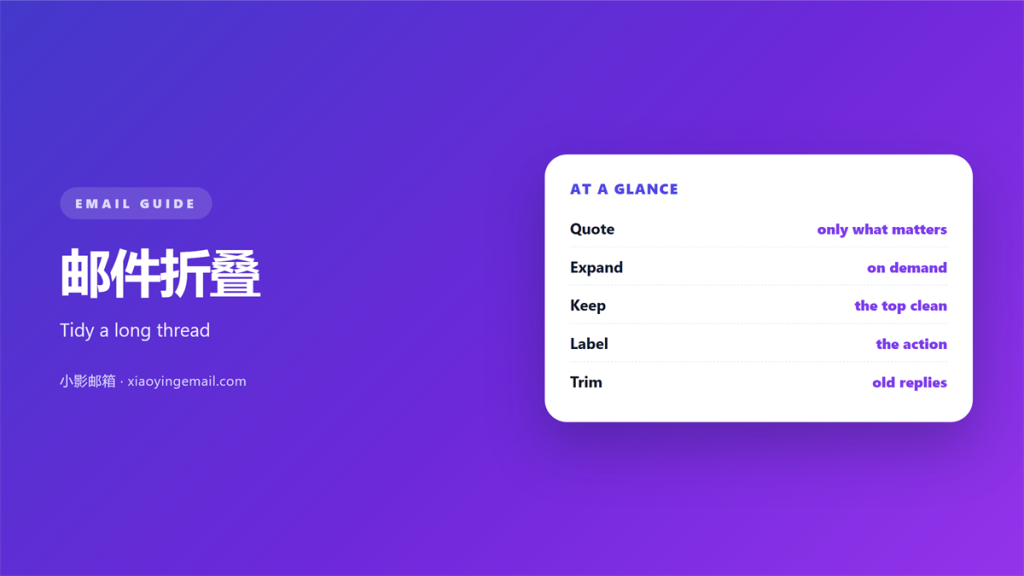
- 邮件折叠 hides old quoted text in a reply.
- A tidy thread keeps the new point in view.
- Most tools fold quotes automatically.
- Folding helps readers on small screens.
- A clean reply is easier to answer.
What 邮件折叠 really means
邮件折叠 is the way a mail app hides long quoted blocks.
The hidden part stays inside the message.
A small control, often a set of dots, reveals it again.
So the reader sees the new words first.
Nothing is lost in the process. The old text simply waits.
That small change makes a long thread readable.
Folding does not delete anything. It simply hides it for now.
A reader can open the full history whenever they wish.
That balance keeps context close without the clutter.
Small tools like this shape how a whole team writes.
Most people meet the feature before they know its name.
They see a tidy reply and wonder how it was done.
The answer is usually a single setting.
The feature works the same on a phone and a laptop.
It costs nothing and saves a little time each day.
Why 邮件折叠 helps
A long thread can run for many screens.
The useful line is often buried at the bottom.
Folding brings the newest text to the top.
Readers save time and miss fewer questions.
邮件折叠 also helps anyone reading on a small phone.
One long quote can push the real answer off the screen.
A reader may give up before they reach the question.
Folding keeps the ask and the reply side by side.
That simple habit saves time on every message.
A buried question often gets no reply at all.
So folding is really about being heard.
A clear thread respects everyone’s time.
A shorter thread is easier to search much later.
Small gains add up across a busy week.
Less to scroll
A short view keeps attention on the main point.
It also helps busy people answer faster.
Short views also make a reply easier to quote.
So the next person starts from a clean point.
How 邮件折叠 works in practice
Most clients fold a quoted reply by default.
You can also fold a block by hand.
Keep a short quote for context.
A little 邮件折叠 keeps the thread readable.
You can turn 邮件折叠 on in most settings.
Look for a small arrow beside the quoted block.
Many apps also fold a signature or a long list.
Test the setting on your own phone first.
Then share the trick with the team.
Every major client offers some form of it.
The name may differ, but the idea is the same.
Learn it once and it travels with you.
It also keeps a long chain from looking messy.
A neat reply invites a quick and clear answer.
Folding quoted text
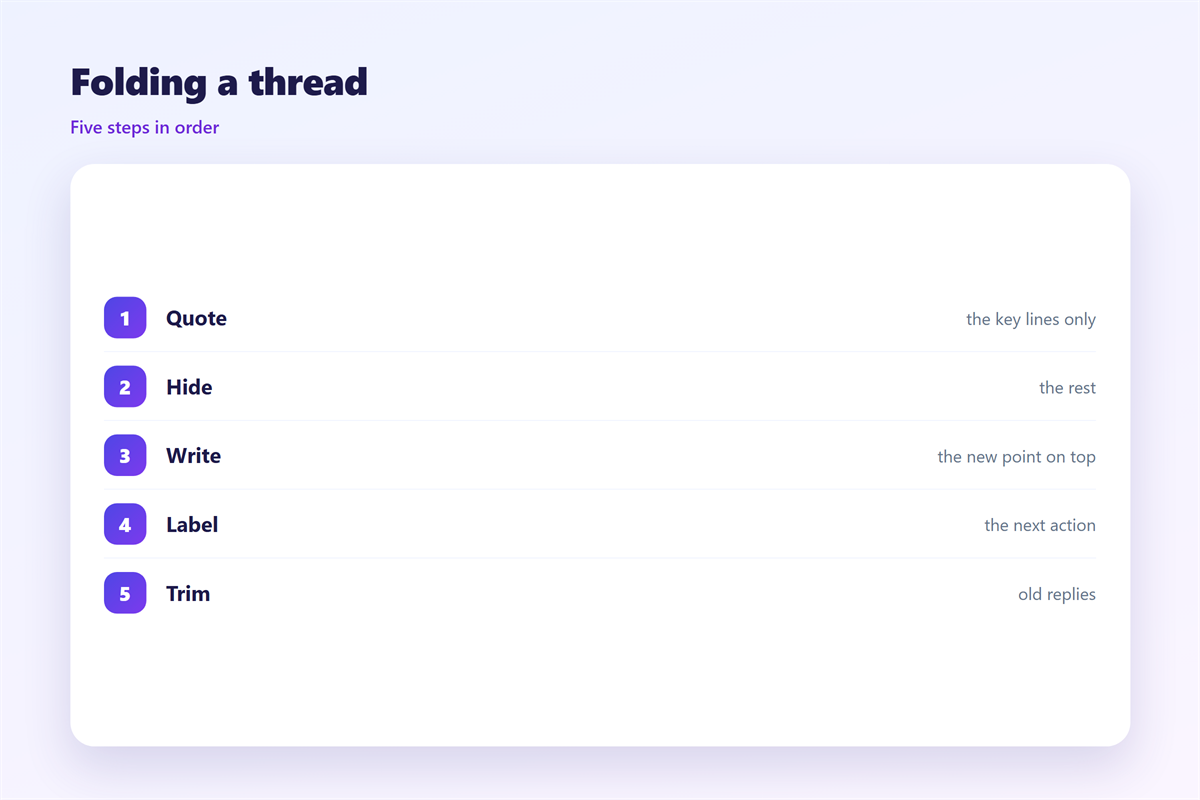
Keep one line of the original where it matters.
Cut the rest so the reply stays tight.
Pick the sentence you are answering.
Leave just that line above your reply.
The reader then sees why you said what you said.
Common mistakes with 邮件折叠
One mistake is folding your own new text.
Another is hiding a question that still needs an answer.
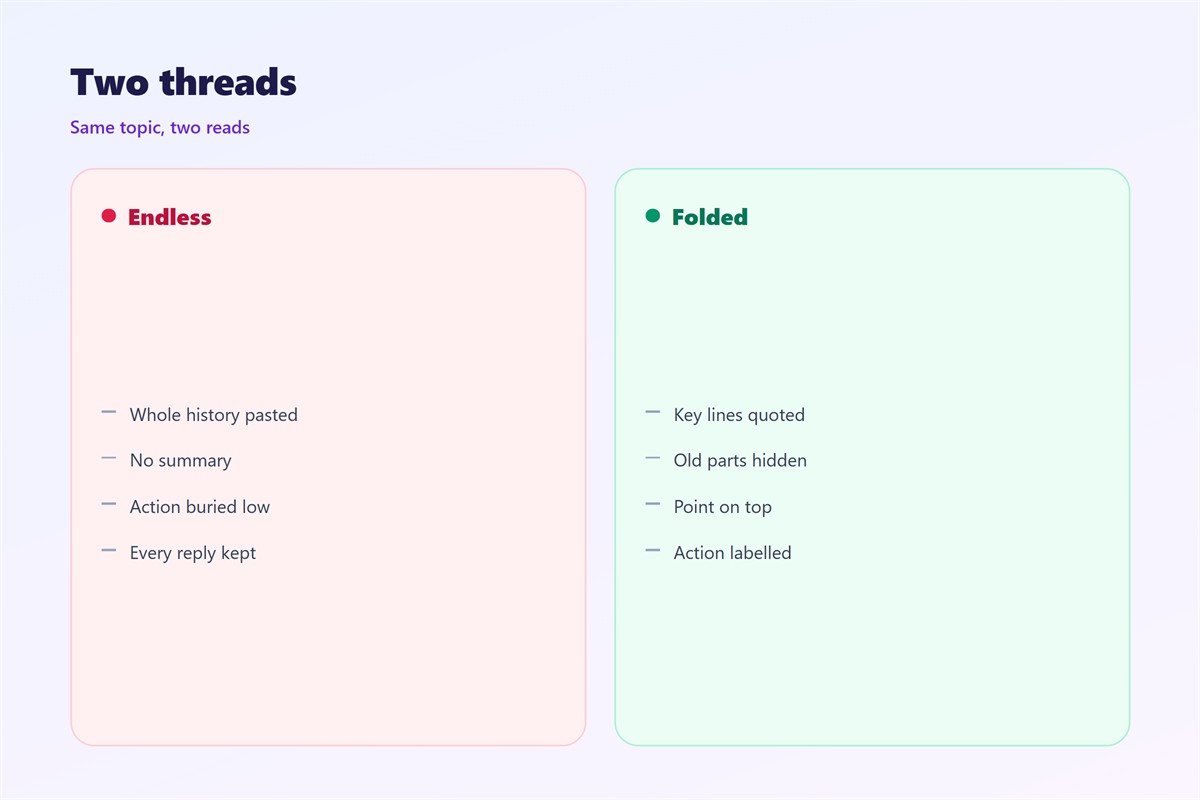
Some people quote a whole thread with no cut.
Poor 邮件折叠 can hide the very point you need.
Others fold text that someone still needs to read.
A hidden warning can cause a real mistake.
So fold old text, never a live instruction.
Read the folded part once before you send.
A tidy reply shows respect for the reader.
It also lowers the chance of a missed point.
A hidden line can lead to a wrong decision.
Habits for a tidy thread
Write the reply at the top of the message.
Quote only the lines you answer.
Change the subject when the topic shifts.
A steady 邮件折叠 habit keeps threads short.
Keep 邮件折叠 simple so others can follow.
Close the thread when the question is settled.
Keep the newest words at the very top.
Trim a quote until only the point remains.
Give the thread a clear and short subject.
Then fold the rest so the reply stays neat.
Good threads get answered faster.
That speed helps the whole team.
Keep the same style across the whole team.
Keeping 邮件折叠 steady day to day
Understand how a thread is grouped. The rules are explained in 邮件会话.
Show the list and the message together. That layout is described in 邮件阅读窗格.
Sort the flood before it grows. The method is covered in 邮件收件箱.
Reply with care about what you keep. The style is discussed in 邮件引用.
Then keep the routine small enough to last. Neat 邮件折叠 saves minutes every day.
Write the steps down so the team agrees.
Review the habit each season as tools change.
Train new staff on the same short steps.
A shared habit keeps every thread clean.
A quiet habit makes every thread pleasant to read.
So keep the habit alive on every reply.
FAQ
Does 邮件折叠 hide information?
No. It only hides it from view. One click brings it back.
Nothing is deleted, so the record stays whole.
Is 邮件折叠 safe on every app?
Mostly. A few older tools show the full text.
Test the setting once on each device you use.
Should I fold my own replies?
No. Fold the quoted text, not your new words.
The newest words should always stay visible.
How long should a thread grow?
Change the subject after about ten messages.
A fresh subject helps people find the topic again.
评论
还没有评论,来说两句吧。
评论功能已关闭。