 小影邮箱
邮件内部沟通怎么做?Talking Inside the Team
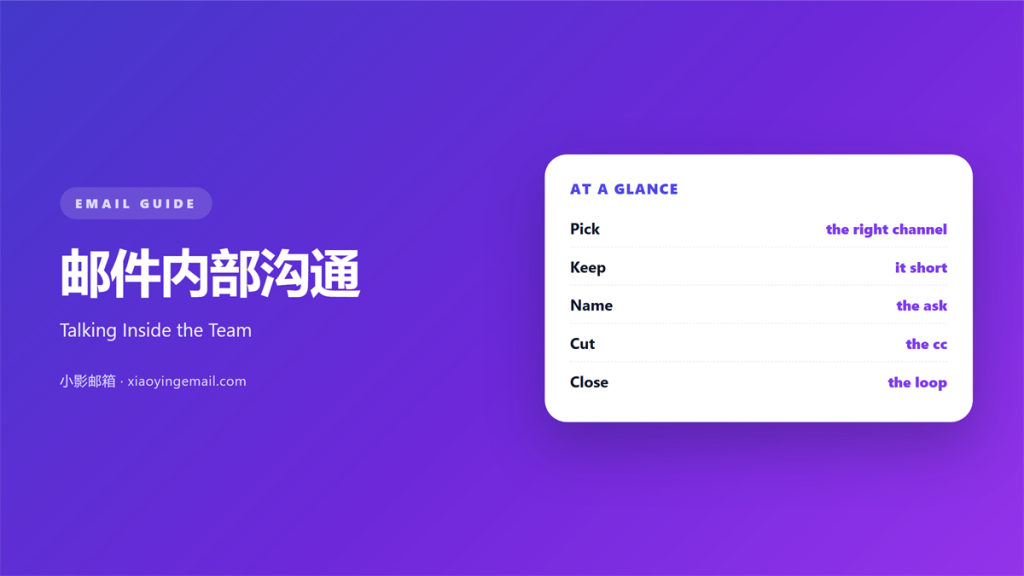
Key Takeaways
- 邮件内部沟通 keeps a team aligned in writing.
- Put the ask in the first line, not the last.
- Match the tone to the reader and the moment.
- Keep the thread to the people who must act.
- Use chat for quick talk and mail for records.
What 邮件内部沟通 means
邮件内部沟通 is the mail a team sends itself.
It shares updates, decisions, and requests inside one group.
The readers already know the people and the projects.
So the note can skip a long introduction.
It still needs a clear point and a clear ask.
Internal mail is a record as well as a message.
That record may be read again months later.
So write it as if a stranger will open it.
A short line of context saves a long reply.
It is not a place to rehearse a private thought.
Every note should move the work forward.
Why 邮件内部沟通 matters
A team that writes well wastes less time.
Clear notes cut the number of follow-up questions.
Good 邮件内部沟通 keeps decisions in one place.
Then nobody has to remember a hallway chat.
It also helps a new colleague catch up fast.
A written trail settles later disputes.
And it lets people work across time zones.
A clear record turns a private memory into shared knowledge.
It also keeps a quiet member in the loop.
A written update reaches everyone at once.
A shared note also cuts repeat questions.
That keeps the whole team moving.
Written for a stranger
Write each note as if a newcomer will read it.
Add the context they are missing.
Name the project and the goal in one line.
Then the note stands on its own.
When 邮件内部沟通 helps
Internal mail helps in a few clear cases.
Use it to confirm a decision the team just made.
Use it to hand a task from one person to another.
Use it to share a status update with a group.
Use it when a written record may be needed.
And keep the group small for each note.
Use it to welcome a new teammate.
Use it to close a task with a clear result.
A clear note can replace a long meeting.
That saves an hour for real work.
The right audience
Send to the people who must act.
Copy the people who must only know.
Leave out everyone else.
A wide list invites noise and replies.
When 邮件内部沟通 hurts
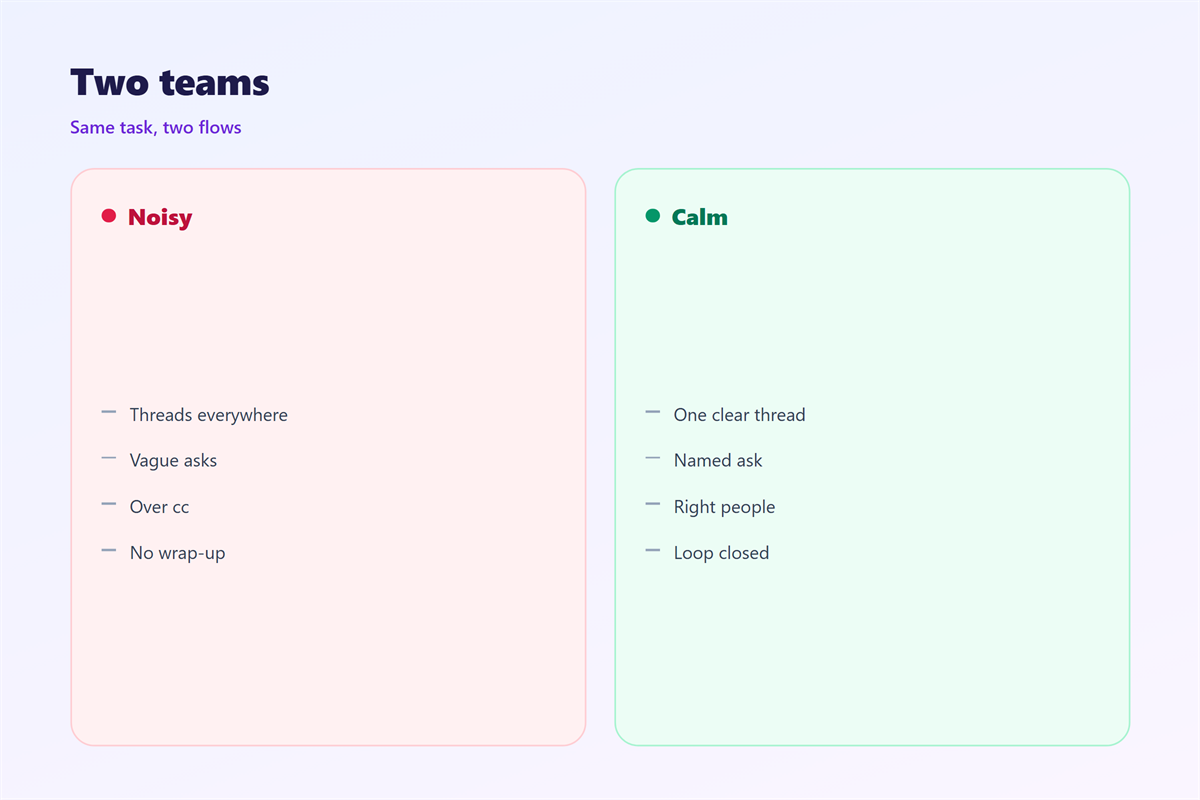
A reply-all storm can bury a thread in minutes.
Vague asks keep a task stuck for days.
A cold tone can sour a normal request.
Too many copies make people ignore your notes.
A thread that never ends hides the real decision.
So keep internal mail short, clear, and kind.
A note with no owner sits unanswered for days.
So always name who should act next.
The reply-all trap
Reply all only when everyone needs the answer.
Otherwise reply to one person.
Move the rest to a new, shorter thread.
邮件内部沟通 or a chat app
Chat apps move fast and feel casual.
Mail moves slower but leaves a full record.
Use chat for a quick question and a quick answer.
Use mail for a decision that must last.
When a chat turns into a plan, move it to mail.
That split keeps both tools doing their best work.
A clear 邮件内部沟通 sits beside the chat, not against it.
A chat can scroll away before anyone reads it.
Mail waits until the reader is ready.
How to use 邮件内部沟通 well
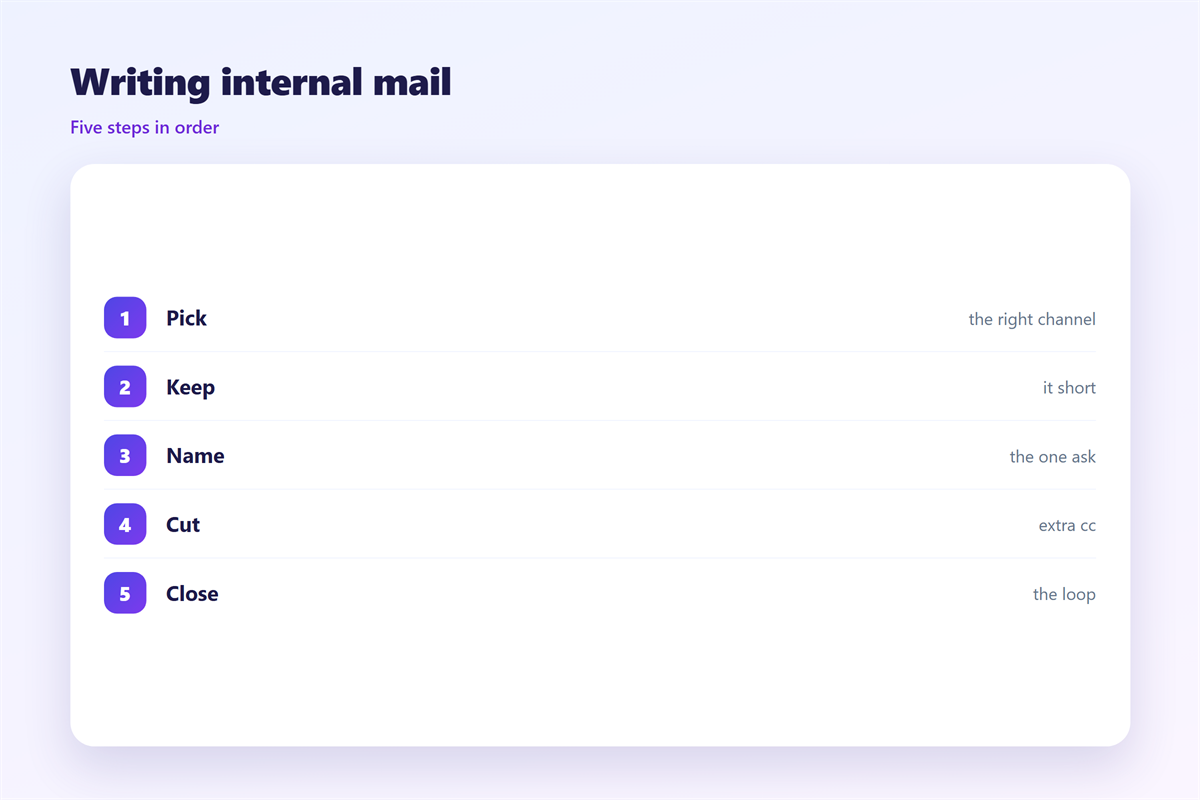
Write the ask in the first line of the note.
Add one line of context, then stop.
Use a clear subject that names the topic.
Keep the body under five short lines.
Bold the one date or number that matters.
Say clearly what you want and by when.
Good 邮件内部沟通 is short and useful.
The reader can act without reading twice.
If the topic grows, start a new thread.
A fresh subject beats a long running chain.
A short note respects the reader’s time.
Close with one clear next step.
Say who does what and by when.
邮件内部沟通 and tone
Internal mail is read by people you already know.
So a warm tone costs nothing and helps a lot.
A short greeting and a thank you go a long way.
State a problem without blaming a person.
Assume good intent until you learn otherwise.
A kind 邮件内部沟通 builds trust over time.
That habit keeps a team working together.
A calm tone also invites a calm reply.
A short thank you costs nothing.
Skip blame and keep the facts.
Keeping 邮件内部沟通 consistent
Consistency keeps internal mail easy to read.
Pick one house style and hold it across the team.
The rules that guide a shared mailbox appear in 邮件协作.
The choice between cc and bcc is covered in 邮件抄送.
The manners that travel well are explained in 邮件礼仪.
The way to keep clients close appears in 邮件客户关怀.
Agree on when to use mail and when to use chat.
Then keep the same habits for every message you send.
A team that agrees on 邮件内部沟通 moves faster.
FAQ
How long should a 邮件内部沟通 note be?
Keep the body under five short lines when you can.
Should I copy my manager every time?
No. Copy only the people who truly need to know.
When should I use chat instead of mail?
Use chat for a quick question and mail for a lasting record.
How do I set a friendly tone?
Add a short greeting, a thank you, and no blame.
References
- Harvard Business Review: Email that gets a reply
- Nielsen Norman Group: Tagging
- Grammarly: Email formatting
评论
还没有评论,来说两句吧。
评论功能已关闭。