 小影邮箱
邮件背调怎么做?Reference Checks by Mail
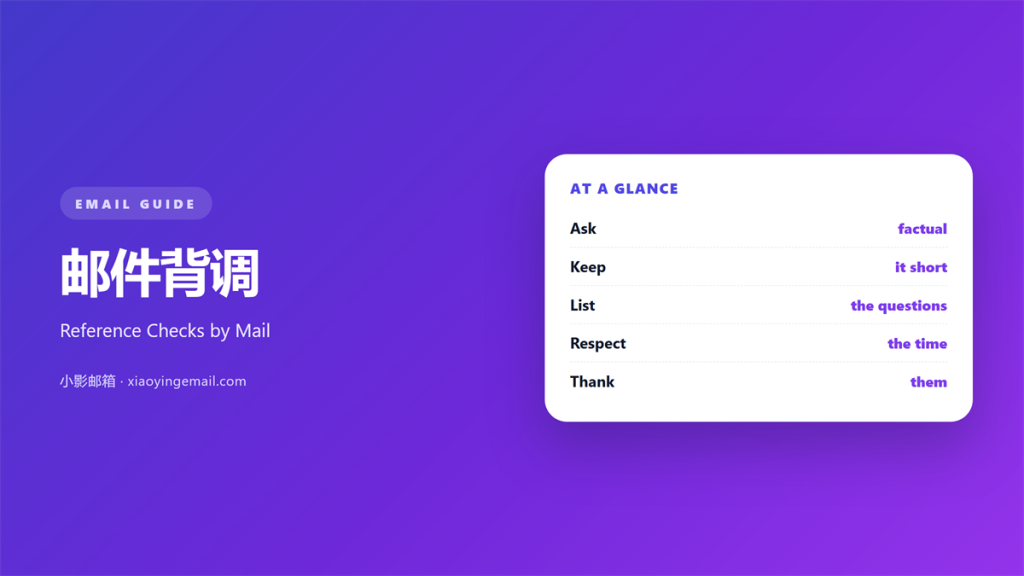
Key Takeaways
- 邮件背调 is a reference check done over email.
- Short, factual questions get the best answers.
- Ask about the role, not the private life.
- Give the referee an easy way to reply.
- Thank them, whatever the answer.
What 邮件背调 means
邮件背调 is a reference check sent by email.
A hiring manager writes to a past employer.
The note asks a few set questions.
The referee replies in writing.
The reply becomes part of the hiring file.
It is slower than a phone call.
It is also easier to keep on record.
That written record is the main gain.
It protects both sides from dispute.
Everyone can read the same words.
The check fills a gap the interview leaves.
It confirms what the candidate already said.
It also confirms the work ethic.
A note about conduct says a lot.
So the process stays fair and calm.
That is why many teams prefer it.
Why 邮件背调 matters
A bad hire costs a lot.
A short check reduces that risk.
It confirms the dates of employment.
It confirms the job title.
It confirms whether the person left in good standing.
It can also confirm a few skills.
邮件背调 keeps those answers in one thread.
The thread is easy to search later.
It also gives shy referees time.
They can reply when they are ready.
That raises the quality of the answer.
So the written form helps everyone.
The written reply is easy to store.
It sits beside the CV and the notes.
It also protects the referee.
Their own words are on record too.
What you may ask
Ask about the role and the dates.
Ask about duties and results.
Avoid health, family and beliefs.
Keep every question job-related.
When 邮件背调 helps
It helps when a referee is busy.
It helps when the teams are far apart.
It helps when records must be kept.
It helps when several people must review.
A thread can be shared with the panel.
Each reader sees the same reply.
That removes retelling and drift.
It also helps the referee.
They can check their own notes first.
So their answer is more accurate.
It also suits a global team.
Everyone reads the same reply at once.
It fits a team that hires often.
The same questions scale well.
The two-question rule
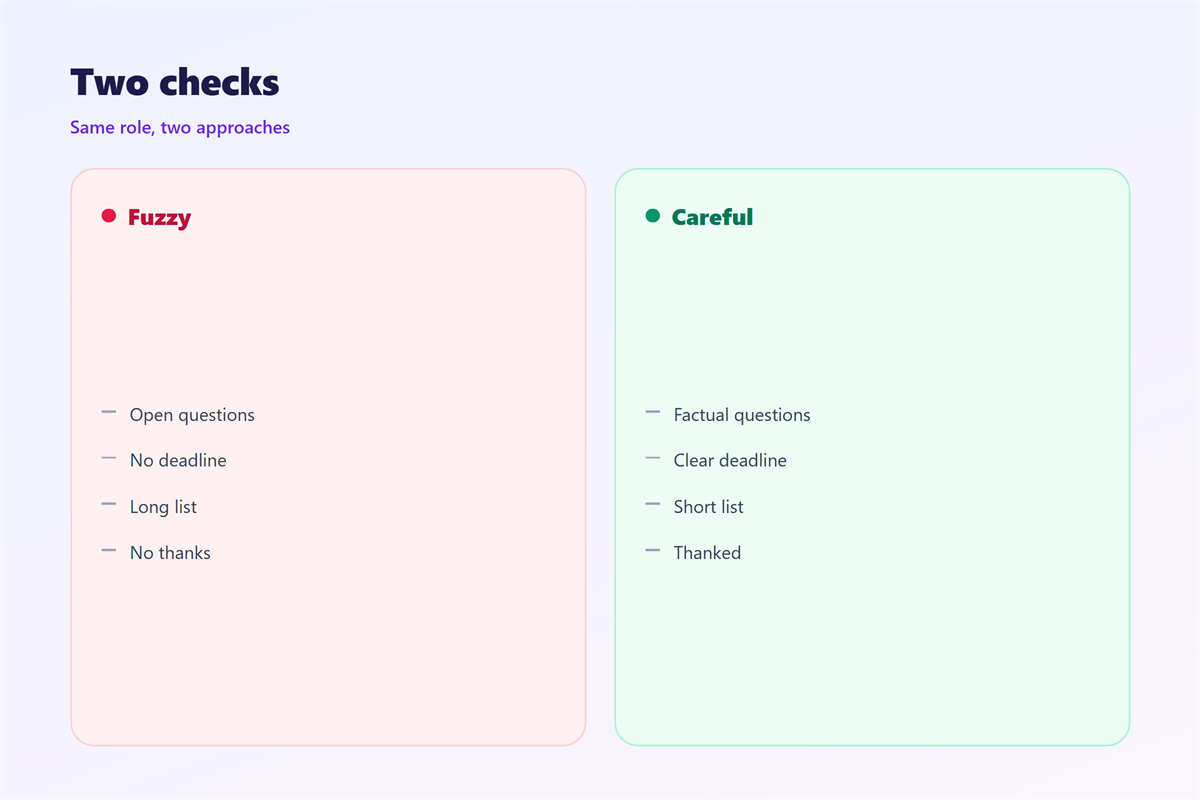
Send no more than three questions.
Two is often enough.
Short notes get faster replies.
When 邮件背调 hurts
A vague request gets a vague reply.
A general question tells you little.
Long lists also hurt.
Ten questions feel like an exam.
The referee may simply not reply.
Then you wait and learn nothing.
Legal risk is the second worry.
Some questions are not allowed.
Asking about age or health invites trouble.
So keep every question factual.
A personal question can end the process.
So stick to the role and the dates.
The silence problem
One follow-up is polite.
Two is still acceptable.
Three feels like pressure.
So stop after the second.
A missing reply stalls the hire.
So ask two referees, not one.
邮件背调 in practice
Start before the interview ends.
Ask the candidate for two referees.
Ask for their current email address.
Confirm they have agreed to help.
Then write the first note.
Name the role and the team.
Say who you are and why you write.
Ask your two or three questions.
Give a clear reply date.
Offer to answer any questions.
Keep the whole note short.
Then wait for the reply.
When it arrives, note it in the file.
A short summary is enough.
That saves the next reader time.
Then confirm the reply date.
Send one reminder if needed.
How to set 邮件背调
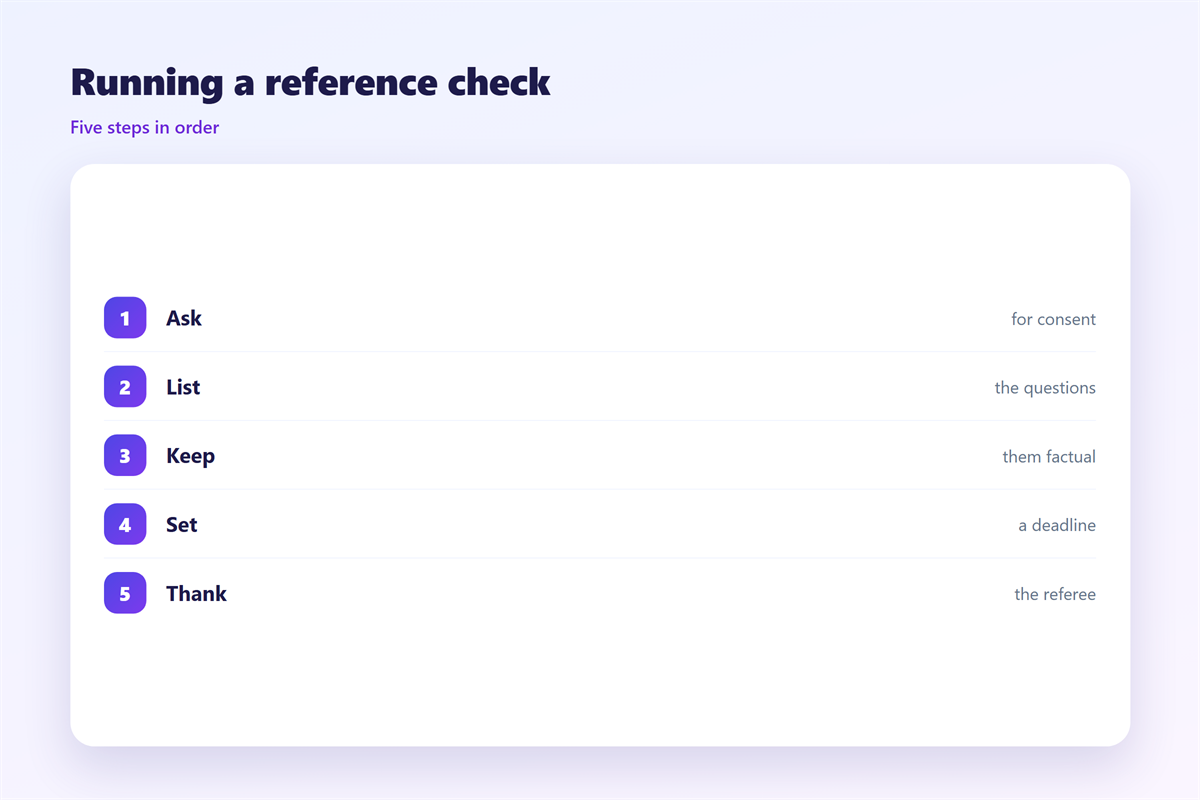
Prepare a small question set.
Keep it the same for every candidate.
That makes answers easy to compare.
Start with the dates of employment.
Then ask about the role.
Then ask one question about results.
Add a line about re-hiring.
Then close with a thank-you line.
Check the note against the rules once.
Remove anything not job-related.
Save the template for next time.
邮件背调 then takes only minutes.
A fixed set also looks fair.
That matters if a candidate ever asks.
Keep each reply in the candidate file.
Then test it on one hire.
Fix any question that confuses.
After that, keep it steady.
邮件背调 and the referee
The referee is doing you a favour.
Make the reply easy to give.
Number your questions one by one.
Leave space under each one.
Avoid attachments they must open.
Put everything in the email body.
Reply to their answer with thanks.
Tell them the outcome if you can.
That small step builds goodwill.
They may help you again later.
A good name is worth a lot.
So protect it with good manners.
Keeping 邮件背调 fair
The interview sets the stage for the check.
The questions you ask there appear in 邮件面试.
A written reference you may be asked for is covered in 邮件推荐信.
The first week after a yes is described in 邮件入职.
The footer line that guards private data sits in 邮件保密声明.
Review your question set once a year.
Then apply the same rule to every hire.
Keep the file tidy and short.
Then archive it after a set time.
A fair 邮件背调 protects the team and the candidate.
FAQ
How long does 邮件背调 take?
Usually two to five working days.
Can I check references by phone instead?
Yes, but a written reply is easier to keep.
What if a referee stays silent?
Send one calm follow-up, then move on.
Is 邮件背调 allowed for every role?
It is common, but always check local rules.
References
- W3C WAI: Content structure and readability
- Litmus: Email marketing guides
- Nielsen Norman Group: Email usability research
评论
还没有评论,来说两句吧。
评论功能已关闭。