 小影邮箱
邮件栏目怎么设?Sections That Keep Readers
Key Takeaways
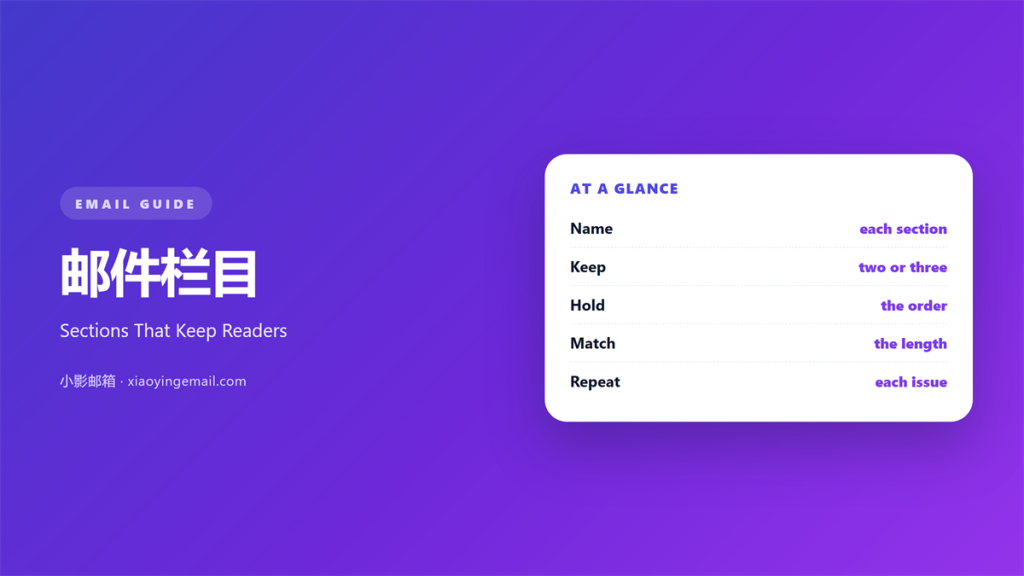
- 邮件栏目 gives a newsletter a fixed shape.
- Two or three sections are usually enough.
- Name each section so readers know it fast.
- Keep the same order in every issue.
- Drop a weak section before adding a new one.
What 邮件栏目 means
邮件栏目 is a named part of a recurring mail.
It holds one kind of content and nothing else.
A new tools section shows only new tools.
A reader question section holds only those.
The name tells the reader what to expect.
So the reader can skip what they do not need.
That choice is what keeps them reading.
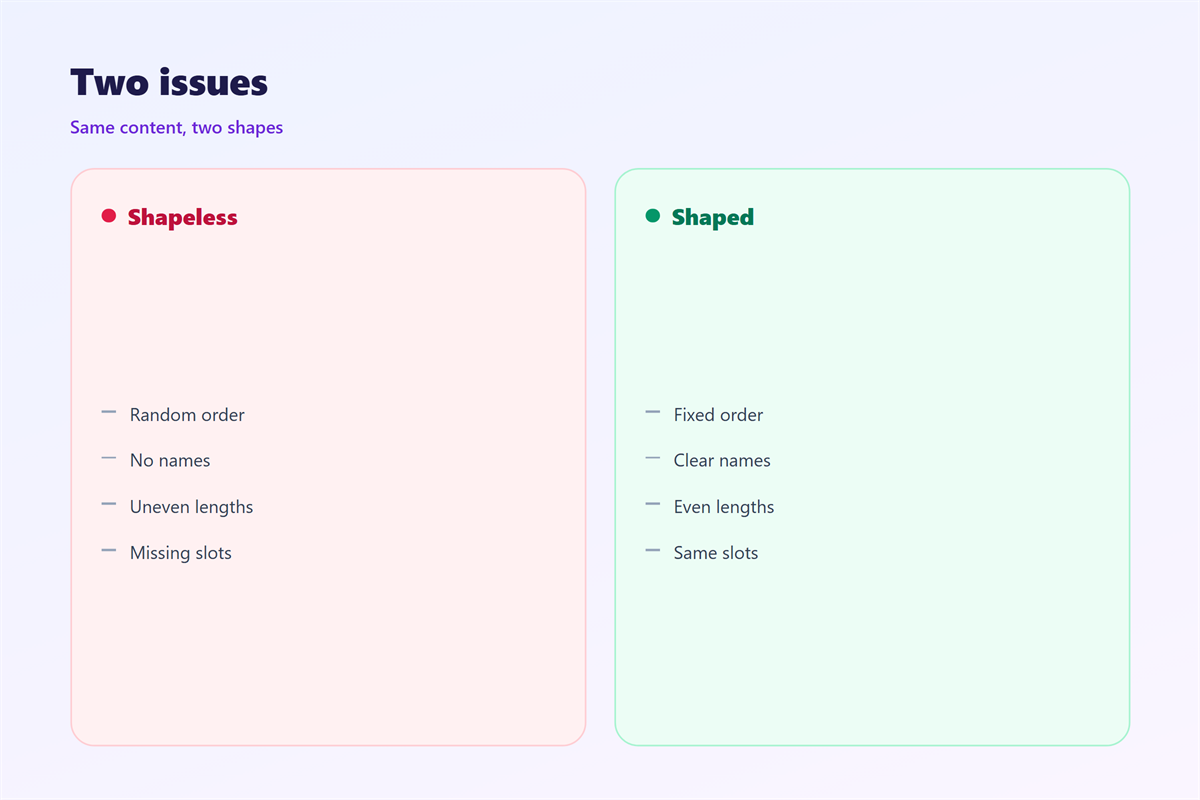
A strong 邮件栏目 has a fixed place in the issue.
It also has a stable length.
The reader learns both after a few issues.
Then the whole mail feels organised.
That order is the real product.
The layout repeats from issue to issue.
So the reader moves through it quickly.
The order rarely changes after that.
So the reader arrives on solid ground.
That is why the name matters so much.
Why 邮件栏目 matters
Readers scan before they read.
A clear section helps them scan fast.
It also builds a small habit.
People return for the parts they like.
邮件栏目 makes those parts easy to find.
Without names, the mail is one long blur.
A blur gets skimmed and forgotten.
Sections also help the writer.
You fill a box instead of facing a blank page.
That alone makes each issue easier.
Named parts also help new readers.
They learn the shape in one or two issues.
That habit is what turns a list into a home.
How many sections
Two or three suit most lists.
Four is the upper limit for a short mail.
More than that feels like a catalogue.
When 邮件栏目 helps
A fixed shape helps in several ways.
It keeps the issue short and focused.
It makes each topic find its home.
It also makes your work repeatable.
You plan one section at a time.
The queue fills itself over the month.
And the open rate settles into a line.
A steady line is easy to read.
You can compare one issue with the last.
A sudden change stands out at once.
A stable shape also saves editing time.
You know what each part needs.
So the issue comes together faster.
A clear shape also makes testing easier.
Reusing a section
A good section can run for years.
Change the content, keep the name.
Readers reward the familiar label.
When 邮件栏目 hurts
Too many sections can hurt.
Each one needs a fresh idea.
That load grows fast.
Weak sections then drag the whole issue down.
So cut a section before you add one.
Another risk is a vague name.
Updates tells the reader nothing.
So name the content, not the mood.
A clear name earns a second look.
So spend time on the label.
Readers leave when the shape keeps changing.
So protect the parts they already know.
The one-job rule
Give each section one clear job.
If it does two jobs, split it.
Then the reader still understands the point.
邮件栏目 in practice
Start by listing what you always cover.
Group the items into two or three themes.
Then give each theme a short name.
Write the order down and keep it.
Fill each section with one idea.
Keep the lengths roughly equal.
Then read the issue aloud once.
Anything that drags gets cut.
Small and clean beats long and messy.
So protect the shape every time.
Readers notice when the shape breaks.
Keep a note of what each part holds.
Then the next issue writes itself.
You only add the new facts.
Test one change at a time.
How to build 邮件栏目
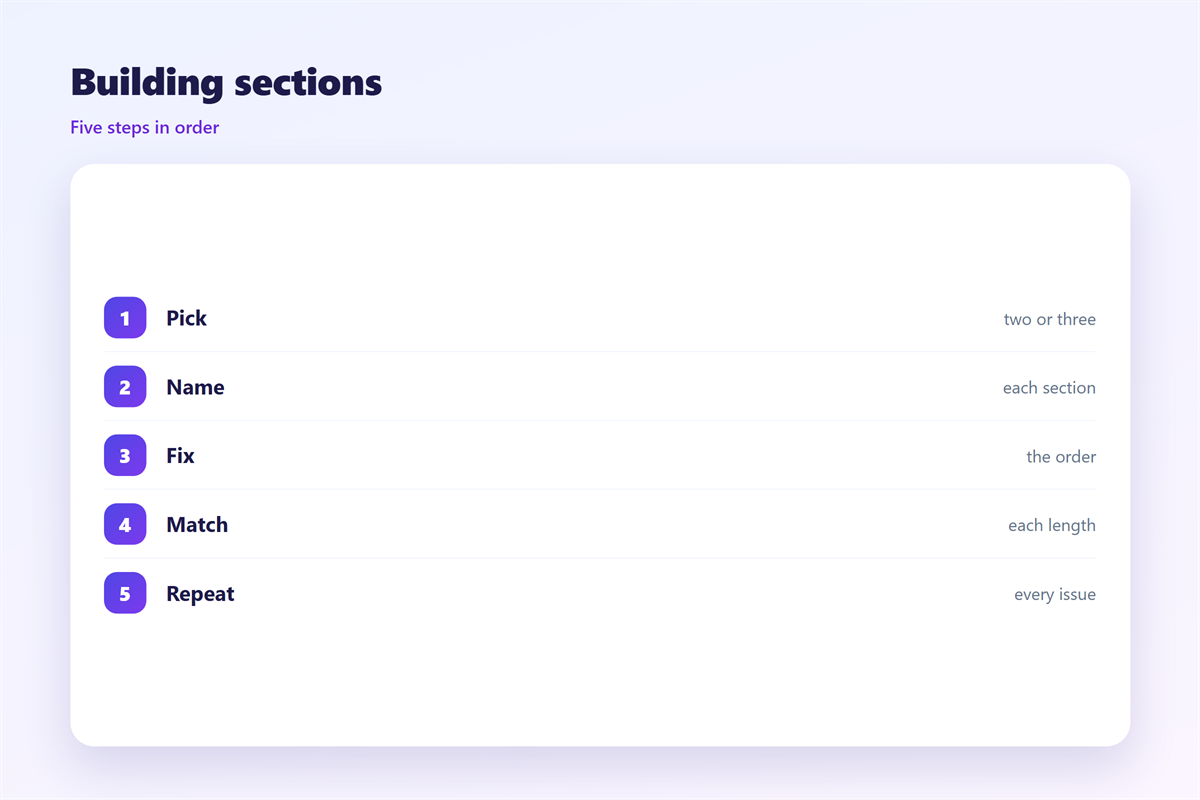
Pick the sections you will keep.
Write one sentence for each.
That sentence is the section’s job.
Then choose a length for each.
Send the same order every issue.
After a month, read the click rate.
If a section is never clicked, cut it.
If readers ask for more, expand it.
Good 邮件栏目 changes slowly.
Next, check the issue for repeats.
Two sections with one idea should be rare.
If they collide, merge them at once.
Then set the order for the next three issues.
Ask three readers what they skip.
Their answers show the weak parts.
Then cut or rename those parts.
Then repeat the best shape each month.
邮件栏目 and the reader
Readers live in different moods.
Some read every section, others just one.
So the order matters more than the length.
Put the strongest section first.
Put the lightest one last.
What breaks a habit is surprise.
A new order every week feels chaotic.
So move a section rarely and slowly.
Test a new name for a month.
Then keep the name that works.
Small changes keep the reader oriented.
A good shape feels invisible.
The reader just finds what they want.
That feeling is worth protecting.
So keep the changes gentle and few.
Keeping 邮件栏目 steady
A steady shape turns into a habit.
The internal brief that shares the format sits in 邮件简报.
The plan behind each issue appears in 邮件内容日历.
The way people join the list sits in 邮件订阅.
The reusable shell for each issue lives in 邮件模板.
Review the shape once a quarter.
Then keep the same rule for every issue.
A team that agrees on 邮件栏目 ships faster.
Keep one owner for the whole shape.
That owner checks it each quarter.
FAQ
How many 邮件栏目 should a newsletter have?
Two or three, and never more than four.
Should the sections stay in the same order?
Yes. A stable order keeps readers oriented.
Can I rename a 邮件栏目 later?
Yes, but keep the old name for a month first.
What if one section is always empty?
Retire it and give the space to another.
评论
还没有评论,来说两句吧。
评论功能已关闭。