 小影邮箱
邮件分享率怎么提升?Getting Mail Forwarded
Key Takeaways
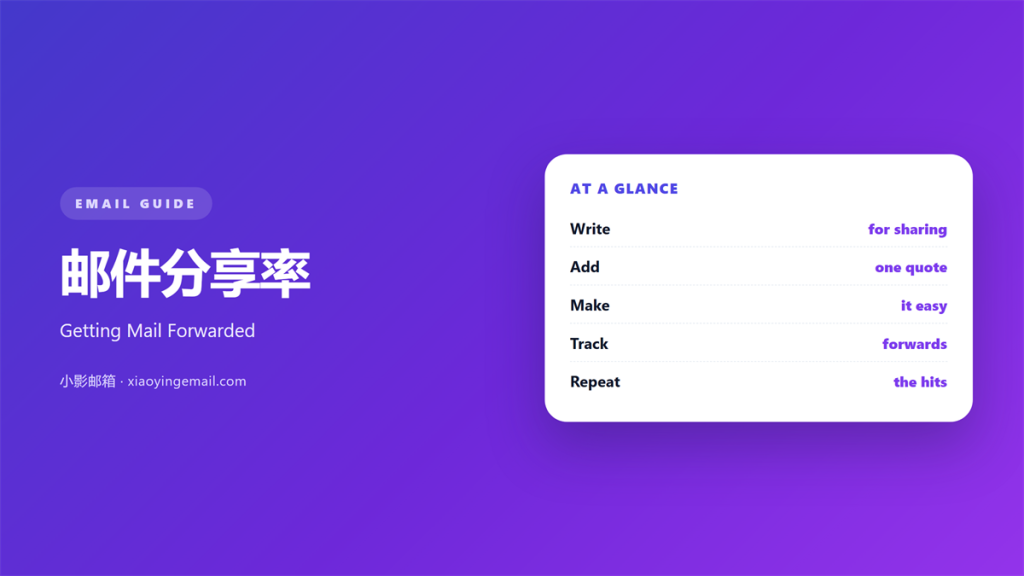
- 邮件分享率 is the share of readers who pass a note on.
- A high rate means the words travel.
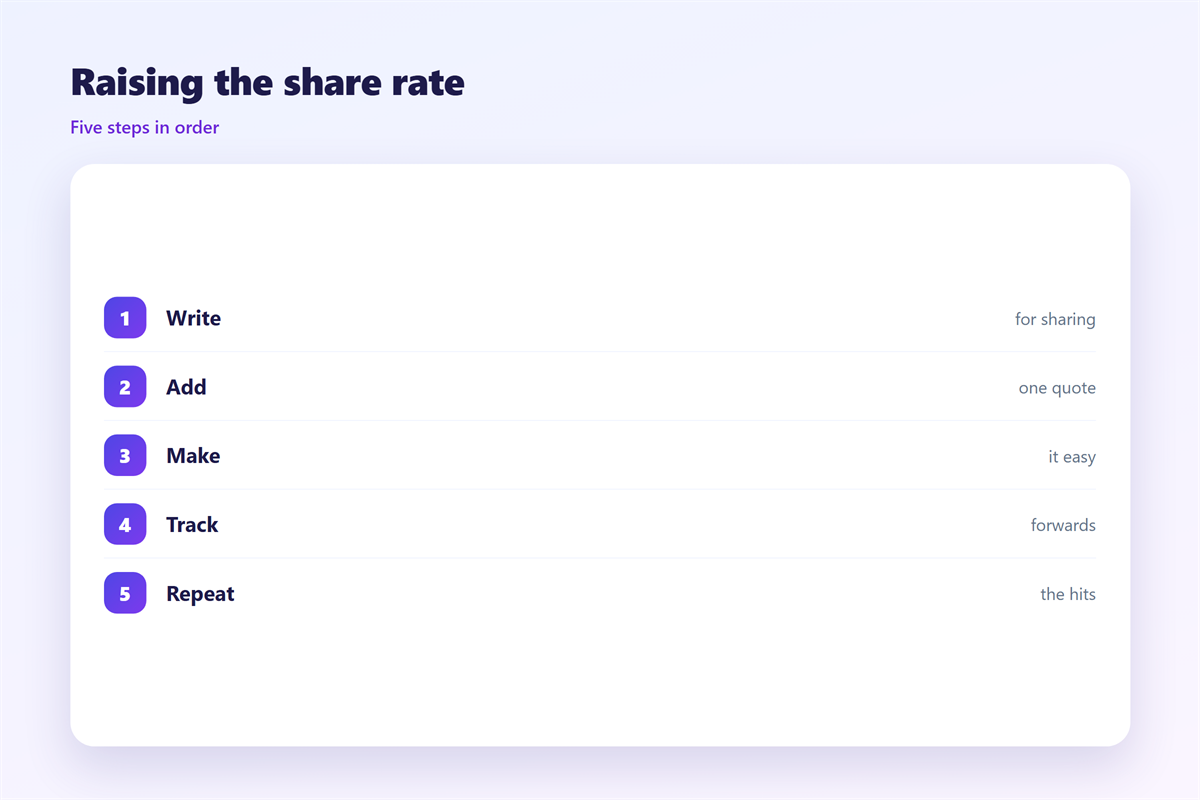
- Write lines people want to repeat.
- Make forwarding one easy tap.
- Measure shares beside opens and clicks.
- Value the quality of reach over raw size.
What 邮件分享率 means
邮件分享率 is the share of readers who forward a note.
It counts the people who pass it on.
Some tools call it a forward rate.
Others blend it with clicks and replies.
The idea is simple in every case.
How far did the message travel beyond its list?
The metric answers that one question.
A note read by one person stays small.
A note passed to ten grows fast.
So the rate measures reach, not effort.
It also hints at how useful the content felt.
People rarely share something dull.
So a good rate is a quiet compliment.
It shows the reader found value worth sharing.
That value is the real driver of the rate.
So the number starts with the writing.
A clear note travels further than a clever one.
Why 邮件分享率 matters
Reach that costs nothing
A forward brings a new reader for free.
That reader arrived through trust, not ads.
邮件分享率 shows how often that happens.
A steady rate means the content earns its place.
It also lifts the chance of a new subscriber.
So the metric links to list growth.
A falling rate is an early warning.
It may mean the topic has gone stale.
So watch the trend, not one number.
A trend tells more than a single send.
So track it month by month.
Then you can separate luck from real change.
A slow climb is still a climb.
When 邮件分享率 helps
Reading the trend
The number helps when you compare periods.
A rise across a month tells a clear story.
邮件分享率 also helps when you test a subject line.
Two versions can show which one travels.
It helps too when you plan a series.
Shared issues point to a topic worth repeating.
And it helps when a note flops.
A low rate can explain the silence.
So use it as a guide, not a score.
Then act on the finding, not the feeling.
One clear test beats ten guesses.
So keep the tests small and quick.
When 邮件分享率 hurts
A single 邮件分享率 can mislead a team.
One viral send can hide a weak month.
So never judge the health by one spike.
It can also hurt when it becomes a target.
A forced goal invites gimmicks and tricks.
People then add share buttons everywhere.
The clutter drives readers away instead.
So treat the rate as a signal, not a demand.
Chasing it too hard can break the tone.
A calm note will always read better.
So set a range and let the rate move inside it.
A sensible range removes the daily worry.
Then the team can focus on the writing.
邮件分享率 and forwarding
Sharing and forwarding are close cousins.
A forward button makes sharing easy.
But a button alone does not earn a share.
People share what helps them look good.
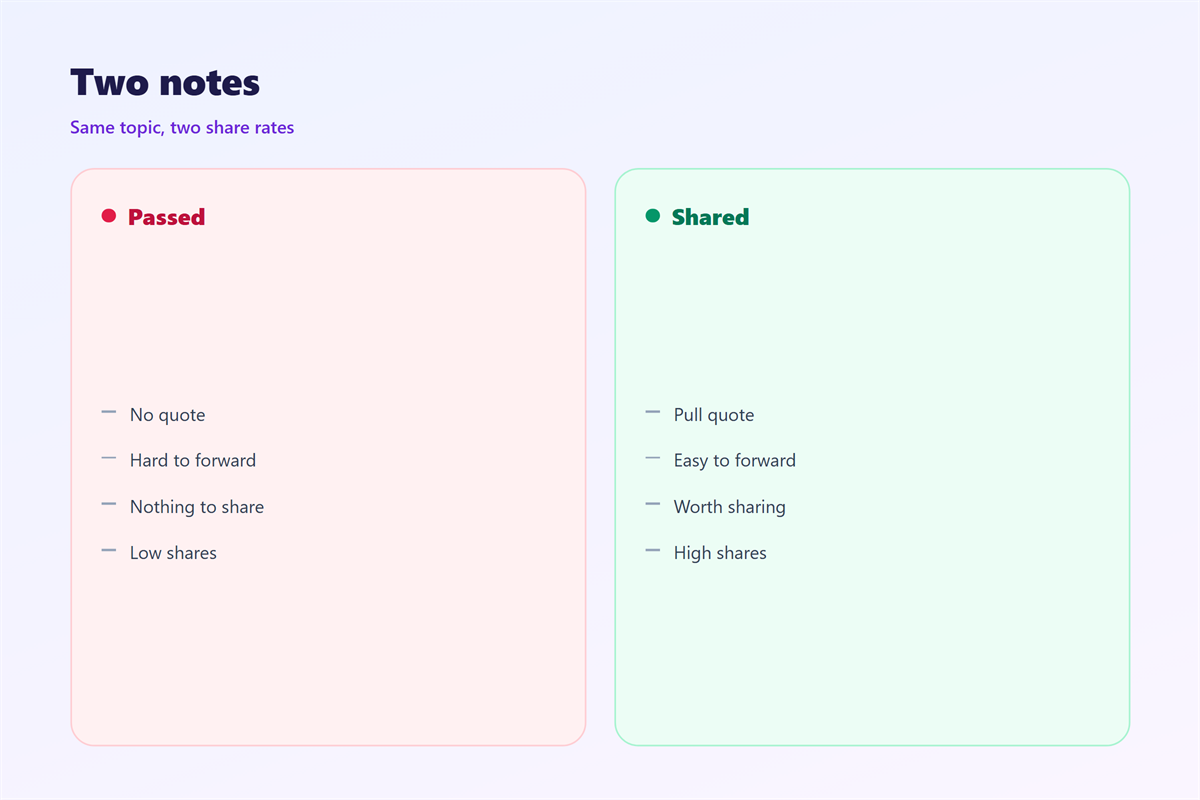
So give them a fact worth passing on.
A short checklist or a clear tip works well.
邮件分享率 often rises with simple utility.
Put the value in the first few lines.
Then the reader knows it is worth sending.
A quick share link removes one more step.
A small nudge at the end can also help.
But keep that nudge light and short.
A heavy ask can spoil a good note.
So let the content carry the weight.
How to use 邮件分享率 well
Writing a shareable note
Write the note you would send to a friend.
Lead with one useful idea.
Keep the paragraphs short and clean.
Give the reader a reason to pass it on.
The metric rewards content that saves time.
So make every line do some work.
Cut anything that adds no value.
Then add one line that invites a share.
A simple ask works better than a push.
Test the wording before you commit.
A useful note tends to be a shared note.
So spend the time on the message itself.
The styling can stay simple and plain.
邮件分享率 on a monthly report
A monthly view shows the true trend.
邮件分享率 belongs beside opens and clicks.
Read the three together for a full picture.
A high open with a low share is odd.
It may mean the topic interests only the list.
A lower open with a high share is fine.
It means a few readers cared a lot.
So note both the rate and the volume.
Then choose one change for next month.
A single change is easier to judge.
Write down what you changed and why.
Then compare the next report with the last.
Keeping 邮件分享率 consistent
A steady baseline
Consistency lets you spot a real change.
Measure the same way every month.
The click path sits in 邮件点击率. The share rules sit in 邮件转发. The wider plan sits in 邮件营销. The schedule sits in 邮件内容日历.
Then keep one baseline for the team.
A single standard stops the arguments.
And a clear trend guides the next draft.
So write the rule once and keep it.
Then revisit the rule at year end.
FAQ
Is 邮件分享率 the same as a forward rate?
They are close. Many tools use the words alike.
What is a good share rate?
It varies. Watch your own trend over months.
Do share buttons raise the rate?
Not on their own. Useful content earns the share.
Should I aim for a viral send?
No. A steady rate beats one lucky spike.
References
- W3C WAI: Content structure and emphasis
- Litmus: Email rendering guides
- Nielsen Norman Group: Typography and readability
评论
还没有评论,来说两句吧。
评论功能已关闭。