 小影邮箱
邮件备忘怎么做?Notes You Can Reuse
Key Takeaways
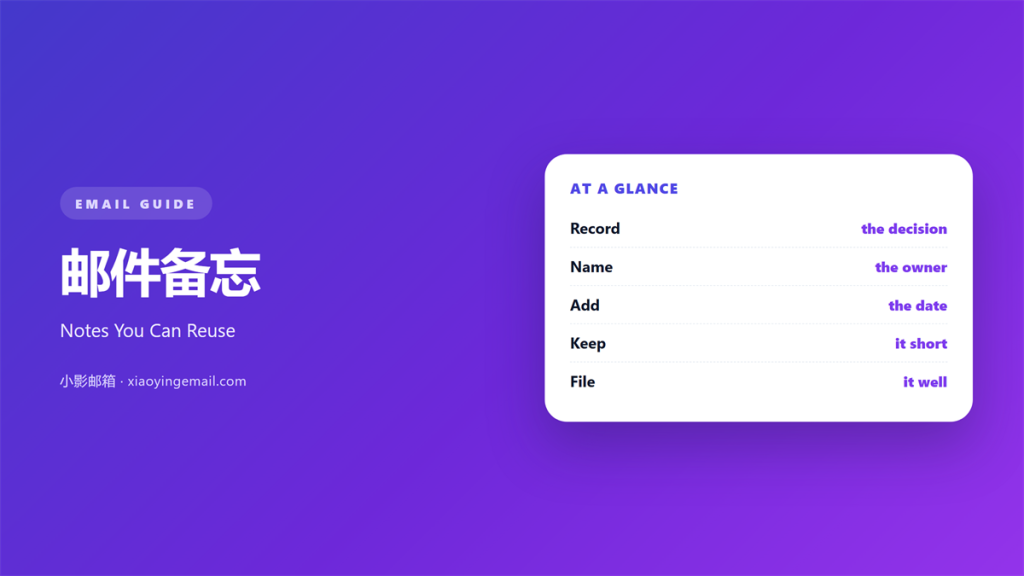
- 邮件备忘 is a short record of what a message decided.
- Write the decision first and the detail second.
- Name the owner and the date for every action.
- Keep the note in one place the team can find.
- A good memo ends the need to re-read the thread.
What 邮件备忘 means
邮件备忘 is a written note that preserves a decision. It turns a long thread into a short record.
It is not a diary. It captures only what others must know.
A memo can be three lines or three paragraphs.
Length depends on how many people need the detail.
The test is simple. Can a new reader act on it?
If yes, the note has done its job.
If no, one fact is probably missing.
Most memos are written in a hurry, so keep the template close.
A fixed shape helps you start faster.
Why 邮件备忘 matters
Threads grow and memory fades.
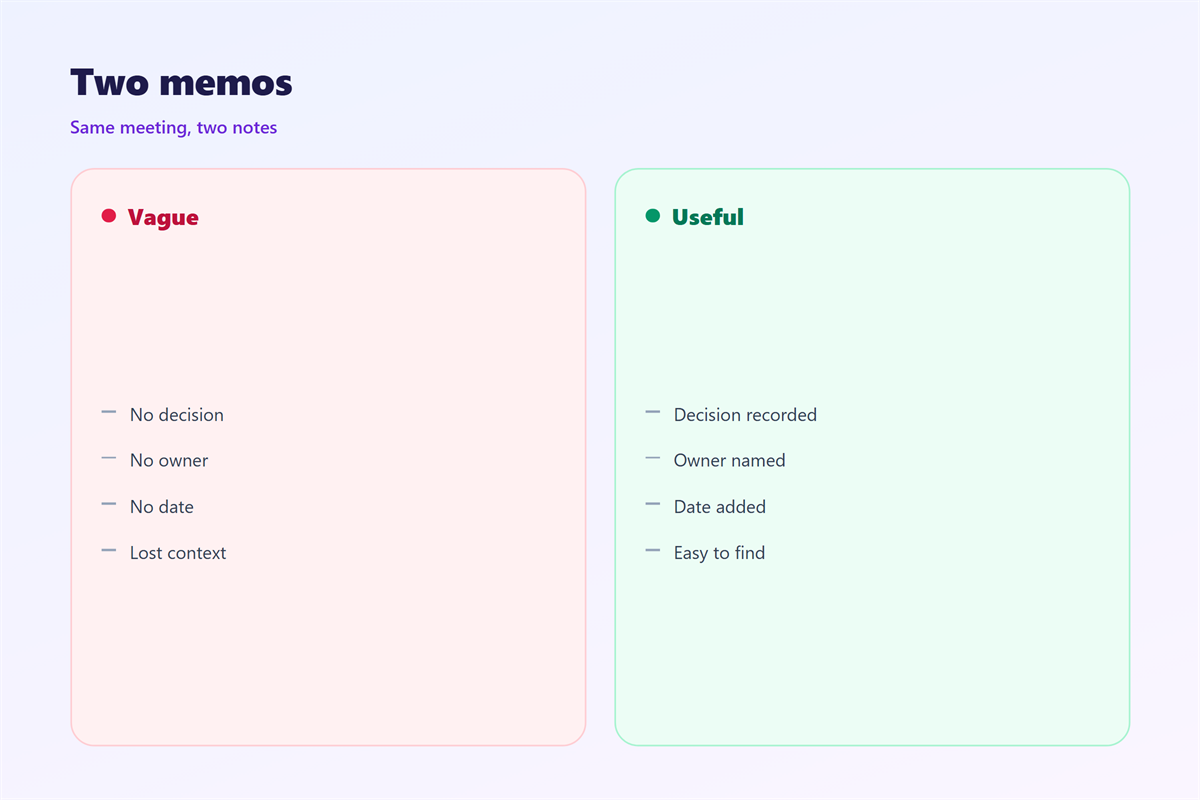
Three weeks later, nobody remembers the number that was agreed.
A short memo answers that question in seconds.
It also protects the people who were not in the room.
They can read one note instead of forty replies.
That saves time and prevents quiet mistakes.
A team without notes repeats the same debate.
A team with notes moves to the next question.
The hidden cost of memory
Relying on memory makes work fragile.
One person leaves and the context leaves too.
A written note survives that change.
Good notes also make onboarding cheaper.
The new hire reads the archive instead of asking around.
That independence is worth the minute it takes to write.
When 邮件备忘 helps
邮件备忘 helps after any meeting that changed a plan.
It helps when a decision needs approval from a manager.
It helps when several teams must follow the same rule.
It also helps at the end of a long support thread.
In each case, one note replaces many questions.
A memo also helps when a decision is likely to be questioned.
The written record answers the question once.
Three moments to write one
Write after a meeting, a call, or a long thread.
Write before the details start to blur.
Write while the people are still easy to reach.
When 邮件备忘 hurts
邮件备忘 hurts when it copies the whole thread.
A note that repeats every message is not a note.
It hurts when the owner is left unnamed.
Everyone assumes someone else will act.
It also hurts when the memo is stored in a private folder.
A note nobody can find is a note nobody uses.
And a memo without a date loses its meaning.
Old decisions can look like current ones.
Too much detail hides the one line that matters.
Readers skim past the point and ask again.
邮件备忘 and structure
Structure makes a note easy to scan.
Start with one sentence that states the outcome.
Then list the facts that support it.
Use bullets for actions and plain text for context.
Put the owner and the date beside each action.
The four-line format
Line one: the decision.
Line two: the reason.
Line three: who does what.
Line four: when it is due.
That format works for almost every memo.
Keep each bullet to one action and one owner.
Long bullets merge two ideas and slow the reader.
How to use 邮件备忘 well
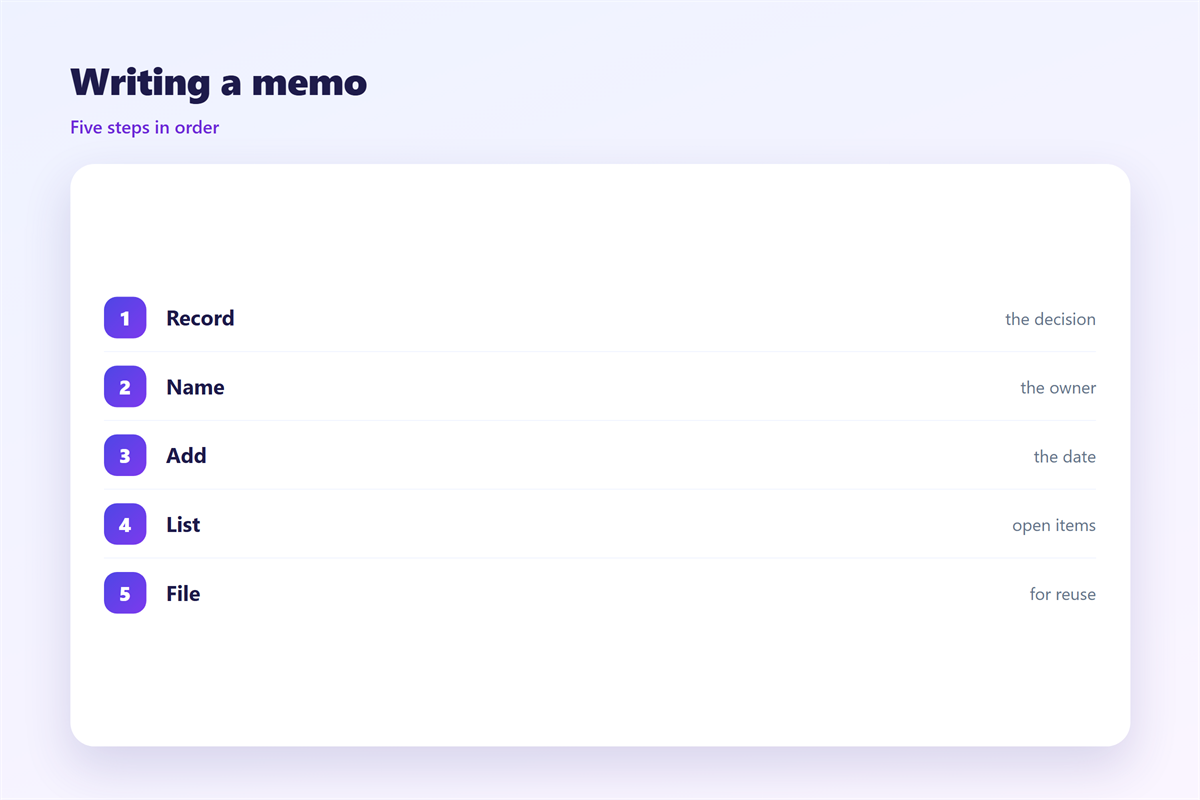
Write the memo right after the conversation ends.
Use the subject line to name the topic and the date.
Keep the first line free of background.
Then add only the facts a reader needs.
Name people, not roles, when you can.
Roles change and names are easier to search.
End with the next checkpoint.
Then send it to everyone who was involved.
Send the memo as plain text when the team prefers it.
Plain text is easy to quote and easy to search.
Write for the next reader
Imagine a colleague who joins next month.
Would the note make sense to them?
If not, add one line of context.
Then stop. More context becomes clutter.
邮件备忘 in a shared archive
A memo only works when people can find it.
Choose one folder or one tool for all notes.
Use a naming rule that sorts by date and topic.
Then link the note in the thread it came from.
That link matters more than the folder.
Future readers follow links, not directory trees.
Review the archive once a month.
Delete drafts and keep the final notes.
Name the archive in the team handbook.
New members then learn the habit in week one.
A simple naming rule
Start with the year, then the month, then the topic.
Add the word memo at the end.
Keep the name under eight words.
A short name is easy to type and easy to scan.
Keeping 邮件备忘 consistent
Consistency turns notes into a shared habit.
Agree on the four-line format for the team.
Agree on where the notes live.
Agree on who writes the note after a meeting.
The meeting record itself is covered in 邮件会议纪要. The review habit appears in 邮件复盘. The short digest is explained in 邮件摘要. The task list sits in 邮件待办.
Then review one note together each week.
A shared habit makes 邮件备忘 reliable for everyone.
FAQ
Is 邮件备忘 the same as meeting minutes?
Not quite. Minutes record the discussion. A memo records the decision and the next step.
How long should a memo be?
As short as the decision allows. Most fit in four lines and a short list.
Who should receive 邮件备忘?
Everyone who must act or approve. Copy the people who only need to know.
Should a memo repeat the original email?
Only the key fact or number. A full quote makes the note hard to scan.
评论
还没有评论,来说两句吧。
评论功能已关闭。