 小影邮箱
邮件晋升怎么写?Asking for the Next Step
Key Takeaways
- 邮件晋升 is a written request for a bigger role.
- Lead with results, not with the wish.
- Name the role and the reason it fits.
- Keep the note short enough to read twice.
- Ask for a clear next step and a date.
What 邮件晋升 means
邮件晋升 is a message that asks for a new role.
It is not a complaint about the current one.
It is a case built from evidence.
The evidence is the work you already delivered.
The request names the role you want next.
It also names the reason you are ready.
A good note reads like a short brief.
It respects the reader’s time.
邮件晋升 should feel calm, not urgent.
Urgency suggests the decision is already late.
Calm suggests the case can stand on its own.
That quiet confidence is the tone to aim for.
It invites a fair reading.
It also leaves room for a fair answer.
Why 邮件晋升 matters
Promotions rarely arrive without a request.
Managers are busy and remember recent work.
A written note fixes the record.
It also gives the manager something to forward.
A clear case travels further than a spoken hint.
邮件晋升 also protects the process.
A written ask makes the criteria visible.
Then both sides argue about facts, not feelings.
The note can also reveal a gap.
Knowing the gap is better than guessing.
A named gap can be closed in months.
An unnamed one can last for years.
Memory favours the written
A hallway comment fades by Friday.
A short note survives the quarter.
It can be read again before the decision.
When 邮件晋升 helps
邮件晋升 helps when the role is already open.
A known vacancy gives the note a target.
It helps after a strong quarter.
Recent results are easier to verify.
It also helps when a review is near.
The note can feed straight into the review.
One document then serves two purposes.
It saves the manager a second read.
That small courtesy is remembered.
Time it to the calendar
Learn when decisions are made.
Send the note two weeks before.
Late asks land after the budget is set.
When 邮件晋升 hurts
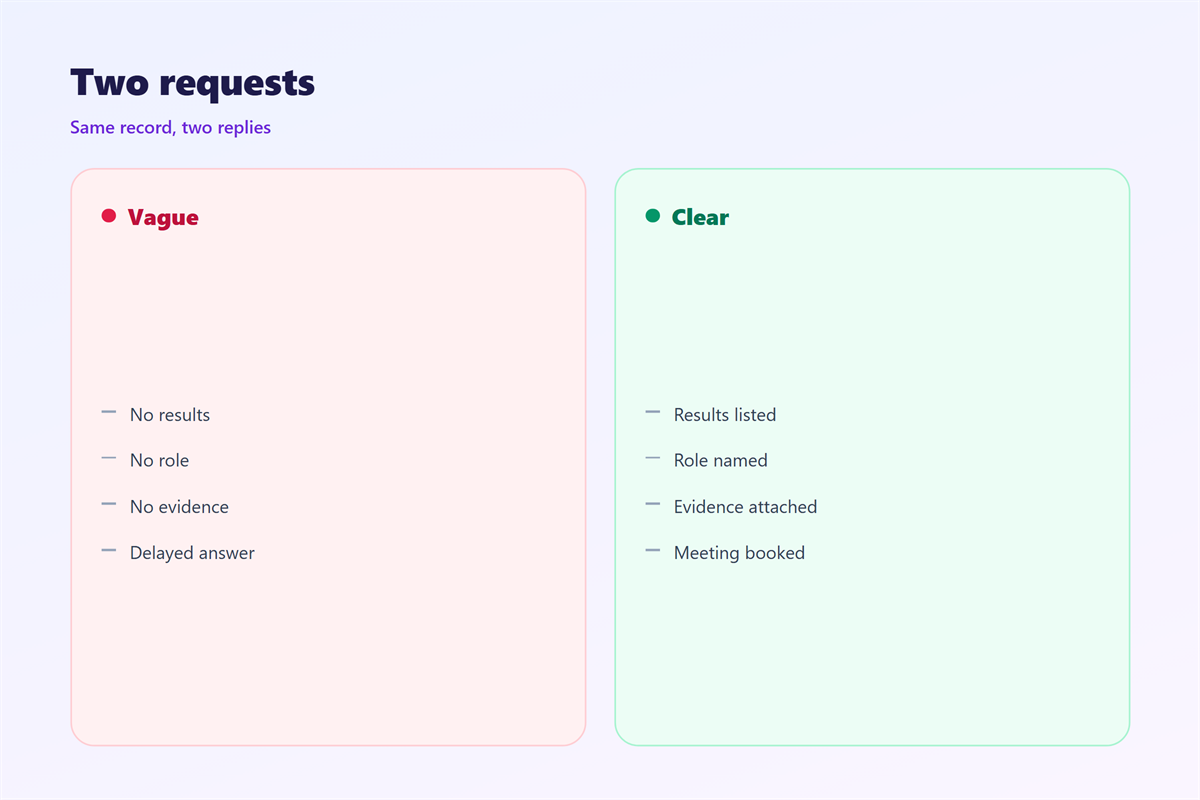
邮件晋升 hurts when it lists duties, not results.
“I worked hard” is not evidence.
It hurts when the tone is a threat.
A veiled ultimatum closes more doors than it opens.
It also hurts when the ask is vague.
“A bigger role” gives the manager nothing to approve.
Finally, avoid comparing yourself to a colleague.
The comparison reads as a complaint.
It also invites a defence of the other person.
Keep the case about your own work.
Your record is strong enough without a rival in it.
邮件晋升 and evidence
Evidence means numbers, dates, and outcomes.
Name the project and the result.
Say what changed because of your work.
Then tie that change to the new role.
A useful line links the past to the future.
邮件晋升 works when the link is obvious.
If the link needs a paragraph, it is weak.
A weak link invites a polite delay.
A clear one invites a question about timing.
Three results are enough
Pick the strongest three.
Give each one a number or a date.
Leave the rest for the meeting.
How to use 邮件晋升 well
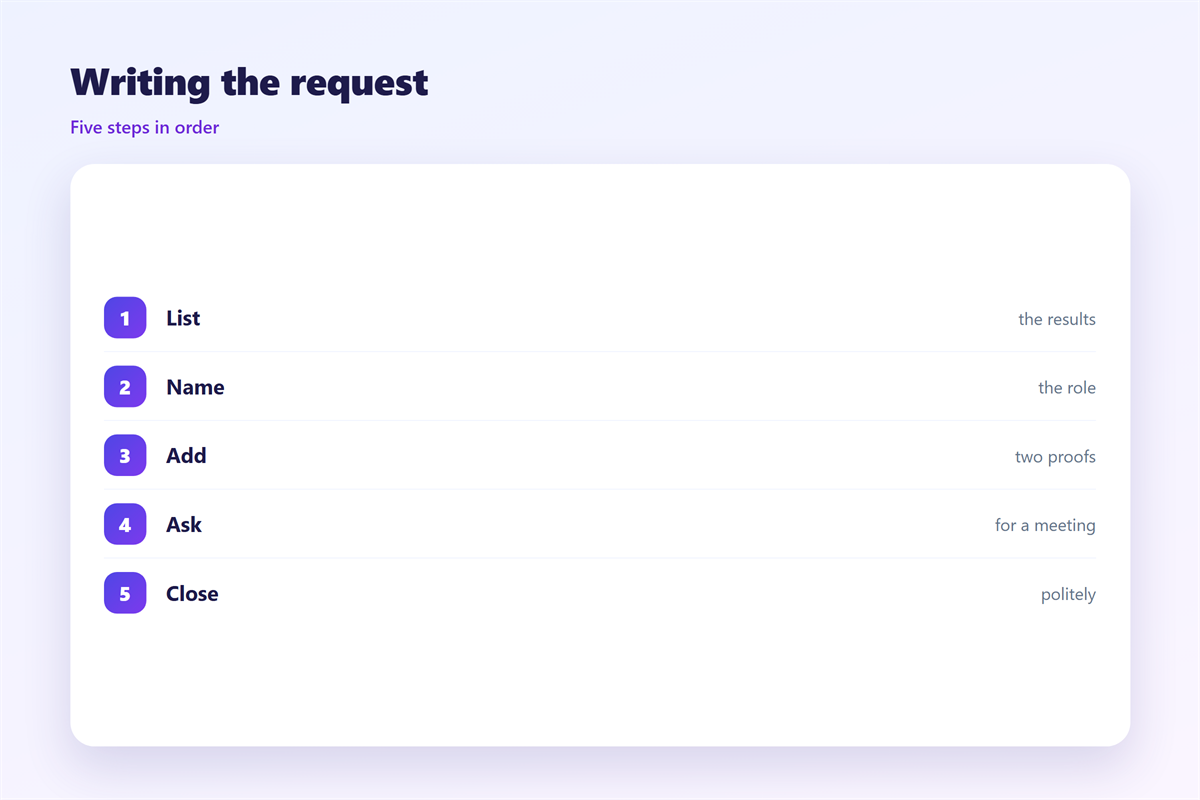
Start with the request in one line.
Then give the evidence in three short points.
Name the role and the level.
Say what you would take on first.
A short plan shows you are ready.
Then ask for a meeting.
Offer two times that suit you.
Close with thanks and a clear date.
邮件晋升 should fit on one screen.
Read it aloud before sending.
If a sentence sounds like a plea, cut it.
Replace it with a fact and a date.
Facts keep the note steady.
Dates keep the process moving.
Write the subject plainly
Use the role and your name.
Skip words like “urgent” or “important”.
A plain subject gets a calm reading.
邮件晋升 after the meeting
A meeting often ends with a maybe.
Send a short note the same day.
Repeat what was agreed in plain words.
Name the date for the next answer.
Then wait without sending reminders.
One follow-up is enough.
邮件晋升 needs patience after the ask.
Keep doing the visible work meanwhile.
A quiet week can undo a strong note.
If the answer is no, ask what would change it.
Write that answer down.
Then plan the next six months around it.
The plan is your next case, already forming.
Start it the day you write it.
Keeping 邮件晋升 honest
A promotion is a promise in both directions.
Only claim work you actually did.
Give credit where the team earned it.
A generous note reads as confidence.
The results side lives in 邮件绩效 and the review side sits in 邮件述职. A move to another team appears in 邮件调岗, and the end of probation is covered in 邮件转正.
Then keep a file of your results.
Update it every month.
The next ask will be easier.
So will the next review.
FAQ
Should 邮件晋升 wait for the annual review?
Not always. A strong quarter is a good moment. The review is only one option.
How long should the note be?
One screen. Three results and one request. Anything longer gets skimmed.
What if my manager says nothing?
Ask once for a date. Then keep working. Silence is not a no.
Can I ask for the salary in the same note?
Better to separate them. Settle the role first. Then discuss the pay.
评论
还没有评论,来说两句吧。
评论功能已关闭。