 小影邮箱
邮件说明怎么写?Explaining Without Noise
Key Takeaways
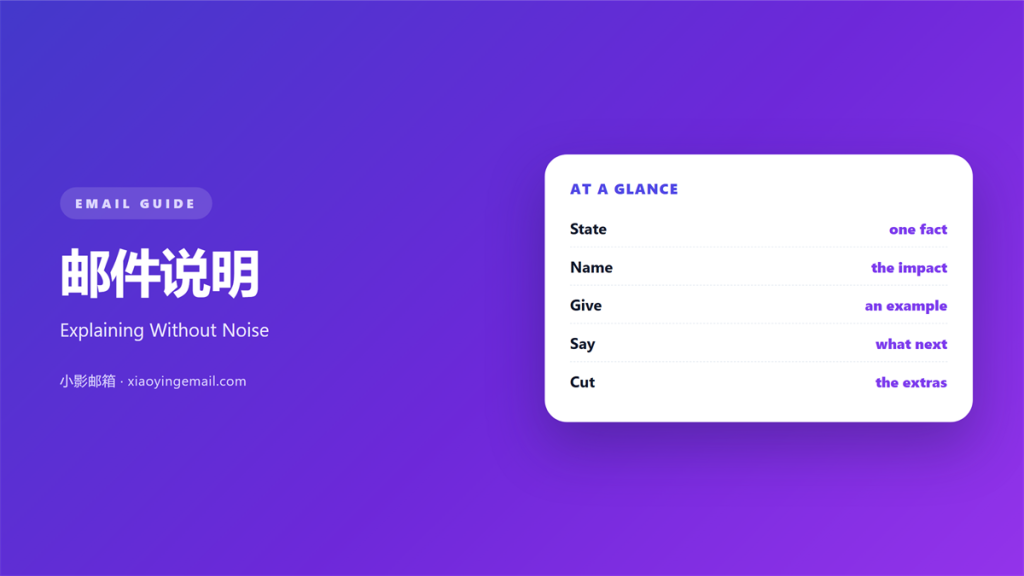
- 邮件说明 explains one thing at a time.
- State the fact, then the impact.
- End with what happens next.
- Keep paragraphs to three lines.
- Remove any detail the reader cannot use.
What 邮件说明 means
邮件说明 is a short note that makes one thing clear.
It is not a report and not a story.
It answers a question the reader already has.
Or it prevents a question they would ask later.
The job is to remove confusion, not to show effort.
A good 邮件说明 fits on one screen.
It uses plain words and short paragraphs.
It puts the key fact near the top.
Then it stops.
Most long explanations are long because the writer is unsure.
Short ones are easier to trust.
A clear 邮件说明 also makes a reply easier.
The reader can answer in one line.
That saves a second exchange.
Why 邮件说明 matters
People read email in fragments of time.
A clear note respects those fragments.
A vague note creates more work for everyone.
It leads to questions, calls, and delays.
Clear writing also protects decisions.
The reader can act without guessing.
That speed is worth more than perfect wording.
It also builds a reputation for reliability.
Readers learn that your notes can be acted on.
That trust is hard to buy.
One thing at a time
Each note should carry one main point.
Two points compete for attention.
Three points usually mean two emails.
Split the message and send it in order.
When 邮件说明 helps
邮件说明 helps when a process changes.
Readers need to know what is different and when.
It helps when a delivery will be late.
Say the new date before anyone asks.
It helps when a policy needs a plain summary.
It also helps when you correct an earlier note.
Name the old sentence and replace it.
Then say whether anything else changes.
A short correction prevents a long thread.
Three good moments to write
First, when a decision affects other teams.
Second, when a mistake changes a timeline.
Third, when a new person joins a thread.
In each case, explain the change and the next step.
When 邮件说明 hurts
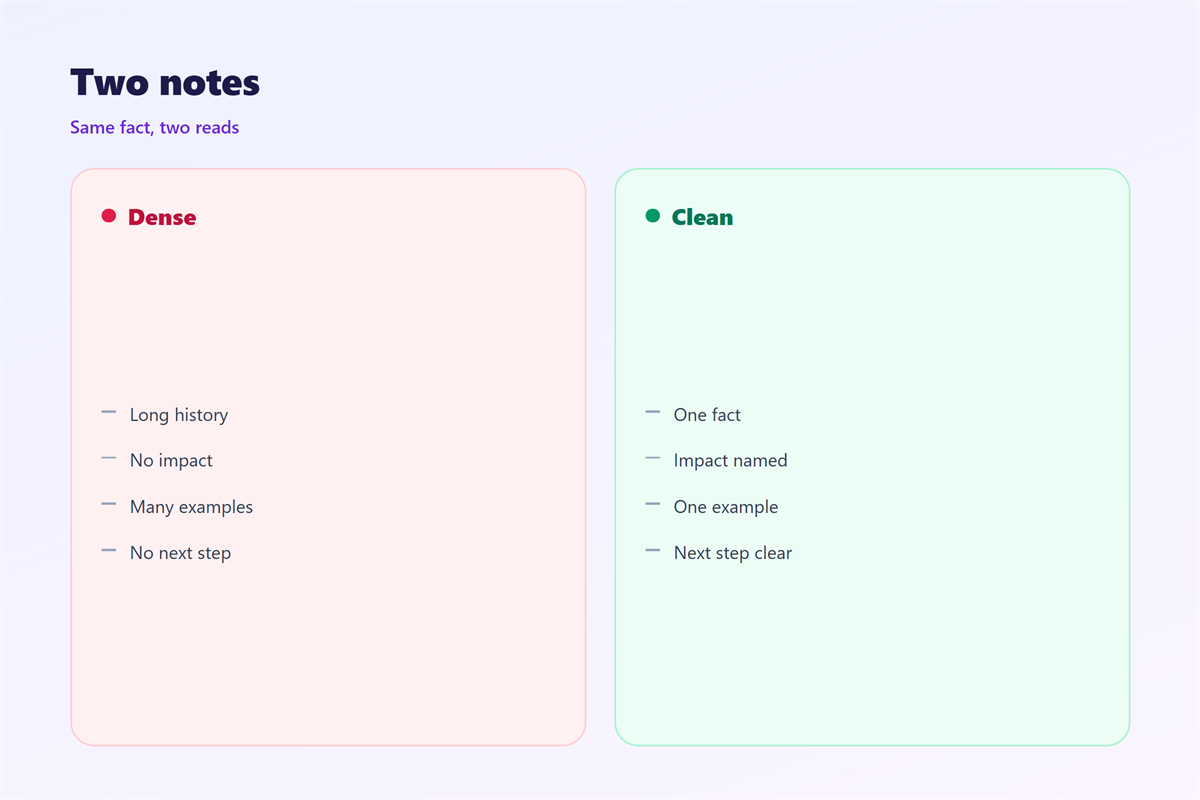
邮件说明 hurts when it starts with history.
Nobody needs the full background first.
It hurts when it hides the point in paragraph four.
Busy readers stop before they reach it.
It hurts when the tone turns defensive.
Defence invites an argument you did not want.
It also hurts when it explains the same idea twice.
Repetition reads as doubt.
Finally, avoid detail that changes no decision.
Detail feels like proof to the writer.
To the reader it looks like noise.
Keep the proof and cut the tour.
邮件说明 and structure
Structure carries more weight than style.
Start with the fact in one sentence.
Then say who or what is affected.
Then give the next step and the date.
Add context only if it changes the meaning.
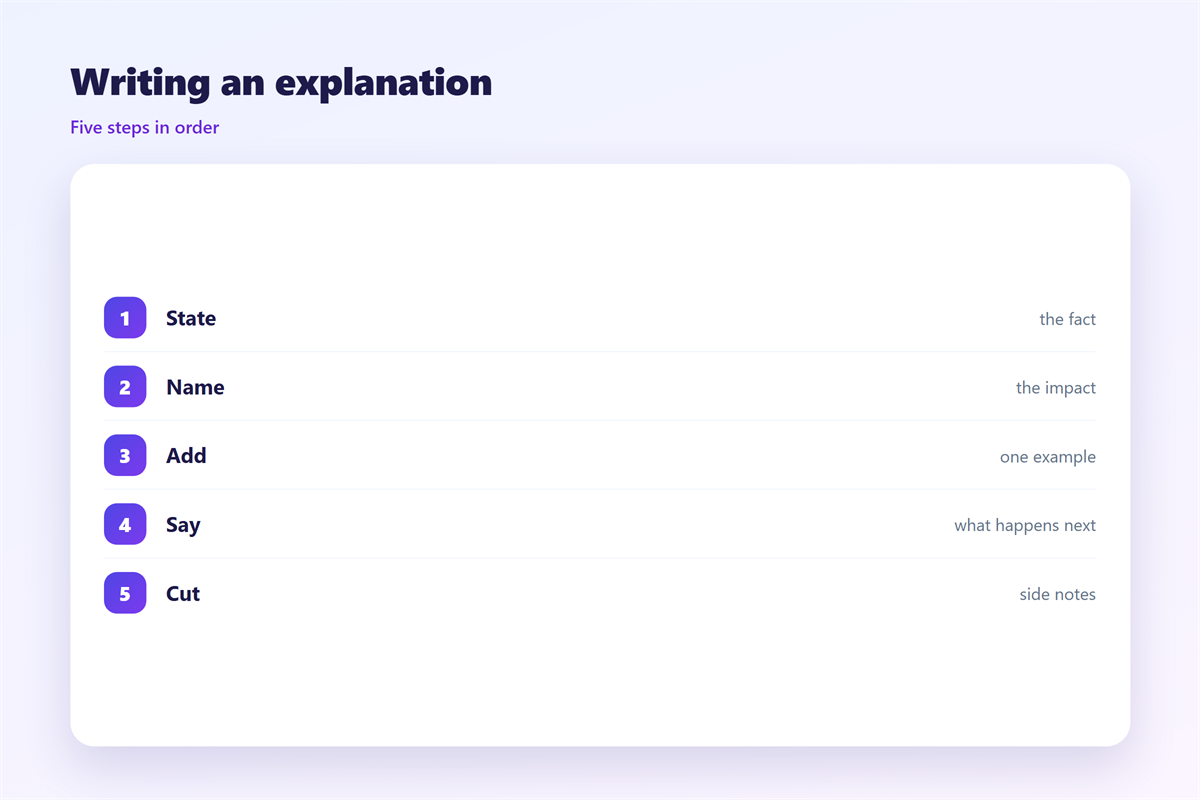
Fact, impact, next step
That order works for almost every note.
Fact tells the reader what happened.
Impact tells them why it matters.
Next step tells them what to do now.
Keep each part to one or two lines.
If a part needs more, split the note.
Or move the detail to an attachment.
The body should still stand alone.
How to use 邮件说明 well
Write the point before you write the greeting.
Draft the whole note in five sentences.
Then cut one sentence.
Use a short subject that names the change.
Break the body into small blocks.
Use a bullet list only for three or more items.
Name the owner of each action.
Close with one clear request or one clear date.
Then read the note from the reader’s seat.
Ask what they still do not know.
Add only that answer.
Cut the background
Background feels safe to the writer.
It feels slow to the reader.
Keep only the detail that explains the fact.
Move the rest to a linked document.
邮件说明 after a mistake
A mistake needs a shorter note, not a longer one.
Say what happened in plain words.
Say what it affects and what it does not.
Say what you have already done.
Then give the next update and its date.
Do not explain your intentions at length.
Intentions do not fix a missed deadline.
One short apology is enough.
Then spend the words on the repair.
Readers trust a fix more than a speech.
Send the next update even if nothing changed.
Silence after a mistake looks like hiding.
Keeping 邮件说明 honest
Honesty matters most when the news is bad.
Do not soften a delay into a vague phrase.
Give the new date, even if it is uncertain.
The body layout is covered in 邮件正文.
Block spacing sits in 邮件段落.
The short summary appears in 邮件要点.
A later correction is handled in 邮件补充说明.
Never write that something is done when it is not.
A small accurate note beats a large hopeful one.
Accuracy is the whole product here.
If you do not know the answer, say when you will.
A promised update is better than a guess.
FAQ
How long should 邮件说明 be?
Five short sentences is a good target. One screen is the limit for most notes.
Should I use bullet points?
Yes, for three or more items. A single item belongs in a normal sentence.
Where does the request go?
Near the end, with a name and a date. One request per note works best.
What if the topic is complex?
Send a short summary first. Link to a longer document for the detail.
评论
还没有评论,来说两句吧。
评论功能已关闭。