 小影邮箱
邮件会议室怎么订?Booking by Mail
Key Takeaways
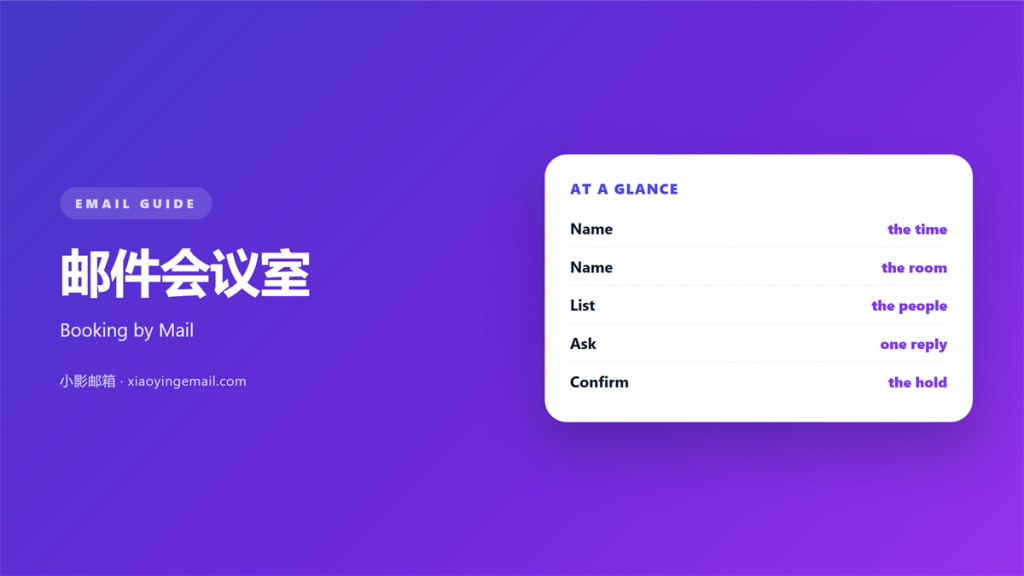
- 邮件会议室 is a booking request sent by mail.
- Name the time, the room, and the people.
- Check that the room holds everyone.
- Put the details in the calendar invite.
- Confirm once the room is held.
What 邮件会议室 means
邮件会议室 is a written request for a room and a slot.
It does three jobs in one note.
It asks for a space. It names a time.
It tells the other people where to go.
The note is not the booking itself.
The booking exists when the system confirms it.
Many teams confuse the two.
They send a warm note and assume the room is theirs.
Then two groups arrive at the same door.
A clear 邮件会议室 request prevents that scene.
The room manager answers dozens of these each week.
Make yours the easy one to approve.
A short note also respects the reader’s time.
Why 邮件会议室 matters
A room is a shared and limited resource.
One vague note can block a room for hours.
Clear requests save everyone a walk down the hall.
They also protect the meeting itself.
A room that fits the group keeps people comfortable.
A room with the right screen keeps the demo working.
The 邮件会议室 note is often the only record.
If it is vague, the booking cannot be checked later.
A small delay in the reply can push a meeting to another day.
A clear request also keeps the room list accurate.
One note, one slot
Ask for one room and one time.
Lists of options slow the answer.
The room manager must pick, and the thread grows.
When 邮件会议室 helps
邮件会议室 helps when the team is small.
A short note can hold every detail.
It helps when the room is shared across floors.
The note tells people which lift to take.
It also helps with recurring meetings.
One clear template works for months.
And it helps when guests visit.
The note can carry the address and the desk name.
A visitor badly needs that floor and desk name.
A recurring booking needs the same facts each time.
When a form is better
Some offices have a booking tool.
Use it when it exists, and keep the mail short.
The mail can carry the link and the reason.
When 邮件会议室 hurts
邮件会议室 hurts when the time is vague.
Words like “sometime Tuesday” block a whole day.
It hurts when the room is not named.
People arrive at the wrong floor.
It hurts when the note goes to too many people.
Twenty recipients turn a booking into a debate.
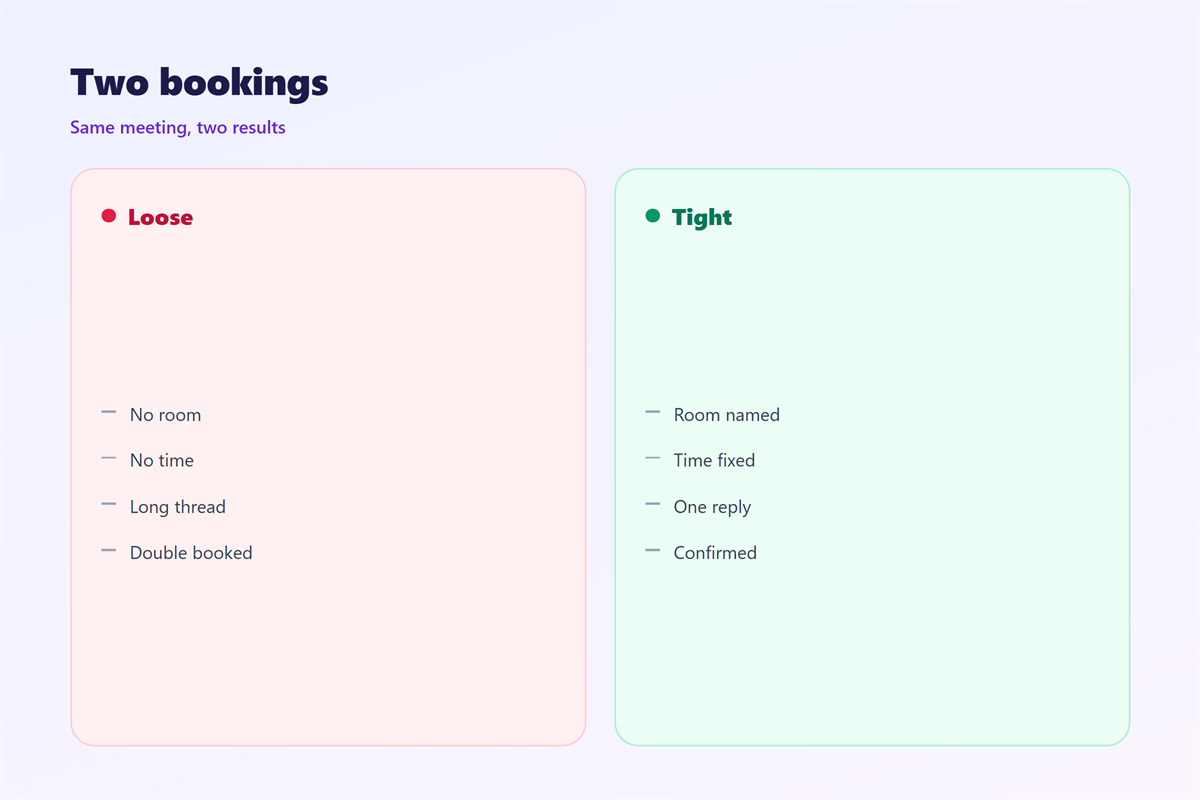
It also hurts when the booking is never confirmed.
Silence feels like yes to the sender.
It feels like nothing to the room manager.
That gap causes most double bookings.
A long thread hides the one detail that matters.
邮件会议室 and the calendar invite
The invite is the part people keep.
Put the room in the location field.
Put the address in the notes.
Add the dial-in link if the meeting is hybrid.
Then check that the room accepts the invite.
Some systems book a room only through the invite.
A 邮件会议室 without an invite may vanish.
Send the invite at the same time as the note.
Then the two records always match.
Delete the invite if the meeting is cancelled.
Check the attendee list before you send.
How to book 邮件会议室 well
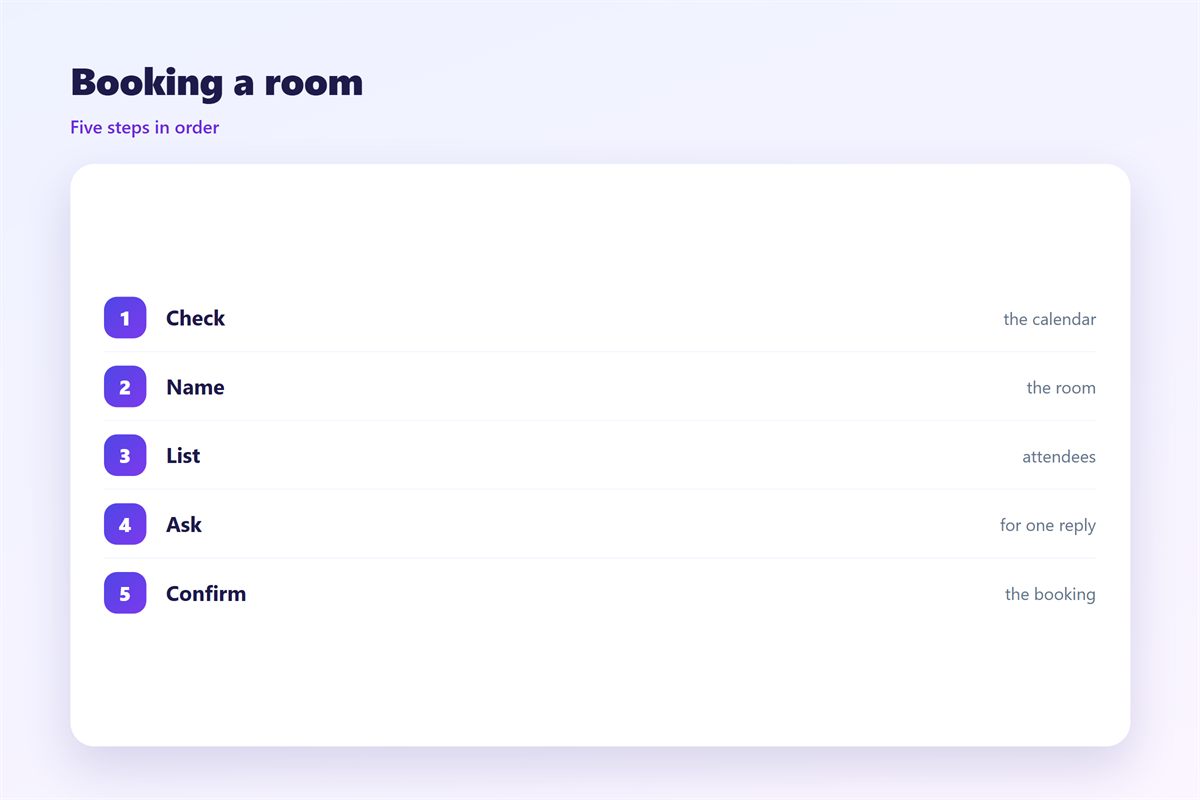
Write the subject as a booking, not a chat.
Include the date, the start, and the end.
Name the room or the floor you need.
List the people who must attend.
Say how many seats you need.
Mention any equipment the meeting needs.
Then ask for one clear reply.
Give the manager an easy yes
A short checklist is faster to approve.
Put the details in the same order every time.
Keep the request under one screen.
Then confirm as soon as the answer arrives.
Then read the note once as the manager.
邮件会议室 and the agenda
A booking often hides a second question.
What will the group do in that room?
A short agenda answers it.
Three lines are enough for most meetings.
It tells people whether they are needed.
It also keeps the meeting inside its slot.
A 邮件会议室 with no agenda invites drift.
Add the agenda to the invite, not just the mail.
Then late joiners see the same plan.
Send the agenda a day before the meeting.
Then check who declines and adjust.
It also gives latecomers a way to catch up.
Keeping 邮件会议室 requests clear
A booking is a small contract.
Both sides need the same facts.
The time choices sit in 邮件预约.
The invite rules are in 邮件日历邀请.
The meeting plan sits in 邮件议程.
Moving a slot is covered in 邮件改期.
Then keep one template for the team.
Update it when the office changes.
Review the room list each quarter.
Rooms get renamed and floors get rebuilt.
An old name in a template causes real delays.
A booking request should be easy to answer.
That is the whole test.
That habit keeps the calendar clean.
FAQ
Does 邮件会议室 book the room for me?
No. The mail is the request. The room is held only when the calendar or the manager confirms.
What if two people ask for the same room?
The calendar decides. One request will fail, so the sender must offer a second time.
Should I include the agenda in the first mail?
Yes, when you have one. A short plan helps the manager judge the length of the booking.
How far ahead should I book?
Two working days suits most rooms. Large rooms and guest visits need a week.
评论
还没有评论,来说两句吧。
评论功能已关闭。