 小影邮箱
道歉邮件怎么写?What to Admit and What to Leave Out
What an 道歉邮件 is really doing
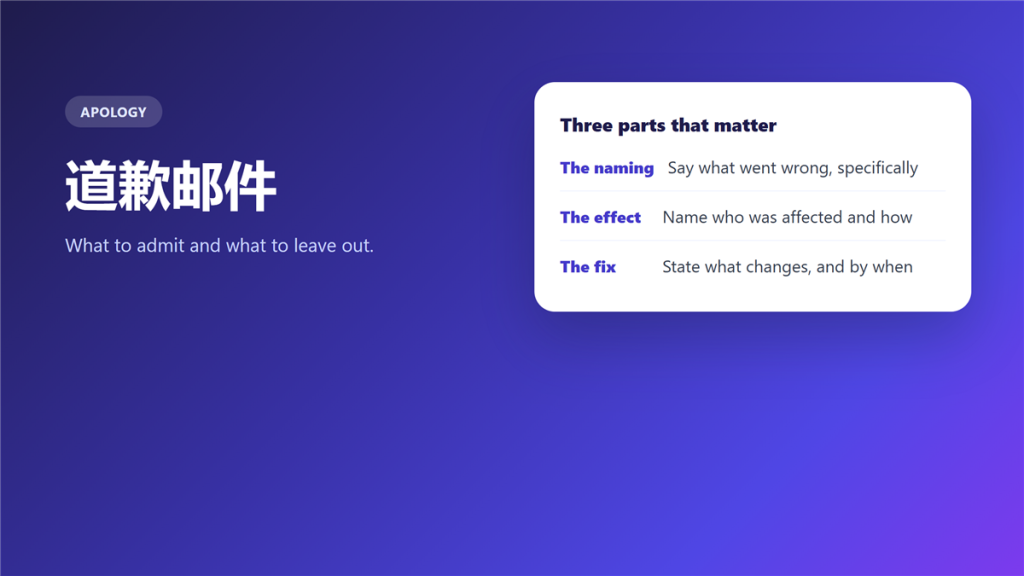
道歉邮件 is not an expression of regret. It is a repair action, and it is judged on whether the reader can stop worrying about the problem.
A supplier once sent a two line note after missing a delivery window, naming the date, the cause and the change to its process. The client kept the account. A longer 道歉邮件 from a different supplier, full of context about staffing, ended the relationship instead.
Key Takeaways
- 道歉邮件 repairs a problem rather than expressing regret.
- Name the fault instead of the mistake category.
- Apologising early costs less than apologising late.
- Never attach a condition to an apology.
- Explain the fix, not the internal pressures.
- Two lines often beat two paragraphs.
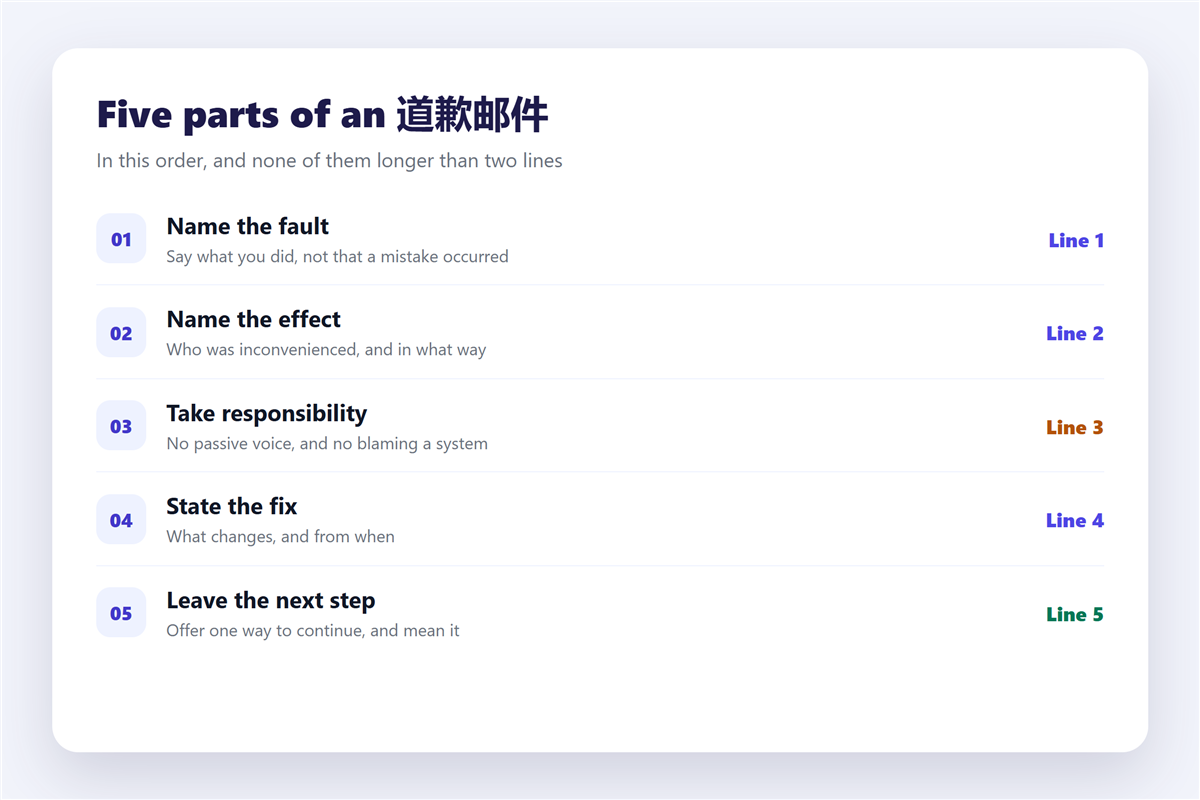
Five parts of an 道歉邮件
- The fault, named specifically.
- The effect, on a named group of people.
- The responsibility, in the active voice.
- The fix, with a date attached to it.
- The next step, offered rather than demanded.
The third part is where most apologies weaken, because the passive voice carries responsibility away from the writer. Therefore replace the mistakes were made with a plain statement of what you did. The tone that reads as sincere rather than rehearsed is covered in 邮件礼仪.
How much to explain in an 道歉邮件
Explanation divides usefully into two kinds, and only one of them belongs in the message.
The cause the reader needs
If the reader has to change something on their own side, explain it. Notably, a cause that explains a delay is worth one sentence and no more.
The pressures the reader does not
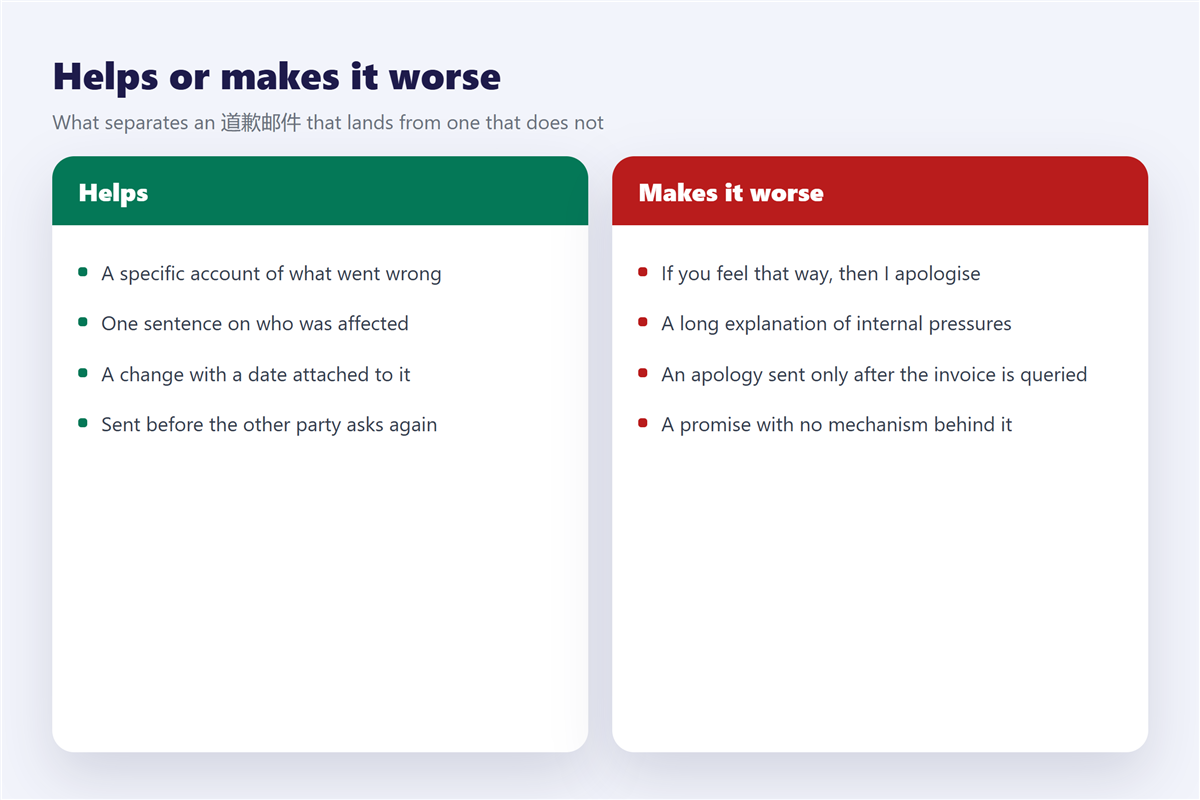
Staff shortages, a bad week and a difficult quarter are your problems rather than theirs. In addition, describing them reads as an excuse attached to an apology.
Anything that sounds like a condition
Constructions such as if you feel that way weaken the sentence they sit in. Consequently, cut every clause that begins with if.
When an 道歉邮件 should be sent
Timing changes the value of an apology more than wording does.
Send it as soon as the fault is known, even before the fix is arranged, because a reader who knows something is being handled stops escalating. Then send a second short note when the fix is complete, in the same thread. If the matter affects several people, keep them in one chain rather than writing separately to each, as described in 邮件回复. Where the apology is one of many routine messages, the pitfalls of reuse are in 邮件模板.
道歉邮件 and the signature
The closing lines carry more weight than people expect, because they say who is now responsible.
Sign with a name a person can reply to, and give one route back rather than three. What belongs in that block is set out in 邮件签名, and a subject line that names the problem rather than the emotion helps the note get opened, as shown in 邮件标题.
Frequently asked questions
How long should an 道歉邮件 be?
Two to five lines for a routine fault, and never longer than the problem deserves.
Should an 道歉邮件 offer compensation?
Only if the loss is material. Offering money for an inconvenience can look like a settlement.
Can an 道歉邮件 be sent by a colleague?
It can, and it lands better when the sender owns the fault. A delegated apology reads as a formality.
Is it too late to send an 道歉邮件?
No, and it should still be specific. A late apology without detail is worse than none at all.
评论
还没有评论,来说两句吧。以下为本文的引用通告: