 小影邮箱
邮件下单怎么写?Order Mail That Is Clear
Key Takeaways
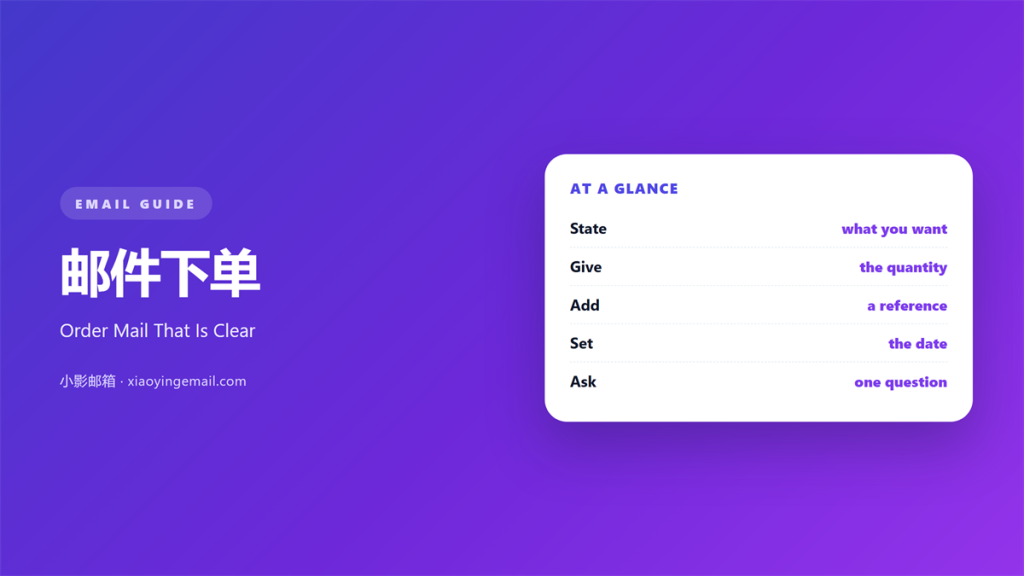
- 邮件下单 removes doubt from a purchase.
- List the item, the amount, and the date.
- One order per message keeps it clean.
- Ask for a written confirmation in return.
- Keep the thread together for later.
What 邮件下单 means
邮件下单 is the mail that places an order.
It turns a spoken request into a clear record.
It names what you want and how many.
It names the price you agreed to pay.
It names the date you need the goods.
A good order leaves nothing to guess.
The supplier can act without a single question.
An order is not the same as an enquiry.
An enquiry asks for facts. An order confirms a choice.
So keep the two messages separate.
Send the enquiry first and collect the prices.
Then send the order once you have decided.
That path keeps a clean paper trail.
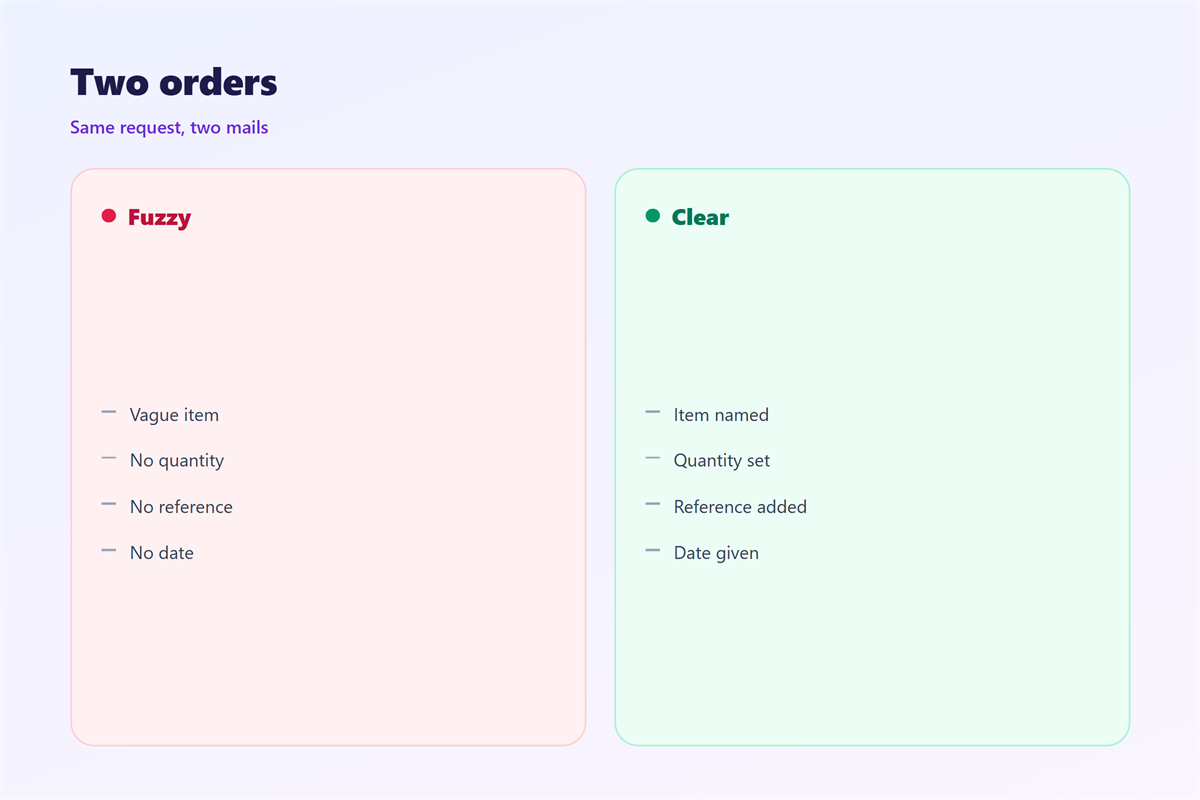
A vague 邮件下单 invites the wrong goods.
A precise one saves weeks of repair.
Keep the note short and easy to answer.
A clear order respects the supplier’s time.
Why 邮件下单 matters
An order is a small contract in writing.
If a dispute starts, the mail is the proof.
So every key term should sit in the text.
It also speeds the supplier’s work.
A clear note moves straight to the warehouse.
A vague one sits in a queue of questions.
A steady 邮件下单 also protects your budget.
The agreed price is fixed in the thread.
Then no one adds a surprise charge later.
It also helps a busy team.
Anyone can open the thread and see the facts.
The five details
Item, quantity, price, date, and delivery address.
If all five appear, the order is solid.
Miss one and the supplier must write back.
When 邮件下单 helps
邮件下单 helps whenever money changes hands.
Use it for a first order with a new supplier.
Use it for a repeat order of the same goods.
Use it when the deadline is tight.
Each case needs the same care.
Write the order while the details are fresh.
It helps when several people share the buying.
One thread keeps everyone on the same page.
It also helps when a price was agreed by phone.
Put that price in the mail right away.
Then the spoken deal becomes a written one.
One item per line
List each item on its own line.
Add the code, the size, and the count.
A table beats a long sentence every time.
Then the reader can check it in seconds.
A good list also speeds the reply.
When 邮件下单 hurts
A careless 邮件下单 can cost real money.
A wrong code sends the wrong product.
A missing date delays the whole shipment.
Then both sides lose time and trust.
Bundling orders also causes trouble.
Two orders in one note are easy to mix up.
So send one order per message.
Keep a reply in the thread for the next one.
Another risk is a silent change.
If the price shifts, say so in writing.
A quiet change looks like a mistake later.
So keep every term visible and dated.
邮件下单 and price
Price is the term people argue about most.
Always write the currency and the unit.
A number alone can mean two different things.
Then state whether tax is included.
Then state the delivery fee.
A good 邮件下单 shows the final total.
That one figure removes most disputes.
Discounts should also appear in the text.
A spoken discount is easy to forget.
So repeat it in the order and thank them.
Then ask them to confirm the total in reply.
A short reply closes the deal well.
How to write 邮件下单 well
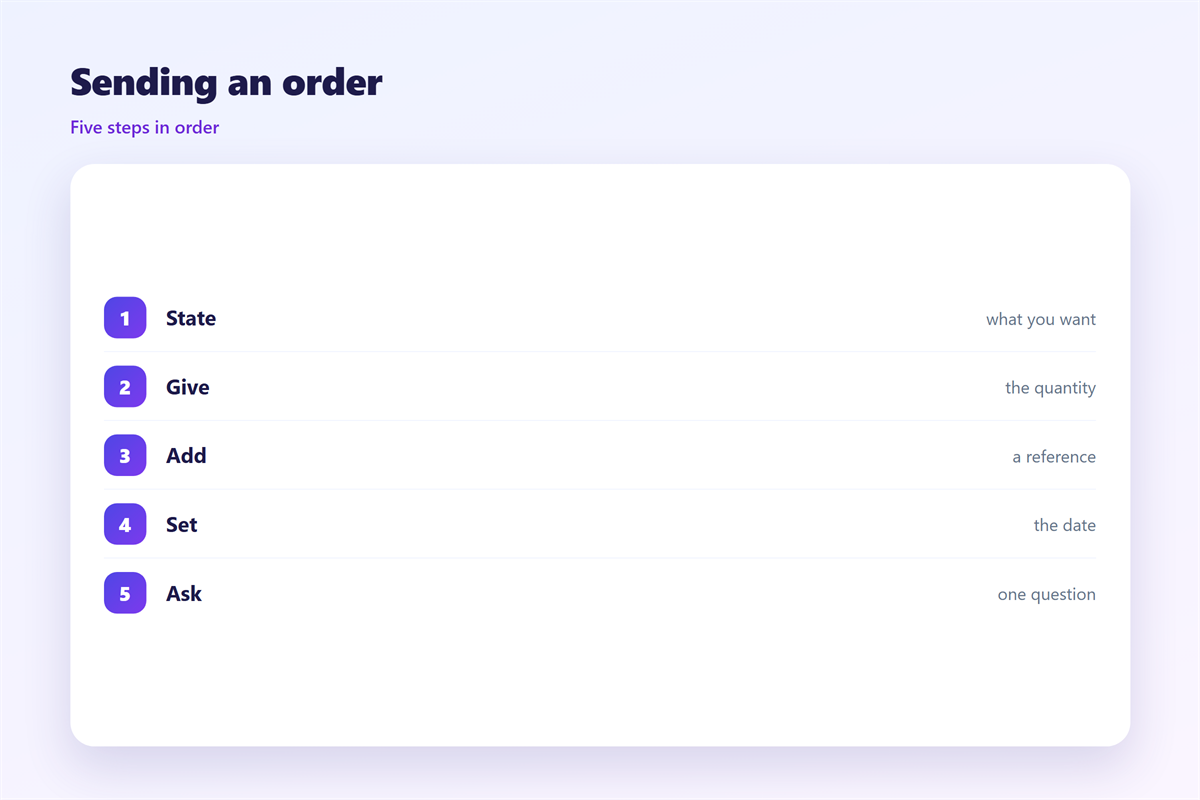
Start with a subject that names the order.
Add a reference number if you have one.
Then greet the supplier by name.
Then state the order in one clear line.
Then list the items in a short table.
Then give the price and the delivery date.
Then ask for a written confirmation.
Keep the note short and easy to scan.
Read it once as the supplier would.
Cut any line that adds no fact.
Then check the codes against the catalogue.
Then send it and keep the thread open.
Good 邮件下单 feels like a short, tidy list.
A short template
Greeting, items, price, date, and thanks.
Five small parts make one strong order.
邮件下单 in a team
A shared order needs one clear owner.
One person sends the mail and tracks the reply.
Others copy the thread but do not rewrite it.
Then the record stays single and clean.
Agree on who may change the order.
A late edit from the wrong person causes chaos.
So keep the edits with the owner.
It also helps to log each order in one place.
A simple sheet shows what is on the way.
Then the team sees the full picture.
A tidy 邮件下单 keeps the buyers calm.
They always know what they asked for.
So fewer orders go astray each month.
Keeping 邮件下单 clear
Consistency makes an order easy to trust.
Pick one format and use it every time.
The price question itself is covered in 邮件询价.
The quote that follows sits in 邮件报价.
The receipt that closes the loop appears in 邮件订单确认.
The wider buying process sits in 邮件采购.
Then a new colleague learns it in a day.
A shared format saves everyone time.
FAQ
Is an order the same as an enquiry?
No. An enquiry asks for prices. An order confirms one.
One order or several in a message?
One order per message. It keeps the record clean.
Should I ask for a confirmation?
Yes. A short reply shows the supplier agrees.
What if the price changes after I send?
Ask them to confirm the new price in writing.
评论
还没有评论,来说两句吧。
评论功能已关闭。