 小影邮箱
邮件伪造怎么防?Stopping Fake Senders
Key Takeaways
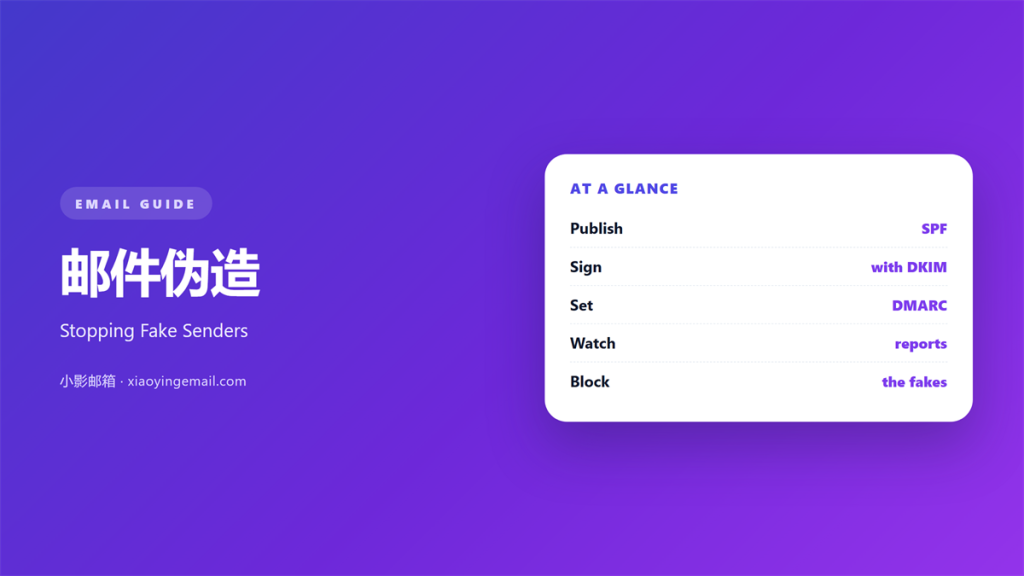
- 邮件伪造 is a message sent under a name you do not own.
- The sender line can be faked with little effort.
- Authentication records are the first defence.
- Watch the reports, not just the inbox.
- Tell readers how to check a real message.
What 邮件伪造 means
邮件伪造 is a message sent from a forged address.
The reader sees a name they trust.
The address behind it belongs to someone else.
Sometimes the domain is real and the display name is false.
Sometimes the whole domain is a near copy.
Both forms trade on trust that was never given.
A forged note rarely asks for much at first.
It opens a door and waits.
The next message asks for a payment or a password.
That quiet first step is what makes it work.
Good 邮件伪造 defence starts before the message arrives.
The fake rarely copies a whole message.
It copies the parts that readers trust.
A logo, a name, a familiar subject line.
Why 邮件伪造 matters
One forged note can cost more than a year of work.
Readers blame the brand, not the criminal.
They remember the fake invoice, not the fix.
Trust in the real mail also falls.
People start to check the sender address twice.
Some stop opening anything that looks official.
That loss is slower and harder to repair.
A 邮件伪造 report also affects delivery.
Mail systems judge a domain by its worst day.
Repeated abuse pushes good mail into the spam folder.
That can hide a real invoice or a password reset.
The reader then misses something important.
The cost is paid by the reader
A staff member may pay the fake bill.
They carry the blame even when the fault is elsewhere.
Clear warnings protect them as much as you.
When 邮件伪造 hurts
邮件伪造 hurts most when nobody watches the reports.
Most forged mail never reaches your inbox.
It goes to your customers instead.
You learn about it from an angry reply.
It hurts when a domain sits unused.
Old domains are easy to spoof and easy to forget.
It hurts when teams share one sending domain.
A weak link exposes every brand on it.
Small lists are not safer. They are just quieter.
A quiet list also gives you less warning.
Fewer replies means fewer early signals.
So watch the reports even when nothing seems wrong.
邮件伪造 and the reply trap
Many fakes do not ask for a click.
They ask for a reply.
A reply feels private and safe.
The sender then moves the talk to another channel.
Watch for a changed reply address.
Watch for urgency about a payment.
A good check is a shared phrase for money requests.
That one habit stops most of these attempts.
Keep the phrase out of public channels.
Change it when someone leaves the team.
How to stop 邮件伪造
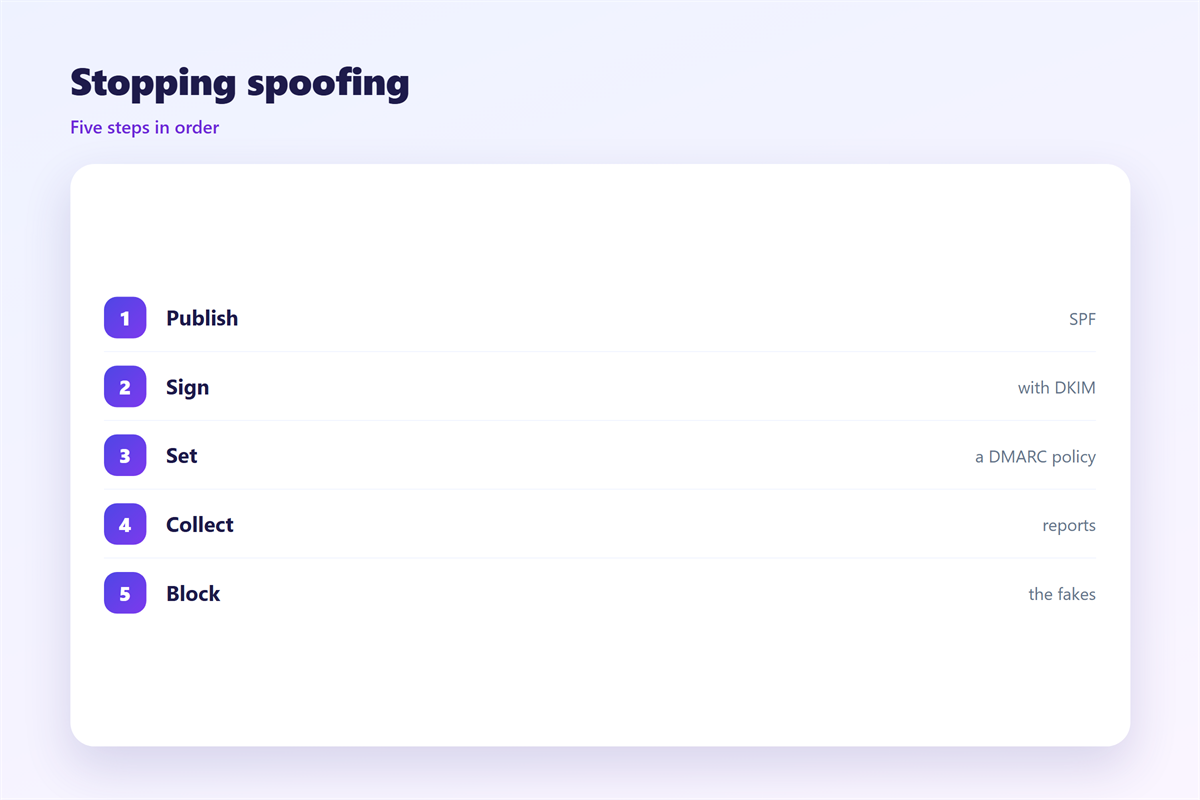
Start with the records that prove who sends for you.
Publish a sender policy and keep it current.
Sign every outgoing message with a key.
Then set a policy for mail that fails the checks.
Begin with a watch mode.
Move to quarantine once the reports look clean.
Test each change on a small domain first.
Watch before you block
A strict rule too early can stop real mail.
Read two weeks of reports before you block.
Fix every legitimate sender that fails.
Then tighten the rule with confidence.
邮件伪造 and small teams
A small team can still do the basics.
Many providers publish the records for you.
Copy them once and check them each year.
Name one person who owns the domain list.
That person should know every sender in use.
Write the list down
Keep a written list of tools that send mail.
Remove old tools as soon as they stop sending.
邮件伪造 loves a forgotten form or plugin.
Review the list after every product change.
Small teams often skip this step and pay for it.
Give the job a name in the calendar.
A yearly review is enough for most teams.
Put the date next to the domain renewal.
邮件伪造 across your domains
Most brands own more than one domain.
Each one needs the same checks.
A forgotten domain can be used for years.
Buy the near copies of your main name.
Point them at a page that explains the brand.
Then protect them like the main one.
Do not let a parked domain sit silent.
A silent domain is an open door.
Check the full list twice a year.
Keep the list in one shared place.
Add the owner and the last check date.
A short list beats a perfect plan.
Keeping 邮件伪造 out of the inbox
Readers are the last line of defence.
Teach them what real mail looks like.
Show the address, not just the name.
Say which requests you never make by mail.
The sender rules sit in 邮件SPF.
The signing step is covered in 邮件DKIM.
The policy layer appears in 邮件DMARC.
The full picture sits in 邮件认证.
Then put a short warning in every invoice mail.
Keep it to one line and one clear action.
A 邮件伪造 will still arrive some days.
The goal is to make it obvious and harmless.
FAQ
Can 邮件伪造 use my exact address?
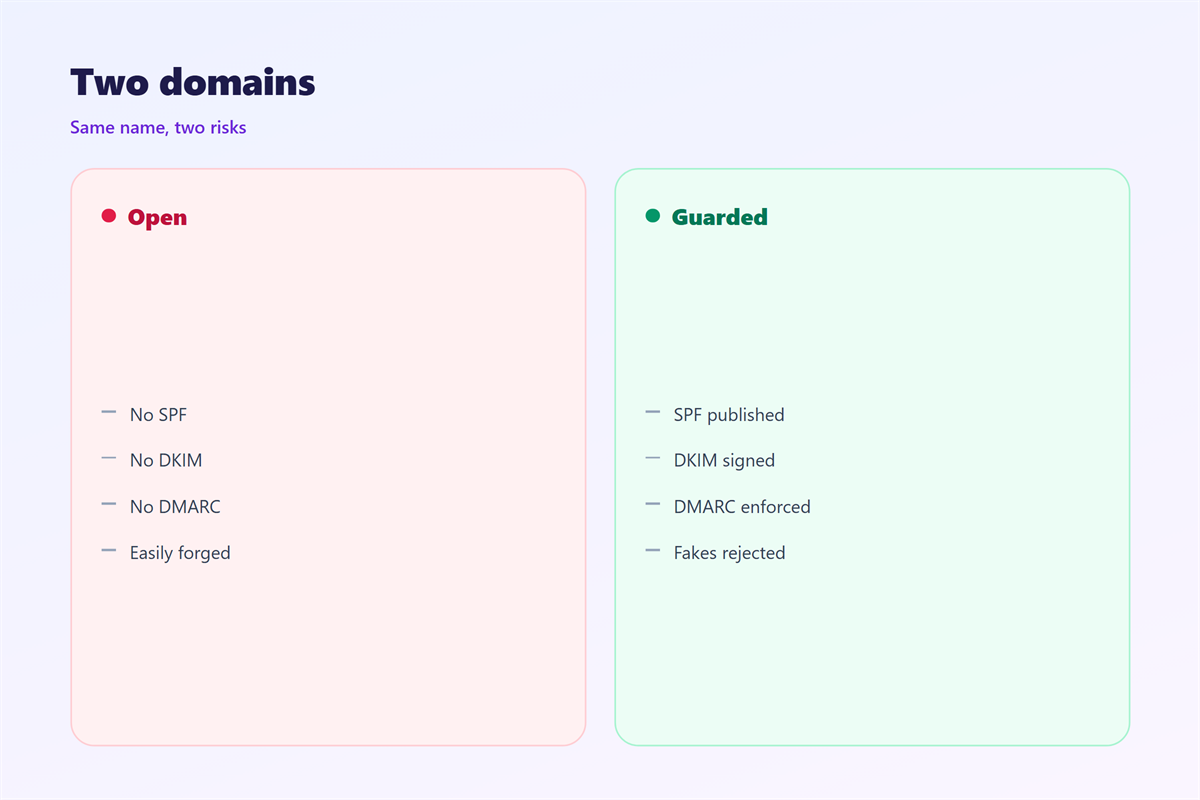
Yes. The sender address is easy to copy. Authentication records make that copy much harder to deliver.
Do authentication records stop every fake?
No. They stop address forgery, not a real account that was stolen. Train readers to check requests.
What should I do with a forged message?
Keep the full headers and report it. Then warn the people who received the same note.
How long does setup take?
A small domain can be ready in a day. Reports take a few weeks to trust.
评论
还没有评论,来说两句吧。
评论功能已关闭。