 小影邮箱
邮件加急怎么标?Marking It Urgent
Key Takeaways
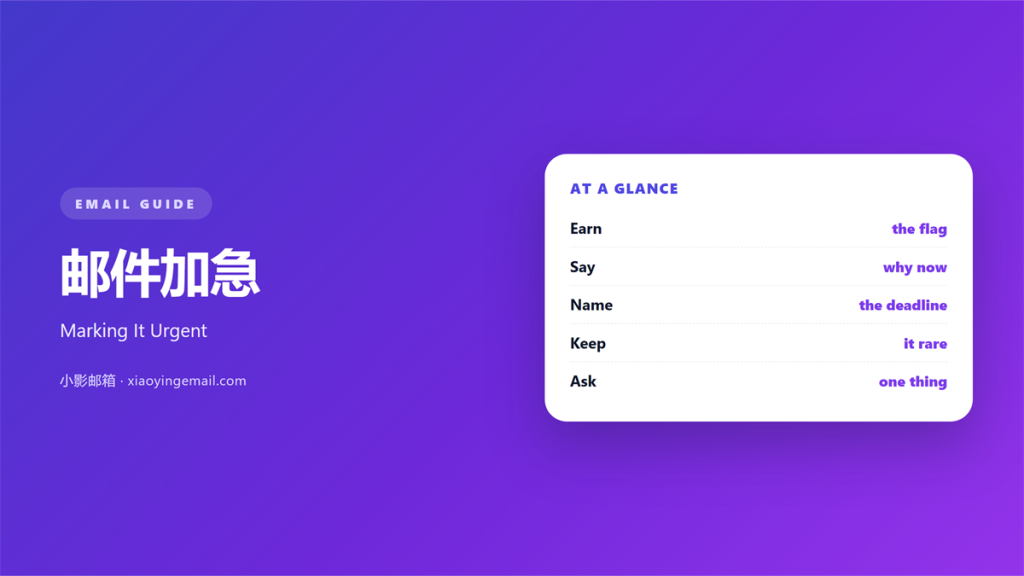
- 邮件加急 should mark a real deadline, not a mood.
- A rare label keeps its power, and a common one fades.
- Put the ask and the deadline in the first line.
- Say what breaks if the reply arrives late.
- Follow up once, then let the label rest.
What 邮件加急 means
邮件加急 is the mark that tells a reader to act now.
It is a promise that a reply cannot wait.
Every inbox offers a way to send it.
The flag may be a red mark, a high setting or a short tag.
The tool is simple. The judgement is not.
Some notes deserve the label, and most do not.
That gap is where many people go wrong.
A good 邮件加急 is rare, specific and honest.
It saves a real block instead of feeding a habit.
A clear flag also sets a shared standard.
When it is used well, everyone benefits.
Most teams can learn the habit in a week.
Why 邮件加急 matters
A reader’s attention is limited each day.
When every note shouts, none of them is heard.
So the value of 邮件加急 depends on its scarcity.
Use it well and it clears a genuine block.
Use it often and you train others to ignore you.
The cost shows up later, in missed deadlines and cold replies.
That is why the label deserves real care.
Attention is the scarcest thing in a busy inbox.
Spending it wisely is a genuine skill.
One false alarm can cost a full hour.
When a message is truly urgent
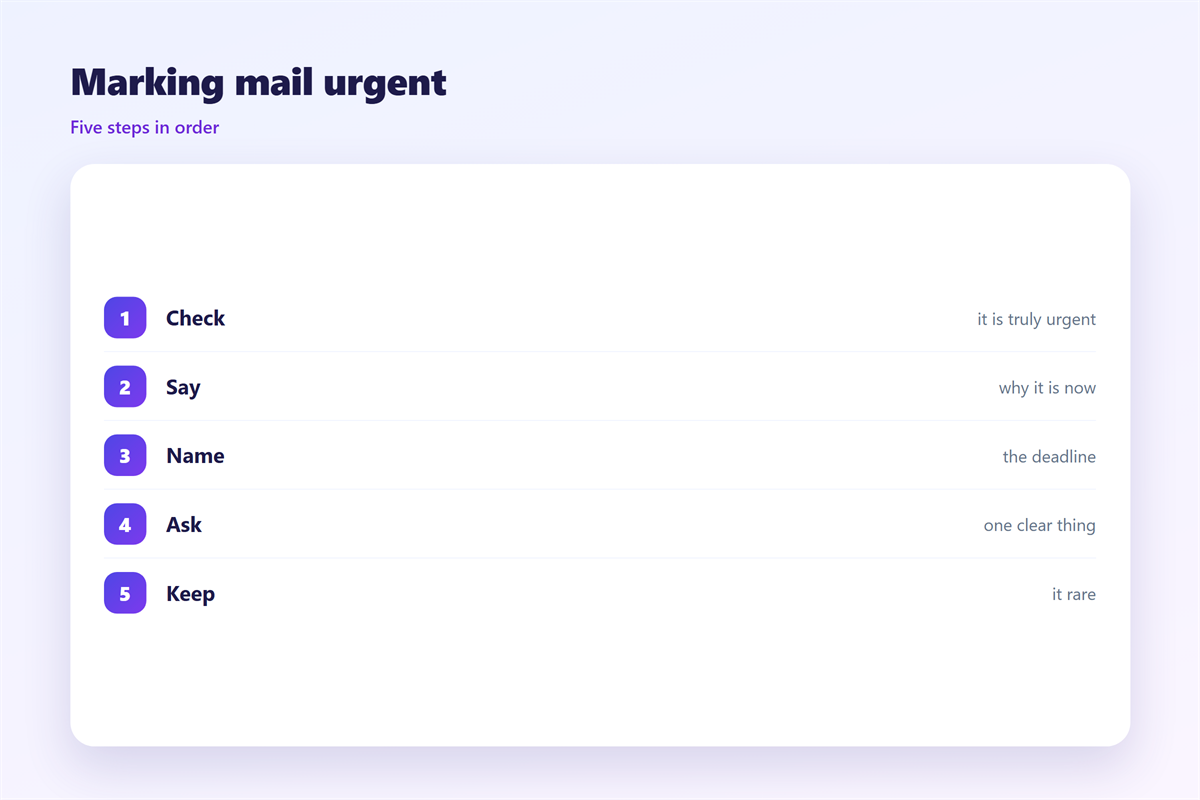
Ask one question before you flag a note.
Will something break if this waits a day?
If the answer is yes, the label fits.
If the answer is no, use a normal send.
Real urgency usually has a name and a time.
It rarely comes with a vague feeling of hurry.
When not to use 邮件加急
Many notes feel urgent but are only new.
Feeling rushed is not the same as a deadline.
A 邮件加急 sent at midnight also breaks trust.
It assumes the reader owes you their evening.
Save the label for the hours people actually work.
A quiet note in the morning often gets a faster reply.
The label that cried wolf
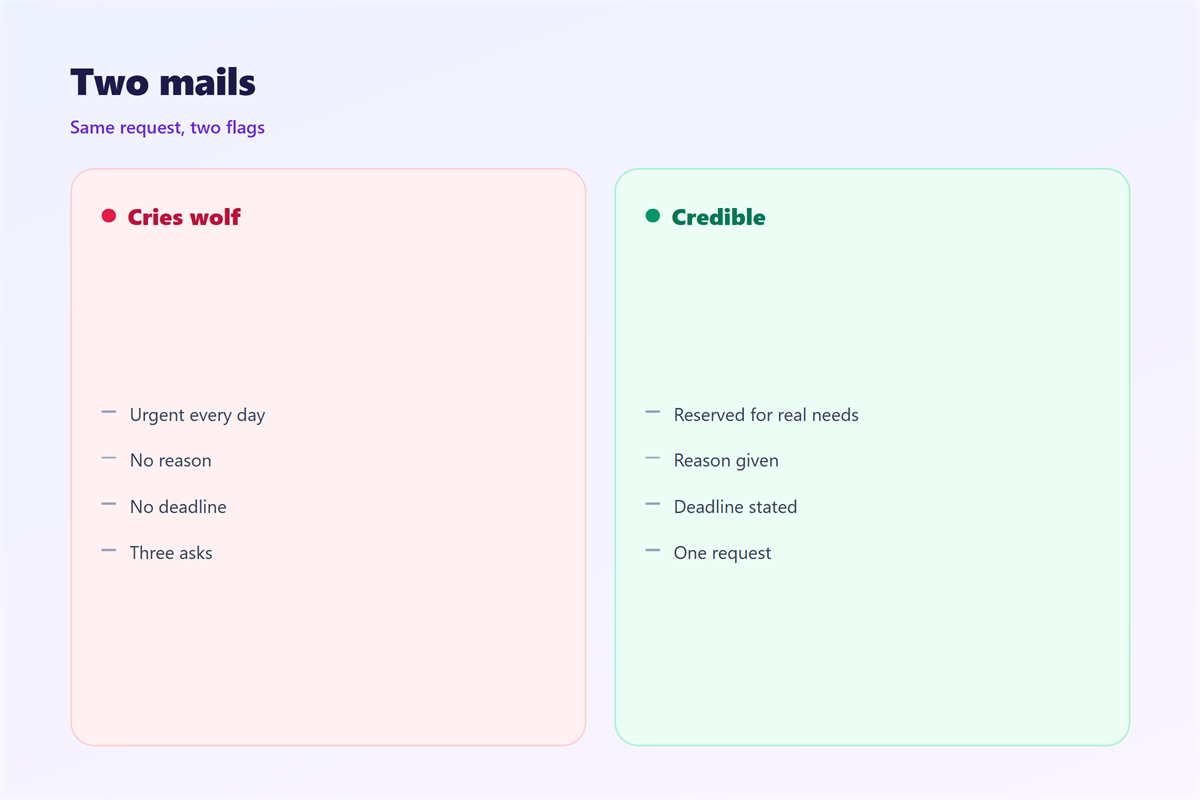
A team that flags everything soon flags nothing.
People learn to skim the red marks.
Then the one real crisis slips through unseen.
That habit is hard to undo once it takes hold.
Fewer flags keep the rare one sharp.
Ask a quiet colleague what they think.
If they shrug, the note can wait.
Trust, once spent, is slow to rebuild.
Writing a 邮件加急 that gets read
The words matter as much as the flag.
A bare flag with a vague note only frustrates people.
So make the opening line carry the weight.
Signal it in the subject
Put the ask in the subject line.
A short tag like “urgent” can help as well.
Keep the subject concrete and easy to scan.
Fresh words beat a recycled old thread.
State the ask and the deadline
Name the exact action you need.
Then give a clear time for it.
Say what breaks if the reply is late.
One short sentence for each part is enough.
A 邮件加急 with a firm deadline is hard to ignore.
Keep the tone plain and the facts close.
A calm note still reads as serious.
Short lines are easy to read on a phone.
Timing a 邮件加急
Send a 邮件加急 when the clock is real.
Do not send one late on a Friday.
Check the reader’s time zone first.
If the hour is odd, wait for the morning.
Follow up once, and not five times.
A single nudge is a reminder. A stream of them is noise.
If the matter fades, drop the flag at once.
Update the thread when the pressure ends.
Tell people the crisis is over.
Then close the loop with one short line.
Signs your 邮件加急 has worn out
Watch for the signs that the label is tired.
Do people reply late even to a 邮件加急?
Do they write back just to check it is real?
Those are quiet warnings worth heeding.
Slow down and send fewer flags for a while.
Let the label rest until it feels scarce again.
Its power returns when it marks something rare.
Ask once a quarter if the rule still fits.
Small checks keep a habit honest.
Honesty about the habit keeps it strong.
Keeping 邮件加急 consistent
A 邮件加急 works best with one shared team rule.
Agree in plain words on what counts as urgent.
The order that decides what is first is set out in 邮件优先级.
Marking a note to handle later is handled in 邮件标记.
Writing a subject that gets opened is covered in 邮件主题行.
The alerts behind the inbox are explained in 邮件通知.
Keep the rule short enough to fit one page.
A team that agrees on the label wastes less time.
Write the rule in plain language.
Show one good example and one bad one.
New teammates copy what they see every day.
FAQ
Is 邮件加急 rude?
Not by itself. It is rude only when it is overused.
How often should I flag a message?
Rarely. A few times a month is plenty for most roles.
Should I flag a note after hours?
Only for a true emergency. Otherwise wait for the morning.
What if nobody replies to my 邮件加急?
Follow up once. Then call or message another way if it matters.
评论
还没有评论,来说两句吧。
评论功能已关闭。