 小影邮箱
邮件发件人名称怎么写?The Name They See
Key Takeaways
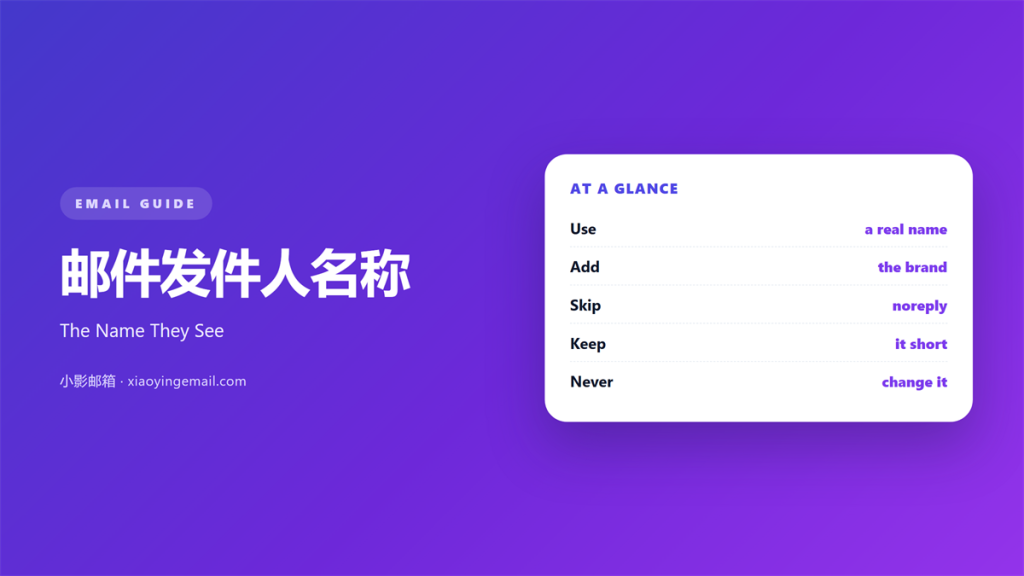
- 邮件发件人名称 is the text a reader sees before opening.
- Put a real person’s name next to the brand.
- Avoid “noreply” when a human could answer.
- Keep the name and the domain consistent.
- Choose one name and keep it for a year.
What 邮件发件人名称 means
邮件发件人名称 is the label shown in the inbox list.
It sits next to the subject and the preview text.
It is not the email address, though both appear.
Most clients show twenty to thirty characters.
A phone may cut that to eighteen.
The name is the first trust signal in the list.
A 邮件发件人名称 can hold a person, a brand, or both.
“Anna at Northwind” is a common shape.
The person makes it human and the brand makes it known.
A bare brand works for receipts and alerts.
A bare address never works.
The reader needs a name they can recognise later.
A reader should be able to say it aloud.
Why 邮件发件人名称 matters
The inbox is a list of names, not subjects.
People scan the name column first.
A 邮件发件人名称 decides whether the subject is read at all.
A familiar name earns a second of attention.
An unknown name earns a report as spam.
The name also carries the memory of past mails.
One good send makes the next one easier.
One bad send poisons the same name for months.
The name is the cheapest brand asset you own.
It costs nothing to set and nothing to keep.
That memory does more work than any discount.
The trust line
Name, domain, and content should agree.
A bank name on a hobby domain looks like fraud.
A mismatch is the first thing a careful reader checks.
Make the three match before you send anything.
When 邮件发件人名称 helps
It helps when one team sends to many lists.
A clear 邮件发件人名称 keeps the mails together.
It helps when the brand is new to the reader.
A person’s name lowers the barrier.
It also helps when replies matter.
A human name invites a human answer.
It helps in a crowded promotions tab.
A name with a face beside it wins the glance.
Where “noreply” fails
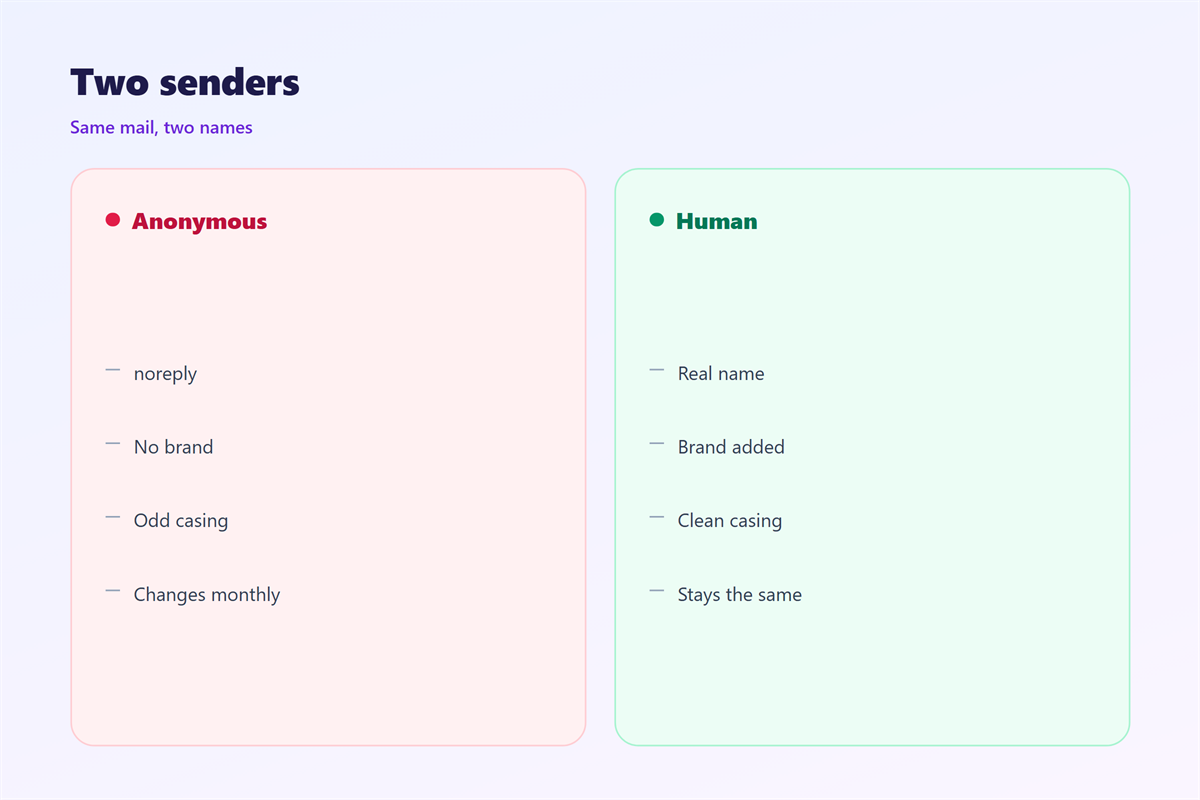
“noreply” tells the reader the door is shut.
Some people reply anyway, and the mail bounces.
That bounce becomes a support ticket.
Use a monitored address even for automated mail.
When 邮件发件人名称 hurts
A 邮件发件人名称 hurts when it changes every week.
Readers learn names, not campaigns.
It hurts when the name is longer than the screen.
Cut text looks like a broken sender.
It hurts when the name promises a person who is absent.
A fake assistant name is easy to spot.
It hurts when the name has no relation to the domain.
Readers treat that gap as a warning sign.
It also hurts when every mail uses a different name.
Six names for one brand look like six companies.
邮件发件人名称 and the domain behind it
A 邮件发件人名称 is read together with the address.
The domain sits right beside it in most clients.
A name on a free mailbox looks improvised.
Use a domain you own and have warmed up.
Keep one domain for one kind of mail.
Marketing mail and invoices can share it at first.
Then split them once volume grows.
The display name should match the domain’s owner.
A reader who trusts one will trust the other.
Set up the pieces together
Pick the address before you pick the name.
Then write the name to match that address.
Add the logo in the sender profile.
Check all three in a real inbox.
Fix the weakest one before the next send.
How to set 邮件发件人名称
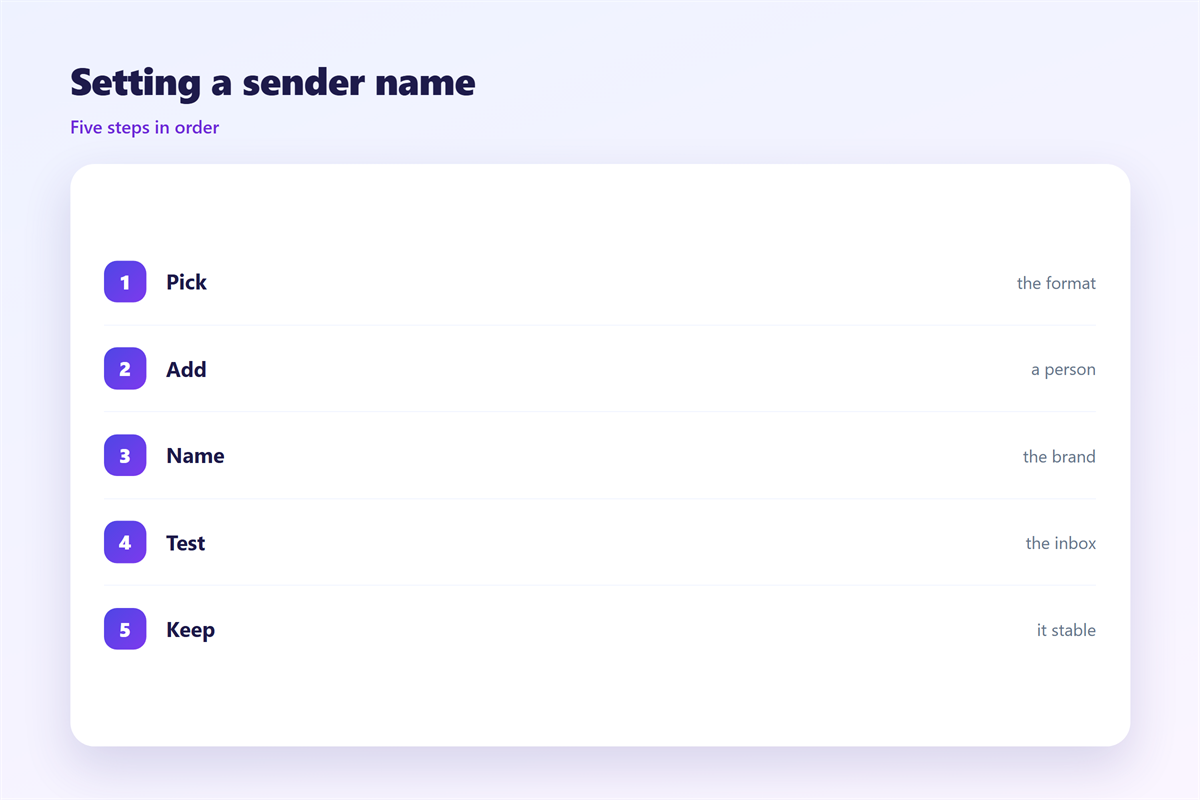
Choose the 邮件发件人名称 before the first campaign.
Decide who the reader should picture.
Use a real person for newsletters and support.
Use the brand alone for receipts and alerts.
Keep the total under twenty-five characters.
Put the person first and the brand second.
Then add a reply address that a human reads.
Test the name in three different clients.
Keep it for a year
Changing the name resets recognition.
Recognition is the whole point of the label.
Review it once a year, not once a month.
Then change only the part that failed.
Tell the list when a name changes.
A short note prevents a wave of spam reports.
邮件发件人名称 on a phone
A phone shows fewer characters than a desktop.
The name column is the first thing cut.
Keep the important words at the front.
A two-word brand survives a narrow screen.
A long department title does not.
Test the name on a small phone yourself.
Then look at it beside ten other senders.
The name should stand out without shouting.
Emoji in a sender name rarely helps.
A clean name reads faster in a crowded list.
Keeping 邮件发件人名称 honest
Never use a person’s name without their consent.
A shared inbox name should say it is a team.
The default label is covered in 邮箱默认发件人.
A stable name protects 邮件信誉 over time.
A face beside the name helps, as in 邮箱头像.
The name also moves 邮件打开率 more than most tests.
Then write the rule down for every sender.
Review the name after each major campaign.
Keep it until there is a real reason to change.
A stable name is a small promise kept.
FAQ
Should the sender name include the company?
Yes, in most cases. Put the person first and the brand second.
Is “noreply” ever acceptable?
Only for pure alerts, and even then a monitored address is better.
How long can a sender name be?
Keep it under twenty-five characters so phones do not cut it.
Can we change the name for a campaign?
Rarely. Use the subject line for the campaign instead.
评论
还没有评论,来说两句吧。
评论功能已关闭。