 小影邮箱
邮件重发怎么做?Resending Without Confusion
Key Takeaways
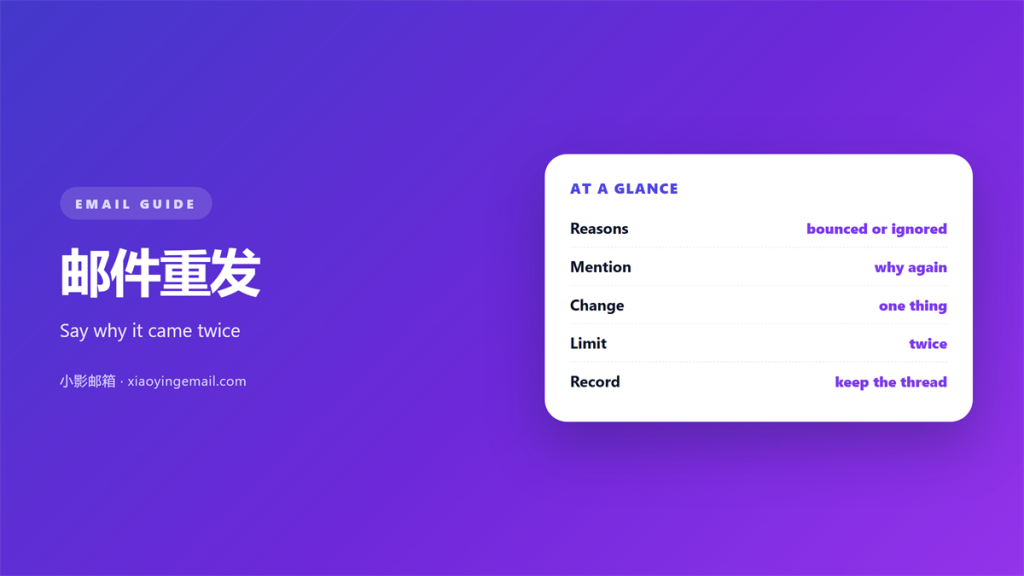
- 邮件重发 should be the second half of a decision, not an automatic reflex.
- If the first copy arrived, a silent resend looks like a glitch or a duplicate.
- When you do 邮件重发, say so in the first line and keep the original subject.
- A hard bounce tells you to fix something. A soft bounce tells you to wait.
- Threading keeps the second copy beside the first, which is what the reader expects.
When 邮件重发 is the right move
邮件重发 is warranted in a small number of situations: the recipient never received the message, the first copy failed to send, or enough time has passed that a reminder is genuinely helpful. In each case you are sending again because of evidence, not anxiety.
The reflex version is different. Hitting send again five minutes later because no reply has arrived creates confusion for the reader and clutter for both sides, and it rarely produces a faster answer.
A useful test is to ask what you know that the recipient does not. If the answer is nothing, waiting another day is usually the better 邮件重发 decision.
It is also worth separating two questions that feel identical in the moment. Did the message fail, and did the reader ignore it? The first justifies another send, because something went wrong on the way. The second usually justifies patience, because the message arrived and simply has not been answered yet.
Why 邮件重发 creates duplicate confusion
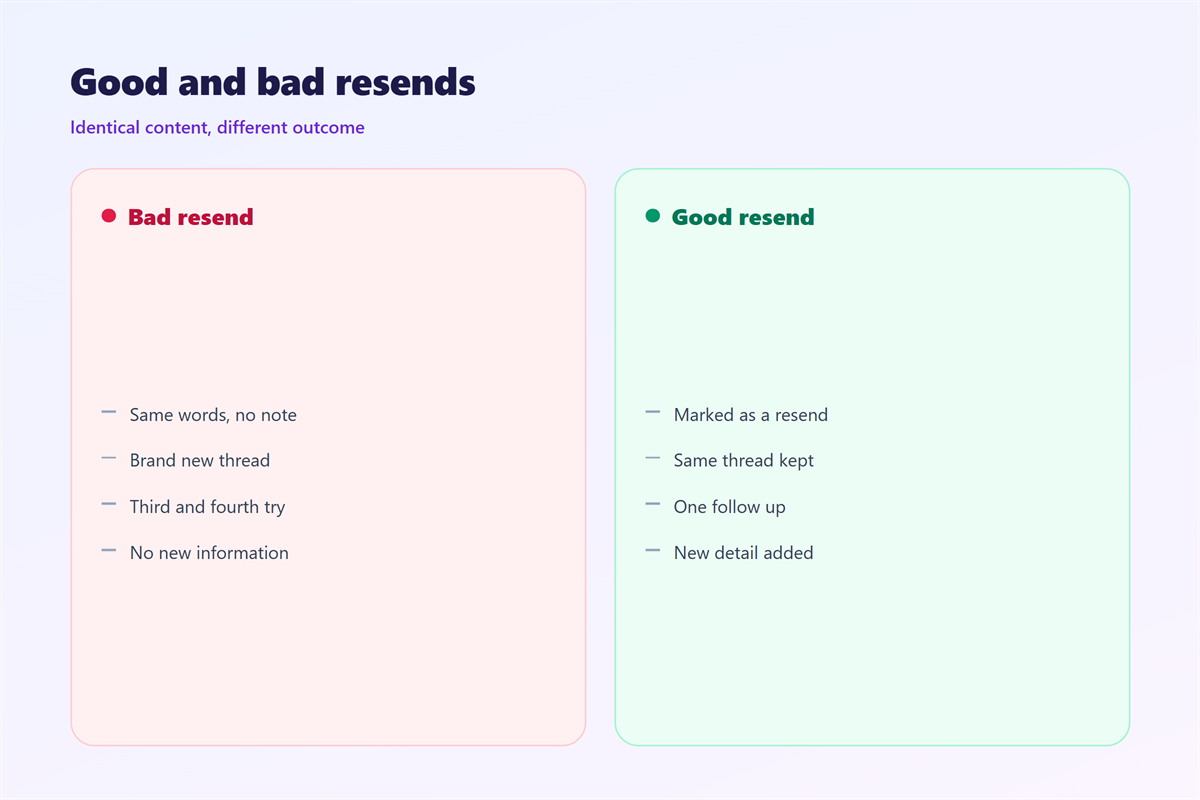
Two identical messages rarely read as two messages. They read as a mistake, and the reader spends attention deciding which copy to answer instead of simply answering. That cost lands on the person you were trying to reach.
Duplicates also erode trust in the thread. If the same request arrives twice without explanation, the reader begins to wonder what else is being sent in the background. For the mechanics, 邮件重复 explains where duplicate copies usually come from.
Before sending again, check whether the first message actually left. 邮件发送失败 covers the cases where the message never departed at all.
How to 邮件重发 without alarming the reader
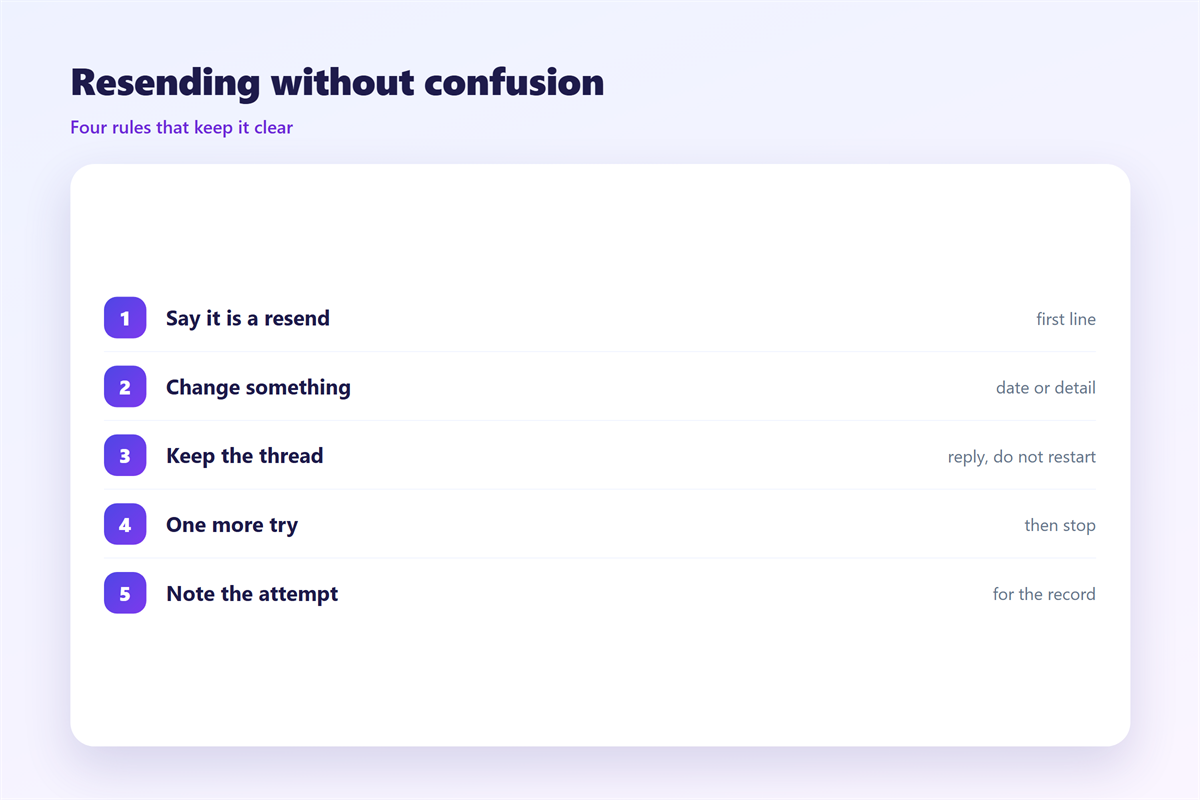
Keep the original subject line so the copy lands in the same thread, and open with a plain sentence: sending this again in case the first copy did not arrive. That line removes the guesswork in six words.
If the first attempt bounced, say what changed. A note that the earlier address was returning errors, so this one goes to your current address, is far more useful than a silent second 邮件重发.
When the delay had a cause the reader should know about, name it briefly. 邮件退信 explains how to read the bounce that prompted the second send.
What to change on the second attempt
A 邮件重发 that changes nothing is really just a nudge, and that is fine as long as you call it one. If the first copy was wrong, fix what was wrong rather than copying it forward unchanged.
Shorten where you can. The second 邮件重发 is often better received when it carries one clear ask rather than the full history. Use reply rather than reply-all where only some people need to see it, which 邮件回复 covers in detail.
Keeping the record clear
A 邮件重发 leaves two copies in one thread, and that is usually the right outcome: the reader can see both attempts and the explanation between them. The habit to avoid is resending into a fresh thread, which splits the history and hides the reason.
If the second copy is going to someone new, that is a forward rather than a resend, and it deserves the context the original reader already had.
Label it honestly where a tool makes that easy. A subject prefix or a short tag takes a second and saves the reader from wondering whether they are seeing double.
Two attempts are usually enough
A second send is normal. A third one starts to feel like pressure, and a fourth is a sign that the channel itself is not working. If two copies have gone unanswered, the useful next step is a different route: a phone call, a chat message, or a short note asking whether email is reaching the right person at all.
That pause protects you as well. Repeated sends to an address that is quietly failing generate bounce messages, and enough of them can make your own domain look like a source of unwanted mail.
A short 邮件重发 checklist
Confirm the first copy did not arrive. Keep the subject. Explain in one line. Trim rather than add. Send once, then wait a reasonable interval before the next attempt. If the second try fails too, change the route rather than repeating the same one a third time.
FAQ
How long should I wait before a 邮件重发?
For routine mail, a day is a reasonable interval. For something genuinely time-critical, an hour is defensible, but say why in the second message.
Should a 邮件重发 use the same subject?
Yes, unless the first one was misleading. Reusing the subject keeps the copies together, which is far easier to follow than two separate threads.
Does a 邮件重发 annoy people?
Only when it is unexplained. A clearly labelled second copy reads as considerate, because it tells the reader exactly what happened.
Can I 邮件重发 to a new recipient?
That is a forward, not a resend. Keep the two ideas separate so the original thread stays intact and the new reader gets the context they need.
References
- IETF RFC 5321: Simple Mail Transfer Protocol
- Wikipedia: Bounce message
- Google: Gmail message not delivered
评论
还没有评论,来说两句吧。
评论功能已关闭。