 小影邮箱
邮件线索怎么跟进?Warming Up a Lead
Key Takeaways
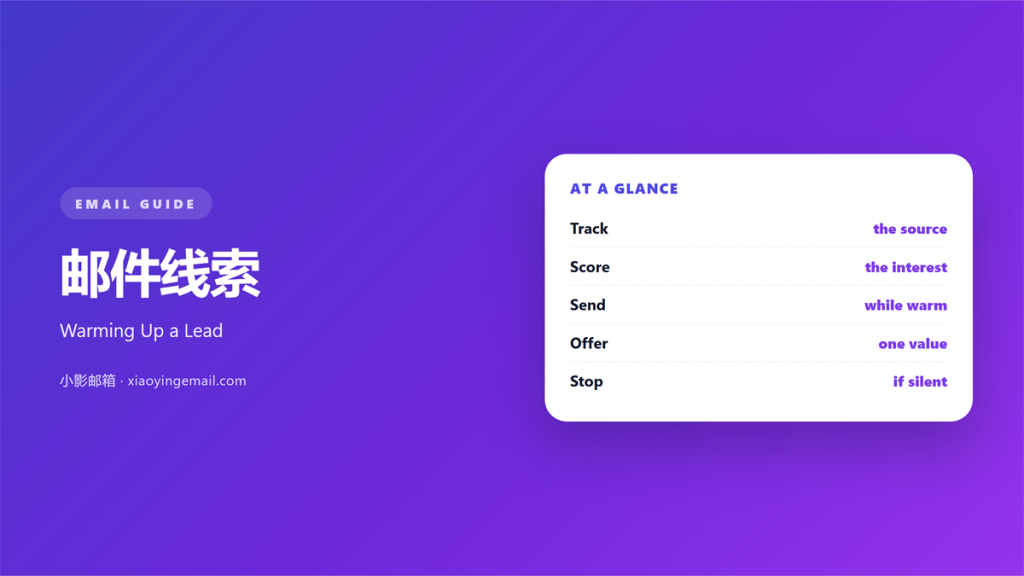
- 邮件线索 is a reader who showed real interest.
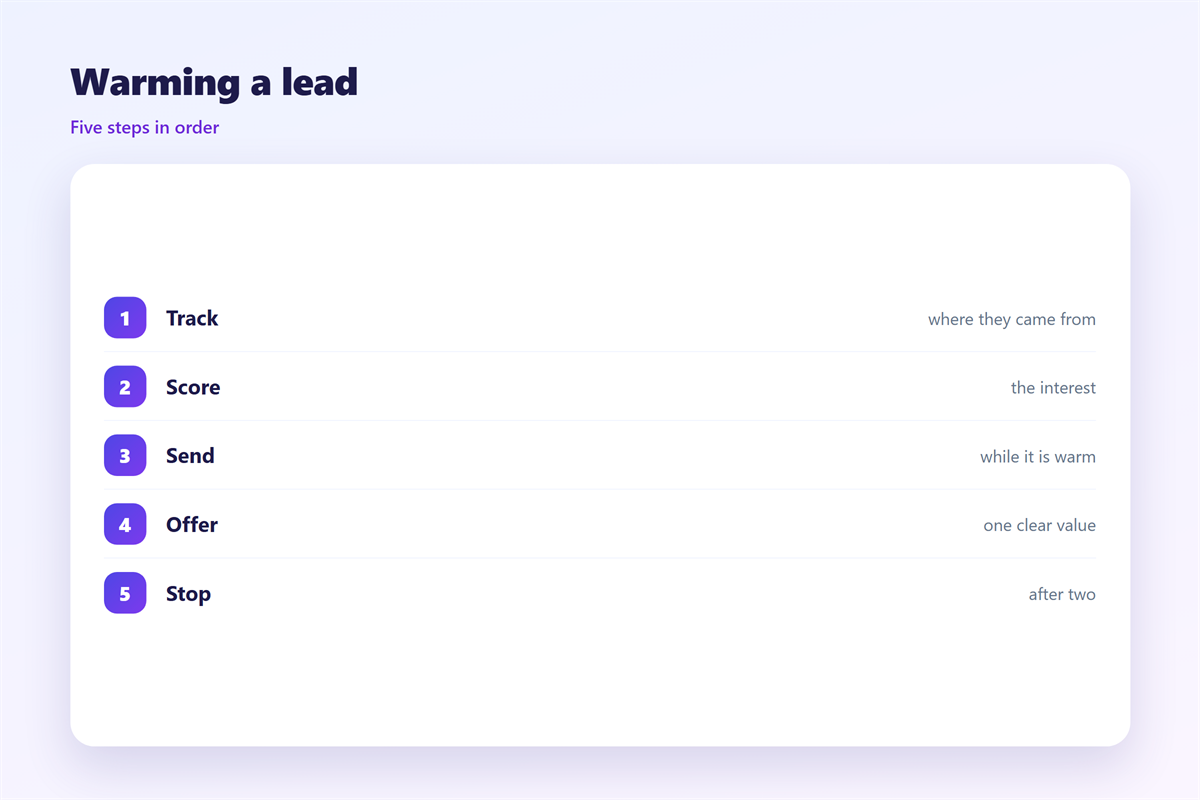
- Track where each new lead came from.
- Reply while the interest is still warm.
- One clear next step beats a long pitch.
- A quiet lead can still be woken later.
What 邮件线索 means
邮件线索 is a contact who showed interest in what you offer.
The word comes straight from sales teams.
A lead is not a customer yet.
It is someone who raised a hand.
They clicked a link or asked a question.
That small action makes them worth a follow-up.
A blank address with no history is not a lead.
Interest is the part that matters most.
So treat every lead as a warm conversation.
The goal is a reply, not a sale.
Keep the first note light and personal.
A real lead always leaves a small trace behind.
Why 邮件线索 matters
Most readers never answer a first note.
A few do, and those few carry the value.
Ignoring them wastes the hardest work.
Winning attention is the expensive part.
A warm 邮件线索 already gave you that attention.
Speed also changes the outcome.
The same reply lands better within a day.
Wait a week and the interest fades.
So a lead is a short window, not a list entry.
Treat the window as precious time.
Use it well and the rest gets easier.
Warm and cold contacts
A warm contact has spoken to you before.
A cold contact has not.
Both still need a clear reason to reply.
Only the warm one remembers your name.
When a 邮件线索 helps
A lead helps when the interest is real.
Use it to answer a question they asked.
Use it to share one useful piece of proof.
Use it to keep a name in front of them.
Each note should add something new.
If it adds nothing, skip it.
A note with no value is just noise.
Noise trains the reader to ignore you.
So earn the next reply every time.
Small useful notes beat big empty ones.
Let each message stand on its own.
A single useful line can carry a whole reply.
Save the big pitch for a later stage.
When a 邮件线索 goes cold
A lead cools when the reply never comes.
Days pass and the reason fades.
A new priority takes the space.
That does not always mean no.
Sometimes the timing was simply wrong.
So keep the record and stay gentle.
One quiet follow-up can restart the thread.
Two notes are often enough to know.
If silence holds, park it and move on.
A parked lead is not a lost lead.
People return when their need returns.
Where a 邮件线索 comes from
Leads arrive from many small actions.
A form fill is the most obvious one.
A link click counts when it shows intent.
A reply inside a thread counts too.
A download or a demo request also counts.
Record the source the moment it appears.
The source tells you what to say next.
A reader from a guide wants more help.
A reader from a price page wants numbers.
Match the note to the path they took.
The path is a clue, not a burden.
Use it to make the first line specific.
Name the source inside the record itself.
How to follow up a 邮件线索
Keep the follow-up short and direct.
Remind them who you are in one line.
Then name the single next step.
A small ask is easier to answer.
Offer two times instead of an open question.
Write like a person, not a brochure.
Skip the pressure and the guilt.
A calm note gets a calmer reply.
End with an easy way to say no.
Then stop and wait for the answer.
A patient sender looks more confident.
Three follow-up notes for a 邮件线索
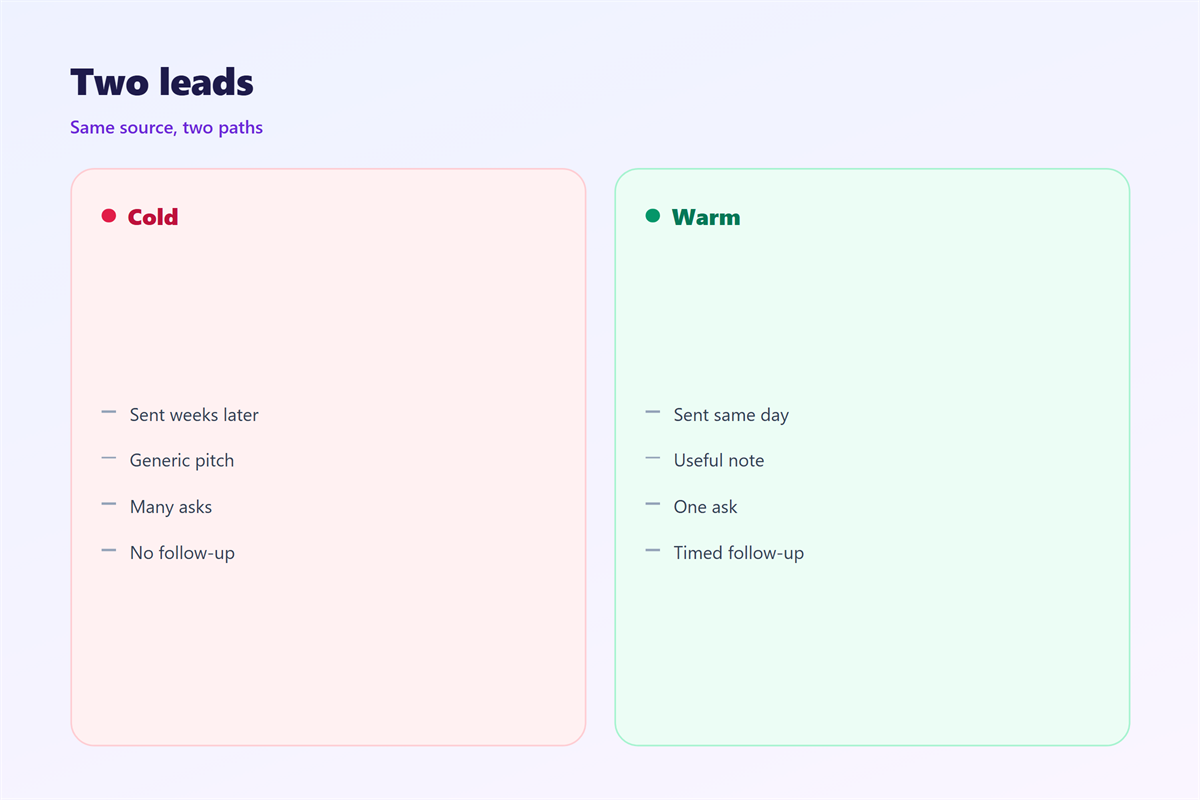
Send the first note within a day.
Send a second note after three days.
Send a last note after a week.
邮件线索 and good timing
Timing decides more than wording.
A quick reply feels like good service.
A slow reply feels like a brush-off.
Send the first note while the visit is fresh.
Morning and midweek often work best.
Avoid late Friday and public holidays.
Watch when your replies usually arrive.
Then send inside that same window.
So time each 邮件线索 note with care.
The clock is part of the message.
A well timed note feels personal.
A late reply loses that small advantage.
A simple timing rule
Answer in a day if you can.
Follow up within the same week.
Keeping 邮件线索 records clean
A tidy record saves the next conversation.
Store the name, the source, and the date.
Add one line about what they wanted.
Update the status after every touch.
Mark the warm ones so they stand out.
Remove duplicates before they spread.
A clean list keeps the whole team aligned.
Cold outreach starts with a clear offer, covered in 邮件开发信.
The final step from reply to action sits in 邮件转化率.
The patient warming between the two appears in 邮件培育.
The full path from first touch to loyal reader is in 邮件营销漏斗.
A rushed 邮件线索 reply can read as pressure.
FAQ
How fast should I answer a 邮件线索?
Within one working day if you can.
Can a cold address become a 邮件线索?
Yes. One real action turns a stranger into a lead.
What if the lead never replies?
Send two gentle notes, then park the record.
Should I send a discount right away?
No. Lead with help and save the offer for later.
评论
还没有评论,来说两句吧。
评论功能已关闭。