 小影邮箱
邮件递交怎么写?Handing Work Over
Key Takeaways
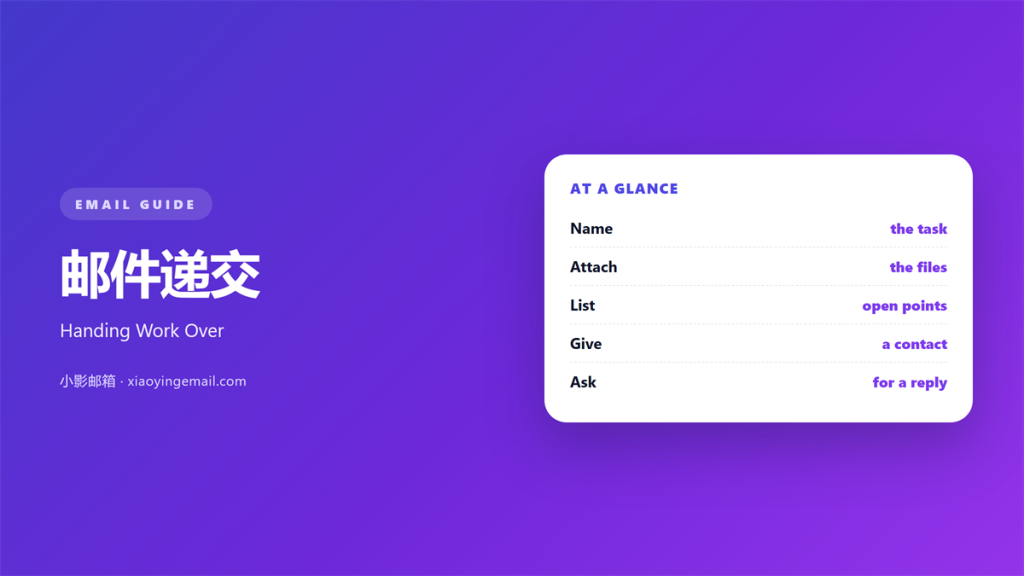
- 邮件递交 passes a piece of work to another person.
- A clear handover names the owner and the next step.
- Attach the files the receiver truly needs.
- A short 邮件递交 prevents later confusion.
- Always confirm that the handover arrived.
What 邮件递交 means
邮件递交 is the moment you hand a task to someone else.
It is not just forwarding a message. It transfers the duty.
The receiver should know exactly what to do next.
It marks a clean end to your part of the work.
A good 邮件递交 also protects you if the work stalls.
Think of it as passing a baton, not dropping a box.
The receiver should feel ready, not surprised.
A clear handover ends your own responsibility neatly.
The sender stays reachable for a short time.
The task should be easy to repeat later.
Why a clear 邮件递交 matters
Work gets lost when nobody owns the next step.
A vague note leaves both sides guessing.
A precise 邮件递交 removes that guesswork in one message.
It also protects a colleague from a surprise task.
Written handovers create a record both sides can check.
A calm 邮件递交 keeps a team moving without meetings.
Every colleague has their own list of open work.
A short brief helps them slot your task in.
It also saves an awkward question a week later.
It also cuts the number of follow up emails.
A good brief shows which task comes first.
What a 邮件递交 includes
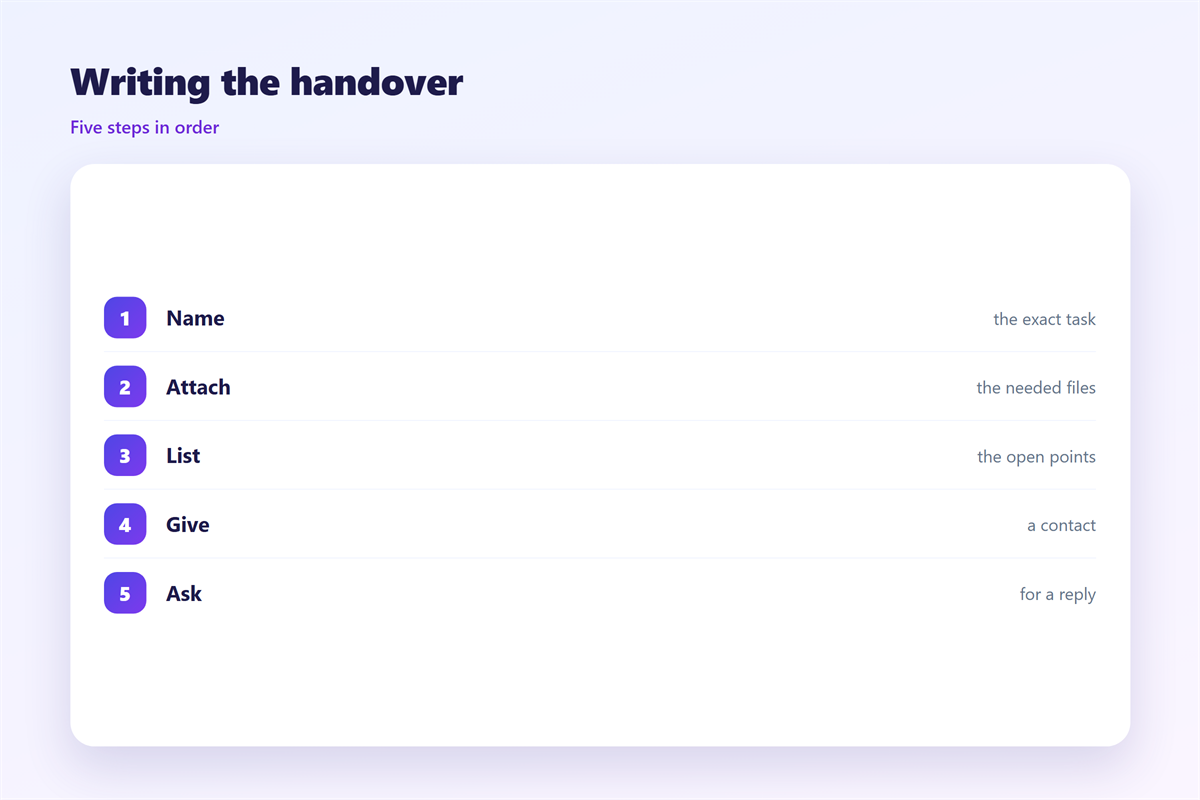
Every 邮件递交 needs five plain facts.
Name the task
State the goal in one sentence the reader can repeat.
Keep the goal free of jargon and acronyms.
Name the owner
Say who does what. One owner per task is best.
Say the name clearly. A team address is too vague.
Give the deadline
Add a date and a time zone if the team is spread out.
A date without an hour is still half a fact.
List the files
Attach only what the receiver needs to start.
Name each file so the reader can find it fast.
Five facts in five lines is the whole template.
Add a short greeting and a clear subject.
A short 邮件递交 example
Imagine you are passing a client file to a teammate.
The subject names the client and the word handover.
The body names the task, the owner and the due date.
Two files go in the attachment, nothing more.
One line tells the teammate who to contact with questions.
The closing asks them to confirm when they have it.
That is a complete 邮件递交 in six lines.
Notice how short every single sentence is.
The receiver can act within a minute of reading.
Nothing in the note is longer than one idea.
That keeps the message easy to scan.
A short example teaches the shape faster than rules.
Mistakes to avoid
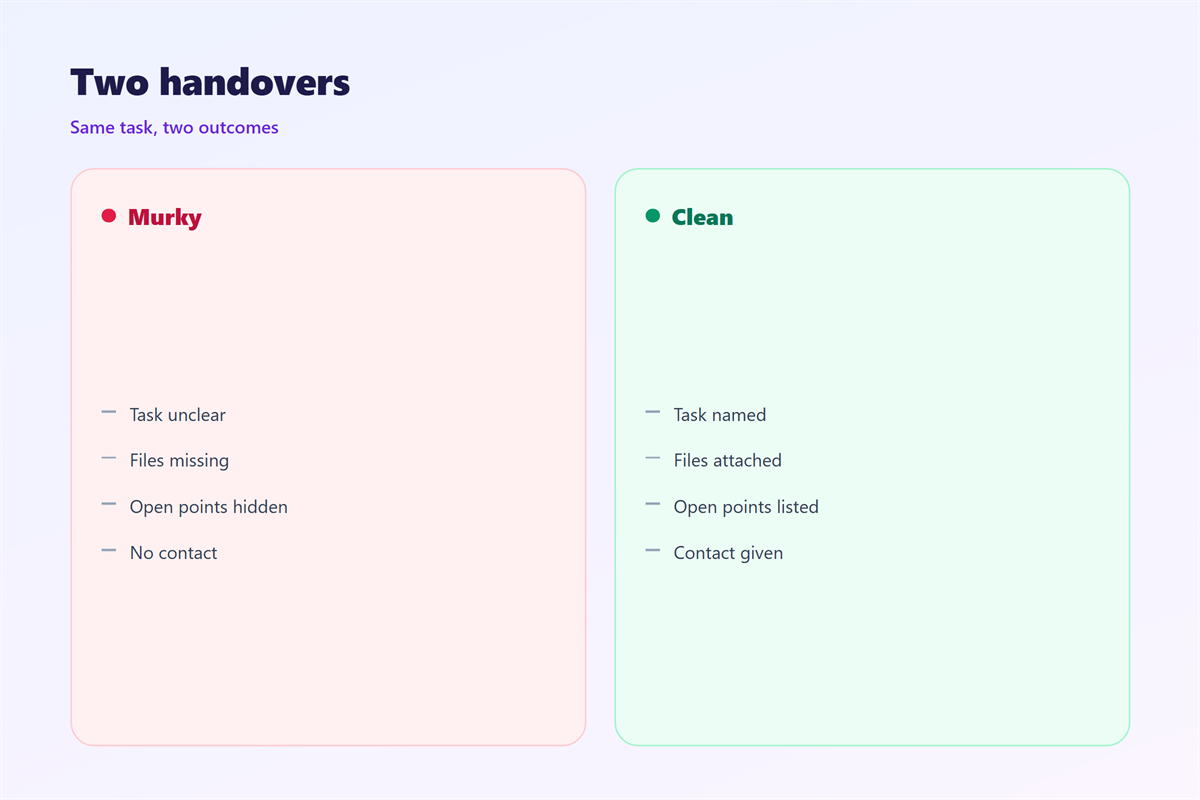
The first mistake is dumping a task with no context.
The second is handing over two owners for one job.
The third is hiding the deadline in a long paragraph.
A rushed 邮件递交 costs more than it saves.
Always reread the note as if you were the receiver.
Another common slip is a subject line with no name.
A vague subject hides the task inside a long list.
Recheck the names and the dates before sending.
A small typo can send work to the wrong desk.
Handover across teams
Cross team handovers need one extra line.
Explain why this team owns the work now.
Name the contact on your side in case of a question.
Keep the tone plain and free of blame.
A short note in the channel keeps everyone informed.
It also stops one question reaching two people.
Keep the wording neutral and factual.
Timing the handover
Pass work on while there is still time to act.
A handover at the last minute helps nobody.
Give the receiver enough room to do a good job.
If the deadline is tight, say so in the first line.
Offer to stay in touch for a short while.
A generous lead time is a quiet form of respect.
A rushed handover usually comes back to you.
Check the team calendar before you commit.
Keeping 邮件递交 records
Save each handover in a shared folder.
Safe file practices are set out in 邮件附件.
Clear file names are covered in 邮件附件命名.
Formal sign off is described in 邮件审批.
Choosing a layout is shown in 邮件格式.
Then confirm the receiver has replied before you close it.
A logged 邮件递交 saves hours during an audit.
A simple log with dates helps at review time.
Give the folder a name the whole team will recall.
Closing the loop
A handover is not finished when you press send.
Wait for a short reply that confirms the task arrived.
If silence lasts two days, send one gentle nudge.
Then step back and let the new owner work.
Trust is the real point of a clean handover.
A finished loop leaves both sides calm and clear.
A short thanks at the end keeps the tone warm.
A clean handover protects the whole team.
The habit grows easier with every task you pass on.
FAQ
Who owns the task after a 邮件递交?
The receiver owns it, and the sender keeps the record.
Should I copy the manager?
Copy the manager only when the work carries real risk.
How long should the note be?
Five to eight lines is plenty for most handovers.
What if the receiver is silent?
Send one short reminder, then a gentle follow up.
评论
还没有评论,来说两句吧。
评论功能已关闭。