 小影邮箱
邮件撰写怎么写?Write Mail People Answer
Key Takeaways
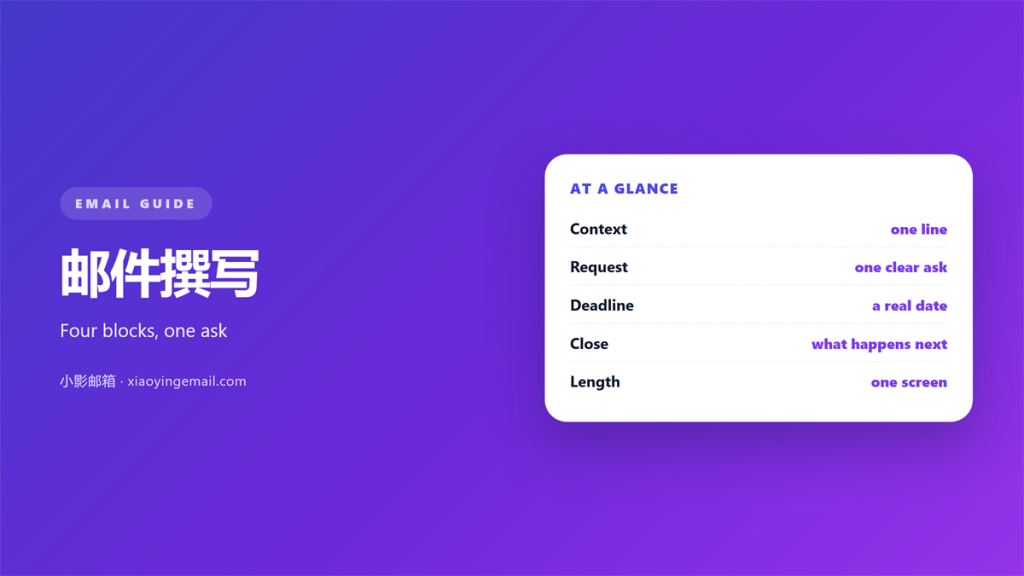
- 邮件撰写 starts before the first word.
- A clear subject decides whether it is opened.
- One message should carry one request.
- Short paragraphs are read. Dense ones are skipped.
- The close should say what happens next.
What 邮件撰写 actually decides
邮件撰写 is the part of the job nobody trains for. Most people learn it by copying what arrives.
That works until the message matters. A short note to a colleague and a careful request to a client are different tasks.
The difference is not length. It is whether the reader can act after one pass.
Good 邮件撰写 answers three questions before the reader asks them. Who is writing, what is wanted, and by when.
Everything else in this guide follows from those three.
A useful test is to imagine the reply. If the reply would contain a question, the message is missing something. Careful 邮件撰写 makes the next step obvious.
Three sentences answer most of it. Who you are, what you need, and when you need it. Everything else is detail that can wait for the second message.
There is also a cost to getting it wrong. A confusing message produces a reply that asks for the same information again. That round trip is the most expensive thing email does.
Why the first line carries the message
The subject line is a promise. It tells the reader whether to open now or later.
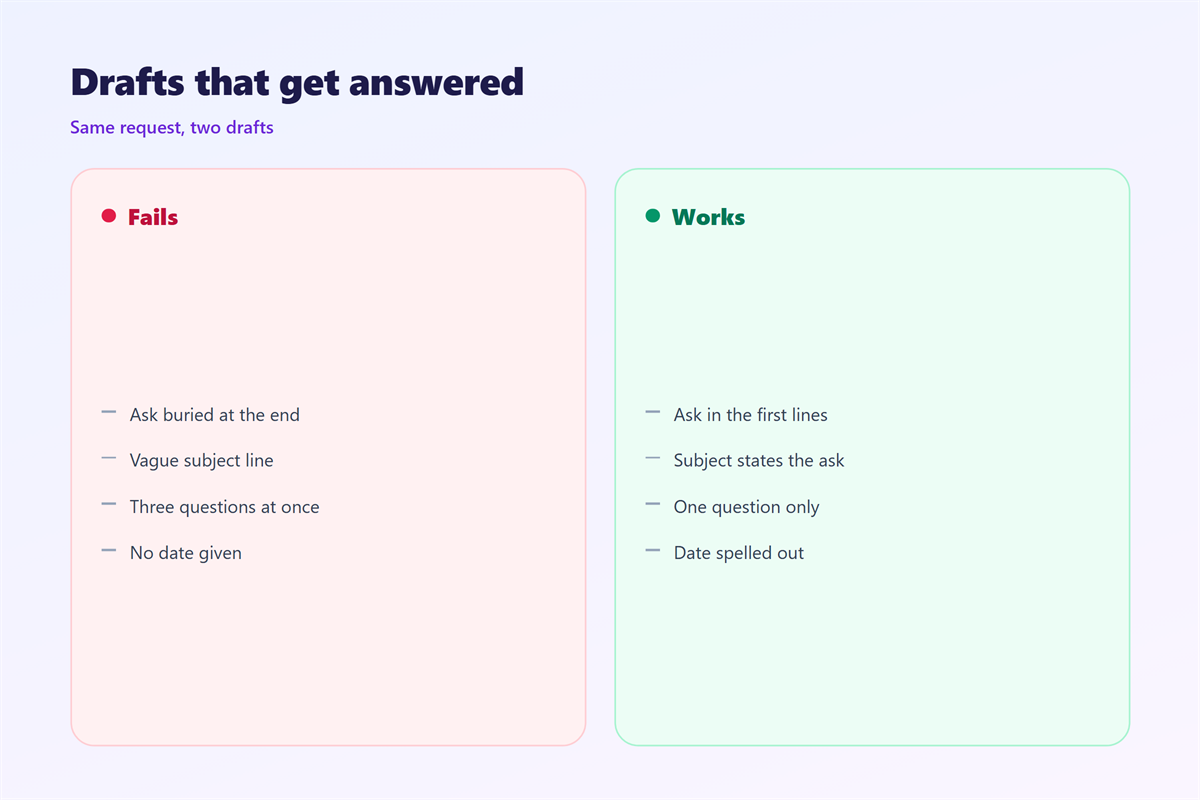
A vague subject pushes the message down the list. A specific one earns a few seconds of attention.
Write the subject after the body, not before. By then you know what the message actually asks for.
Then cut it down. Six to eight words is usually enough.
邮件撰写 gets easier once the subject is fixed, because the body only has to deliver on it.
Names and dates belong in the subject when they matter. A reader scanning a list will find a date faster than a topic.
A subject that states the request saves a full read. The reader can decide from the list alone. That single habit improves 邮件撰写 more than any writing course.
A structure that survives a busy inbox
Use a predictable shape. It costs nothing and saves the reader time.
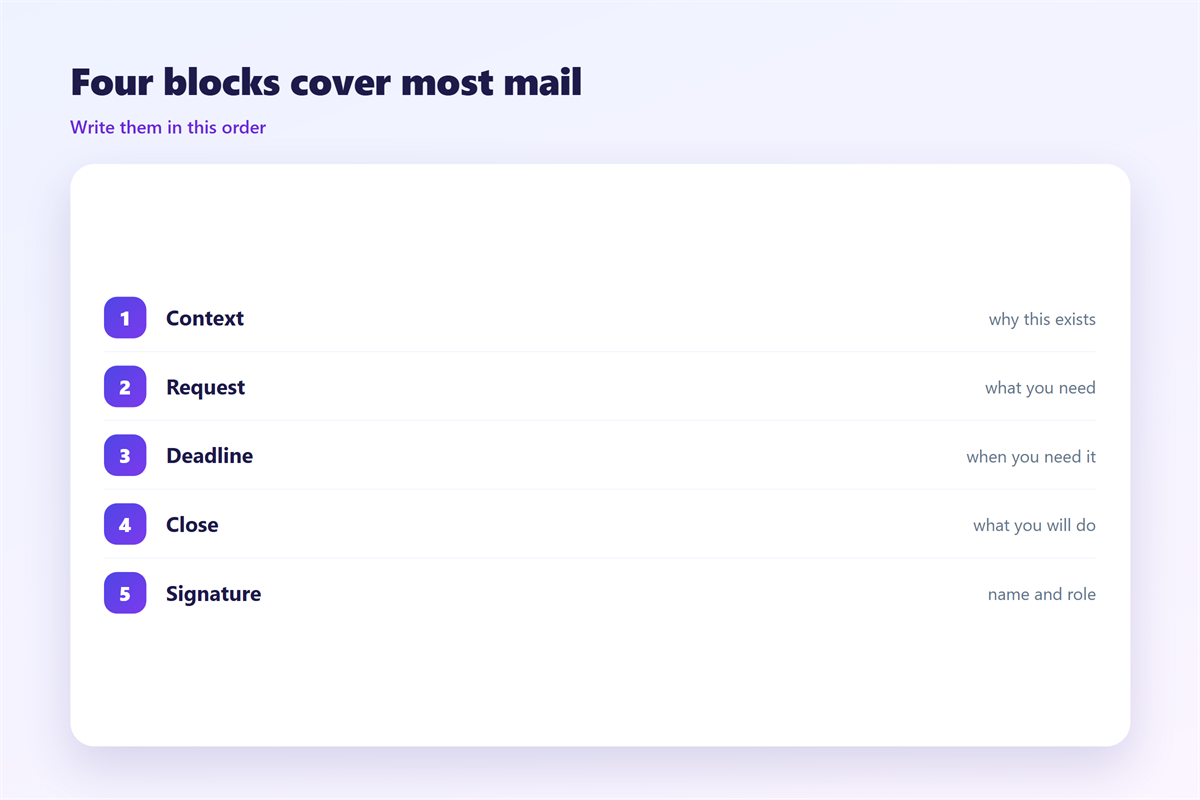
- Context: one line on why this message exists.
- Request: one clear ask, stated plainly.
- Deadline: a date, not “soon”.
- Close: what you will do next.
Four blocks cover almost every message. Anything longer is usually a document, not an email.
Keep paragraphs to three lines. White space is not wasted space.
If a 邮件撰写 task needs more than one request, send more than one message.
The structure also protects you. When every message looks the same, a missing block is easy to spot before you send.
Order matters as much as content. A request placed after three paragraphs of background arrives late. 邮件撰写 works best when the ask comes early and the detail follows.
Where 邮件撰写 goes wrong
Three habits cause most of the damage.
The first is burying the ask. A reader who has to hunt for the request will often miss it.
The second is writing for the record. Long history and copied threads feel safe and hide the point.
The third is tone drift. A message written in frustration reads that way for years.
Length is not the enemy by itself. A long message with clear headings is easier to read than a short one with a hidden request.
Read the draft once as the recipient. If you cannot say what is wanted in one sentence, the message is not ready.
Our notes on 邮件正文 cover the body itself. Subject lines are treated in detail under 邮件标题. Plain text and HTML are compared in 邮件格式, and the wider conventions sit in 邮件礼仪.
Testing your 邮件撰写
Give a new habit two weeks before judging it.
Then check three things. Replies arrived faster. Fewer follow ups were needed. Nobody asked what you meant.
If a message is misunderstood twice, the problem is the template, not the reader. Rewrite it once and reuse the result.
A 邮件撰写 routine is working when you stop rewriting the same message from scratch.
Reading it as the recipient
Before you send, read the draft as if it arrived unannounced. You will notice two things.
The first is missing context. You know the project and the reader may not. One line usually closes the gap.
The second is buried emphasis. Whatever matters most should sit in the first two lines.
A slow read also catches the small errors that damage credibility. A wrong name or a stale date undoes an otherwise careful 邮件撰写 effort.
If the message still reads well after that pass, send it.
Sleep on anything difficult. A draft written late and sent early is the most common cause of an apology the next morning.
FAQ
How long should a message be?
Short enough to read on one screen. If it needs more, put the detail in a document and link to it. A long email is usually two short emails that were never separated.
Does 邮件撰写 change by industry?
The tone changes and the structure does not. Every reader still wants the ask and the date.
Should 邮件撰写 use templates?
Yes for the skeleton, no for the sentence that names the person and the request. A template that never changes reads like one.
What about a very short reply?
One line is fine when it answers the question. 邮件撰写 does not require length, and a quick confirmation is often the best answer.
References
- IETF RFC 5322: Internet Message Format
- Google: Send or unsend Gmail messages
- Microsoft: Create and send email in Outlook
延伸阅读
- 《邮件提纲怎么写?Plan Before You Write》
- 《邮件要点怎么写?The Bullet Summary》
- 《邮件示例怎么用?Show, Then Tell》
- 《邮件标点怎么用?Punctuation That Helps》
- 《邮件缩写怎么用?Short Forms Done Right》
- 《邮件术语怎么用?Jargon in Plain Sight》
- 《邮件草稿箱怎么用?A Place for Unfinished Mail》
- 《邮件范文怎么用?Samples You Can Adapt》
- 《邮件引言怎么写?An Intro That Earns the Read》
- 《邮件过渡怎么写?Transitions That Connect》
- 《邮件赘词怎么删?Cut the Filler Words》
- 《邮件写作怎么写?Writing Mail That Gets Read》
- 《邮件逻辑怎么理?Logic That Holds Together》
评论
还没有评论,来说两句吧。
评论功能已关闭。