 小影邮箱
邮件蜜罐是什么?Addresses Nobody Should Mail
Key Takeaways
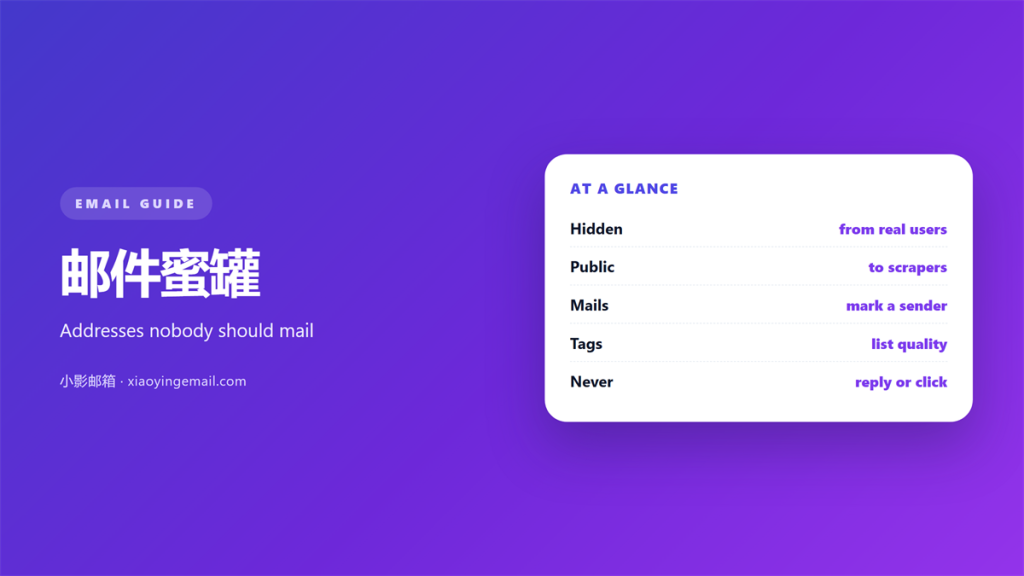
- 邮件蜜罐 is an address that should never get mail.
- Any message sent to it marks the sender as bad.
- Scrapers collect these addresses from public pages.
- A single hit can damage your sender score.
- Clean lists avoid the trap in the first place.
What 邮件蜜罐 actually means
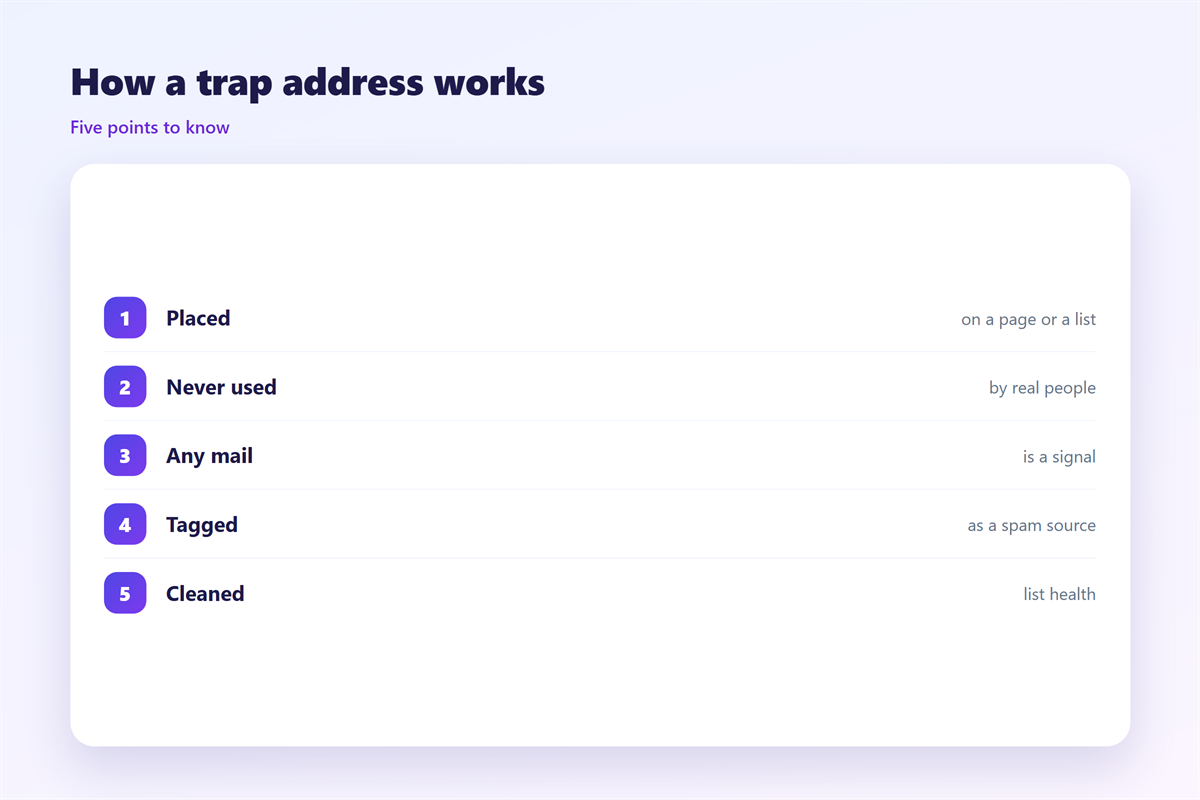
邮件蜜罐 is a hidden address with no real owner.
Nobody should ever write to it. It exists only to catch senders.
The address is left in places scrapers love. It may sit on a public page.
No human reads mail sent there. The system records it instead.
Any message that arrives is treated as a strong signal.
A real list would never hold this address. Only a scraped list would.
邮件蜜罐 uses that logic to find bad senders.
The verdict is blunt. One clean hit can label the sender as a spammer.
That is why the trap works. Honest senders never touch it.
A hidden 邮件蜜罐 is easy to miss.
A trap address looks like any other address.
Nothing in the name gives it away.
A polite sender would never mail it. A scraper does not care.
How 邮件蜜罐 addresses are planted
Operators hide these addresses on purpose.
Some sit on a normal web page. The address is invisible to a reader.
Others are buried in code. A person would never see them.
They may use a plain name that looks real.
Some are old addresses that once belonged to someone. The owner left long ago.
A scraper collects them all. It cannot tell a trap from a real address.
Understanding 邮件蜜罐 starts with this trick.
The trap grows with every new placement. Operators refresh them often.
Some are placed in hidden form fields.
Others sit in the footer of a page in tiny text.
A link may hide the address behind a word.
Each placement catches a different kind of tool.
Some 邮件蜜罐 addresses are years old.
When you hit a 邮件蜜罐
A hit usually shows up as a blocklist entry.
Your delivery rate drops without warning. Bounce messages rarely explain why.
The cause is often an old list you bought or reused.
Old lists age badly. Addresses change hands and turn into traps.
A purchased list is the worst case. You never know what it holds.
The fix takes patience. Stop sending to the bad segment at once.
Then check common blocklists. Ask for removal where a process exists.
Rebuilding a score takes weeks. Prevention is far cheaper.
Check your sending logs for the flagged address.
Find the source that added it to your list.
Remove that whole source, not just one row.
A blocklist entry fades once the cause is gone.
Types of 邮件蜜罐
Not every trap works the same way.
- Pure: never a real mailbox, only a trap.
- Recycled: once active, then abandoned.
- Typo: a common misspelling of a real address.
- Reported: flagged by users rather than planted.
Each type sends a slightly different signal.
A recycled trap punishes old data. A typo trap punishes a careless keystroke.
Knowing the type helps you find the cause.
A trap may sit in a domain that never existed.
Some are hosted by the blocklist itself.
Others belong to a security company.
The exact owner matters less than the signal.
Testing for 邮件蜜罐 exposure
You cannot see a trap directly. You can still reduce the risk.
Review how every address joined your list.
Remove any entry with no clear source.
Do not send to the full list after a long pause.
Reconfirm addresses before you restart. A short message asks people to opt in.
Track bounces and complaints by source. A bad source shows up fast.
Checking 邮件蜜罐 exposure protects the whole domain.
Do this review twice a year.
Send a small test to a random new address.
Watch whether it bounces at once.
A silent address with no bounce is odd.
Keep the test separate from your real campaign.
Checking 邮件蜜罐 exposure should be routine.
One clean 邮件蜜罐 test a year is enough.
Keeping your list clean
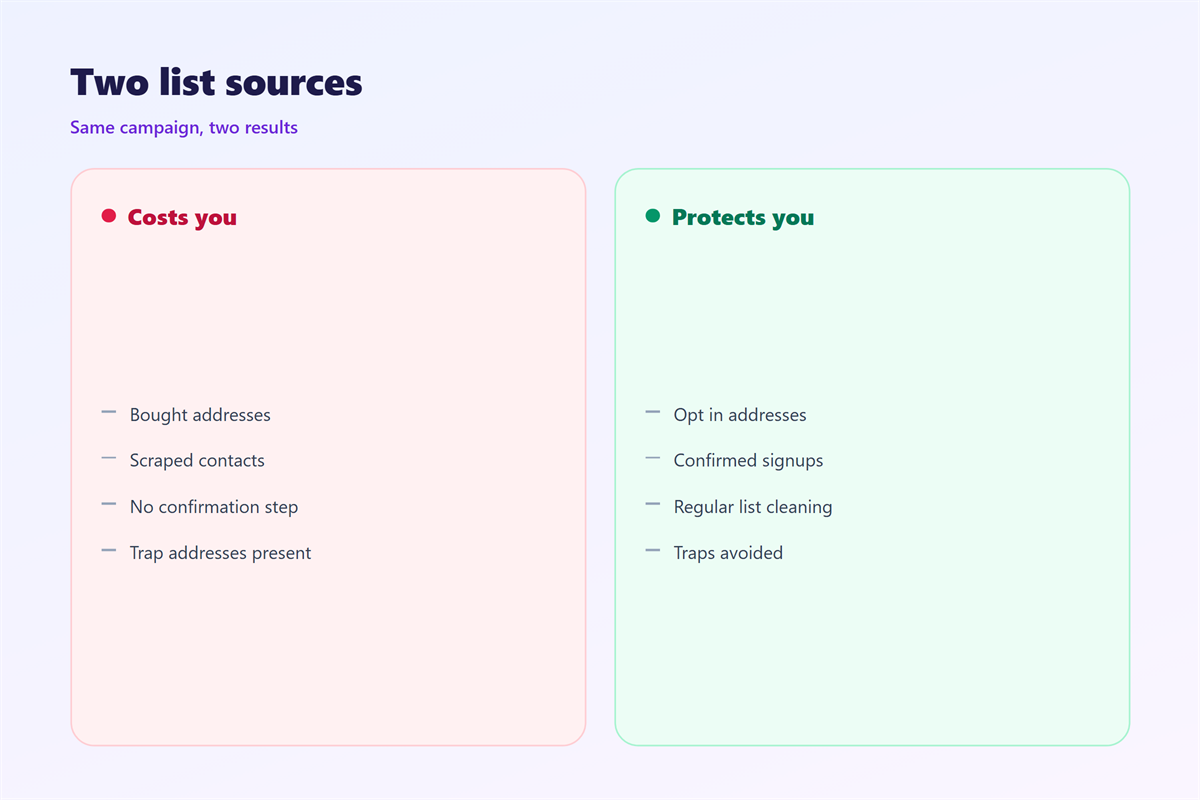
The best defence is consent. People who ask for mail rarely turn into traps.
Remove hard bounces at once. Keeping them only invites more harm.
Our notes on 垃圾邮件 explain where spam comes from. The removal process is described under 邮件黑名单. How senders are scored is covered in 邮件信誉, and the safe way to grow sits under 邮件营销.
Never buy a list. That single habit causes most trap hits.
A small, willing list beats a large, tired one.
Ask people to confirm before you add them.
A double opt in stops most bad addresses.
Prune the list every few months.
A small 邮件蜜罐 hit is easy to fix.
A repeated hit is a habit you must break.
Keep a record of every removal.
A short log explains a sudden drop later.
Good data hygiene is a habit, not a project.
Send only to people who expect your mail.
A clean list is your best protection.
Review the source of every new signup.
Slow growth is safer than a sudden jump.
FAQ
Can I remove my address from a 邮件蜜罐?
No. The address has no owner. You can only stop sending to bad segments.
How fast does a trap hurt me?
One message can be enough. A blocklist entry may appear within hours.
Are all traps the same?
No. Pure, recycled and typo traps catch different mistakes.
Does a trap mean I am a spammer?
No. It means your list held an address that should never get mail.
评论
还没有评论,来说两句吧。
评论功能已关闭。