 小影邮箱
邮件对齐怎么排?Align Text With Care
Key Takeaways
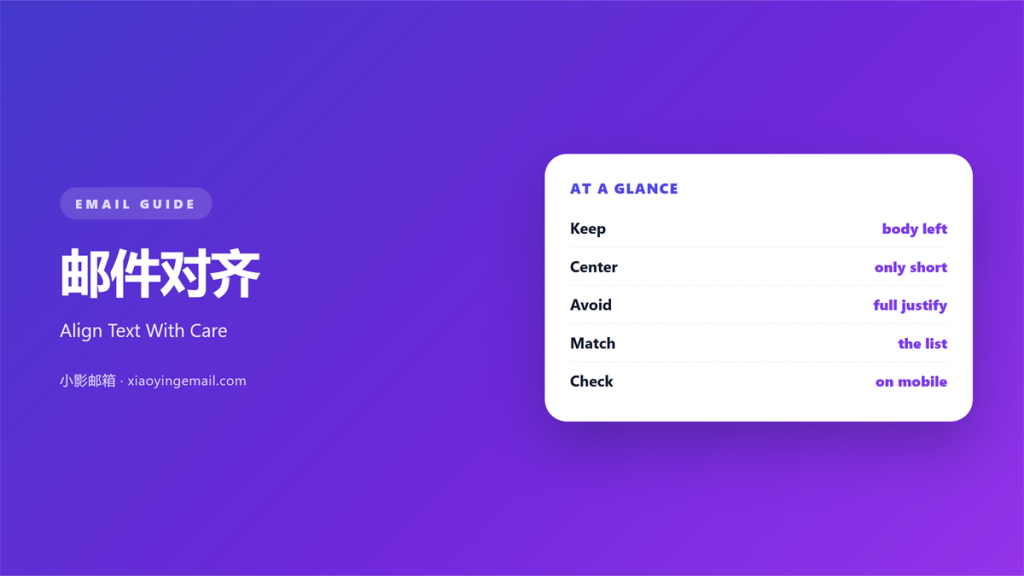
- 邮件对齐 decides how a message reads on a screen.
- Keep body text left aligned for easy scanning.
- Avoid long centred blocks in a normal note.
- Leave the right edge ragged and calm.
- Use one alignment pattern and hold it steady.
What 邮件对齐 means
邮件对齐 is the way text lines up on the page.
Each line follows an invisible guide.
The guide may be the left edge, the centre, or both edges.
Most screens expect a clean left edge.
That edge gives the eye a fixed place to start.
So the skill is choosing one guide and keeping it.
Think of 邮件对齐 as the spine of the page.
A steady spine holds the whole layout together.
When the spine wobbles, the page feels messy.
A guide you cannot see still shapes the read.
So choose it early and keep it fixed.
Most readers never think about it at all.
Why 邮件对齐 matters
Alignment shapes how fast a message reads.
A steady left edge lets the eye jump back quickly.
A wandering edge makes the eye work harder.
That extra work costs the reader time.
Good 邮件对齐 also looks calm and tidy.
A tidy note feels more professional.
It also signals care for the reader.
Care is a quiet form of respect.
A messy page can also slow a reply.
A tidy page invites a fast and clear answer.
That speed is worth the small effort.
What alignment cannot do
Alignment cannot fix a message with no clear point.
It cannot make a weak offer strong.
So fix the words first, then set the edges.
When 邮件对齐 helps
One alignment choice works for almost every note.
Left aligned text is the safe default.
It suits short notes and long reports alike.
It also works well on small phone screens.
Left alignment keeps the line starts steady.
That steady start is easy to scan.
Few readers notice a good alignment.
They just find the note easy to read.
That is the whole goal of good alignment.
Align to the left
Left alignment leaves the right edge ragged.
A ragged edge is fine. It reads naturally.
It also avoids odd gaps between words.
So keep the body left aligned and calm.
When 邮件对齐 hurts
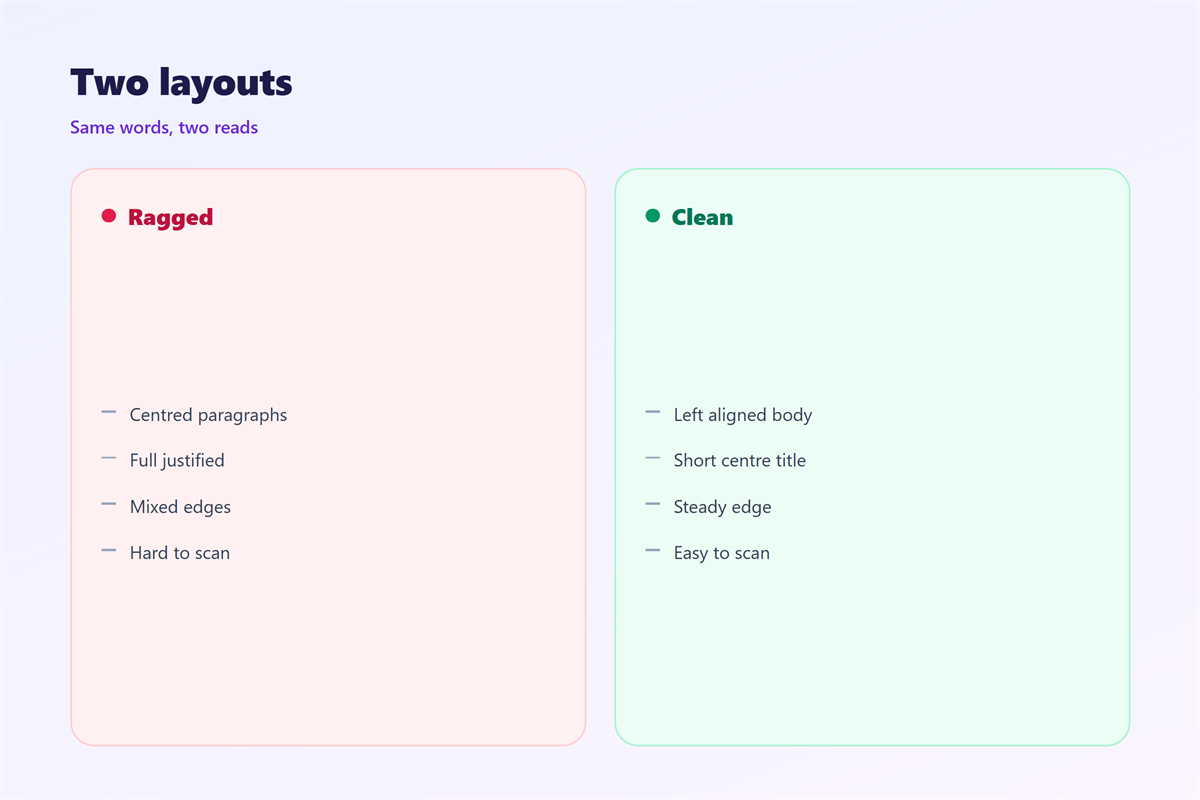
Centred text looks formal and slow to read.
A long centred block is hard on the eye.
Each line starts in a new place.
So centred text works only for short lines.
Justified text can also cause problems.
It stretches words and leaves wide gaps.
Those gaps break the reading rhythm.
Both habits pull the eye away from the words.
So keep the body simple and left aligned.
The centred block problem
Keep centring for a title or a single line.
Never centre a long paragraph of body text.
If a block runs past two lines, align it left.
Ragged edges that distract
A very ragged edge can also pull the eye.
Keep line lengths even where you can.
Short and even lines stay easy to follow.
How to use 邮件对齐 well
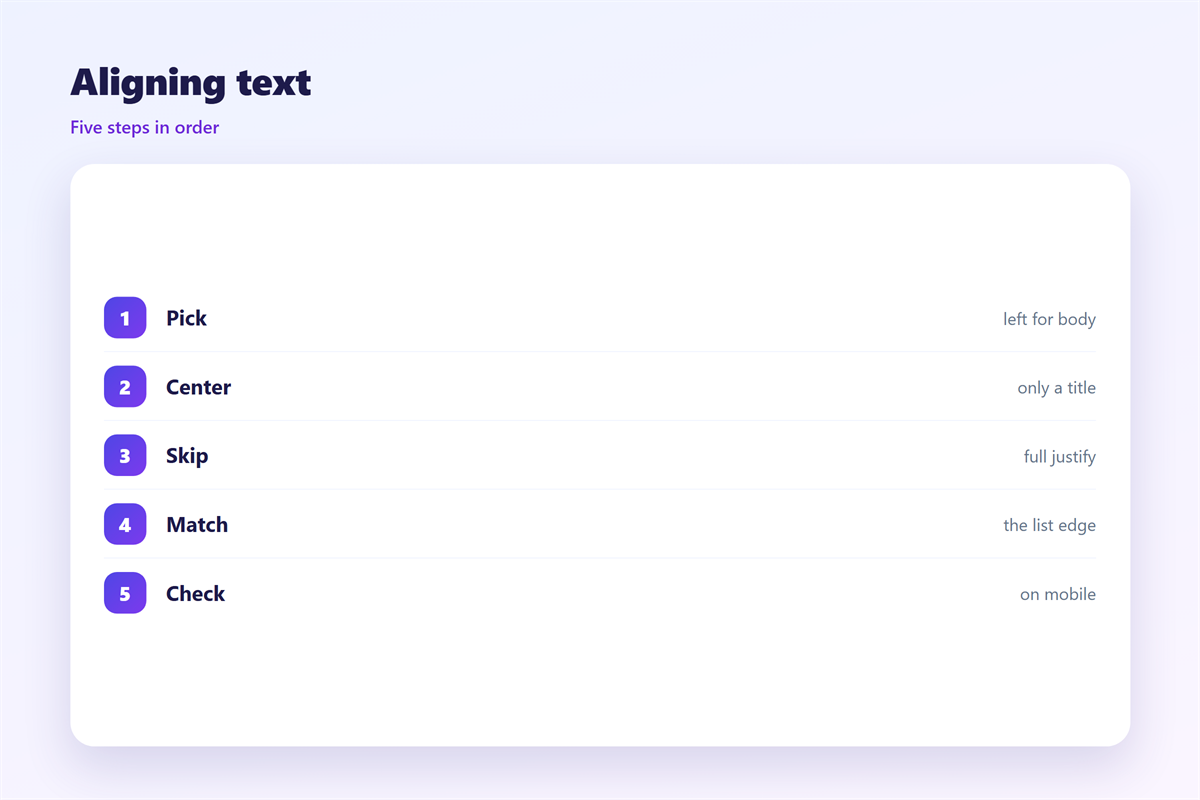
Pick one 邮件对齐 for the body of the note.
Left alignment is the safest choice.
Save centring for the title or a short line.
Keep the same guide through the whole message.
Then read the note on a small screen.
A steady 邮件对齐 is easy to miss in the best way.
The reader just moves down the page without effort.
Next, check the whole layout at a glance.
Draw a line down the left edge with your thumb.
If the line wobbles, fix the alignment.
Then send a test copy to yourself.
Check the layout on a phone and a desktop.
A small change can lift the whole note.
邮件对齐 and accessibility
Some readers use a screen magnifier to read.
Centred text is hard to follow with a magnifier.
Justified text can also confuse a screen reader.
So left alignment helps more readers.
It also keeps the reading order clear.
Clear order matters for everyone.
Test the note with a magnifier if you can.
Small changes in alignment can help a lot.
A steady edge also helps a reader who zooms in.
The eye keeps its place when line starts are even.
邮件对齐 across clients
Alignment behaves differently from one app to the next.
Some clients keep your chosen guide.
Others reset the text to a plain left edge.
In plain text, all alignment disappears.
So plan for the plain version too.
A message that reads well while left aligned is safest.
Write the plain version first. Then set the edges.
Test the note in two or three apps.
Note where the guide holds and where it breaks.
A simple note often survives the trip best.
Keeping 邮件对齐 consistent
Consistency turns a small rule into a habit.
Pick a house style and hold it across the team.
The wider layout behind good alignment is covered in 邮件排版.
The structure of the message body appears in 邮件正文.
The space around the text is explained in 邮件留白.
The choice between rich text and plain text appears in 邮件格式.
Agree on one default alignment for the team.
Keep that rule for every message you send.
Then review the rule after a few weeks.
A short check keeps the habit from slipping.
A team that agrees on 邮件对齐 writes cleaner mail.
FAQ
Should body text be centred?
No. Centre only a title or a short line.
Body text should always start at a steady left edge.
Is justified text a good idea?
Rarely. It leaves wide gaps between words.
Those gaps slow the eye and break the rhythm.
Which 邮件对齐 is safest?
Left alignment is the safest choice for most notes.
Does alignment matter on a phone?
Yes. Left alignment is easiest to read on a small screen.
评论
还没有评论,来说两句吧。
评论功能已关闭。