 小影邮箱
小影邮箱邮箱小号怎么管?一个域名养 20 个小号的做法
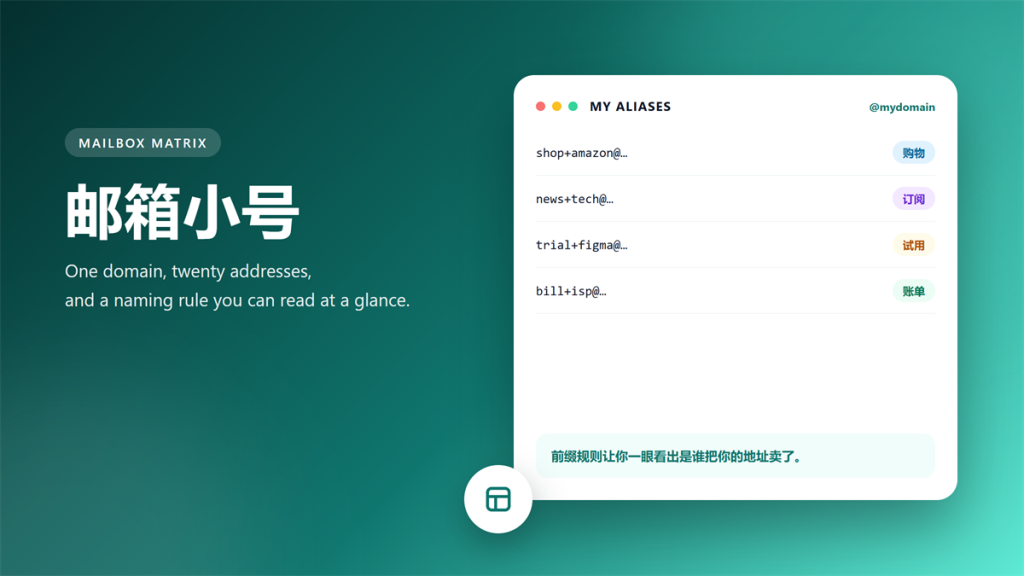
A 邮箱小号 only works if you can tell later who leaked it. I keep twenty aliases on one domain, and the naming rule does more work than the tool itself.
This guide covers three ways to create aliases, the naming pattern I rely on, and the point where an alias should be retired instead of repaired.
Key Takeaways
Here is the short version, before the setup.
- A 邮箱小号 isolates one sender, not your entire inbox.
- Name every alias by purpose and source, so a leak explains itself.
- Keep the mapping in a password manager rather than in your head.
- Two aliases are enough to start, and twenty is a comfortable ceiling.
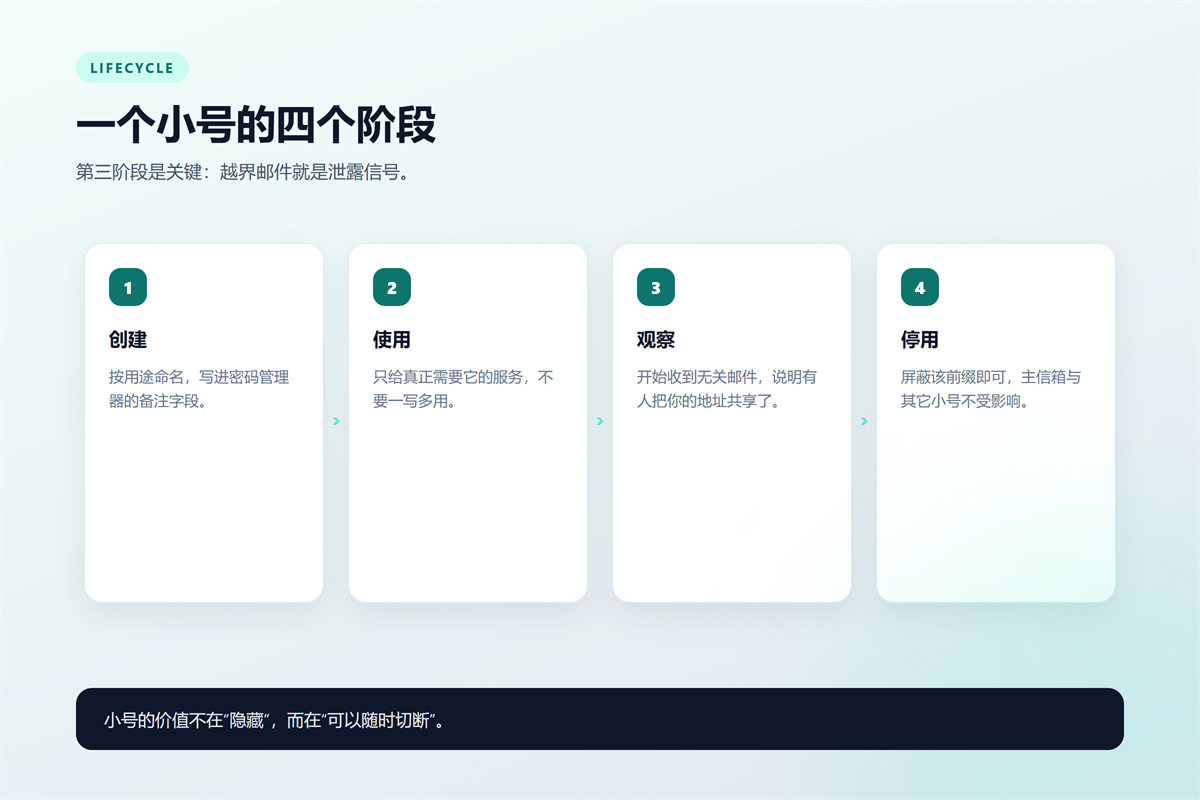
- Retire an alias when it receives mail it should never have received.
- Never reuse one alias across several unrelated services.
Why One 邮箱小号 Is Never Enough
The first alias solves spam, and the tenth solves diagnosis. With one address, every sender looks identical in your archive, and you cannot tell who sold your data.
Moreover, a single alias cannot be retired without breaking every account attached to it. Consequently, people keep a compromised address alive for years instead of replacing it.
Splitting the workload solves both problems at once. Each sender gets its own address, and each address can be switched off alone. That isolation is the whole point of a 邮箱小号, and it costs nothing extra once you own the domain.
Three Ways to Create 邮箱小号
You can build aliases in three ways, and the cheapest option depends on whether you own a domain.
- Plus-addressing, which appends a tag to your existing inbox.
- A catch-all domain, which accepts every prefix you invent.
- A hosted masking service, which manages aliases in a dashboard.
The first option needs no setup, the second needs one DNS record, and the third needs a subscription. In practice, most people end up with a 邮箱小号 from each group. Whatever you choose, write the new address into the mapping on the same day you create it.
The Naming Rule I Use
My rule is purpose plus source, separated by a plus sign. The purpose tells me what kind of mail to expect, and the source tells me who owns the address.
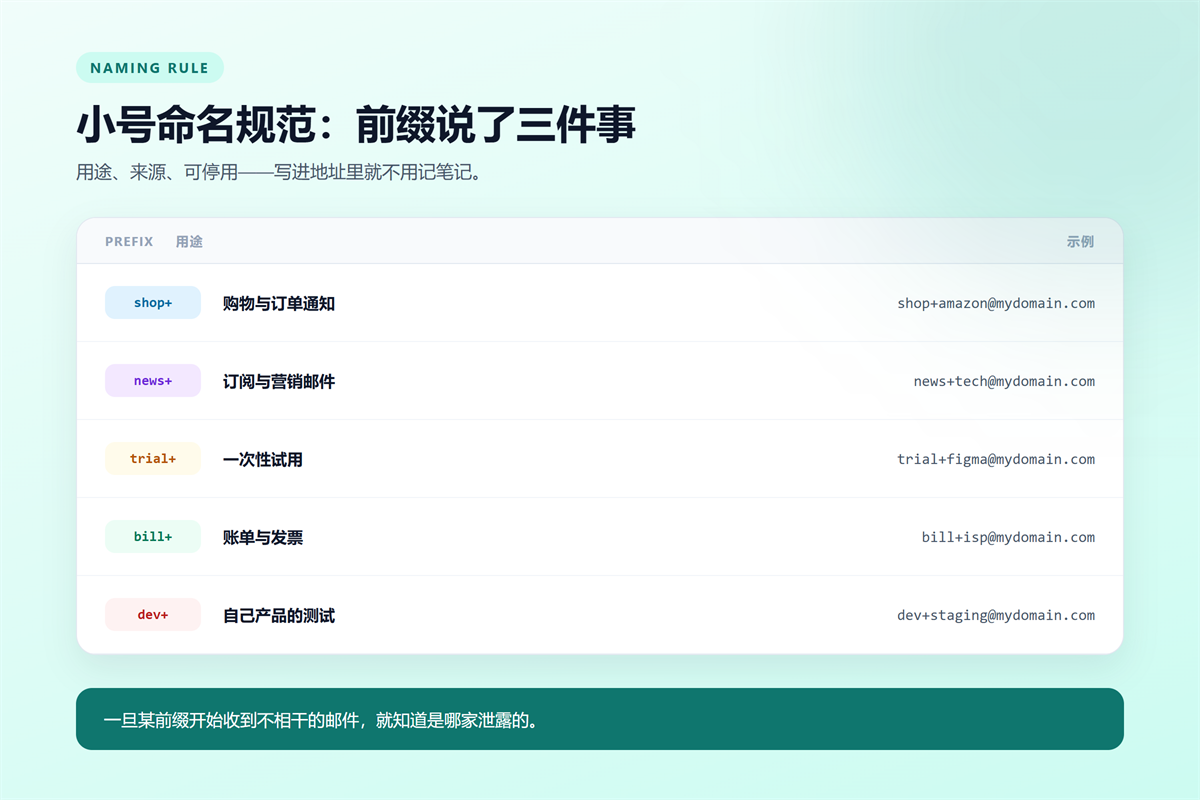
Three years in, this pattern has produced one clear benefit. When an alias starts receiving unrelated mail, the prefix names the guilty party immediately.
Where to Store the Mapping
A 邮箱小号 is only useful if you can find its purpose later. I store每 alias as a note inside a password manager, with the source, the date and the account it serves.
Furthermore, the same note holds the password for that account. Therefore, one search returns both the login and the address that belongs to it.
If you prefer a spreadsheet, keep it offline and out of your mail account. A 邮箱小号 without a mapping becomes a liability, because nobody can prove which service used it.
How a Leak Reveals Itself
Leaks rarely arrive with a label, yet a named 邮箱小号 makes them obvious. The mail arrives from a sender you never gave the prefix to, and the mismatch is the evidence.
For instance, an alias created for a courier should never receive insurance offers. When it does, either the courier shared the address or a third party scraped it.
At that point you have a choice. You can keep reading the alias, or you can retire it and move the account to a fresh prefix. A 邮箱小号 that leaks twice usually belongs to a source worth abandoning.
When to Retire a 邮箱小号
Retire an alias when it leaks, and also when the account behind it stops mattering. Both moments are cheap to act on and expensive to postpone. Waiting also spreads the old address into more databases, which raises the cleanup cost.
On a catch-all domain, retirement takes seconds, because you block the prefix and keep everything else. On a hosted service, you can disable the alias while the inbox stays intact.
Notably, retirement is the real advantage of a 邮箱小号, because a shared address cannot be switched off without losing access.
Two Habits That Break the System
First, people invent beautiful aliases and then reuse one everywhere to save time. That habit collapses twenty addresses into one, and the leak signal disappears.
Second, people skip the mapping and rely on memory. Six months later, a strange address appears in a login form and nobody knows which service it belongs to.
Above all, treat the naming rule and the mapping as part of the setup, not as optional notes. A disciplined 邮箱小号 beats a clever one, because the trail is still readable a year later.
Frequently Asked Questions
How many 邮箱小号 do I need?
Start with two and add one per new source. Most people settle between ten and twenty, and a comfortable ceiling is whatever your mapping can describe accurately.
Can a 邮箱小号 replace my main inbox?
No, and it should not try. Keep banks, employers, tax portals and clinics on a permanent address, and treat the aliases as a filter for everything else. In short, a 邮箱小号 filters noise and never holds your identity.
What happens if I cancel a masking service?
Aliases stop forwarding, which can lock you out of accounts that used them. Export the mapping first, and move important logins to a domain you control.
Do free options work for 邮箱小号?
Yes, for low-stakes accounts. A disposable inbox handles one-time forms, and our guide to 一次性邮箱 types compares the free options with the paid ones.
Before you settle on a provider, run our 免费临时邮箱 checklist over it, or open the 小影邮箱 inbox and try the workflow yourself.
For the other half of this picture, see our guide to spotting a phishing mail from the sender header.
评论
还没有评论,来说两句吧。以下为本文的引用通告: