 小影邮箱
邮件代收怎么用?One Inbox for Many Accounts
Key Takeaways
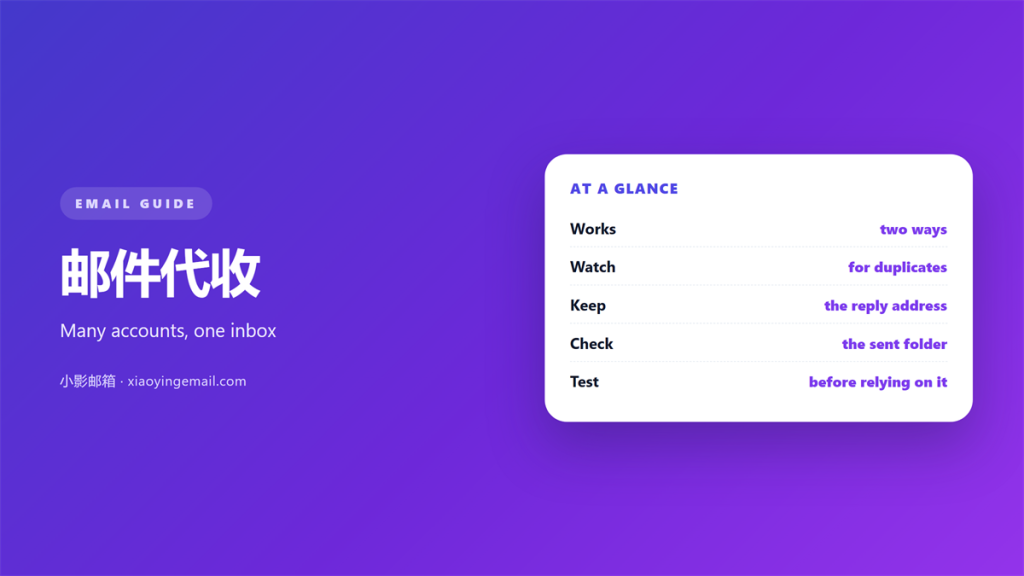
- 邮件代收 pulls mail from other accounts into one place.
- Fetching copies messages. Forwarding pushes them.
- A reply address must match the account you read.
- Duplicates are the main risk to watch.
- Label every collected account from day one.
What 邮件代收 actually does
邮件代收 lets one mailbox collect messages from other accounts. You read them all in one place.
Two methods exist, and they behave differently. Fetching copies mail. Forwarding sends a copy onward.
Fetching usually runs over POP3 or IMAP. The main server checks the other account on a schedule.
Forwarding runs on the other side. That server pushes each new message to your main inbox.
Both methods save a login. Neither one removes the other account.
Clear 邮件代收 also sets a reply identity. The reader should see the address they wrote to.
邮件代收 saves time only when it stays organised. A messy inbox of mixed accounts defeats the point.
The method you choose decides how much you control. Fetching gives you the copy. Forwarding gives the other server the first move.
A single place to read is the real benefit. The login count drops to one.
Most providers show a clear status for each connection. Check that status now and then.
Setting up 邮件代收 safely
Decide the goal before you touch a setting. Do you want to read, to reply, or both?
Reading only is the simple case. A forwarded copy is enough.
Replying from the same address needs more setup. You must add the address as a sender.
Check three things before you connect an account. Server name, port and encryption.
The 邮件客户端 guide covers those settings in detail.
Good 邮件代收 also labels each account. A clear label tells you where a message came from.
Never store an old password in plain notes. Use an app password where the provider allows it.
Test the connection the same day you set it. A silent failure now becomes a lost message later.
Done well, 邮件代收 feels like one account, not several.
Keep a short record of what you changed. The next person will thank you for it.
A slow schedule is fine for newsletters. It is poor for time-sensitive mail.
Set the check interval to match the account. Old mail can wait. Client mail cannot.
Turn on alerts for failed connections where available.
Fetching, forwarding and 邮箱别名
Three tools solve most collection problems. Pick the lightest one that fits.
Fetching suits old accounts you rarely use. You still want to see the message.
Forwarding suits accounts that must stay active elsewhere. Mail keeps flowing on both sides.
An 邮箱别名 is the cleanest option for new addresses. All mail lands in one inbox with no second login at all.
Audit the 邮件转发 rules on every old address. A forgotten rule can leak mail to a stranger.
If you run several real accounts, read our notes on 邮箱多账号. That guide compares separate, combined and aliased setups.
Good 邮件代收 picks one method and sticks to it. Mixing methods per account invites duplicates.
Aliases are cheap and easy to retire. Fetched accounts carry a history you may not want.
Try aliases first for any new address. They cost nothing and retire cleanly.
Where 邮件代收 goes wrong
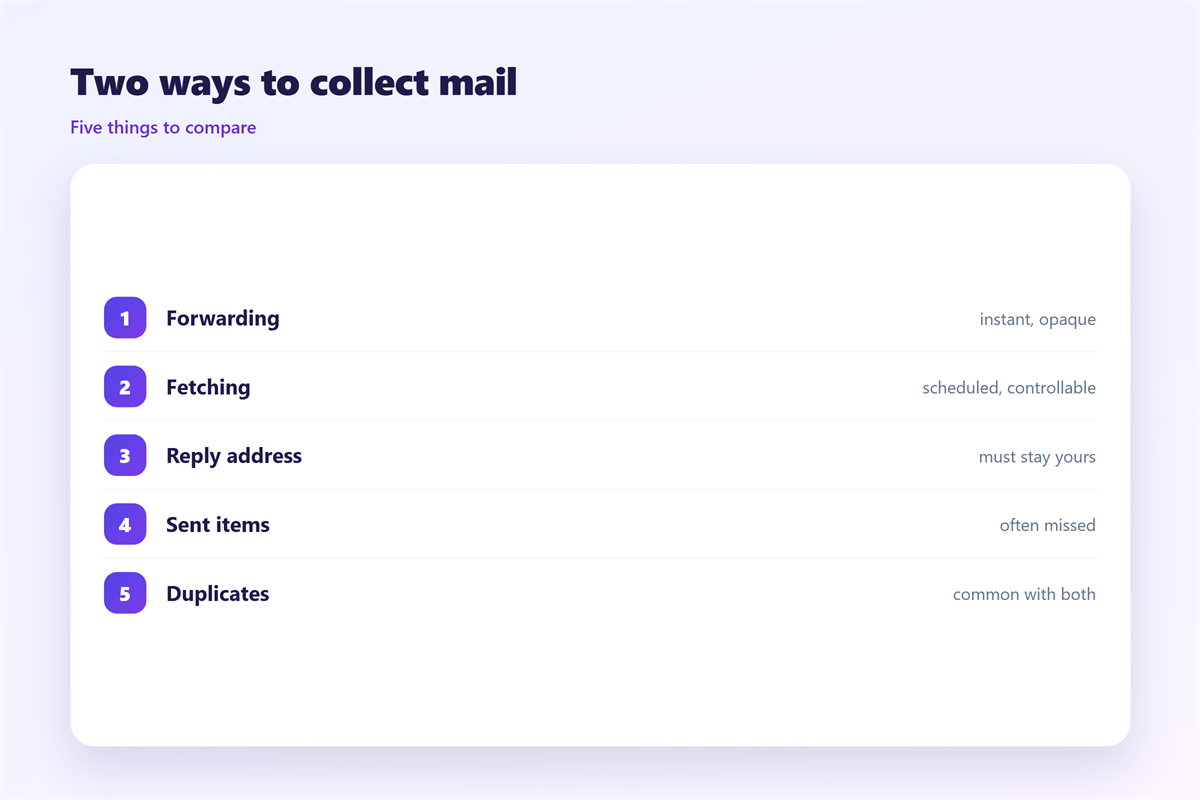
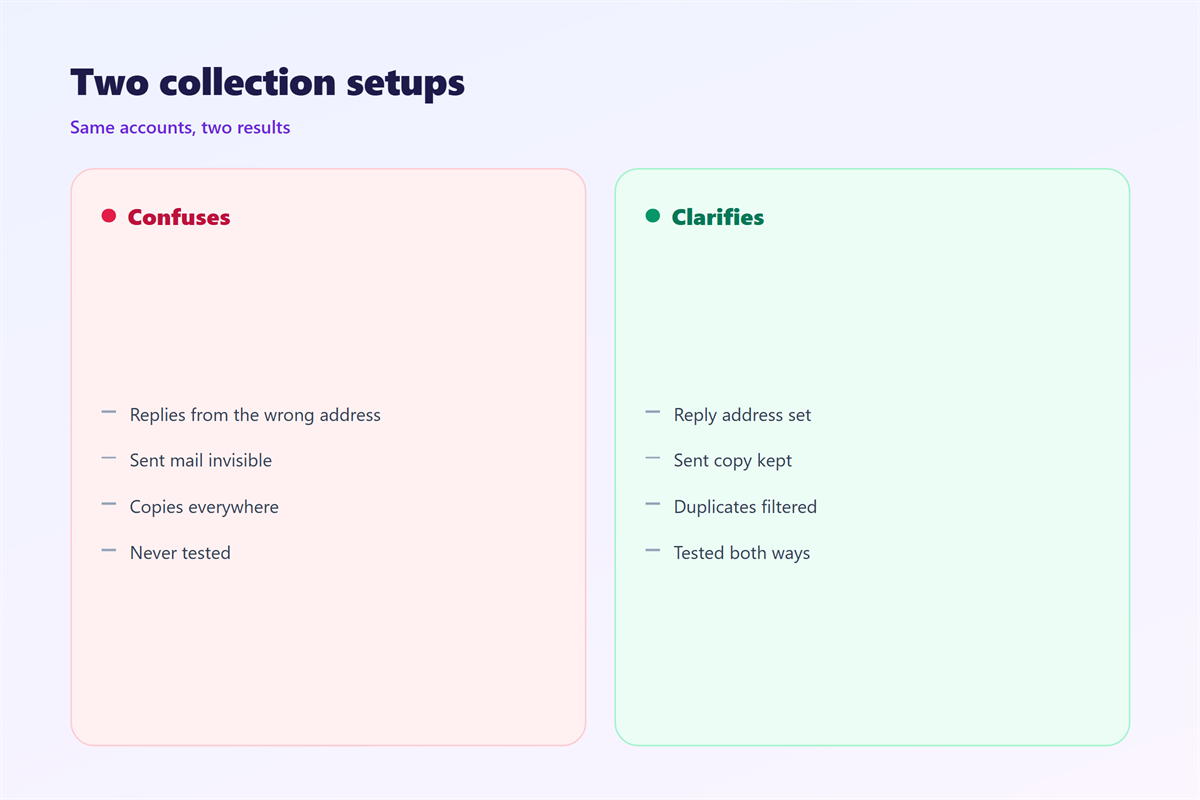
Duplicates top the list of complaints. Fetching and forwarding can both deliver the same message twice.
Choose one method per account. Running both at once creates the mess.
Another error is a broken reply address. Replies then leave from the wrong identity.
The reader sees a strange address. Trust drops at that moment.
Poor 邮件代收 also hides deleted mail. Fetching may leave a copy on the server.
Decide early whether the other account keeps its mail. Write that choice down.
A final risk is the stale connection. Old passwords can fail silently for weeks.
Bad 邮件代收 costs more time than it saves. A monthly check prevents most of that cost.
Watch for two copies of the same label. That is an early sign of a double connection.
Search for duplicates once a month. Two copies of one message are easy to spot.
Keeping 邮件代收 tidy over time
Review every collected account once a quarter. Remove the ones you no longer need.
Check that each reply identity still works. Send a test message from each one.
Watch the storage on the main inbox. Fetched mail adds up faster than people expect.
Good 邮件代收 stays small on purpose. Fewer accounts mean fewer surprises.
Keep a short list of every account you collect. Note the method and the login owner.
When a colleague leaves, that list is worth its weight. Access can be revoked in minutes.
Review the list with whoever shares the inbox. Two pairs of eyes catch what one pair misses.
A quiet inbox is a sign the setup works. Noise usually means a rule is wrong.
Document the last review date next to each account.
FAQ
Does 邮件代收 delete mail from the other account?
Usually not. A fetch often leaves a copy on the server. Check the setting that controls this. Set it deliberately.
Will people see the wrong sender address?
Only if the reply identity is missing. Add the address as a sender first. Then replies come from the right place.
Is 邮件代收 the same as forwarding?
No. Fetching pulls mail into your inbox. Forwarding pushes it from the other server. The result can look similar.
How many accounts can one inbox collect?
Most services allow about five fetched accounts. Forwarding has fewer limits. Aliases are best for many addresses.
评论
还没有评论,来说两句吧。
评论功能已关闭。