 小影邮箱
邮件周报怎么写?Align Without a Meeting
Key Takeaways
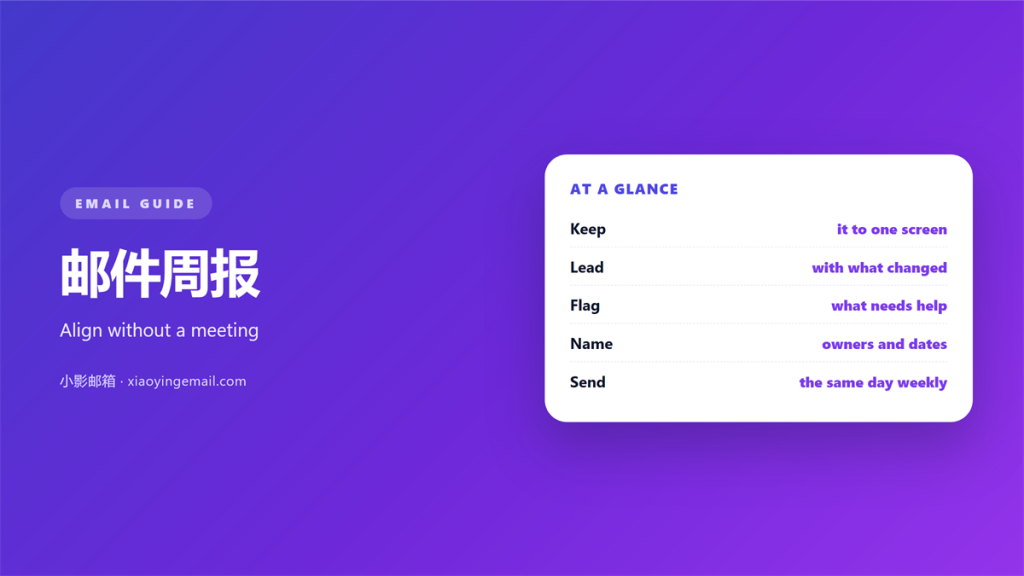
- 邮件周报 keeps a team aligned without another meeting.
- Send it on the same day each week.
- Lead with what changed, not a full diary.
- Keep every line short enough to skim on a phone.
- Name the owner of each open item.
What 邮件周报 means
A 邮件周报 is a short weekly note sent by email to a small group.
It sums up what moved, what stalled and what comes next.
It is not a full report. It is a light signal that keeps everyone on the same page.
The note usually goes out at the end of the week. Friday afternoon is a common choice.
Most teams already share status somewhere. A 邮件周报 gathers it into one place.
The point is not to impress a manager. The point is to stop small gaps turning into surprises.
A good note reads in two minutes. A bad one is skimmed and then forgotten.
That difference comes down to shape, not length. Clear sections beat long paragraphs.
The habit works best when it is predictable. Same day, same shape, every single week.
Weekly rhythm matters more than perfect prose. Readers soon learn where to look.
Why 邮件周报 matters
Teams drift apart when nobody shares news. A weekly note closes that gap.
It also saves time. One message can replace a short standing meeting.
How 邮件周报 carry momentum
A written note survives the week. Spoken updates fade by Monday morning.
People in other time zones read it when they wake up.
Owners stay visible
An open item without a name tends to sit still. The note puts a name beside it.
That small habit is often the whole difference between a plan and progress.
The record builds up
Old notes form a simple history. You can trace a decision back to its week.
That trail helps a lot when someone new joins the team.
Small teams feel the benefit first. Large teams need the same note even more.
How to write 邮件周报
Start with a fixed template. A stable shape saves time every week.
Open with one line of context. State the week and the team in a single sentence.
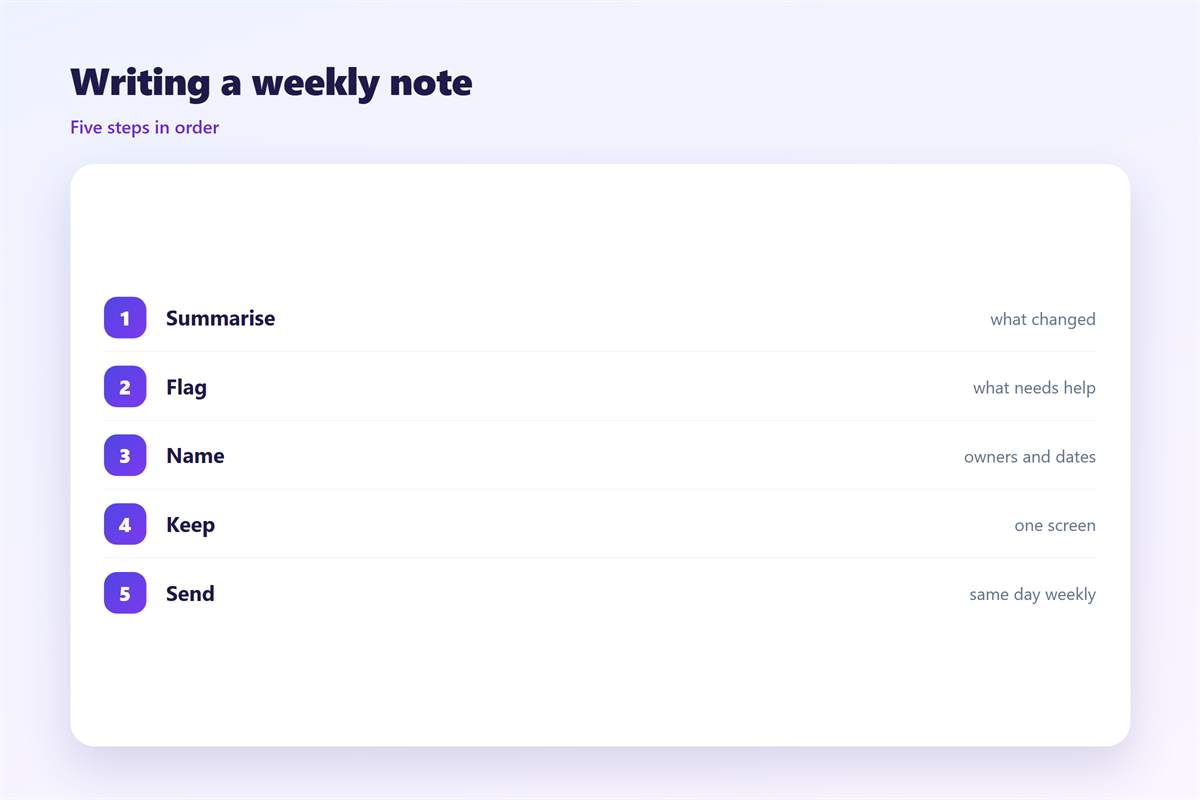
List what changed under a short heading. Use bullets, not long paragraphs.
Write 邮件周报 in plain language. Skip internal jargon when a simple word will do.
Add what is blocked. A quiet blocker can waste a whole week.
End with next steps. Each step should have an owner and a rough date.
Keep the whole note under one screen. If it grows, move detail to a linked file.
Read it once before you send. One slow pass catches most of the confusion.
Consistency is the goal, not perfection. A plain note each week beats a polished note once a month.
Where to keep 邮件周报
邮件周报 are more useful when people can find them again. The inbox is a poor archive.
Save each note to a shared folder. Keep the email as the announcement, not the store.
Name files with the date first. A sortable name beats a clever one.
Link each 邮件周报 to the project it covers. One click should reach the context.
Keep a short index at the top of the folder. It turns loose files into a story.
A shared folder also fixes ownership. Everyone sees the same version at the same time.
Set a simple rule for old notes. Move anything older than a year into a dated archive.
A simple folder tree beats a clever naming scheme that nobody follows.
Common mistakes
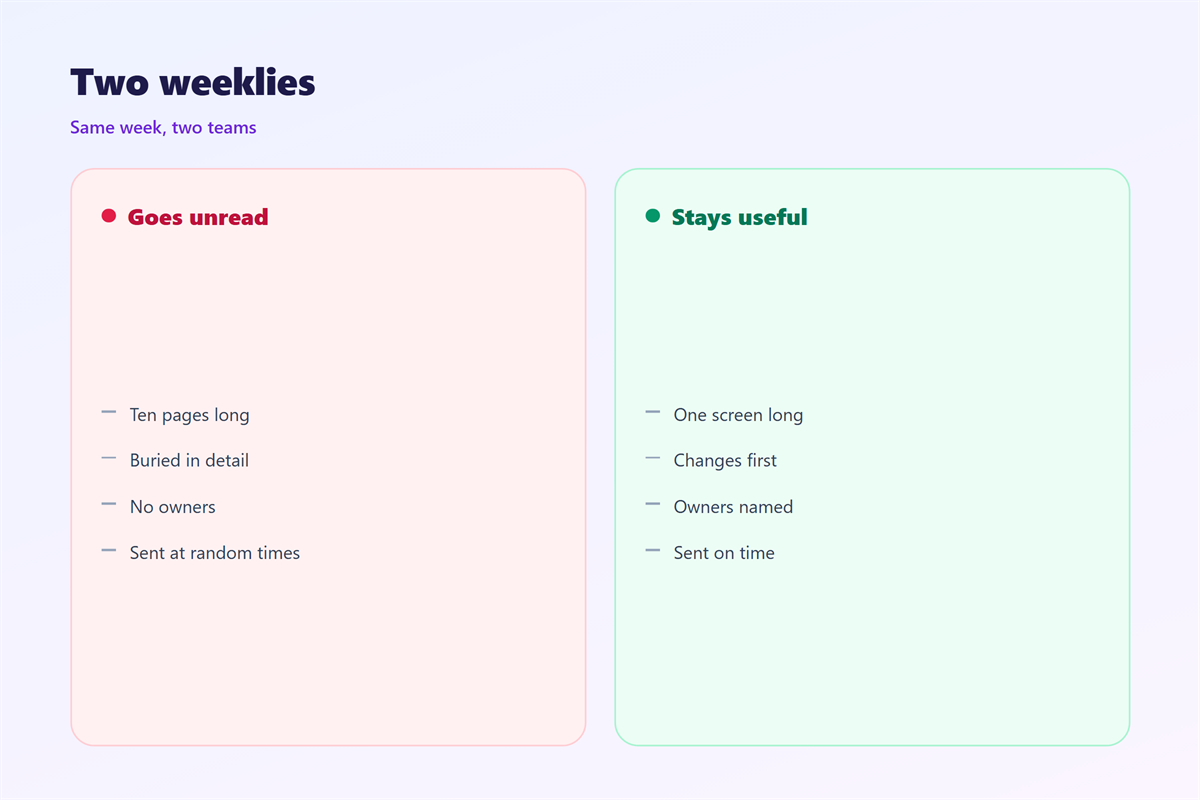
The first 邮件周报 mistake is length. A four page weekly update goes unread.
The second is a missed week. A note that skips a week loses its rhythm.
The third is a missing owner. A list of tasks without names rarely moves.
Another mistake is writing for the archive alone. The note is for people, not the file.
Avoid blame in the wording. Neutral sentences survive a tense week far better.
Do not bury the news under background. Lead with what actually changed.
Skip the full diary. A list of every small task drowns the few that matter.
Do not write it at the last minute. A rushed note reads as a rushed week.
Finally, keep one format across the team. Mixed styles slow every reader down.
Watch the tone as well as the facts. A calm note invites honest replies.
Sending and following up
Sending 邮件周报 is part of the weekly job. A clear subject helps people file it.
Put the team name and the week in the subject line. The body can stay short.
Skim your draft before you send it. A typo in a name reads as carelessness.
Ask for corrections within a day. After that, silence counts as agreement.
A short follow up keeps the open items alive. For related reading, see our guides on 邮件简报, 邮件汇报, 邮件模板 and 邮件群发.
A steady habit beats a perfect template. Send good notes often, not flawless ones rarely.
Reply to questions in the thread. That keeps the answer next to the note.
FAQ
Who writes 邮件周报?
Often a rotating role, so the load is shared across the team. A team lead can send it on small teams.
How long should it be?
One screen is plenty for most teams. A busy week may need two, but never ten.
Should we still hold a meeting?
A short note can replace a status meeting. Keep the meeting only for real debate.
What if people ignore the note?
Keep it short and consistent. A brief 邮件周报 that arrives on time gets read.
评论
还没有评论,来说两句吧。
评论功能已关闭。