 小影邮箱
邮件等级怎么设?Tiers That Mean Something
Key Takeaways
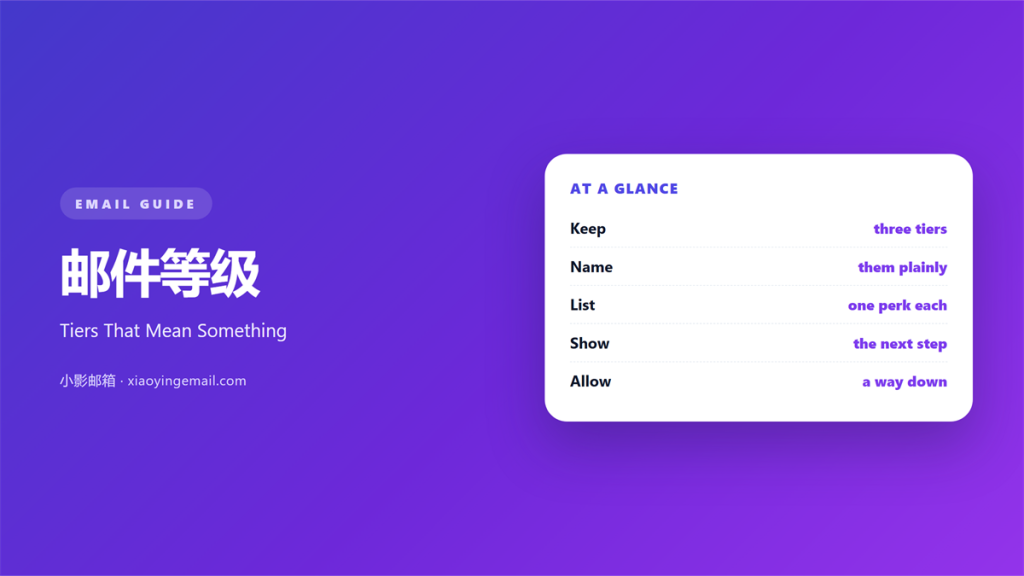
- 邮件等级 names how much a member has stayed or spent.
- Three levels are enough for most programs.
- Every level needs one benefit the others do not offer.
- Write the downgrade rule before the upgrade rule.
- Use plain names that a new member understands.
What 邮件等级 means
邮件等级 is a label for a member’s standing in a program.
It groups people by time, spend, or activity.
The label appears in the mail and on the account page.
Three levels cover most needs: base, middle, top.
Each level changes something the member can feel.
A discount, early access, or a service promise.
The change must be visible without a login.
A 邮件等级 is not a score.
It is a set of rights attached to a group.
The rights should stay the same for a full year.
Changing them mid-year breaks the promise.
People remember the benefit, not the name.
A member who cannot explain the level will not trust it.
Why 邮件等级 matters
A tier gives people a reason to come back.
It turns a flat list into a path.
A 邮件等级 also makes the offer personal.
The top level can receive a different mail.
That mail feels earned rather than broadcast.
Tiers also help the team decide who to protect.
High-level members deserve a faster reply.
The label makes that rule easy to apply.
Without tiers, every member gets the same weight.
That wastes attention on people who barely open.
One benefit per level
Each level needs a single clear gain.
More than one gain blurs the comparison.
Write the gain as a sentence a member could repeat.
If you cannot say it, the level is not ready.
When 邮件等级 helps
It helps when people buy more than once a year.
A 邮件等级 rewards the second and third purchase.
It helps when service quality can vary by group.
Then the top tier gets a named contact.
It also helps when you run frequent promotions.
A tier price is simpler than a new coupon each week.
Programs with a long membership fit best.
Short campaigns do not need a ladder.
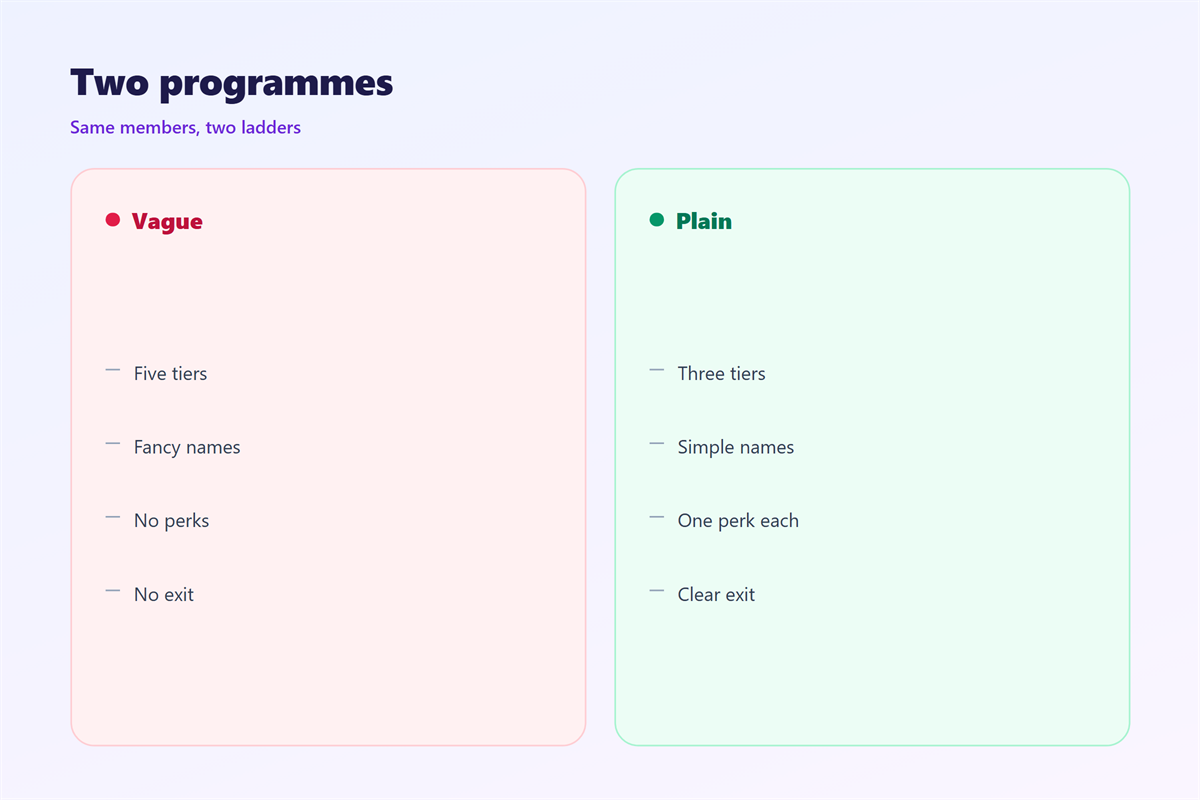
Three tiers, not five
Five tiers look impressive on a slide.
Members cannot name the middle three.
Three levels keep the difference visible.
Base, middle, top is enough for a start.
When 邮件等级 hurts
A 邮件等级 hurts when nobody can name the levels.
Five names with no difference are noise.
It hurts when the top tier is unreachable.
A level nobody reaches is a broken promise.
Tiers hurt when the downgrade is hidden.
Members who drop a level should hear it from you.
They also hurt when the naming is internal.
Codes like T3 and G2 mean nothing outside the team.
It hurts when the benefits change every quarter.
People stop reading the mail after two changes.
邮件等级 and the quiet downgrade
A 邮件等级 must move in both directions.
Most programs only write the upgrade rule.
Then nobody knows what happens after a quiet year.
Write the review date and the measure first.
A year of no purchase can drop one level.
The mail should arrive before the change, not after.
Give people a clear way to keep their level.
One purchase or one click can be enough.
A soft landing keeps the relationship alive.
Say it before it happens
Send a warning thirty days before the review.
Name the level they will hold afterwards.
Then send a second mail when the change lands.
Keep the same tone in both mails.
A downgrade handled well still feels fair.
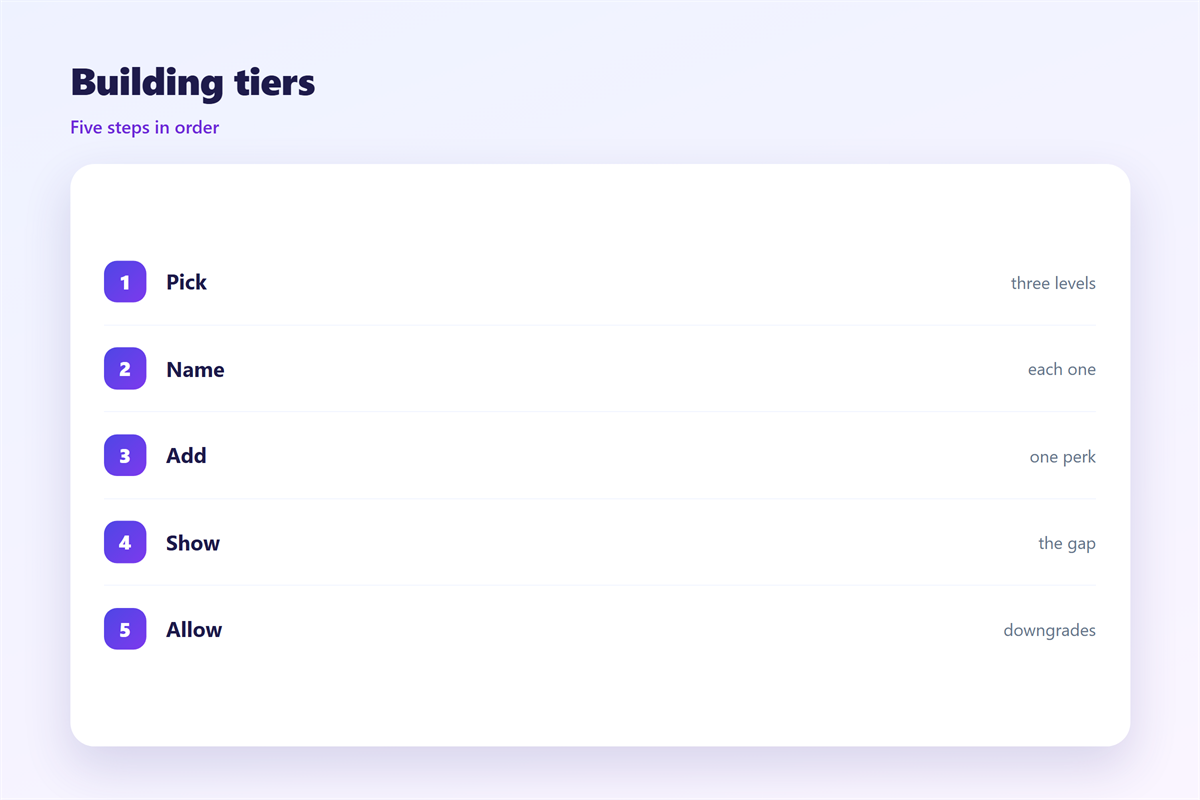
How to set 邮件等级
Set 邮件等级 by one measure, not by three.
Spend is the easiest measure to explain.
Time in the program is the second option.
Write each level as one sentence of rights.
Then add the upgrade threshold in plain numbers.
Add the downgrade rule in the same table.
Name the review month and the notice period.
Keep the number of levels at three.
Name the tiers in plain words
Use words people already say out loud.
Regular, silver, and gold are clear to most readers.
Avoid invented names that need a glossary.
Put the level name in the subject line sometimes.
Then repeat it in the account menu.
A name that sounds like a rank can offend people.
邮件等级 on a phone
Most members check their level on a phone.
The badge appears next to the profile name.
Keep the badge small and the label short.
A long tier name wraps and looks broken.
Put the benefits under the badge, not behind a tap.
Two lines of benefits fit on a small screen.
Test the upgrade button with one thumb.
The button should not sit under the keyboard.
Then check the downgrade notice at the same width.
A fair notice reads well on any screen size.
Keeping 邮件等级 honest
A level should describe the past, not predict the future.
Never sell a level that the team cannot support.
A single member day can carry the whole program, as in 邮件会员日.
Quiet care matters more than the badge, as in 邮件客户关怀.
A level is only one part of 邮件留存.
Watch the openers, not the labels, with 邮件活跃度.
Then review the rules once a year.
Write the changes on one page for members.
Remove any level that no longer earns its keep.
Then ask three members to explain their own level.
A short page beats a long policy nobody opens.
FAQ
How many tiers should a program have?
Three. Add a fourth only when a real benefit appears.
Should a level expire?
Yes, after a stated review period, so the label stays true.
Do tier names affect opens?
A clear name helps, and a coded one adds nothing.
What if a member drops a level?
Tell them early, explain the measure, and offer a way back.
评论
还没有评论,来说两句吧。
评论功能已关闭。