 小影邮箱
邮件留存怎么设?Keep What You Need, No More
Key Takeaways
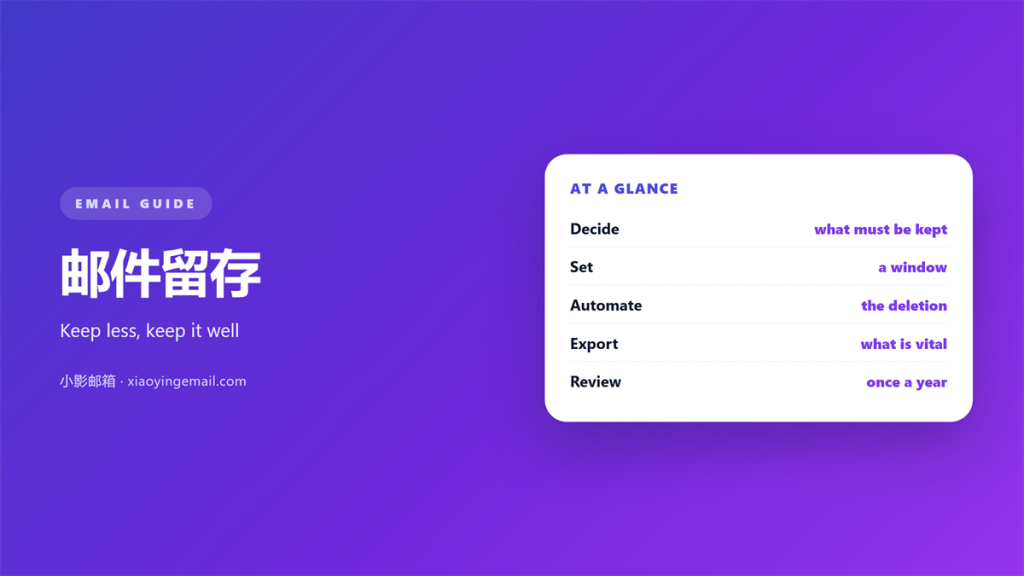
- Keeping every message forever is a liability.
- A short 邮件留存 window is easier to defend.
- Decide what to keep before you delete anything.
- Backups and archives are not the same thing.
- Write the rule down, or it will drift.
What 邮件留存 decides
邮件留存 is the plan for how long you keep mail. It decides what stays, where, and for how long.
Most people never set one. The inbox fills until a limit forces a decision.
A policy turns that scramble into a habit. It also protects you when a request arrives.
Two questions drive everything. How long do you need a message, and who may read it?
Answer both and the rest of the plan is mechanical.
Write it down and share it. A policy in one person’s head is not a policy.
A written rule also ends arguments about what to keep.
邮件留存 is also a question of trust. Readers expect old promises to stay findable.
How long should mail be kept
There is no single number. The right window depends on the content.
Everyday chatter has little value after a month. Anything with money or a promise lasts longer.
Pick a few bands instead of one rule. Short, medium and long is enough.
Short might be thirty days. Medium might be one year. Long is set by your own duties.
Shorter is safer by default. Mail you no longer hold is mail that cannot leak.
A shorter 邮件留存 window lowers risk.
Ask what the message is for before you keep it. Purpose decides the window.
Cold storage is an option for the long band. It is slower and cheaper than live mail.
Seasonal peaks do not change the window.
Set the window shorter for anything personal. Less data held means less to explain.
Write the bands on one page. A 邮件留存 plan nobody can explain is not a plan.
What to keep and what to delete
Judge a message by what it would need to prove. Keep the ones that carry an obligation.
Contracts, invoices and approvals belong in the long band.
Newsletters and automated alerts rarely do. They consume space and add risk.
Attachments deserve their own rule. A large file can live in storage, not in the mailbox.
A message with a legal duty outranks a convenient one. Keep the duty, drop the clutter.
邮件留存 is not the same as tidiness. A tidy inbox can still hide the wrong records.
Sort by type, not by person. Names change and folders grow.
Trust the type, not the folder name.
A second copy in the archive is not a second record. Keep one authoritative store.
Our notes on 邮件归档 cover what to keep and what to remove.
Space is a pressure you can measure. When a mailbox fills, our guide to 邮箱容量 helps you triage.
Deleting is not losing. A message past its window is work finished.
邮件留存 and legal duties
Some mail must be kept. Contracts, tax records and safety reports are common examples.
Other mail should be deleted. Personal data held too long can itself be a problem.
邮件留存 sits between those two duties. Keep what the law demands, and no more.
Rules differ by country and by industry. Check your own obligations before you set a window.
A legal hold overrides the plan. When a dispute starts, stop the deletion at once.
A 邮件留存 rule should name a legal hold. Then everyone knows when to pause.
Ask before you delete. A quick check with your adviser avoids a costly mistake.
Keep the deletion logged. A record of what was removed is proof of care.
Write down who can drop a hold. That single name prevents an accident.
A hold can last for years. Plan for that pause in the rule itself.
A 邮件留存 rule you can run
Keep it simple enough to follow without a manual.
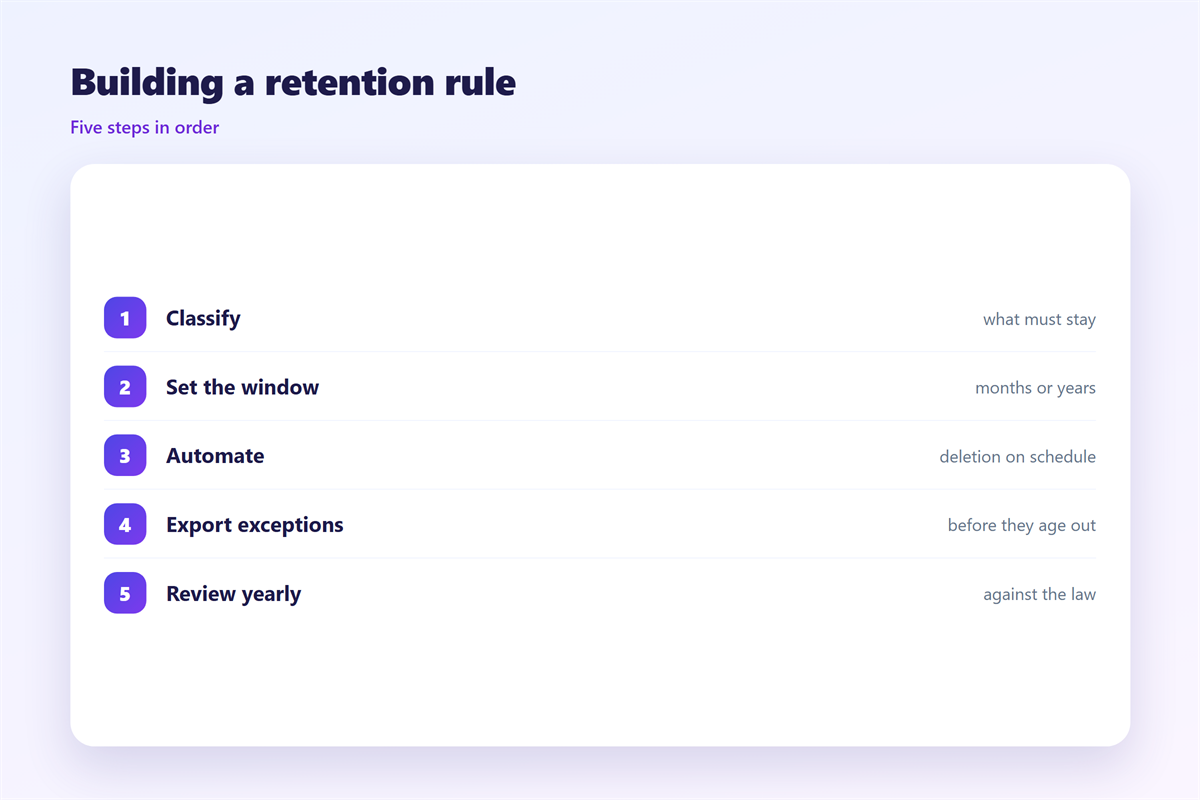
- List the message types you keep.
- Give each type a time window.
- Move long items to an archive.
- Delete the rest on a schedule.
Run the 邮件留存 rule on real mail. A small folder is a safe place to start.
Start with the easy types first. Newsletters and alerts are safe to age out.
Keep the first run small and reversible.
Watch what disappears before you trust it.
Then check the exit path. If someone leaves, their mail still needs a home.
Backups are a separate job. Our notes on 邮件备份 explain why a copy is not an archive.
Export is the last resort. Our guide to 邮件导出 compares the common formats.
Measure the space you save. A visible result keeps the rule alive.
Review the 邮件留存 rule once a year. Storage changes, and duties change with it.
Tell the team before the first deletion. Surprises create workarounds.
Write down what changed after each review. Share the list with everyone who sends mail.
A rule you can explain in one minute is a rule you will actually keep.
FAQ
Is 邮件留存 the same as backup?
No. A backup restores a system. A 邮件留存 rule decides what you keep and for how long.
Should I keep everything just in case?
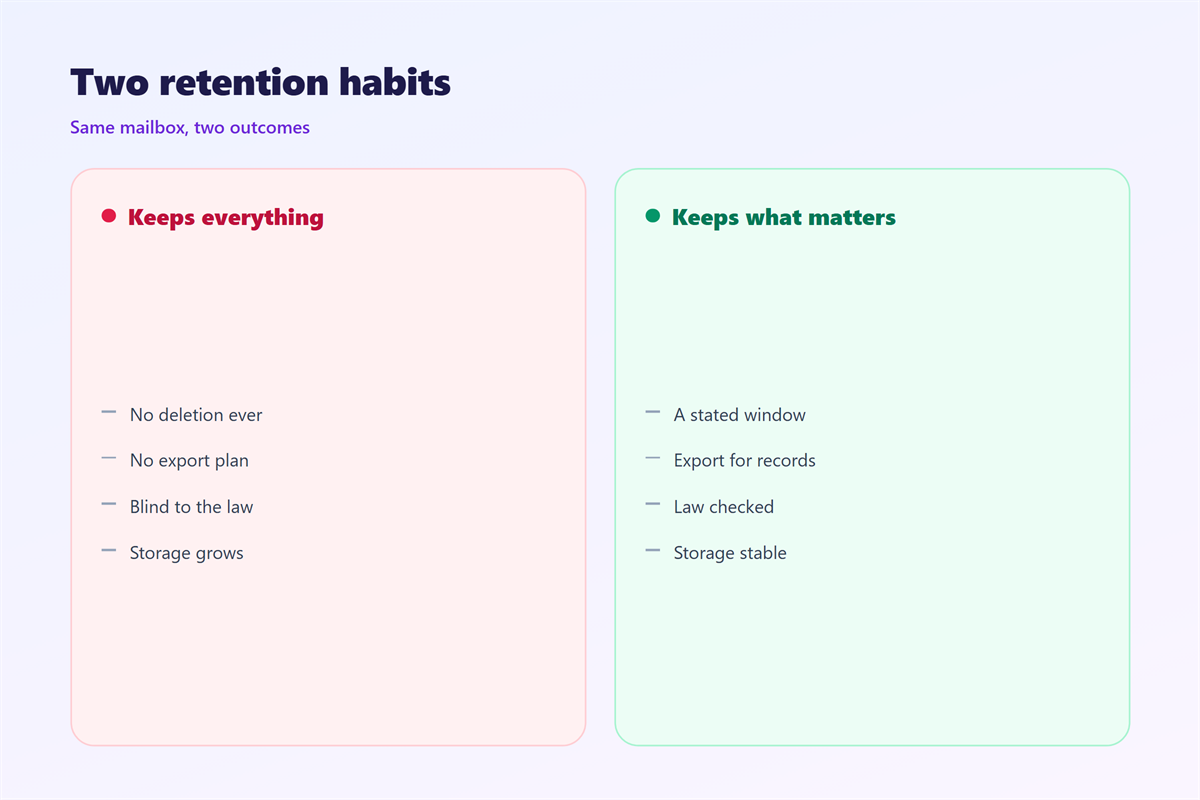
No. Extra mail adds cost and risk. Keep what you can defend.
A smaller archive is easier to search.
Who should own the policy?
邮件留存 needs one owner. With a deputy, so the job survives a holiday.
Can a 邮件留存 window be changed later?
Yes, but document the change. Deleting early is hard to undo.
References
- IETF RFC 5322: Internet Message Format
- Microsoft: Learn about retention policies
- Google Workspace: Set up retention policies
评论
还没有评论,来说两句吧。
评论功能已关闭。