 小影邮箱
邮件防泄漏怎么做?Stop Mail Before It Leaks
Key Takeaways
- 邮件防泄漏 watches mail on the way out, not just in.
- Most leaks start with a rushed reply or a wrong address.
- A short rule list beats a huge block list.
- Held mail needs a human to review it fast.
- Logs turn a quiet policy into real evidence.
What 邮件防泄漏 means
邮件防泄漏 is the practice of keeping sensitive mail inside the company. It checks messages as they leave, and it looks for data that should not travel.
The data might be a customer list, a contract or a set of card numbers. A rule spots the pattern and takes an action.
That action can be a warning, a hold or a hard block. The choice depends on the risk and the team.
邮件防泄漏 is not only about wrong doing. Most leaks are honest mistakes made in a hurry.
A good setup helps the honest sender pause for one second. That second is often enough.
Two words guide the whole idea. Do not let it leave. Every rule serves that single aim.
Why 邮件防泄漏 matters
One wrong file can leave the building forever. Once it is out, you cannot pull it back.
The cost is not only money. Trust, clients and reputation all take the hit too.
A clear 邮件防泄漏 policy also calms the team. People know what is safe to send.
It protects the sender as much as the company. A warning saves a career from a single mistake.
A good 邮件防泄漏 plan is also good service. Clients notice when their data stays safe.
Insurers and auditors often ask about it. A written 邮件防泄漏 policy answers the question early.
Where leaks usually start
The most common cause is a wrong address. An autocomplete fills in the wrong name.
The next is a reply to all. A private note reaches a whole list by accident.
Another cause is a personal account. Work goes to a home address with no controls.
The last is a copied file. A full spreadsheet travels where a summary was needed.
How 邮件防泄漏 works
The system reads outbound mail before it is sent. It scans the text and the files for patterns.
Patterns include account numbers, health terms and project codes. Each pattern carries a risk level.
Low risk mail may leave with a small note. High risk mail waits for a person to decide.
Then the trail matters. Every hold and release is recorded with a time and a name.
Classification makes the review quick. A labelled file is easier to judge than a raw one.
A weekly sample is enough to build confidence. Read a few held items by hand.
Testing the rules
Send test messages that should trigger a rule. A rule that never fires is a rule you cannot trust.
Test the false alarms too. A noisy rule slows the whole team down.
Setting up 邮件防泄漏
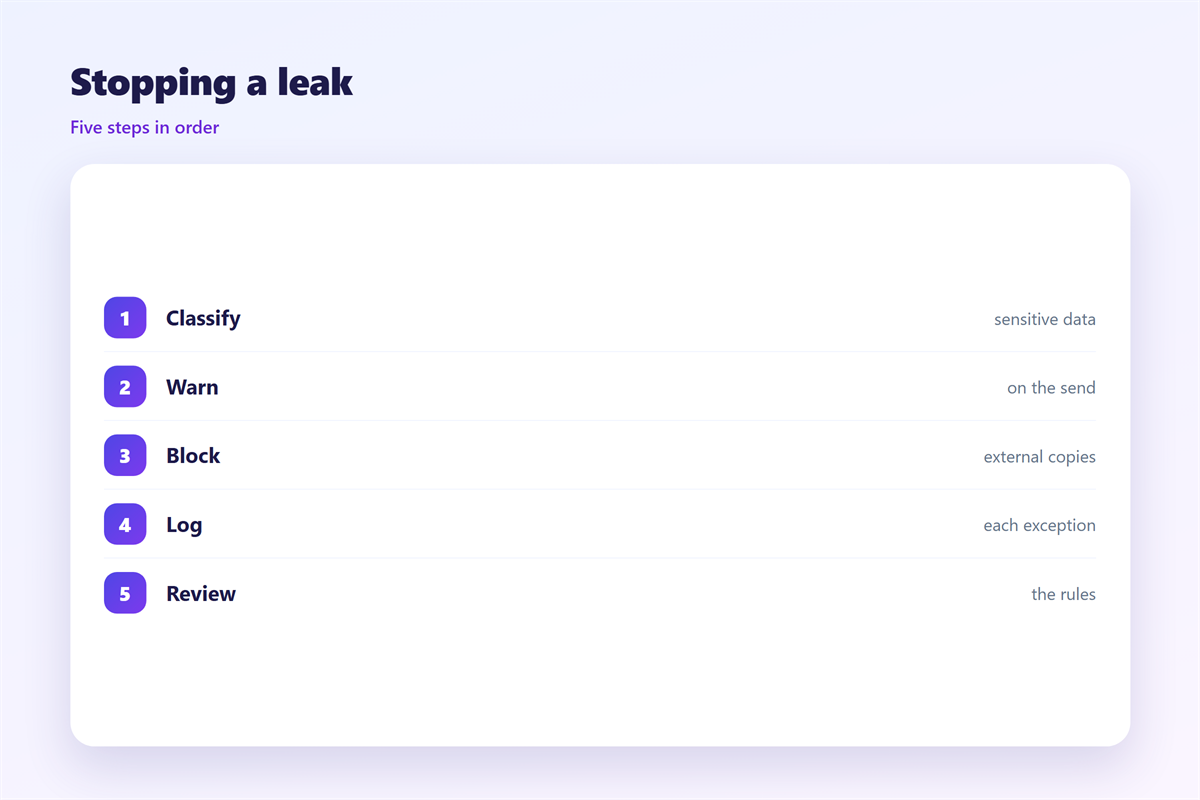
Start your 邮件防泄漏 work with a short list of data you must protect. Ten clear items beat a hundred vague ones.
Write a rule for each item and test it. Keep the wording plain so people understand the alert.
Add a review step for the riskiest mail. A second pair of eyes catches most mistakes.
Encrypt the mail that must still travel. Protection follows the message, not just the network.
Tell the team what will happen. Surprise blocks create workarounds, and those defeat the point.
Review the logs every week. A pattern of holds shows where training is needed.
Keep the policy short enough to read. A one page rule set is easier to follow.
Name each rule after the data it guards. A clear name speeds up every review.
Common mistakes
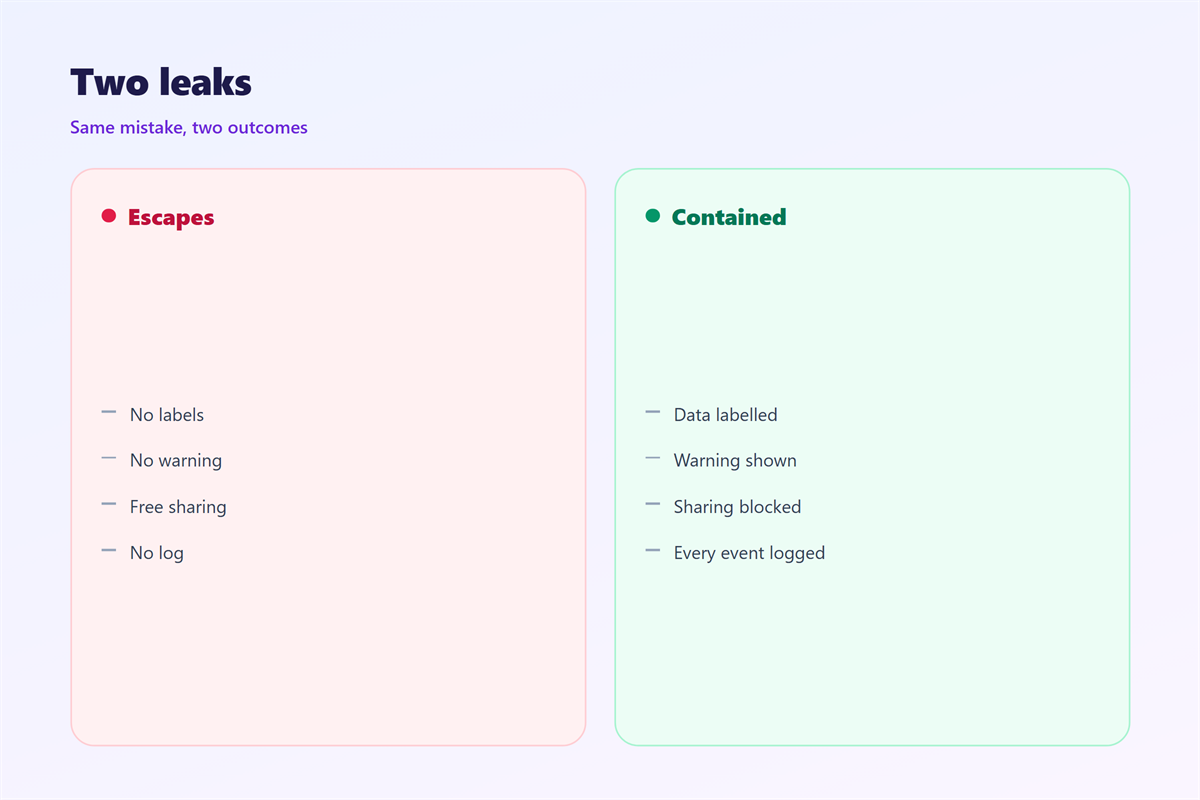
The first mistake is blocking everything at once. A flood of false alarms turns people against the tool.
The second is no review path. A held message with no owner sits until someone gives up.
The third is a rule set nobody updates. Old patterns miss new kinds of data.
Another mistake is ignoring the small leaks. A single file each week adds up over a year.
So build 邮件防泄漏 slowly and explain each rule. A tool people understand is a tool they follow.
And do not publish a rule you cannot explain. A rule nobody understands will be ignored.
Keeping 邮件防泄漏 steady
Review your 邮件防泄漏 rules each quarter. Remove the ones that never fire and add the ones you missed.
Check the reply to all traffic. That single habit prevents many quiet spills.
Keep a short record of every release. A dated note answers questions months later.
Train new staff in the first week. Early habits are the easiest to shape.
Ask for feedback each quarter. The people who send the mail know where the gaps are.
Keep the owner of each rule listed. A named person fixes issues faster.
Treat 邮件防泄漏 as a routine, not a one time project.
For the wider picture, read 邮件审计 and 邮件加密. A calm 邮件审批 step helps too, and the rules in 邮件留存 set the limits.
FAQ
Is 邮件防泄漏 only about attachments?
No. It also watches the body text. A pasted list can leak as easily as a file.
Will it slow down my team?
A little at first. A short rule list and a clear review path keep the delay small.
What happens to held mail?
It waits for a reviewer to release or block it. Every choice is written to the log.
Can it stop a determined insider?
Not fully. It raises the cost and leaves a record. That is often enough.
评论
还没有评论,来说两句吧。
评论功能已关闭。