 小影邮箱
邮箱域名怎么用?Running Email on a Domain You Own
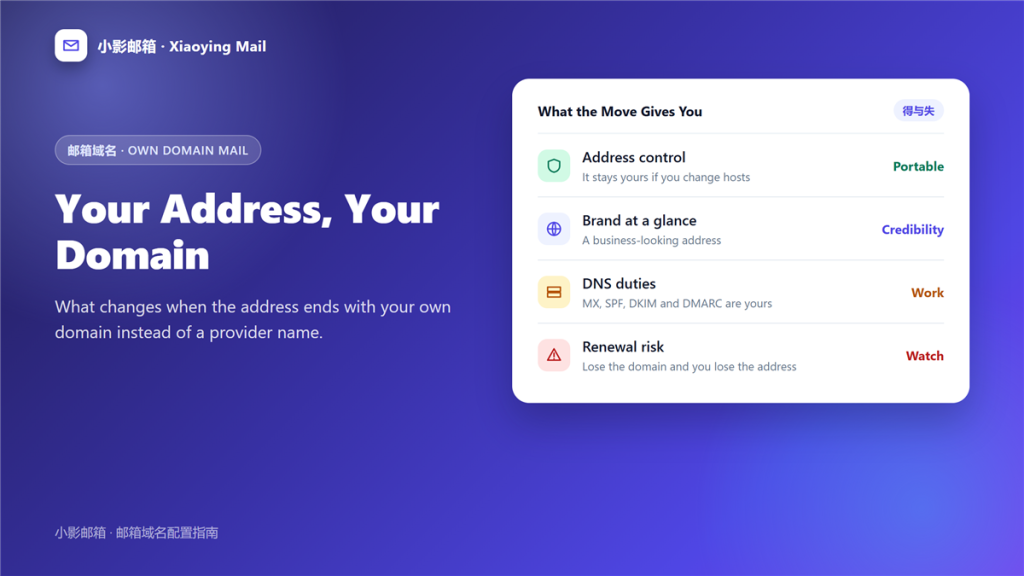
What 邮箱域名 really changes
邮箱域名 means the part after the at sign belongs to you instead of a mail provider. Everything else about the mailbox stays similar, which is why the change looks smaller than it is.
I moved my own address twice in five years without telling a single contact. That portability is the whole point of 邮箱域名, and it is also the part most people discover only after they need it.
Key Takeaways
- 邮箱域名 keeps your address when you change mail hosts.
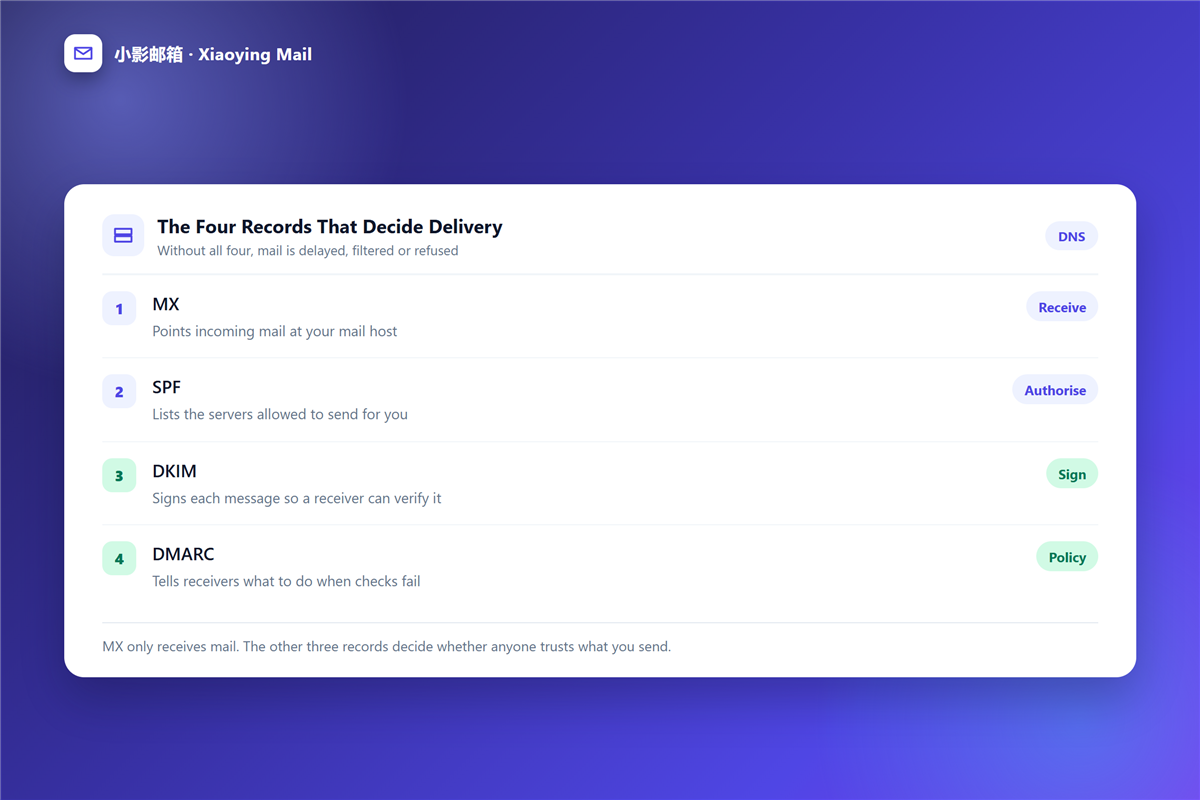
- Four DNS records decide whether your mail is delivered.
- MX handles incoming mail; SPF, DKIM and DMARC cover sending.
- Renewal becomes your responsibility, not a provider task.
- Reputation belongs to the domain, so you build it yourself.
- Setup takes an afternoon; maintenance takes minutes a year.
- A domain is a poor fit if nobody needs to reach you by name.
What you need before you start
Three things, and only one of them costs money.
A domain you control
Registration is annual and cheap. Furthermore, the registrar account matters more than the price, because losing access is the real risk with 邮箱域名.
A mail host
Any provider that supports custom domains will do, from a free tier to a paid plan. The 邮件服务器 behind it handles the queues and the filtering.
Access to DNS records
You need the ability to add four records at the registrar. Without that, no 邮箱域名 setup can be completed.
The four records that decide delivery
These four entries turn a domain into a working 邮箱域名, and skipping any one of them shows up as a symptom rather than an error.
MX
MX tells the world where your mail should be delivered. Consequently, a wrong MX means mail bounces or vanishes, and the 邮箱域名 looks broken for no visible reason.
SPF and DKIM
SPF lists the servers allowed to send for you, and DKIM signs each message so a receiver can verify it. Together they prevent most forgery, which protects the 邮箱域名 reputation you are about to build.
DMARC
DMARC tells a receiver what to do when the other two fail. Start with a monitoring policy, then tighten it once the reports look clean.
What a 邮箱域名 costs you
Money is the smallest part of the bill.
An annual registration fee usually costs less than a coffee each month. However, time and responsibility are the real costs of 邮箱域名 ownership, and both are recurring.
You also inherit the reputation. A new domain has no history, so early messages may be filtered until it builds a record. That is the problem described in a 邮件黑名单 discussion, except here you start from zero rather than repairing damage.
When your own 邮箱域名 is the wrong choice
Not everyone needs one, and the setup cost is real.
If you send five messages a week to people who already have your number, a free provider address is simpler. Similarly, a temporary project rarely justifies a permanent 邮箱域名, and a disposable address covers that case better.
A second trap is scale. Once you add several 邮箱小号 on one domain, every address shares a single reputation, and one careless sender affects the rest.
Moving to a 邮箱域名 without losing mail
The order of operations decides whether mail goes missing during a 邮箱域名 change.
- Create the mailbox on the new host first.
- Add the four DNS records, but leave MX until last.
- Lower the MX record time to live a day in advance.
- Switch MX, then send test messages in both directions.
- Keep the old mailbox active for at least a month.
A 邮箱转移 follows the same logic on a larger scale, and the same habit protects both.
What changes in daily use
Almost nothing visible. However, three small differences appear over time.
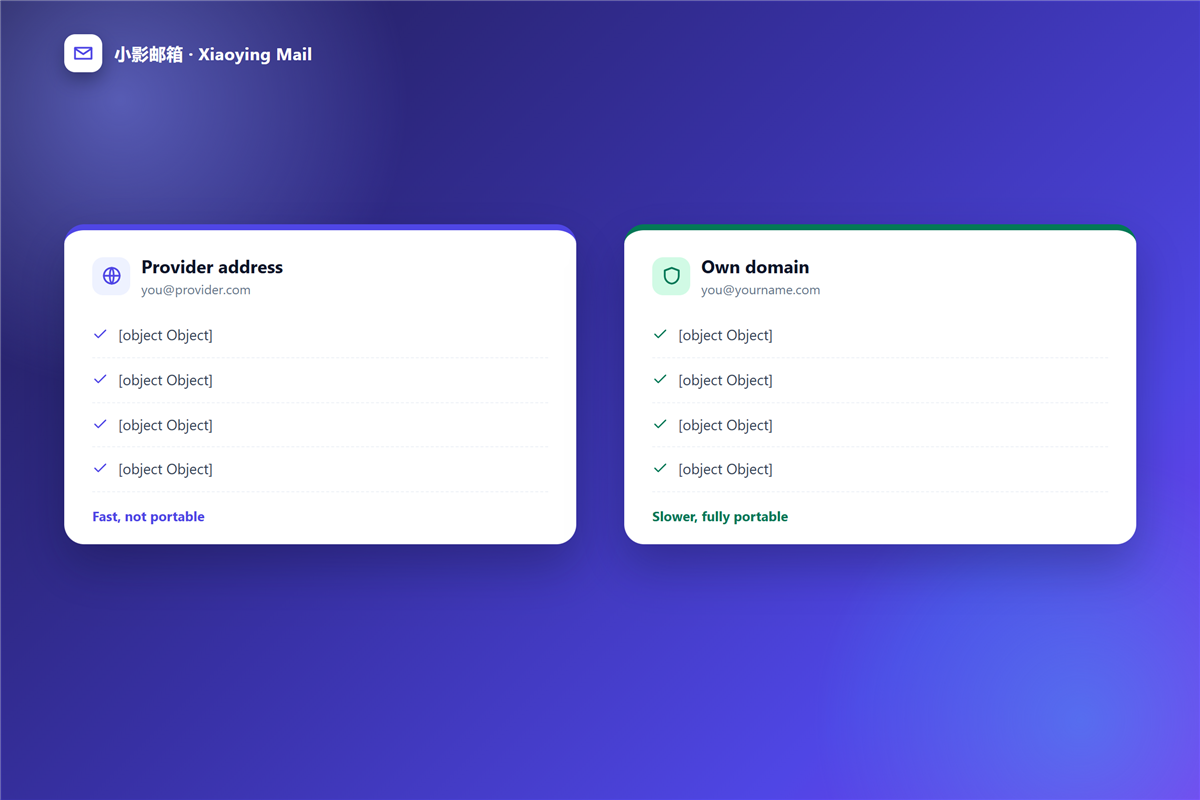
First, your address stops changing when you change hosts. Second, you decide on catch-all rules and forwarding instead of accepting a provider default. Third, your 邮箱域名 identity travels with you into every account you ever signed up with.
Keeping a 邮箱域名 healthy
Ownership does not end at setup. Three habits keep the arrangement working.
Watch the renewal date
Set the domain to auto-renew and keep the payment method current. A lapse is the one failure that somebody else can exploit.
Review the DNS records once a year
Mail hosts change their sending addresses, and SPF lists drift out of date. Furthermore, an outdated record is a common reason a working 邮箱域名 suddenly starts failing.
Read the DMARC reports
Those reports show who is sending as your domain. Accordingly, they are the earliest warning that somebody is forging your address.
Frequently asked questions
Is 邮箱域名 expensive?
The domain is cheap and the mailbox can be free, so total cost is usually the price of one domain per year.
Can I use 邮箱域名 with a free mail host?
Often yes. Several providers support a custom domain on a free or low-cost tier.
What happens if I forget to renew the domain?
Mail stops arriving, and someone else can register the name. An expired renewal is the one failure that is hard to undo.
Do I need technical skills to set up 邮箱域名?
You need to copy four values into a DNS panel. It is fiddly rather than difficult, and the mail host usually publishes exact values.
评论
还没有评论,来说两句吧。以下为本文的引用通告: