 小影邮箱
邮件采购怎么做?From Request to Order
Key Takeaways
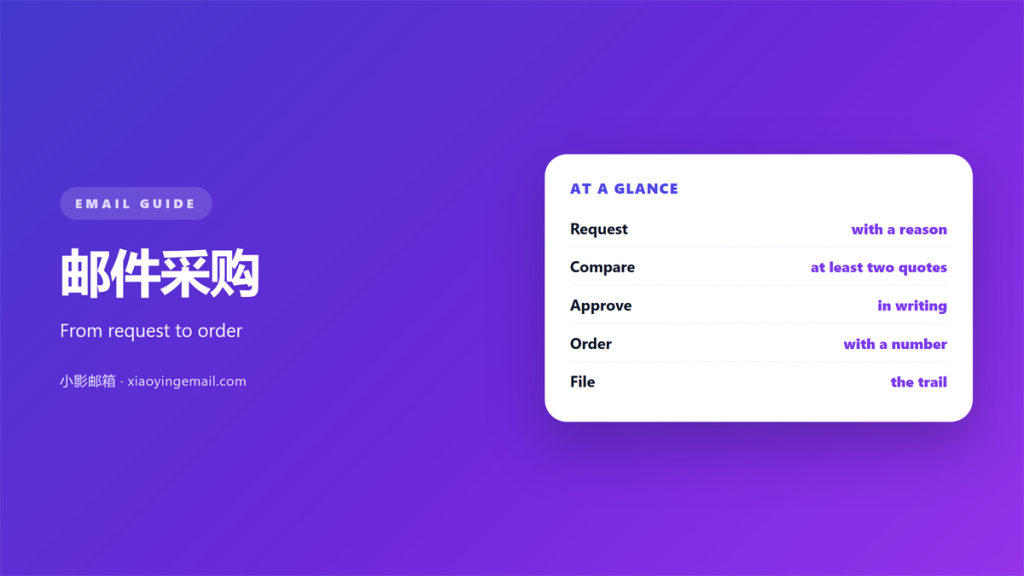
- 邮件采购 turns a request into a clear order.
- Every step should leave a written trace.
- Get prices in writing before you commit.
- Approval needs a name, a date and a limit.
- A tidy thread protects the whole purchase.
What 邮件采购 means
邮件采购 is the process of buying through email, from request to order.
It starts with someone describing what the team really needs.
It ends when a supplier confirms the order and a payment is planned.
The whole path can live in the inbox if the trail stays tidy.
Most companies run this way without ever naming the process.
A clear 邮件采购 names the item, the quantity and the deadline.
It covers the request, the quote, the approval and the order.
Each stage has its own message and its own reader.
A supplier only sees the part that concerns them.
Your team sees the whole picture in one place.
Most of the risk sits in the gaps between those messages.
A tidy process closes those gaps before they cost money.
The steps in 邮件采购
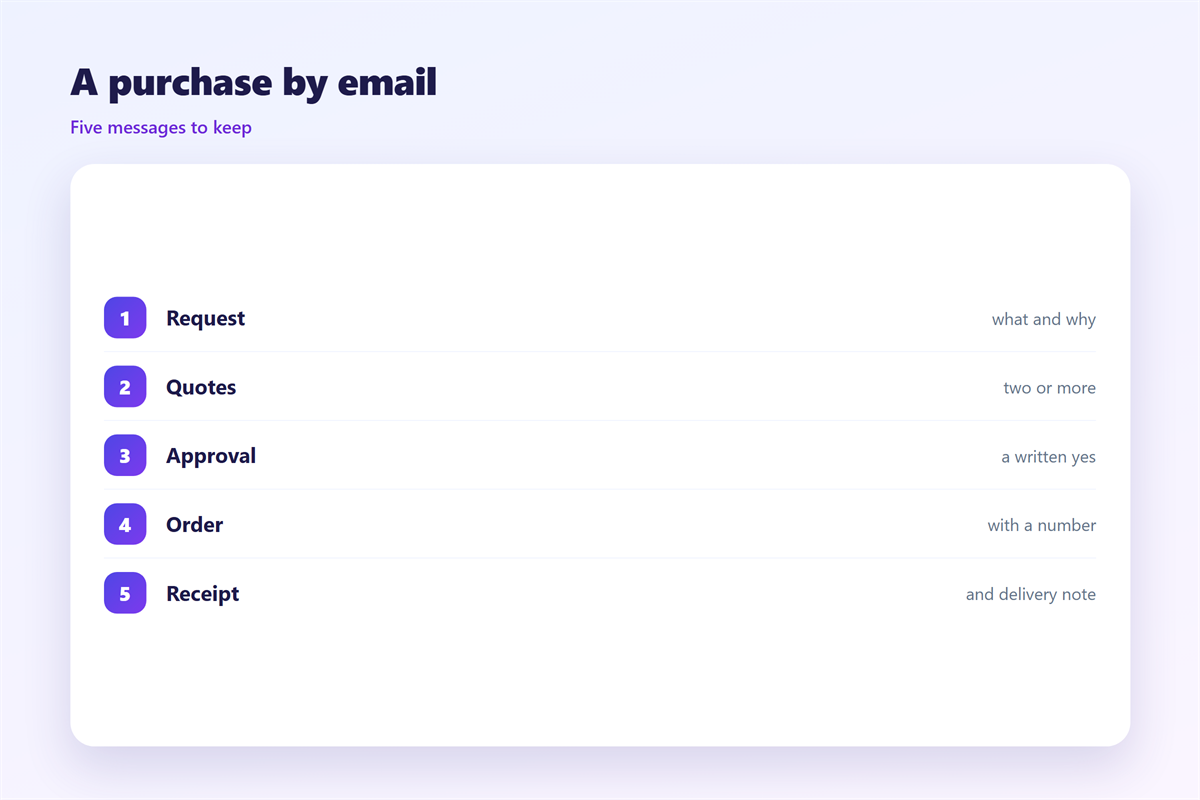
The first step is a short request that states the need plainly.
The second step is a quote from one or more suppliers.
The third step is an approval from whoever holds the budget.
The fourth step is the order itself, sent and confirmed in writing.
- Request: describe the item and the amount.
- Quote: collect prices and dates in writing.
- Approval: record the name and the limit.
- Order: confirm the final terms clearly.
Each step leaves a message, and together they form the 邮件采购 record.
Good 邮件采购 keeps every promise in writing from the very start.
Write the request in the first person and keep it short.
State the quantity, the size and the date you need it.
Ask the supplier to confirm the lead time in the reply.
A written lead time prevents a rushed call later.
Keep the request simple so a busy supplier can answer fast.
One clear question usually returns one clear price.
A short checklist keeps each step from being skipped.
Print it and pin it beside the desk if that helps.
Where 邮件采购 goes wrong
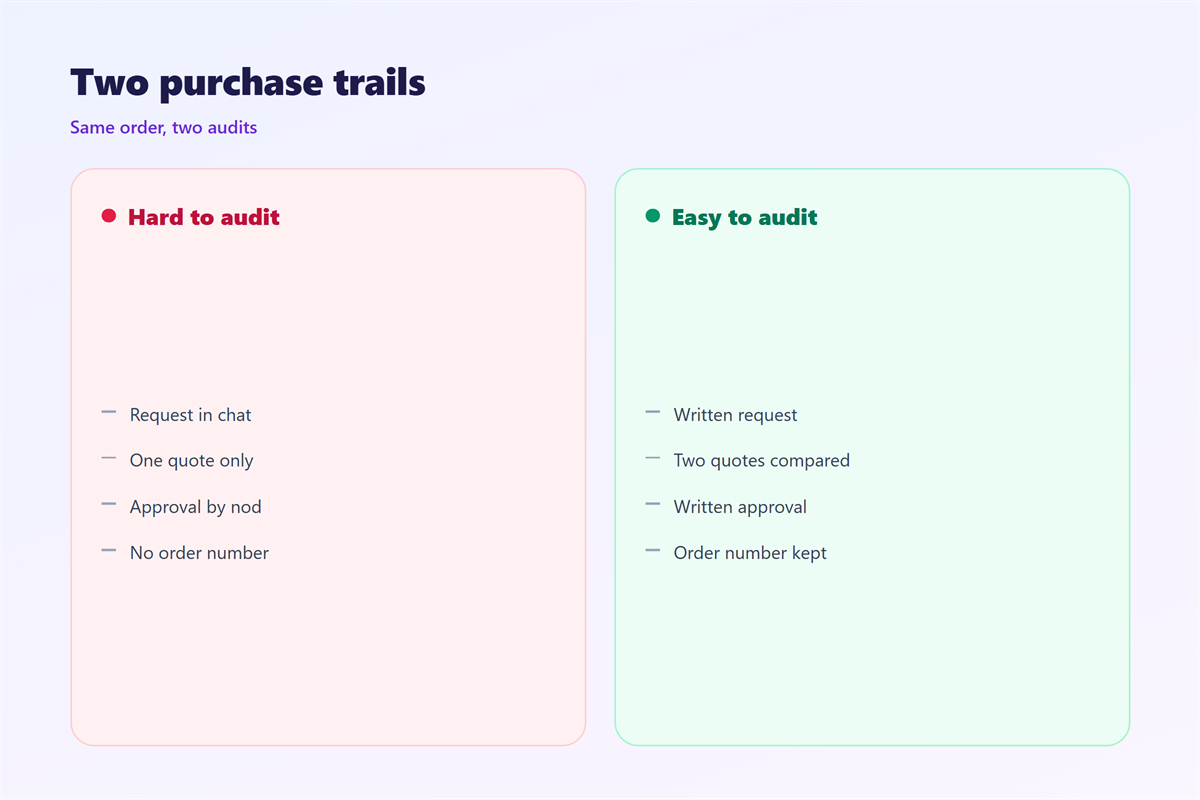
Most problems come from a missing step, not from a bad supplier.
A request goes out by chat and never reaches the inbox.
A verbal quote is remembered and then quietly disputed.
An approval is given in a corridor and cannot be shown later.
A rushed 邮件采购 skips the check that later saves the budget.
A slow 邮件采购 can lose the best delivery slot of the month.
So keep every decision inside the thread where it can be found.
Deadlines slip when nobody repeats them in writing.
Write the date in the subject and the amount in the body.
Two suppliers are asked for the same item by mistake.
A copied manager then approves both without noticing.
That is why each request needs one clear owner.
Write the owner’s name at the bottom of the request.
A price agreed by voice is easy to forget and hard to prove.
Repeat every figure in the thread the same day.
A late order can hold up a whole project.
Send a reminder a day before the promised date.
Testing your 邮件采购
You can test the process with a small, low risk order.
Follow each step and note exactly where the trail breaks.
Check that the quote, the approval and the order agree on price.
Confirm that every message names the item clearly.
Keep the 邮件采购 short enough for a manager to read quickly.
If a step is missing, add it before the next purchase.
A simple test now prevents a costly dispute later.
Choose an item you order often and trace its full path.
Note each message and mark the one that is missing.
Most gaps sit between the quote and the approval step.
Add a short reminder there and test the path again.
Time how long each step takes from request to order.
A slow step shows where the process needs help.
Keeping a record of 邮件采购
Save the whole thread, from the first request to the final order.
Export the messages so a provider change cannot erase them.
Store quotes and approvals beside the order confirmation.
Write a one line summary at the top of the folder.
A clean 邮件采购 record answers most questions without a search.
Our notes on 邮件报价 explain how a quote is sent. Internal sign off is covered under 邮件审批. Politeness and timing are described in 邮件跟进, and reusable wording sits under 邮件模板.
Review the record when the item arrives and again when it is paid.
Then close the file and move calmly to the next request.
Name the folder after the supplier and the month.
That simple rule makes old orders quick to find.
Keep the final order in the same place as the first request.
A single location beats three different systems.
Export the thread once the order is paid and closed.
A saved copy survives staff changes and new tools.
Set a simple rule that every purchase starts in the inbox.
Then nothing important lives only in someone’s memory.
FAQ
Do small purchases need 邮件采购 steps?
Keep it light. A short request and a written yes are enough. Heavy process suits large orders.
How many quotes should I collect?
Two or three for most purchases. One is fine for a repeat supplier. Always keep them in writing.
Who should approve an order?
The person who owns the budget. Their reply should name the item and the spending limit.
What if the supplier changes the price?
Ask for a new quote and a fresh approval. Then update the 邮件采购 record before you confirm.
评论
还没有评论,来说两句吧。
评论功能已关闭。