 小影邮箱
邮件生命周期是什么?Lifecycle Mail Explained
Key Takeaways
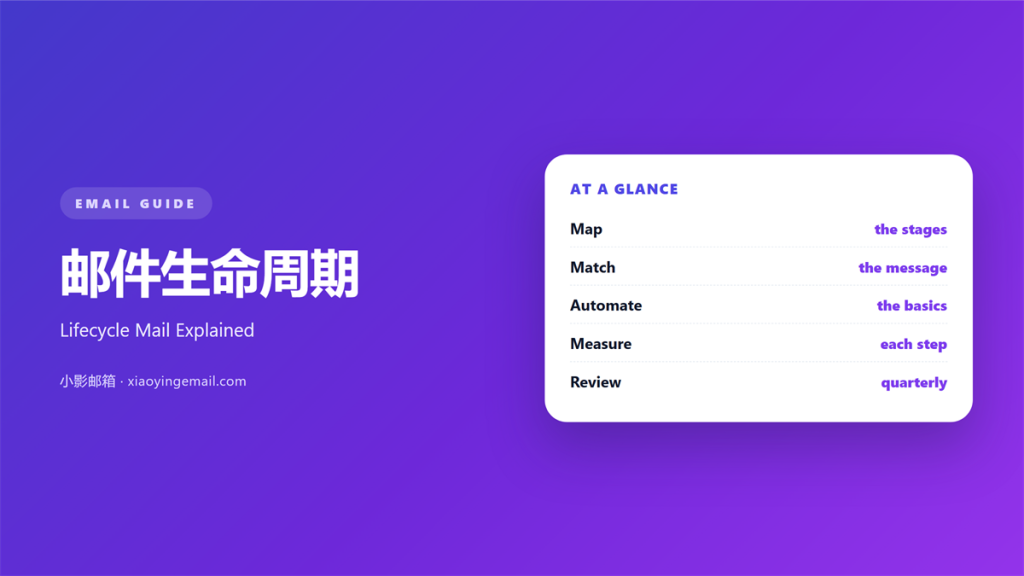
- 邮件生命周期 follows one reader from first hello to loyal fan.
- Every stage needs a message that fits the moment.
- Map the stages before you write the first line.
- Automation keeps the whole series on time.
- Measure each stage and repair the weakest link.
What 邮件生命周期 means
邮件生命周期 is the path a reader walks with your brand.
It begins at the first sign-up and does not end there.
The reader then moves through a few clear stages.
Each stage brings its own mood and its own question.
Your job is to answer the question of that stage.
The answer changes as the reader changes.
So a lifecycle plan is never really finished.
It grows as your reader grows over time.
That is why the word lifecycle fits so well.
A good plan feels alive, not fixed.
It bends when a reader moves faster than expected.
It waits when a reader needs more time.
That patience keeps the tone warm and human.
Why 邮件生命周期 matters
A single blast talks to everyone at the same time.
A lifecycle view talks to one person over time.
That difference changes how the reader feels.
The right note arrives when it is useful.
Useful mail earns trust and gets opened.
Trust slowly turns a quiet reader into a loyal one.
So the extra planning pays for itself.
It also saves you from guessing every week.
A written plan makes each send easier.
You open the file, pick the stage, and write.
No blank page, no wasted morning.
Good timing often matters more than clever words.
A story, not a blast
Think of 邮件生命周期 as a short story.
Each email is one chapter, not the whole book.
A good chapter makes the reader want the next.
A weak chapter lets them close the cover.
The stages of 邮件生命周期
Most readers pass through four broad stages.
Not every reader moves at the same speed.
Some skip ahead, and some leave early.
The stages still give you a useful map.
Use them as a guide, not a cage.
Name the stages in words your team will remember.
First contact
The first stage is the warm hello.
The reader has just signed up and is curious.
Send a welcome note that sets the tone.
Say who you are and what to expect.
The habit stage
Next comes the habit stage.
The reader learns what you send and when.
Consistency here builds the weekly open.
Show up on the same day each time.
The loyal stage
The last stage is loyalty.
The reader trusts your name in the inbox.
Now you may ask for more, with care.
An upgrade or a referral can fit here.
When 邮件生命周期 goes wrong
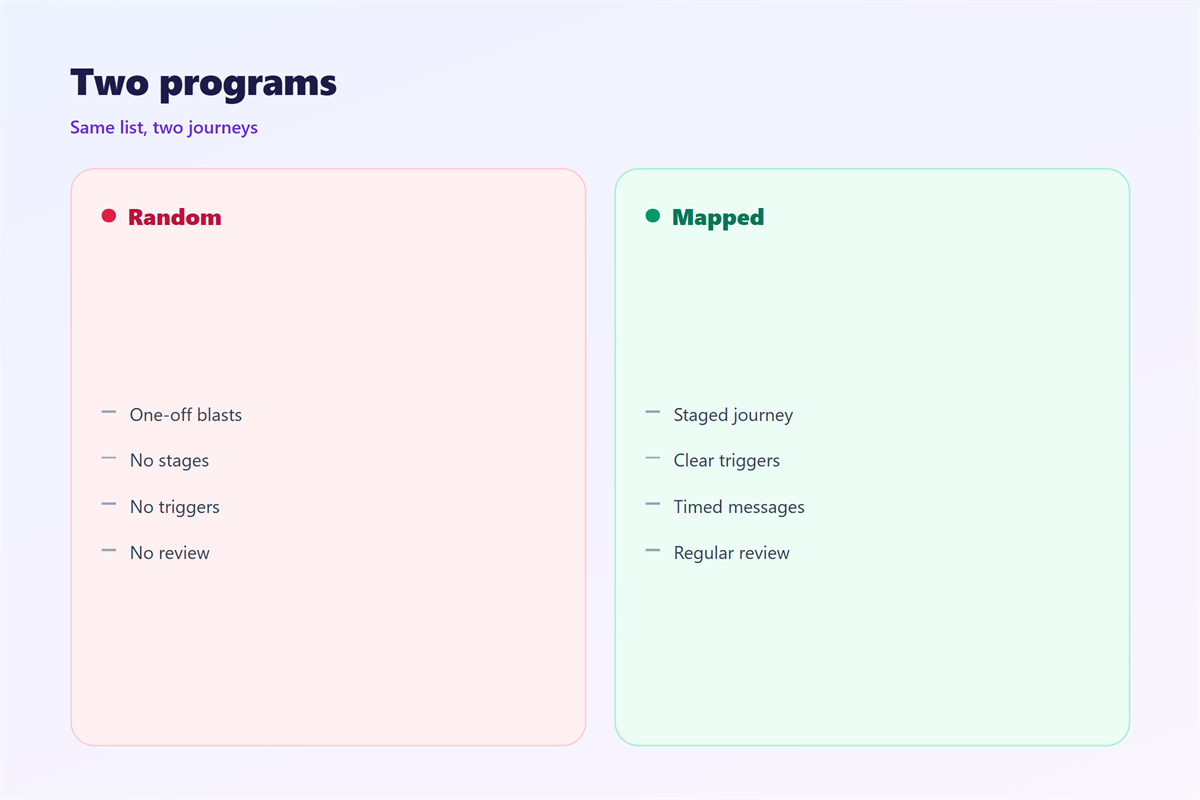
A series fails when every stage sounds the same.
The welcome note repeats the sales pitch.
The follow-up repeats the welcome note.
The reader sees noise and stops opening.
So vary the message by stage, not by mood.
Each stage should add something new.
If two emails could swap places, one is weak.
Cut it or rewrite it with a fresh angle.
A shallow lifecycle also loses readers at the seams.
邮件生命周期 and content
A strong 邮件生命周期 teaches before it sells.
Content is what carries the reader forward.
Early stages need help, not a hard ask.
Middle stages need proof and a small win.
Late stages can offer an upgrade or a referral.
Match the offer to the level of trust.
That single rule keeps the series honest.
Write the helpful note before the sales note.
Readers forgive a pitch after a gift.
They rarely forgive a pitch that arrives first.
How to map 邮件生命周期
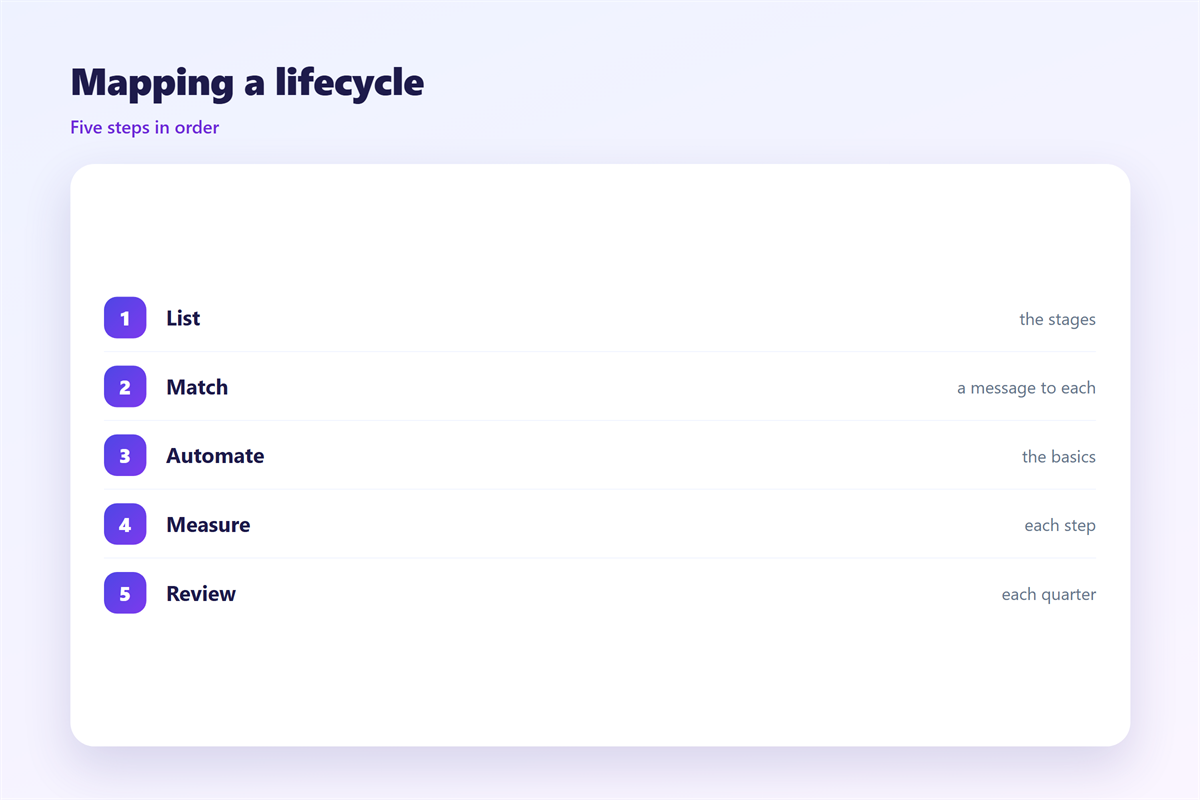
Start with a blank page and four columns.
Name each stage in plain words.
Write the reader’s main question in that stage.
Then write one email that answers it.
Keep the list short at first.
Four clear emails beat twenty vague ones.
A clear 邮件生命周期 answers one question per stage.
Add more emails only when a gap appears.
Ask a teammate to read the plan aloud.
If they look confused, the plan is too complex.
邮件生命周期 in plain numbers
Numbers tell you where the series leaks.
Track the open rate at each stage.
Track the click rate right after it.
A sudden drop marks a weak step.
Fix that one email before adding more.
Small repairs add up over a year.
Keep the list of numbers short and clear.
Three numbers per stage are plenty.
Even a short 邮件生命周期 leaves a clear trail.
Follow that trail to your next fix.
Keeping 邮件生命周期 healthy
A good series needs a little care each month.
Read the old emails with fresh eyes.
Cut any line that no longer helps.
A healthy 邮件生命周期 grows with the reader.
The rules that run a series quietly live in 邮件自动化.
The slow warm-up before a sale appears in 邮件培育.
The full path from stranger to buyer is in 邮件营销漏斗.
The plan to keep readers for years is in 邮件留存.
Review the whole journey once a season.
Then let the reader tell you what to change.
Small tweaks keep the series from going stale.
FAQ
How long is a 邮件生命周期?
It can run for weeks or for many years, depending on the reader.
Do I need automation for every stage?
No. Start with the welcome and the follow-up, then expand.
What if a reader skips a stage?
Let the next email meet them where they are.
How often should I review the series?
Once a quarter is enough for most small teams.
References
- Nielsen Norman Group: Email newsletter usability
- Mailchimp: Lifecycle email marketing
- Litmus: Email design and strategy
评论
还没有评论,来说两句吧。
评论功能已关闭。