 小影邮箱
邮件IP池怎么管?Pool Strategy
Key Takeaways
- 邮件IP池 is a group of addresses used for sending.
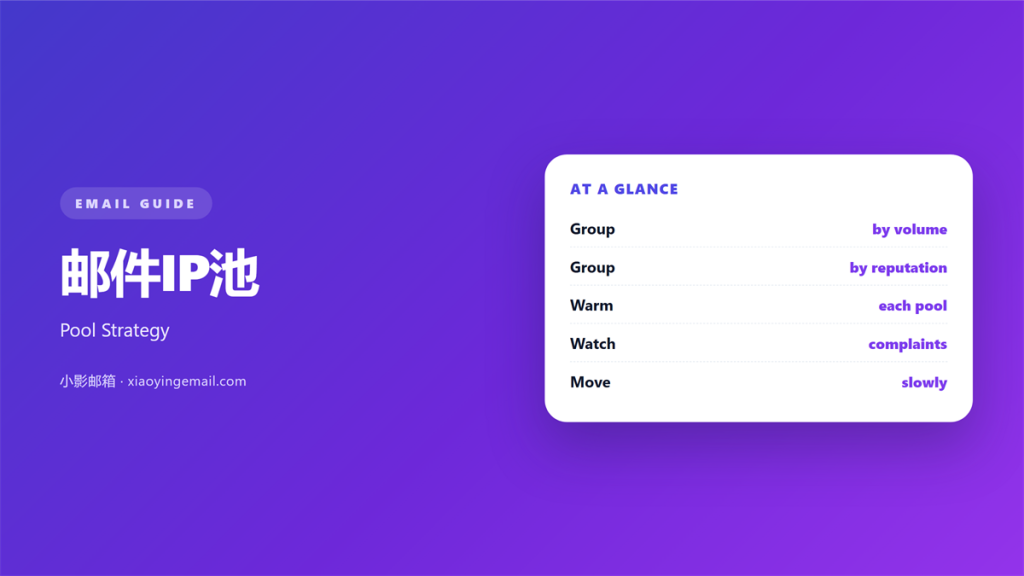
- Group addresses by volume and reputation.
- Keep the best pool for your most engaged readers.
- Warm any new pool before you move traffic.
- Watch each pool as a separate asset.
What 邮件IP池 means
邮件IP池 is a set of sending addresses managed as one unit.
Some pools hold one address. Others hold hundreds.
The pool shares a reputation within its group.
That makes grouping a strategic choice.
A careless group can drag good mail down.
A careful group protects the mail that matters.
The idea is simple. Put similar mail together.
Then watch each group on its own.
Most senders need two or three pools, not ten.
A pool can be as small as one address. Size matters less than clear ownership.
The grouping matters more than the number of addresses.
Why 邮件IP池 matters
Reputation is built per address and per domain.
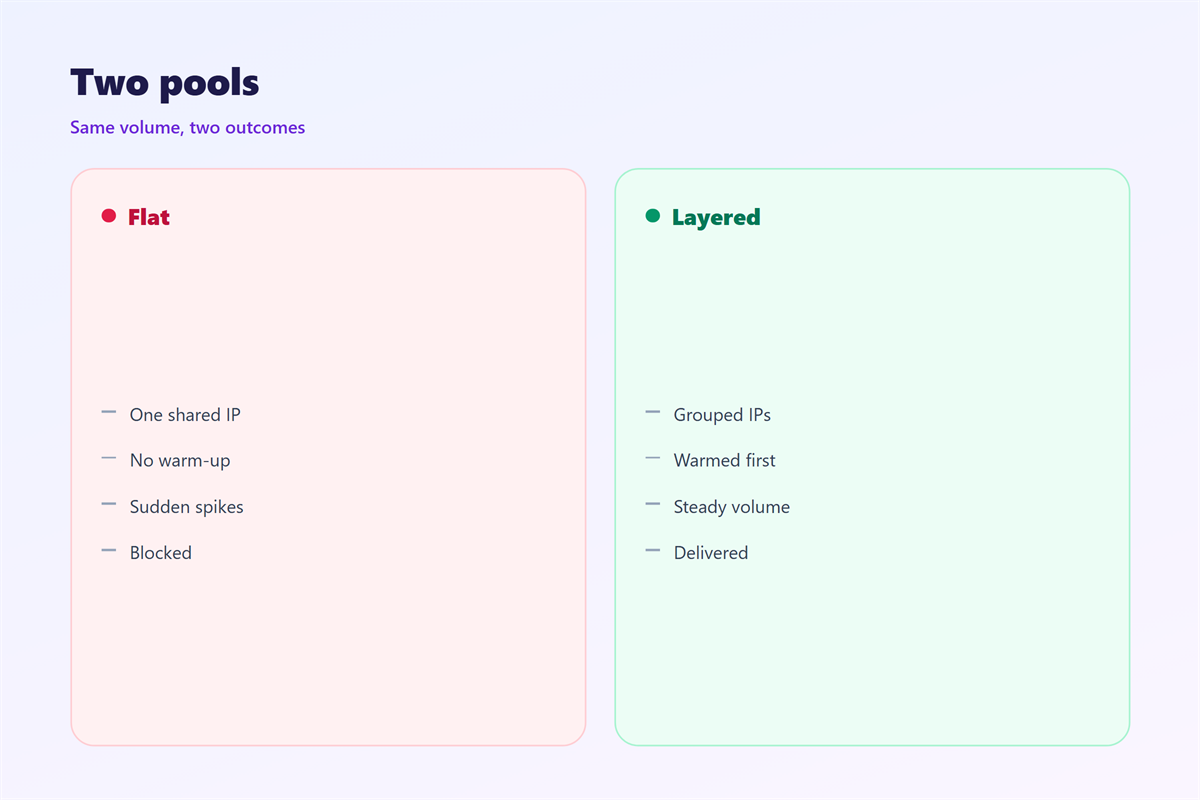
One pool with heavy complaints can affect every stream in it.
Good 邮件IP池 design limits that damage.
It also makes volume easier to control.
A small pool warms faster than a large one.
And a dedicated pool keeps key mail away from bulk.
That matters for password resets and invoices.
Those messages must arrive on time.
A shared pool puts them at risk.
One good pool can carry your best mail for years. Treat it as a long-term asset.
How reputation spreads
Providers watch complaints, bounces, and volume per address.
A sudden spike on one address can mark the group.
Recovery takes weeks, not days.
So keep the quiet mail away from the noisy mail.
Then measure each group on its own.
That habit shows which group needs help first.
When 邮件IP池 helps
邮件IP池 helps when your volume is high enough to split.
It also helps when you send very different kinds of mail.
And it helps when one stream has a poor history.
A separate pool keeps that history contained.
Use pools before a seasonal peak, not during it.
Moving traffic mid-campaign adds risk.
A simple pool plan
One pool for transactional mail.
One for engaged marketing readers.
One for colder or newer names.
Three groups cover most senders.
Add a fourth only when the data supports it.
When 邮件IP池 hurts
邮件IP池 hurts when the pools are too small.
Each address then carries too much volume.
It also hurts when traffic jumps between pools.
Providers see the move as a sudden change.
And it hurts when nobody watches the reports.
A pool without an owner drifts.
Complaints rise and no one acts.
Keep the plan small and the owner clear.
Small pools burn through their allowance fast. Check the daily limit before you plan a send.
Review the numbers every week.
邮件IP池 and reputation
邮件IP池 reputation starts from zero for every new address.
New addresses have no history at all.
Send to engaged readers first.
Let the good signals build for a few weeks.
Then add the next segment in small steps.
Complaints are the signal that matters most.
Keep them low or the pool loses ground.
Bounces matter too, especially hard ones.
Reading pool reports
Compare complaint rates across pools each week.
Look for one pool that always sits higher.
Check volume before you blame the content.
A sudden jump often explains the change.
Fix the cause before you move traffic again.
How to use 邮件IP池 well
Decide the groups before you buy addresses.
Name each pool for its purpose.
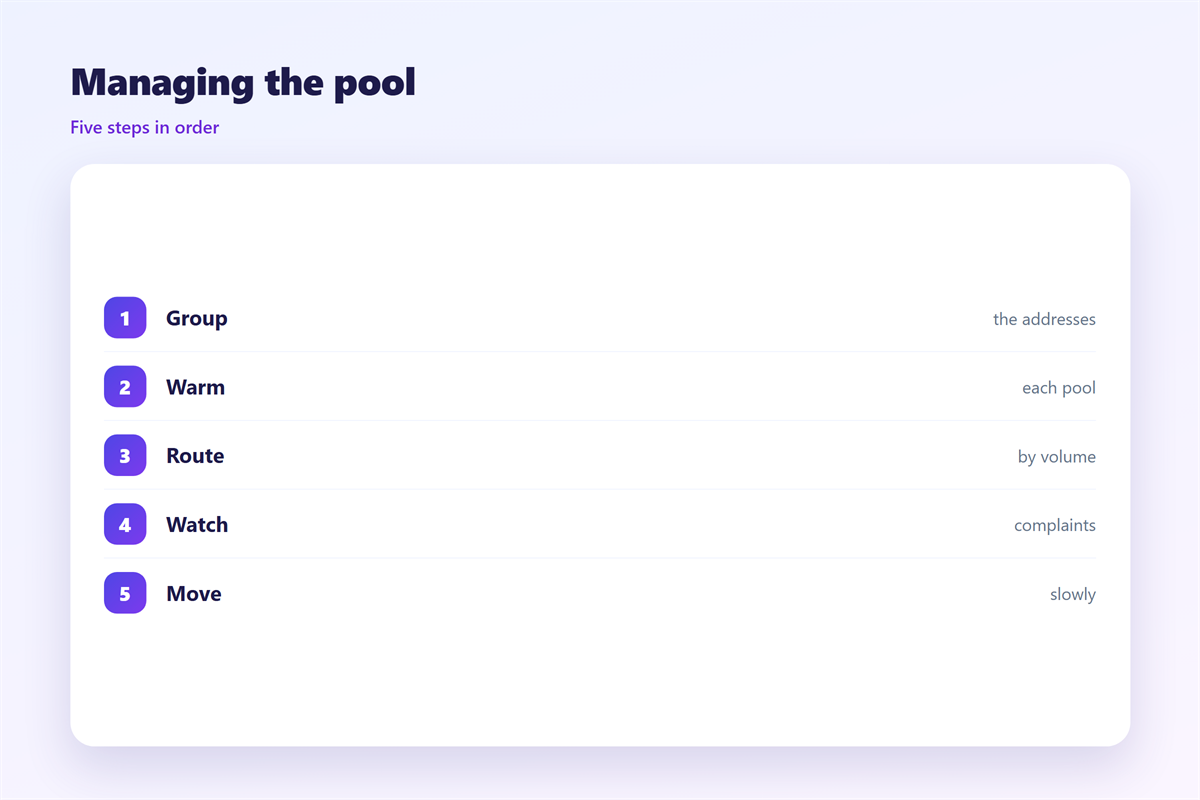
Warm each pool with small, clean sends.
Increase volume in steps you can measure.
Keep transactional mail in its own pool.
Move traffic between pools slowly.
Give every pool one clear owner.
Review the plan each quarter.
Add a review after any sudden drop in delivery.
Good 邮件IP池 work is boring and steady.
Moving traffic safely
Shift a small share first, around five percent.
Hold it there for a week.
Watch complaints and bounces at both ends.
Then raise the share in small steps.
Stop at once if a number turns bad.
邮件IP池 across providers
Shared pools are cheaper and need less care.
Dedicated pools cost more and give more control.
Pick the model that fits your volume.
Ask the provider how they group addresses.
Then check that your mail lands in the right group.
Ask for the pool name in writing. Then keep it with your sending records.
A clear answer is a good sign.
Vague answers usually mean the grouping is untidy.
Keep the written answer with the contract and the sending log.
Questions to ask a vendor
How many senders share each pool?
What volume does one address carry?
Can I move between pools?
What reports do I get each week?
Keeping 邮件IP池 consistent
Write the pool plan in one short page.
List the purpose and the owner of each pool.
Related guides cover 邮件专用IP, 邮件信誉, 邮件预热, and 邮件限流.
Update the page when traffic moves.
Check the reports before every large send.
Then compare the result with the plan.
A written plan keeps 邮件IP池 work stable.
FAQ
Do small senders need a 邮件IP池?
Usually no. A shared pool is fine below a few hundred thousand messages a month. Split only when volume and risk justify it.
How long does a new pool take to warm?
Two to four weeks for most senders. Slower ramps are safer. Watch complaints before each increase.
Can I use one pool for all mail?
You can, but it is risky. Transactional mail should stay separate. That keeps key messages away from bulk complaints.
What if one pool performs badly?
Reduce volume first. Find the cause in the reports. Move only the healthy traffic away while you fix it.
评论
还没有评论,来说两句吧。
评论功能已关闭。