 小影邮箱
邮件速查怎么做?Answers at Hand
Key Takeaways
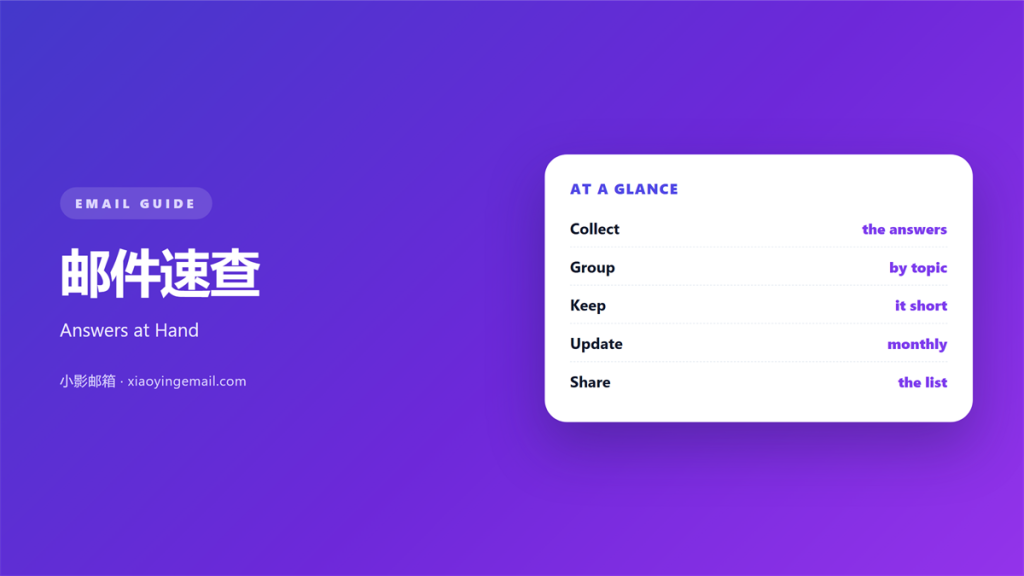
- 邮件速查 is a short list of answers you send often.
- Keep it where you can open it in one click.
- Store the exact wording you trust.
- Review the list every month.
- Delete entries that no longer match the product.
What 邮件速查 means
邮件速查 is a small collection of ready answers.
You write each answer once and reuse it later.
It can live in a note, a folder, or a tool.
The point is speed without guesswork.
A good entry has a title and a short body.
The title is the question, not the answer.
That makes the list easy to scan.
Most teams keep too many entries.
A long list hides the useful ones.
Start with ten answers you type every week.
Then add one only when the same question returns.
The best entries stay close to how people speak.
Write them once, then read them aloud.
A 邮件速查 saves minutes, not hours, each time.
Why 邮件速查 matters
Most replies repeat the same few facts.
Typing them again invites small errors.
A price, a date, or a link can drift.
A fixed answer keeps the wording exact.
Speed also changes how you are read.
A quick reply feels calm and prepared.
A slow reply feels like an afterthought.
New staff feel this difference most.
They can answer well on their first day.
A good 邮件速查 also trains new staff.
It also protects your tone.
Everyone sends the same voice, not four versions.
Readers do not see the list, only the result.
Speed is a form of respect
A reader who waits loses interest.
A clear answer in ten minutes wins trust.
That trust carries into the next request.
When 邮件速查 helps
邮件速查 helps with questions that never change.
Opening hours and return rules are good examples.
It also helps during a busy week.
One person can cover a shared inbox.
Then the same facts go out every time.
It helps new hires most of all.
They learn the approved wording as they send.
It helps when several people share one inbox.
Two voices can confuse a customer.
A shared list keeps the answer steady.
Keep the list open while you work the inbox.
Start with the boring answers
Do not start with your hardest case.
Begin with the plain facts you repeat daily.
Those entries get used and tested fast.
Hard cases need judgement, not a script.
When 邮件速查 hurts
邮件速查 hurts when it replaces thought.
A pasted 邮件速查 can miss the actual question.
Readers notice when a reply ignores them.
It also hurts when entries grow stale.
An old price is worse than no answer.
A wrong date can cost a sale.
One stale entry can undo months of good replies.
Then there is the tone problem.
Long stored text can sound cold.
Trim each entry to the few lines a person needs.
Finally, avoid hiding the list from the team.
A private shortcut helps one person only.
A shared one helps everyone.
邮件速查 and search
Search is the door to any reference list.
If you cannot find an entry, it does not exist.
Name entries with the words readers use.
Put the main noun first.
Keep titles short and free of codes.
Good titles use the reader’s words, not yours.
Then test the list with a real question.
Ask a colleague to find one answer in ten seconds.
If they fail, rename the entry.
One question, one entry
Split entries that answer two things.
A long entry is hard to scan and hard to update.
Short ones stay accurate for longer.
Link related entries instead of merging them.
Then the reader can pick the right one.
How to use 邮件速查 well
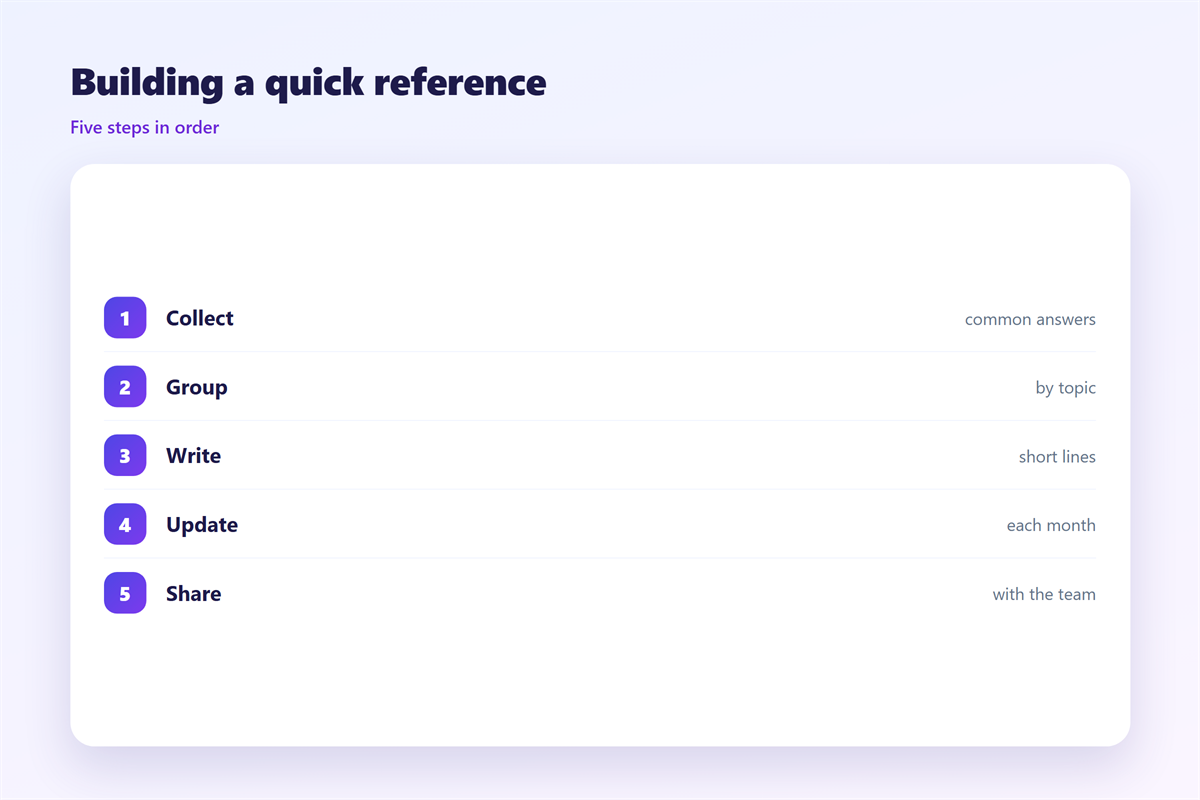
Begin with the questions you answered last week.
Copy the wording you actually sent.
Cut every line that does not help the reader.
Then save it with a plain title.
Add a second line with a link when needed.
Keep the body under sixty words.
Write placeholders only where a name must change.
Too many blanks slow the sender down.
Test each entry by sending it once.
Fix the part that felt awkward.
Then share the list with the whole team.
A shorter list is a faster list.
邮件速查 on a phone
Most quick replies are sent from a phone.
That changes how the list should work.
Keep entries short enough for a small screen.
Put the most used ones at the top.
Then the list opens on the right answer.
Long entries get scrolled past.
A phone reply should still read like a person wrote it.
Remove any line that sounds like a form.
Check the preview before you send.
Test with one hand, as a reader would.
Then close the app and move on.
Keeping 邮件速查 honest
Honesty protects the list more than speed.
A saved answer must match what you can deliver.
The mechanics of stored replies live in 邮件快捷回复.
The library side sits in 邮件模板库.
Finding an old message is covered in 邮件搜索.
The keyboard side appears in 邮件快捷键.
Then set one rule for who may edit the list.
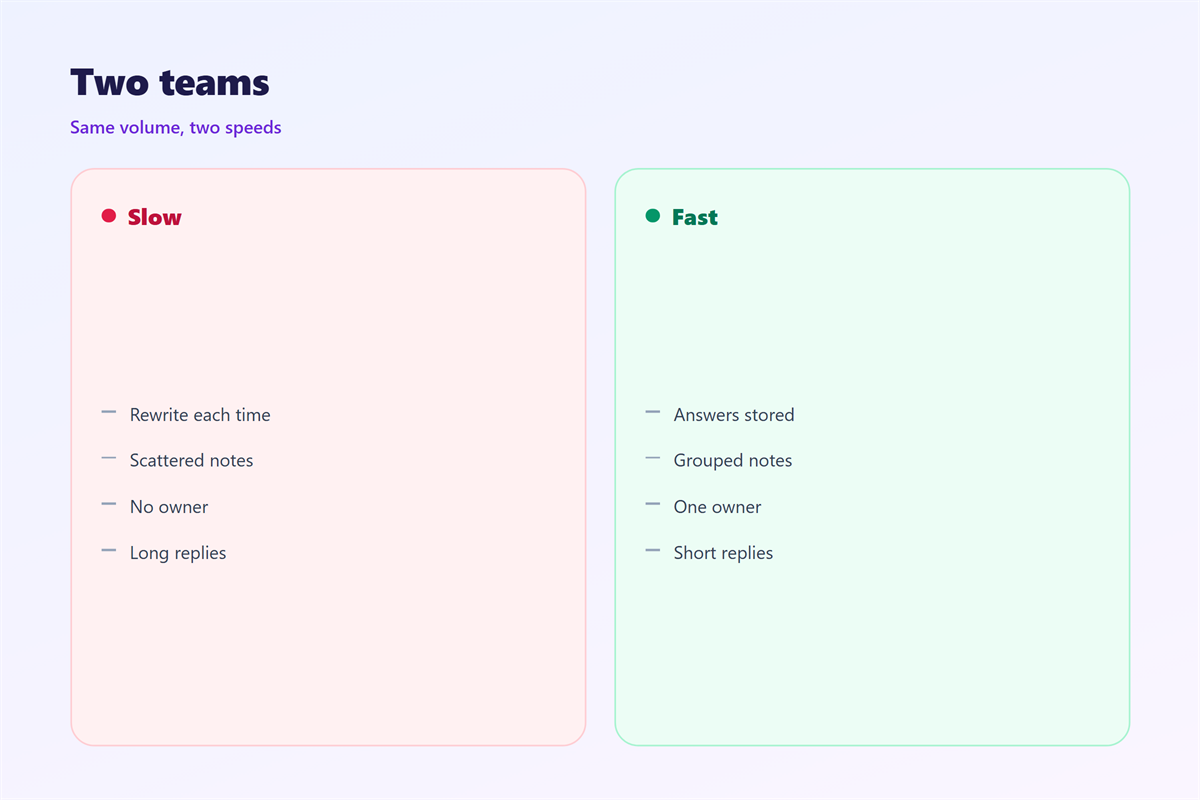
Name one owner for the list.
Too many editors create small contradictions.
Review every entry once a month.
Delete what no longer matches the product.
A team that keeps 邮件速查 current answers faster.
FAQ
How many entries should 邮件速查 hold?
Start with ten. A list of thirty is usually half unused.
Should every reply come from the list?
No. Use it for facts, then add a personal line.
Where should the list live?
Close to the inbox. A tool, a note, or a shared folder all work.
How often should I review it?
Once a month, and after any price change.
评论
还没有评论,来说两句吧。
评论功能已关闭。