 小影邮箱
邮件内容日历怎么排?Plan the Whole Month
Key Takeaways
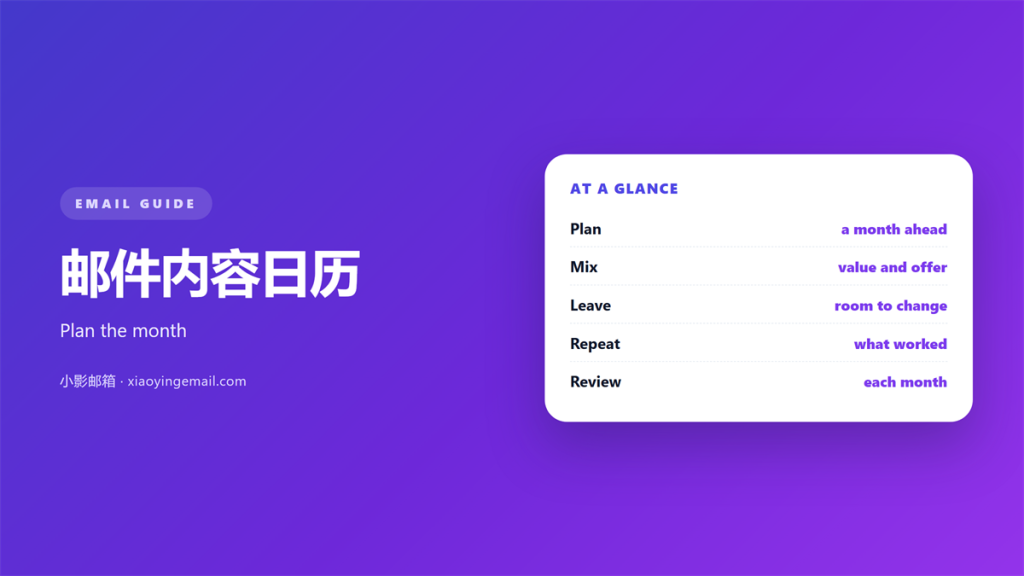
- 邮件内容日历 turns random sends into a plan.
- A good plan always leaves room to change.
- Match each theme to a real reader need.
- Batch the writing, then schedule the sends.
- Review the plan at the end of every month.
What 邮件内容日历 means
邮件内容日历 is a simple plan of what you will send and when.
It lists each send, its theme and its goal in one place.
Without it, every campaign becomes a last minute scramble.
The calendar is not a rigid promise. It is a working map.
A good one answers three questions. What, to whom, and why now.
It also shows what you are missing. Gaps are easier to spot on a page.
So a clear 邮件内容日历 becomes a shared reference for the team.
Build the plan before the month begins, not during it.
Keep the 邮件内容日历 short enough to read in one glance.
A calendar with too many rows will simply be ignored.
A shared plan also stops last minute panic.
Everyone knows which email comes next.
The calendar turns a vague goal into real dates.
It also makes handovers much easier.
A simple calendar keeps everyone aligned.
Why 邮件内容日历 matters
A plan keeps the list from hearing the same message twice.
It also spreads selling across the month. Constant pitches wear readers out.
A steady 邮件内容日历 also lowers your stress. You stop inventing topics each week.
And the team can see the plan. Shared goals are easier to hit.
Planned mail usually reads better. Rushed mail sounds rushed.
A calm, planned month also protects your energy.
Readers feel the difference in the writing.
Good pacing keeps a small team from burning out.
It also makes success easier to repeat.
Reading a 邮件内容日历
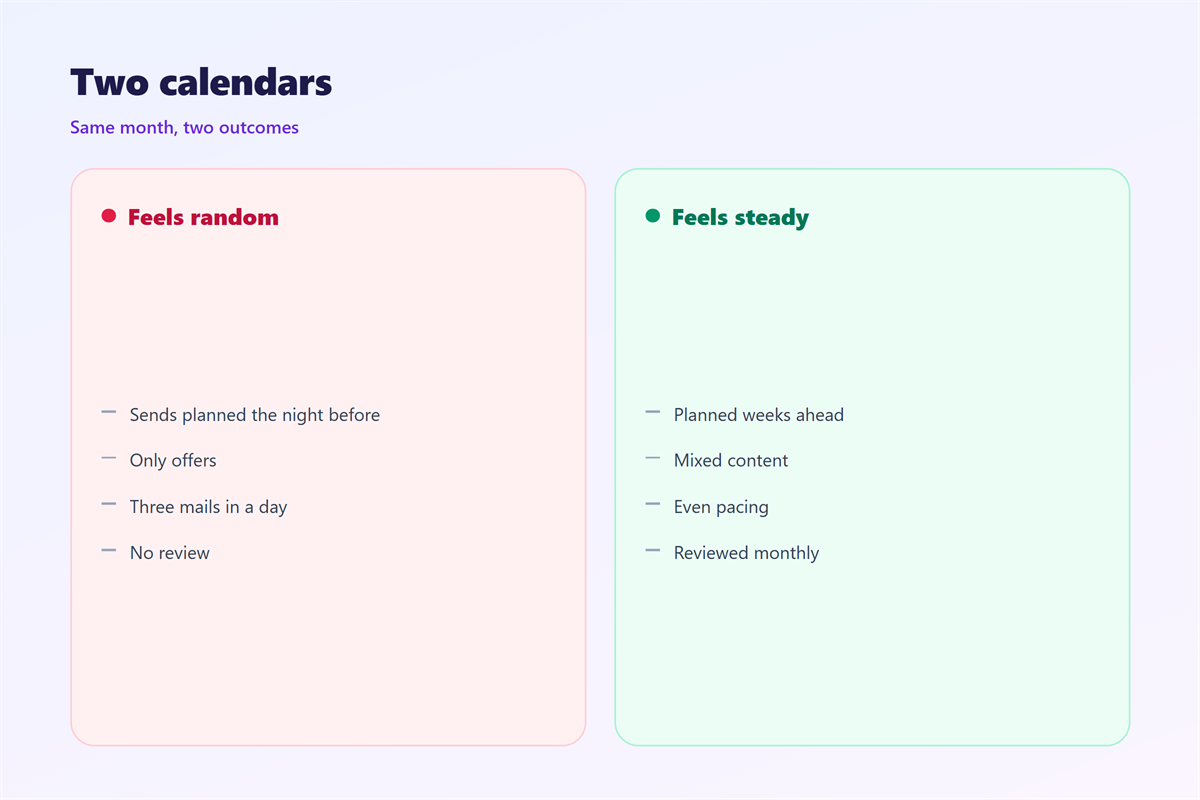
Look for balance first. Too many sales emails exhaust a list.
Then check the gaps. Long silences let attention drift away.
Check the mix of themes across the month.
Check that no two sends repeat the same topic.
Look for a sensible order across the month.
What belongs in a 邮件内容日历
Each entry needs a date, a theme and one clear goal.
Write the goal in a single line. Vague goals produce vague emails.
Add a short note about the main link for each send.
Keep each entry short enough to scan.
Add a short note about the tone you want.
Write the theme in plain language.
How to build a 邮件内容日历
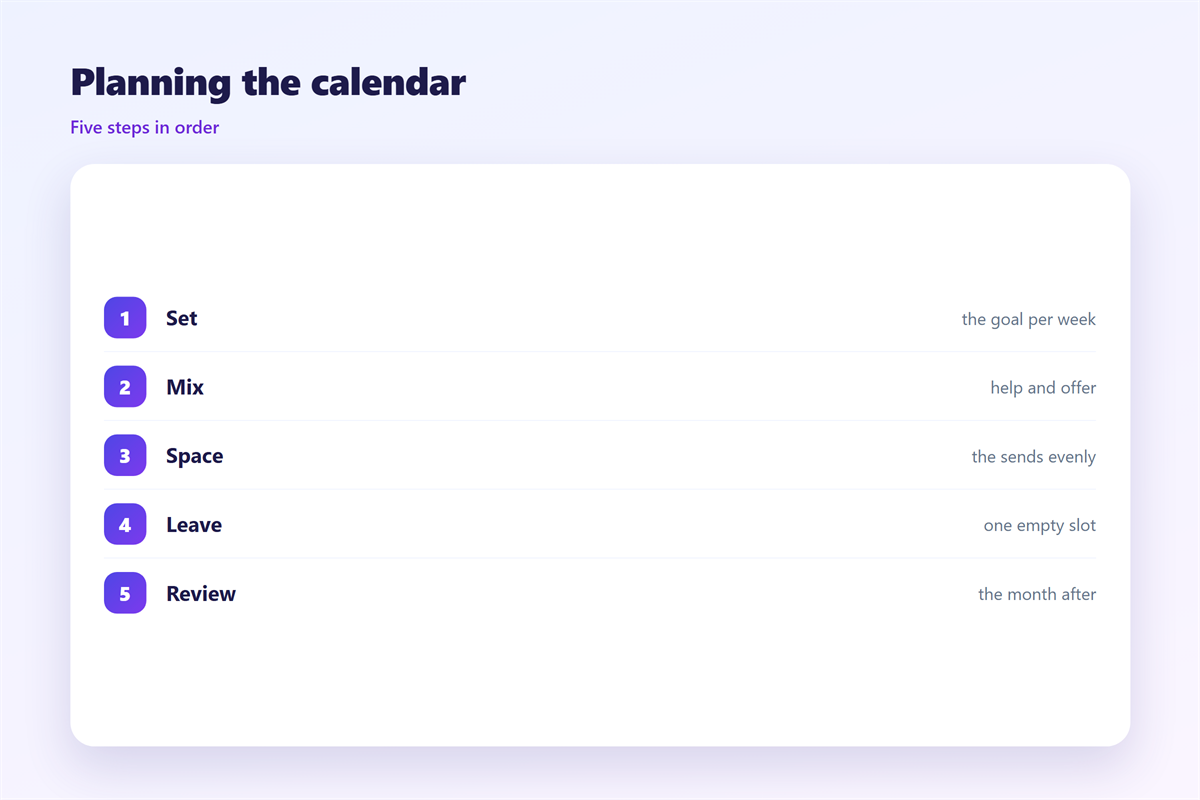
Start with the month and the number of sends you can manage.
Two to four sends suit most small lists. More is not always better.
Pick a few themes that serve the reader. Usefulness comes before promotion.
The best 邮件内容日历 balances helpful notes with a lighter share of offers.
Write rough subject lines early. They show if a theme has real pull.
Leave one slot empty for news. Surprises always appear.
Keep the entries short. A crowded calendar is hard to follow.
Group related sends into a short series when it helps.
Assign one owner to each entry so nothing is forgotten.
Add a draft date and a review date beside every send.
Check the plan against the team’s real workload.
Trim anything that cannot be done well in the time available.
Sketch the month in pencil before you commit.
Draft each email a few days early.
Leave a little space between heavy sends.
Ask a teammate to read each draft.
Save your best subject lines for later reuse.
Build a small template to save time.
Keep the plan in one place everyone can see.
Measuring 邮件内容日历
At month end, compare the plan with what actually went out.
Note which themes earned the best response.
Drop the weakest theme and try a new one next month.
Keep the winning themes on a repeat cycle.
Compare the 邮件内容日历 with the results each month.
Watch the open rate across the month, not just one send.
Track clicks as well as opens for every planned send.
Ask readers which topics they want more of.
A simple grid beats a complex tool you never update.
A clear 邮件内容日历 makes the monthly review much faster.
Keep last month’s plan beside this month’s while you work.
Ask the team what worked and what felt rushed.
Note any theme that readers ignored.
Adjust the next plan with those answers.
Repeat the best month when you find it.
Small tweaks each month add up over a year.
Sending and improving
Respect the rules you agreed with readers. The basics sit in 邮件营销.
Reuse what already works. A sound pattern is set out in 邮件模板.
Keep internal notes short and regular. A clear format is shown in 邮件简报.
Share the plan with the whole team. The habits appear in 邮件协作.
A living 邮件内容日历 is never really finished.
Then start the next month with the lessons you kept.
Keep the tone warm but steady across the whole month.
Trust the plan, but stay flexible.
One good month builds the next.
Steady work beats a burst of effort.
Review, adjust, and begin again.
FAQ
How far ahead should I plan?
One month works well for most lists. A quarter is good for big campaigns.
How many emails should I send each month?
It depends on your audience. Two to four is a common range.
What if I miss a planned send?
Skip it or move it, but do not strain the list. Quality beats hitting a date.
Does a 邮件内容日历 stop creativity?
No. A plan frees you. You stop worrying about what comes next.
References
- Mailchimp: Building an email marketing calendar
- Litmus: Planning your email marketing calendar
- Atlassian: Team calendar best practices
评论
还没有评论,来说两句吧。
评论功能已关闭。