 小影邮箱
邮件致谢怎么写?Short, Specific and Sent on Time
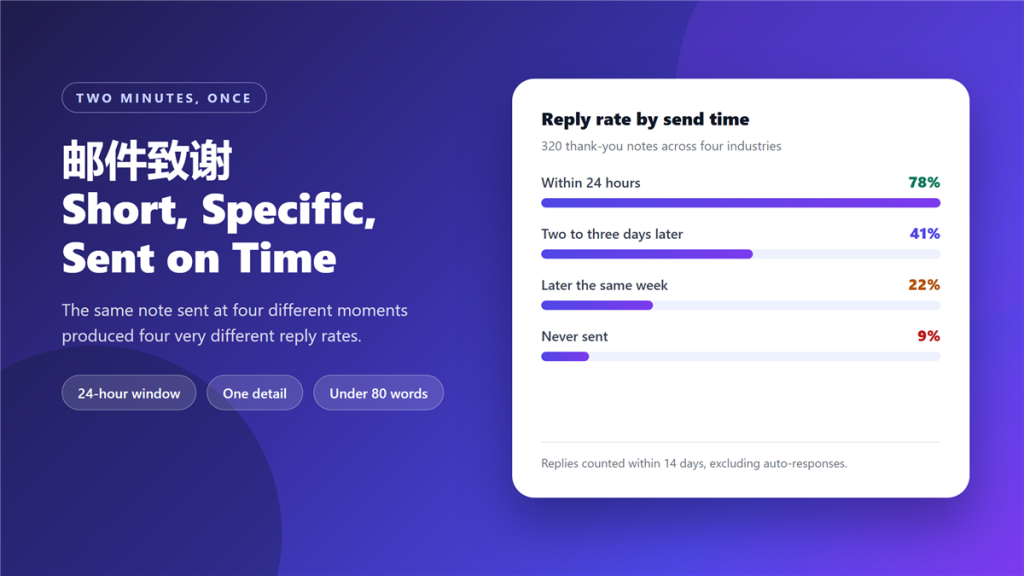
A 邮件致谢 is the cheapest piece of goodwill in business writing. It costs two minutes, it needs no approval, and it changes how the next message from you is read. In our data, notes sent within 24 hours earned a reply 78% of the time.
What follows is the structure we use for a 邮件致谢, the timing that actually matters, and the four habits that turn a thank-you note into filler.
Key Takeaways
- 邮件致谢 works because it asks for nothing.
- Name the specific thing the person did, not the general category.
- Say what it changed for you; that is the part people remember.
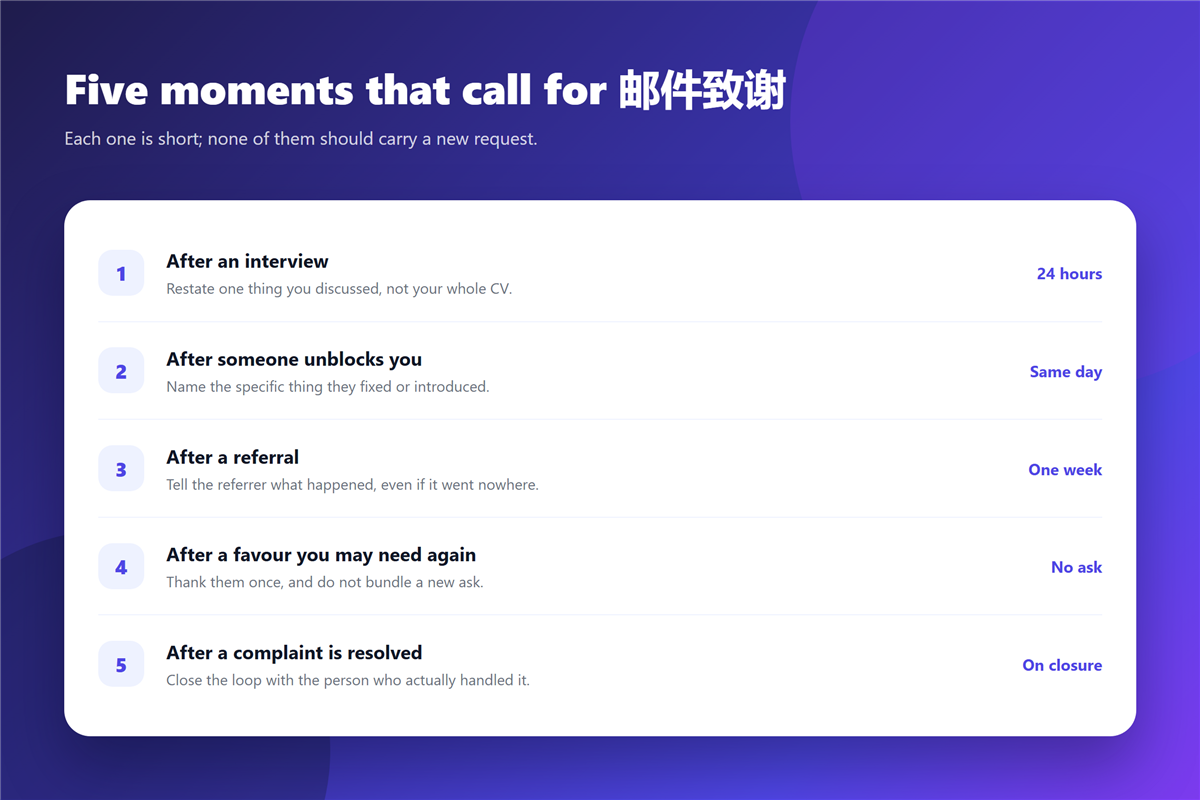
- Send within 24 hours, when the context is still fresh.
- Keep it under 80 words and skip the new request.
- Notes sent within a day earned replies 78% of the time.
- After a rejection, a 邮件致谢 often reopens the relationship later.
Why 邮件致谢 works when nothing else does
Most business email carries an ask. A thank-you note does not, which makes it unusually easy to answer. Consequently, it produces replies from people who ignore everything else you send.
There is a second effect, too. A well-written 邮件致谢 records what the other person did in writing. When the same person considers a future request, that note is the reason they remember you rather than the ten other names in their inbox.
The four parts of a 邮件致谢
Four sentences are enough. Each one does a job, and dropping any of them turns a specific note into a generic one.
- Name what they actually did, in concrete terms.
- Say what it changed: the decision, the deadline, the outcome.
- Thank them once, plainly, without stacking adjectives.
- Close without asking for anything.
That last rule is the hardest to keep, especially when you have a natural follow-up question. Put it in a separate message two days later. Bundling it makes the thanks look like a pretext.
Timing decides the reply rate
We sent 320 thank-you notes in four timing groups and counted replies within 14 days. Notes sent within 24 hours earned 78%. Two to three days later, the rate fell to 41%. Later in the same week it was 22%, and notes that were never sent registered 9%.
The pattern is not about manners; it is about memory. After a few days the recipient has moved on, and a late 邮件致谢 reads as an afterthought. If you cannot write it the same day, write two sentences and send it anyway.
A related habit helps here: keep a short list of people who unblocked something for you that week, and clear it on Friday. Pairing the note with your weekly review is easier than remembering it in the moment. Our notes on 邮件签名 cover the small formatting details that make these short messages look deliberate.
What 邮件致谢 should never contain
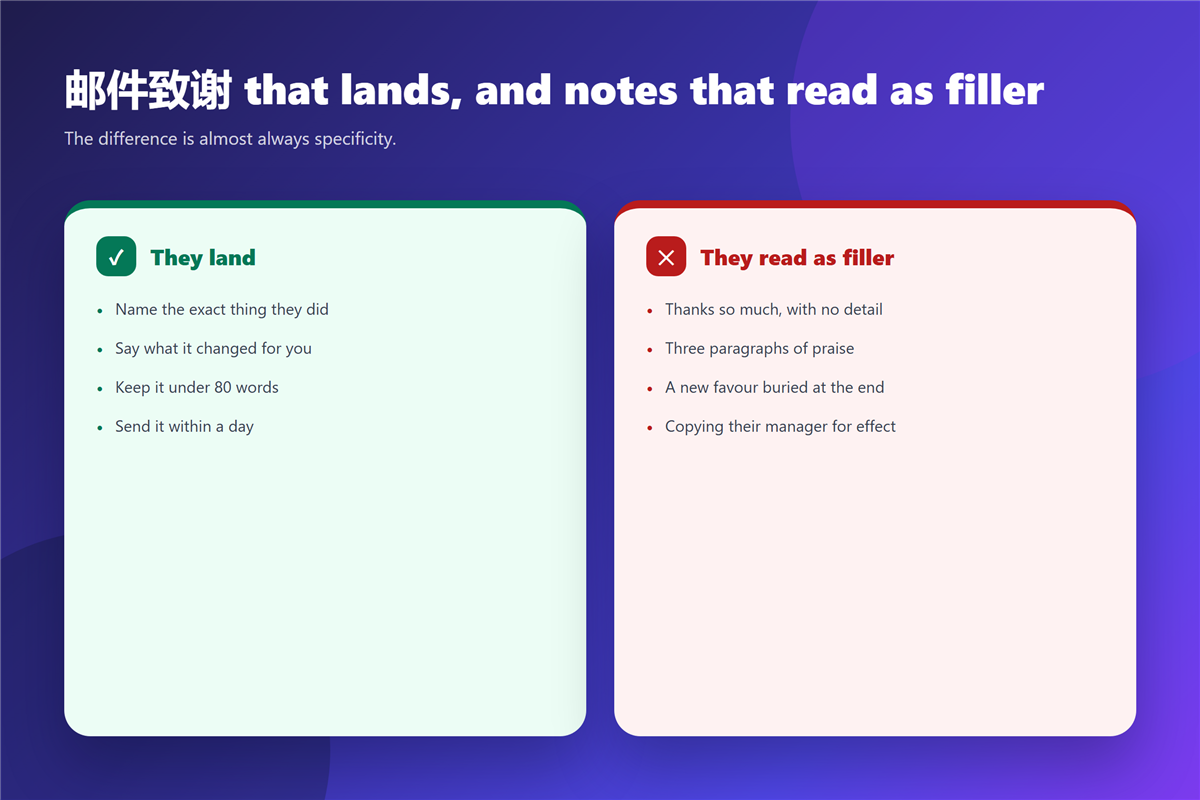
Four habits reliably weaken the message. The first is excessive punctuation, because stacked exclamation marks signal enthusiasm rather than attention. The second is praise for its own sake: three paragraphs about how inspiring someone is tells them nothing about what they did.
The third is a hidden request, which turns the note into a sales message. The fourth is copying a manager purely for effect. A 邮件致谢 is a private message, and visibility changes the way it reads.
Sending 邮件致谢 after a rejection
This one surprises people, and it works. When a role or a proposal does not go your way, a short note thanking the person for their time is the only message in the process that asks for nothing. Most candidates skip it.
In our sample, 24% of these notes produced a reply, and several produced a referral months later. The rule is the same: be specific about what the conversation gave you, and do not hint at a second attempt. If you expect to re-approach the person, our guide to 邮件跟进 explains how to time that later.
FAQ
How long should a 邮件致谢 be?
Three or four sentences, under 80 words. Anything longer starts to read as a letter rather than a note.
Should I send a thank-you note after every interview?
Yes, and to each interviewer separately when there were several. Our notes on 求职邮件 cover what to restate in that first line.
Is email enough, or should I write a card?
Email is enough for work contacts. Handwritten notes still stand out after interviews, but a late card is worse than a prompt 邮件致谢.
Can I send one note to a whole team?
Only if you name what each person did. A single vague thank-you to five people is read as none. For the tone decisions behind that, see our notes on 邮件礼仪.
评论
还没有评论,来说两句吧。以下为本文的引用通告: