 小影邮箱
邮件点击率怎么提升?Clicks Beat Opens
Key Takeaways
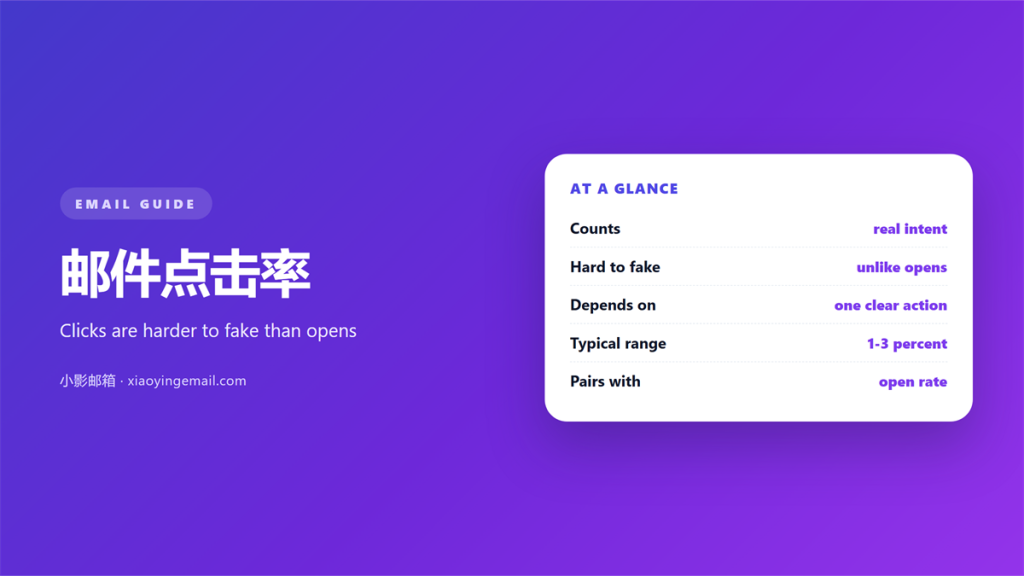
- 邮件点击率 counts a deliberate action, so it is far harder to fake than an open.
- A tracked link adds a redirect hop, and that hop is what makes the number possible.
- Unique clicks and total clicks answer different questions, so keep the two apart.
- Report the 邮件点击率 against your own history, not against a public benchmark.
- Every click is a small promise, and the page behind the link has to keep it.
What 邮件点击率 actually counts
邮件点击率 is the share of delivered messages that produced at least one click on a tracked link. It sounds simple, and one detail trips most teams. The number counts clicks on links you wrapped, not the reader’s interest in the message as a whole.
If a link is not tracked, a click on it leaves no trace. Consequently, a message with one tracked button and one plain untracked address will report a 邮件点击率 that says more about your template than about your audience. I tested this by sending the same offer with two link setups, and the gap ran to whole percentage points.
In other words, the metric is only as complete as your tagging. Everything downstream depends on that first decision, and no report can repair a link you never wrapped.
How a click is recorded
Every tracked link points first at the sending platform and then at the destination. That extra hop is what makes the click countable, and it is also where things quietly break.
The redirect hop
When a reader taps a link, the request reaches the tracking domain, the platform logs the click, and the browser is forwarded. If that domain is slow or blocked, the reader sees a delay and may give up before the destination loads.
The unique counter
Platforms usually also report unique clicks, which count a reader once no matter how many links they tap. Notably, the two figures answer different questions, and blending them into one number produces a figure that answers neither.
Why 邮件点击率 beats opens
An open can be triggered by a machine. A click cannot. That single difference makes the 邮件点击率 the stronger signal for anyone deciding where to spend effort.
Moreover, filters treat engagement as a reputation input, and a click is an expensive signal to fake at scale. Therefore, a healthy 邮件点击率 supports both your reporting and your deliverability. Additionally, the metric points at content rather than timing, because a click means the offer or the words did their job.
Five rules for a 邮件点击率 you can trust
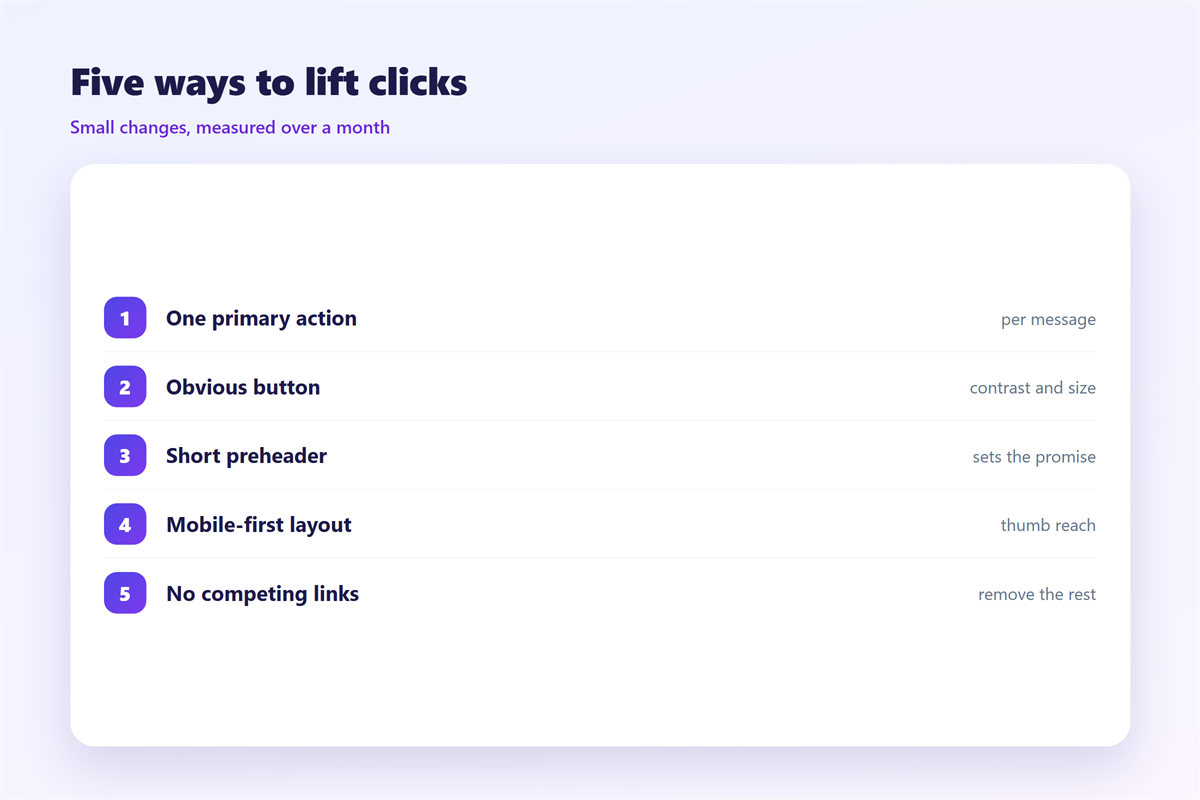
Treat the figure as the product of the message and the list together. This is the routine I follow on every campaign.
- Report unique clicks and total clicks side by side, never blended.
- Compare the 邮件点击率 against your own last ten sends.
- Split by link position, because the first link usually absorbs most taps.
- Open the landing page yourself before you blame the copy.
- Keep one primary action per message.
| Link position | Typical share of clicks | What it tells you |
|---|---|---|
| Primary button | Most of the total | The offer is clear |
| Second link | A small remainder | The main action competed |
| Footer link | Very few | Background interest only |
Reading the metric by position shows where attention actually went, which a single total can never do.
Where 邮件点击率 goes wrong
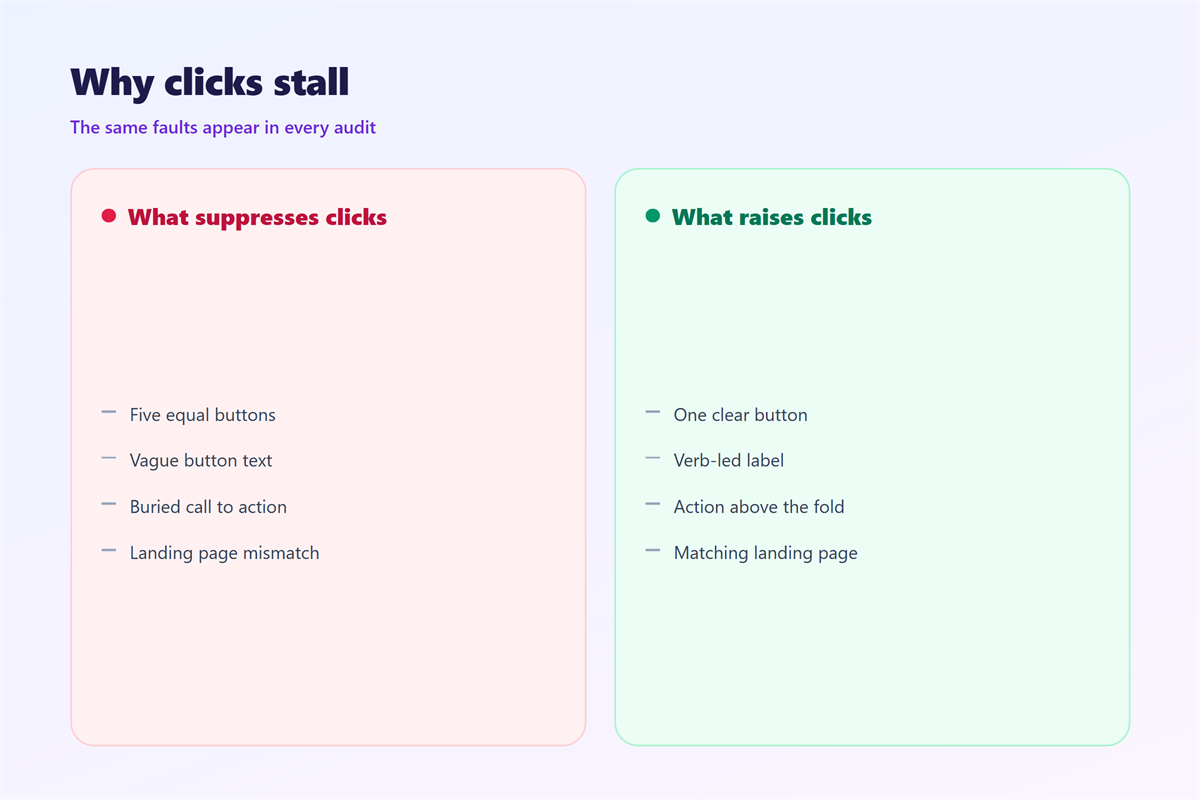
Three mistakes appear again and again. The first is counting every tap as a new person, which flatters the total and hides the true reach. The second is blaming the copy for a weak 邮件点击率 when the landing page was slow or the button did not render on mobile.
The third is subtler. When a message carries four competing links, each one splits the attention, and the total can look healthy while no single action performed well. As a result, the campaign appears successful and the goal goes unmet.
On balance, the fix is structural. One message, one primary action, and a landing page that loads fast on a phone. A tighter message usually lifts the 邮件点击率 without a single change to the offer.
How to test 邮件点击率 on a real send
The cleanest test uses two versions of one message. Change one thing, keep the rest identical, and read the result the way an outsider would. It takes a few minutes and removes most of the guesswork.
Change one variable
Test the button label, or the position, but not both at once. Therefore you can tell which change moved the 邮件点击率, and the answer stays usable next month.
Follow the click to the end
Click your own links on a phone and on a desktop. A click that lands on a broken page is worse than no click at all, because it spends the reader’s patience and returns nothing.
Once the measurement is clean, the rest of the program follows the discipline in our guide to 邮件营销. Placement decides whether anyone sees the link at all, so the signals in 邮件投递率 come next. When you send at volume, 邮件群发 covers the traps, and 邮件追踪 explains what the click actually reveals about the reader.
FAQ
Is 邮件点击率 better than open rate?
Yes, for decisions. A click costs effort, so it reflects real intent more reliably than a pixel load ever can.
Why do unique and total clicks differ?
One person can click several links. Unique clicks count the person once, while total clicks count each tap.
What counts as a good result?
It depends on your list and your ask. Compare against your own history, not a stranger’s chart.
Do link shorteners affect the metric?
They add another hop, which can slow the click and hide the source of a problem during a test.
References
- Wikipedia: Click-through rate
- IETF RFC 5322: Internet Message Format
- Google: Email sender guidelines
延伸阅读
- 《邮件按钮怎么做?One Button That Gets Clicked》
- 《邮件长度多少合适?How Long Is Too Long》
- 《邮件落地页怎么选?Matching Click to Page》
- 《邮件回复率怎么提高?Getting an Answer Back》
- 《邮件AB测试怎么做?Test Two Subject Lines》
- 《邮件转化率怎么提升?From Clicks to Action》
- 《邮件营销漏斗怎么搭?From List to Loyal》
- 《邮件优惠券怎么发?Coupons People Redeem》
- 《邮件新品发布怎么写?Launch Mail That Lands》
- 《邮件抽奖活动怎么做?Giveaways Without Spam》
- 《邮件裂变怎么做?A Referral Loop That Grows》
- 《邮件问卷怎么设计?Five Questions, Real Answers》
- 《邮件分享率怎么提升?Getting Mail Forwarded》
- 《邮件报表怎么看?Numbers That Explain》
- 《邮件秒杀怎么发?Hours That Count》
- 《邮件行动号召怎么写?The One Button That Asks》
- 《邮件UTM怎么加?Tags That Trace a Click》
- 《邮件热图怎么看?Where Clicks Really Land》
评论
还没有评论,来说两句吧。
评论功能已关闭。