 小影邮箱
邮件语气怎么把握?Formal, Neutral or Warm
Key Takeaways
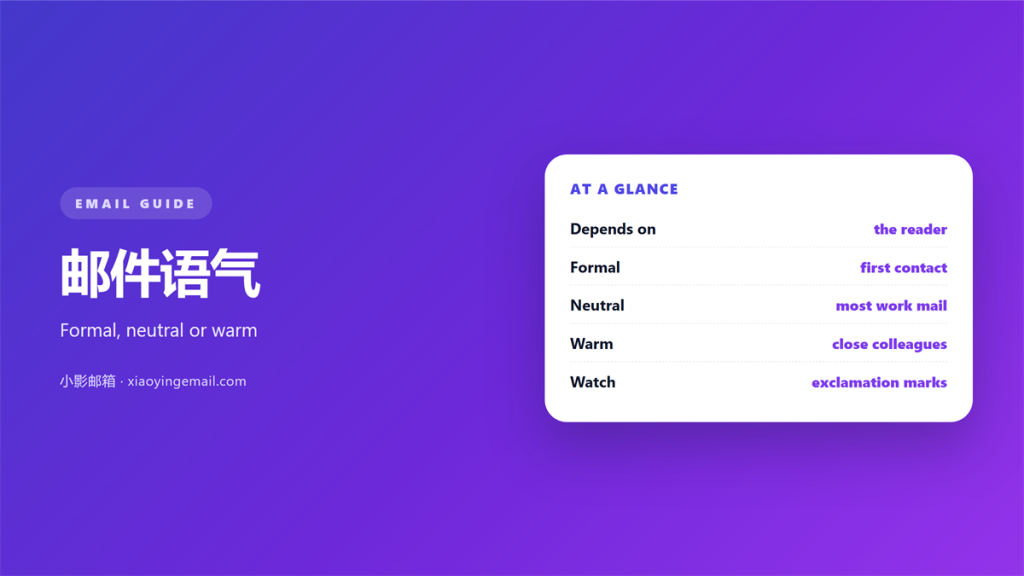
- 邮件语气 is the register a message takes, from formal to warm.
- The reader, not the writer, sets the right level.
- Short words usually sound friendlier than long ones.
- Punctuation carries tone, and an exclamation mark is a decision.
- The same sentence can read as polite in one culture and abrupt in another.
What 邮件语气 means
邮件语气 is the emotional register of a message, the sense a reader gets before they finish the first line. It sits in word choice, sentence length and punctuation. I started paying attention to it after a client told me my notes felt cold, even though every sentence was polite.
The problem was not the content. It was the accumulation of short commands and no warmth at all. Therefore, I began reading my drafts aloud, which surfaces tone far faster than reading them silently. A single word can flip the feeling of a sentence, which is why editing tone takes longer than fixing a typo.
Good 邮件语气 matches the situation. A note that congratulates a colleague should not sound like a policy memo.
How 邮件语气 shifts with the reader
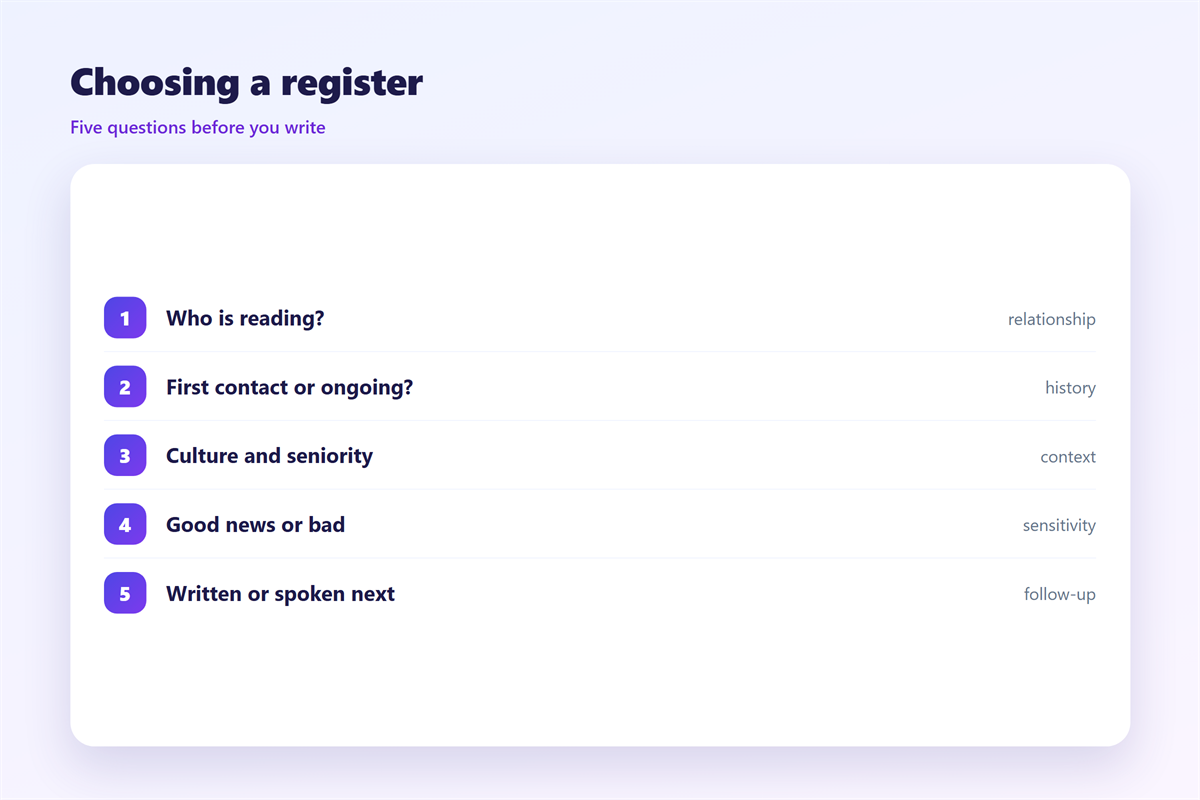
Tone is relational. The same request lands differently depending on who receives it, so the reader decides the level. When you are unsure, aim slightly warmer than the other person, because cold reads worse than friendly. Fortunately, a few signals make the choice easier.
Formal
Formal tone suits first contact, legal matters and senior readers. It uses complete sentences and few contractions. Notably, formality is not the same as stiffness, because a warm formal note is still possible.
Neutral and warm
Neutral tone works for most day-to-day mail, while warm tone suits people you know well. The difference often comes down to one friendly opening line. Consequently, a small edit can move the 邮件语气 from neutral to warm without changing its meaning.
Why 邮件语气 matters more than grammar
A grammatically perfect message can still fail if its 邮件语气 reads as rude. Readers forgive a missing comma far more readily than they forgive a sentence that feels like an order. Therefore, I check tone before I check spelling.
The stakes are higher across cultures. A direct request that seems normal in one country can read as blunt in another, where a softer opening is expected. A translated message can sound sharper than the writer intended, even when every word is correct. In other words, the same wording carries different weight depending on where it lands.
A three-register guide to 邮件语气
I keep three registers in mind and pick one before writing. Naming the register first stops me from drifting between them halfway through a message.
- Formal for first contact and official requests.
- Neutral for routine work between colleagues.
- Warm for close contacts and messages of thanks.
| Register | Best for |
|---|---|
| Formal | First contact and official requests |
| Neutral | Routine work between colleagues |
| Warm | Close contacts and thanks |
The opening line sets the register, so it deserves the most attention. Our notes on 邮件开场白 cover greetings and first sentences in detail. When the message is difficult, tone matters even more, and 道歉邮件 shows how to sound sincere without over-apologising.
Where 邮件语气 goes wrong
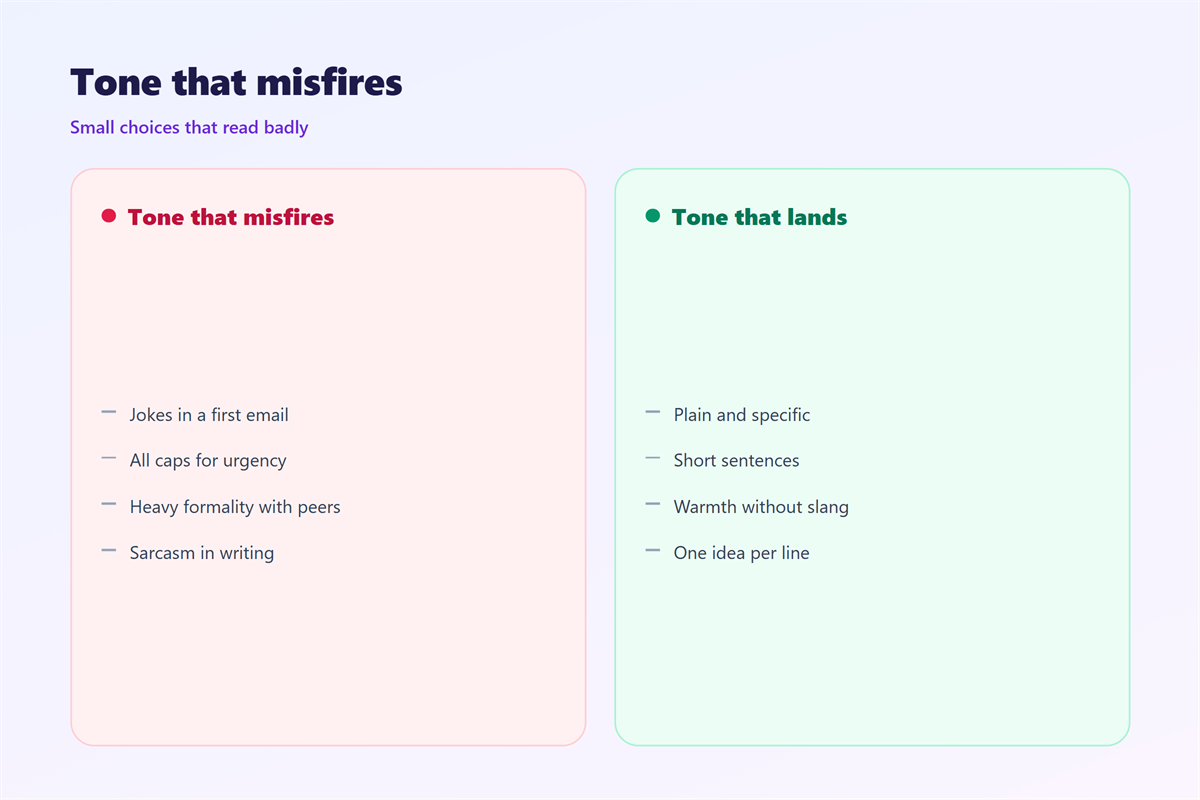
The most common problem is a mismatch between the greeting and the body. The greeting promises one thing and the body delivers another. Notably, the mismatch feels worse than a consistently formal message.
A second failure is accidental aggression. Short replies, capitalised words and a missing closing line all read as irritation, whether or not any was intended. As a result, a busy sender can seem angry on a good day.
A third failure is over-warming with strangers. Emojis and exclamation marks can feel pushy in a first message, especially in a formal setting. Therefore, I add warmth slowly, and only after the reader sets the level.
How to choose 邮件语气 for a message
Start from the relationship and the stakes. A first message to a stranger leans formal, while a note to a teammate leans warm. The relationship answers most of the question before you write a single word. If the outcome is serious, a slightly more formal 邮件语气 is the safer choice.
Then read the draft once for tone alone. I look for commands disguised as requests and for any sentence that could be read two ways. Moreover, I check punctuation, because a stray dash can turn a neutral line into a sharp one.
Mirror the reader
If the other person writes formally, I keep my replies formal. Mirroring is the fastest way to avoid a mismatch. Their own style becomes the example, and you stop guessing.
Cut the filler
Filler words flatten tone and add length. Removing them usually makes a message sound more confident, which reads as warmer rather than colder.
Tone also connects to the wider conventions of the medium. The rules in 邮件礼仪 cover greetings, closings and timing, and they support the 邮件语气 you are trying to set. When a request must be refused, the same care applies, and 邮件拒绝 shows how to decline without sounding harsh.
FAQ
Should a 邮件语气 always be formal?
No. Formal suits first contact and official matters. For everyday work, a neutral tone is easier to read and just as professional.
Are exclamation marks acceptable?
Once, in a warm message, is fine. Several in one note read as shouting or as a sales pitch.
Does 邮件语气 change across cultures?
It does. Directness that reads as efficient in one place can seem abrupt in another, so softer openings help when you are unsure.
How do I know my tone is off?
Read the draft aloud. If a line sounds harsh out loud, the reader will probably hear it the same way.
References
- Wikipedia: Register (sociolinguistics)
- Plain Language: Federal plain language guidelines
- Wikipedia: Hofstede’s cultural dimensions theory
延伸阅读
- 《邮件称呼怎么选?Salutations That Fit the Reader》
- 《邮件致歉怎么写?Say Sorry and Mean It》
- 《邮件校对怎么做?Catch the Small Slips》
- 《邮件润色怎么做?Say It Better》
- 《邮件话术怎么用?Words You Can Reuse》
- 《邮件表扬怎么写?Praise That Lands》
- 《邮件建议怎么写?Suggest Without Push》
- 《邮件敬语怎么用?Words of Respect》
- 《邮件标点怎么用?Punctuation That Helps》
- 《邮件缩写怎么用?Short Forms Done Right》
- 《邮件问候语怎么选?A Greeting That Fits》
- 《邮件感谢信怎么写?Thanks That Land》
- 《邮件道歉信怎么写?Apologies That Work》
- 《邮件祝贺信怎么写?Words for Good News》
- 《邮件慰问信怎么写?Saying It Gently》
- 《邮件礼貌用语怎么用?Plain Courtesy》
- 《邮件措辞怎么选?Words That Carry Tone》
- 《邮件表情符怎么用?Emoji That Add, Not Distract》
- 《邮件委婉怎么说?Saying No With Grace》
- 《邮件沟通怎么做?Clear and Calm》
- 《邮件批评怎么写?Feedback That Lands》
- 《邮件寒暄怎么写?A Warm First Line》
评论
还没有评论,来说两句吧。
评论功能已关闭。