 小影邮箱
邮件跟进怎么写?Timing, Wording and the Third Try
What 邮件跟进 is really for
邮件跟进 is not a reminder that the other person forgot you. It is a second chance for them to answer in one line, and it only works when a one line answer is genuinely possible.
I once chased an invoice five times in three weeks and got nothing back. The sixth message was two lines long and offered a payment plan, and it was answered within the hour. The 邮件跟进 had not been too few or too many. It had been too hard to act on.
Key Takeaways
- 邮件跟进 works when a reply takes one line.
- Stay in the same thread so context travels with it.
- Three attempts is the usual ceiling.
- Each follow up should be shorter than the last.
- Change channel after two unanswered emails.
- Give the other side a way to say no.
How long to wait before 邮件跟进
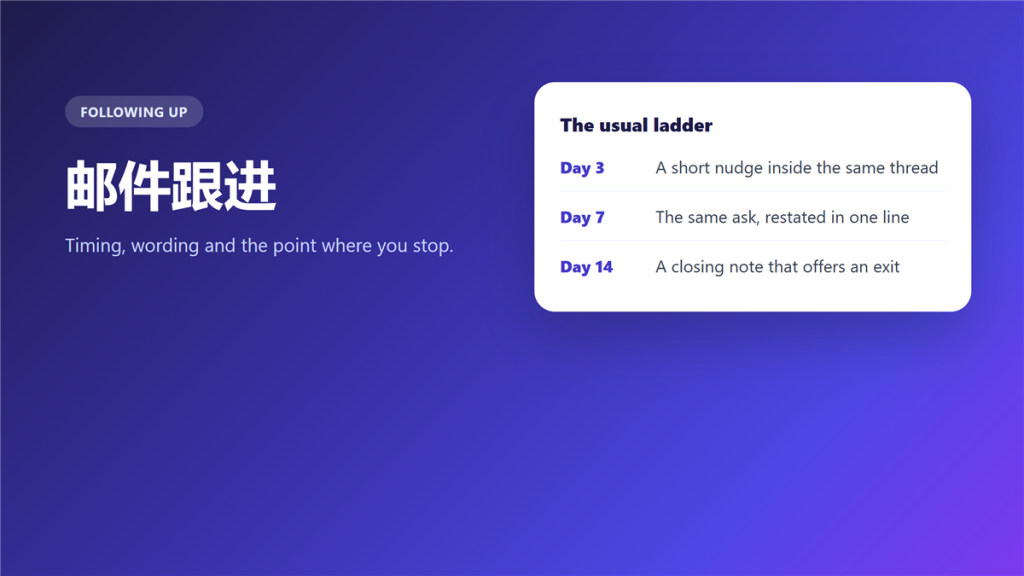
The right gap depends on what you asked for, and the wait should roughly match the effort of the answer.
Twenty four hours
Only for something that cannot move without an answer today, such as a same day booking or a broken system. Notably, the urgency has to be real, or the second message simply reads as pressure.
Three working days
This is the default for a request that needs a decision. Therefore most business follow ups land here.
One week
Use it for anything that needs reading, approval or a third person. In addition, a week is polite when the recipient has been travelling.
Five steps in a 邮件跟进 that gets answered
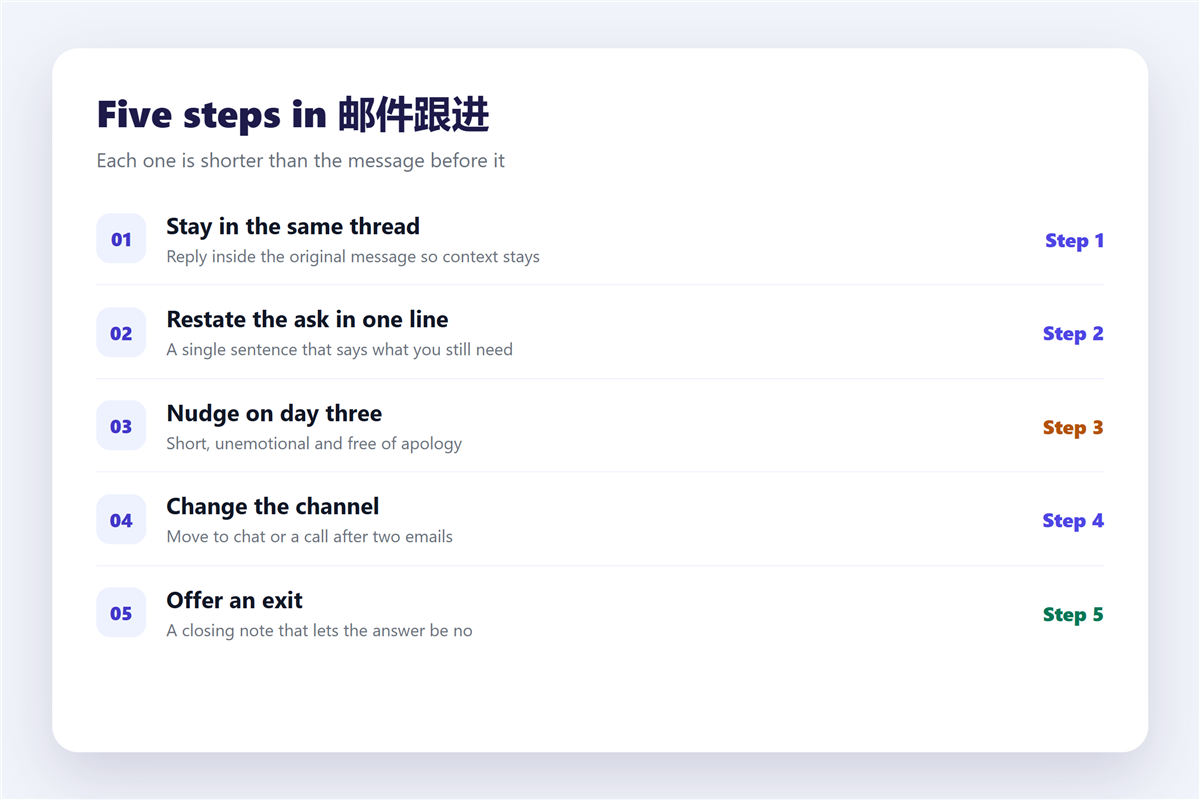
- Reply inside the original message so context stays attached.
- Restate the ask in a single sentence.
- Add one new piece of information, even a small one.
- Give a date, and say what happens if it passes.
- Offer an exit, where a one word answer is enough.
The third step is the one most people skip. Because a bare reminder adds no information, it invites exactly the same silence. Furthermore, the exit in the fifth step is not weakness; it is what makes a one line reply possible at all. Keep the subject unchanged, since a new one breaks the thread, and the guidance sits in 邮件标题.
When to stop 邮件跟进
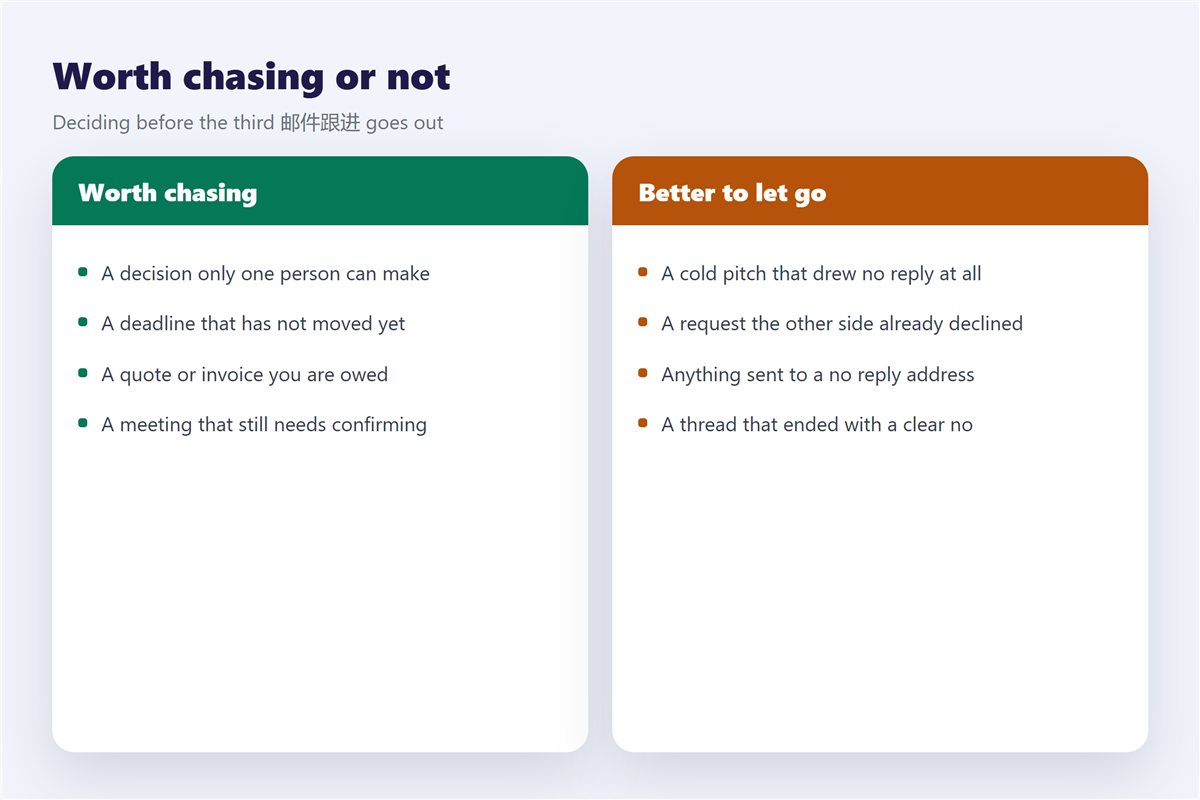
Three attempts is the usual ceiling, and the third message should close the loop rather than reopen it.
A closing note works better than a complaint. For instance, saying that you will assume it is not a priority and will ask again next quarter gives the reader a decision rather than an obligation. Meanwhile, a thread that already ended with a clear no should not be chased at all.
Keeping track of 邮件跟进
Once more than a few threads are open, memory stops being enough.
Two habits hold up. Flag the message at the moment you send the follow up, so the next check finds it, and that routine is in 邮件标记. Then schedule the next nudge as you send this one, which turns a decision into a task, and the mechanics are in 邮件定时发送. If the thread has already split in two, the repair path is in 邮件会话, and a request addressed to a group needs a deliberate choice about who receives the answer, covered in 邮件回复.
Frequently asked questions
How many times should I send a 邮件跟进?
Three, counting every attempt. Beyond that, you are training the other side to ignore you.
Is 邮件跟进 rude?
Not when it is short and gives the reader an easy answer. It becomes rude when it implies blame.
Should 邮件跟进 use the same subject?
Yes. A new subject starts a new thread and hides the history the reader needs to answer.
How do I know a 邮件跟进 was delivered?
Usually you do not. A message that leaves your outbox and produces no bounce has arrived somewhere, and that is all you can know.
References
延伸阅读
- 《求职邮件怎么写?One Page, One Ask, One Attachment》
- 《邮件拒绝怎么说?Declining Requests Without Burning Bridges》
- 《邮件致谢怎么写?Short, Specific and Sent on Time》
- 《邮件待办怎么做?From Inbox to Done in Four Steps》
- 《邮件催款怎么写?Firm, Dated and Documented》
- 《邮件自我介绍怎么写?Who You Are, Why Them》
- 《邮件开发信怎么写?Cold Mail That Gets Answered》
- 《邮件面试怎么沟通?Confirm, Prepare, Follow Up》
- 《邮件工作流怎么建?From Arrival to Done》
- 《邮件报价怎么写?Quotes Clients Understand》
- 《邮件交接怎么做?Passing Work Without Loss》
- 《邮件采购怎么做?From Request to Order》
- 《邮件询价怎么写?Ask for a Price Clearly》
- 《邮件会议纪要怎么写?Minutes That Stick》
- 《邮件续费提醒怎么发?Time It Before the Bill》
- 《邮件催促怎么写?The Gentle Nudge》
- 《邮件回访怎么做?Check Back With Care》
- 《邮件满意度调查怎么做?Ask, Then Act》
- 《邮件截止日期怎么写?Deadlines That Stick》
- 《邮件补充说明怎么写?A Short Addendum》
- 《邮件澄清怎么写?Setting the Record Right》
- 《邮件跟进话术怎么用?Nudge, Never Nag》
- 《邮件会后跟进怎么写?After the Meeting Ends》
- 《邮件谈判怎么写?Negotiating by Mail》
- 《邮件催办怎么写?A Gentle Nudge》
评论
还没有评论,来说两句吧。以下为本文的引用通告: